 BUTTER-C
Manufacturing process
From idea to finished batch:
eight steps, three milestones
Each step has something you prepare, something Butter-C does and something that is handed over. The three milestones — approved sample, notification number, finished batch — are the three points where both sides sign off.
 01
Step 1
Brief & direction
“Tell us your idea — no formula needed yet.”
Understand exactly what you want to sell: to whom, in which segment, with what feel, at what price — before touching any ingredient.
- Brand positioning and target customers
- Product type, pack size and expected budget
- Reference samples or products you already sell, if any
- Advise on the dosage form and a formula direction that fits your positioning
- Check from the outset which claims are permitted
- Draw up a product brief for both sides to sign
HandoverSigned product brief · Preliminary quotation as a price range
 02
Step 2
Formula development
“Our pharmacists build the formula to match the brief.”
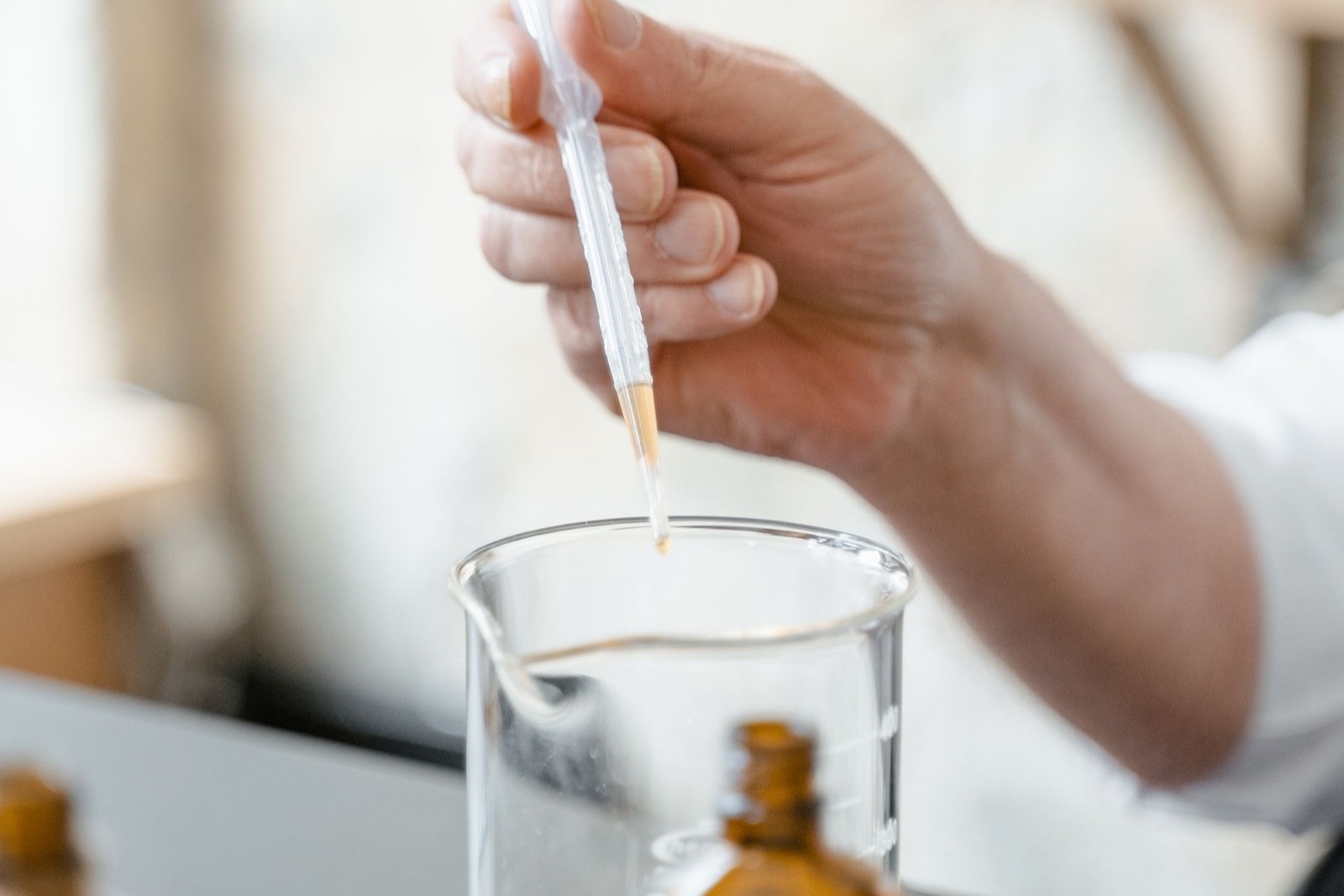
Turn the brief into two or three formula options that can be tried on real skin.
- Let us know early if the direction changes
- Supply your own ingredients if you want to use an exclusive one
- Select the base, actives and preservative system to fit your positioning and regulatory limits
- Measure R&D parameters on every sample: pH, viscosity, sensory profile, clarity
- Prepare 2–3 options with different skin feels for comparison
HandoverLab samples with a parameter sheet for each sample
 03
Step 3
Samples & adjustments
“Try it on real skin, give feedback, adjust until it is right.”
Arrive at a sample that both you and Butter-C sign off — this is the first milestone.
- Test samples the way your target customers would use them
- Give feedback on the sample evaluation form: feel, scent, color, texture
- Adjust in rounds, recording every change from the previous sample
- Send samples in the intended packaging when the product type depends on it
HandoverApproved sample · Sample approval record
Milestone 1 — Approved sample
 04
Step 4
Stability & packaging compatibility
“A good sample must also survive storage and shipping.”
Show that the approved sample keeps its color, scent, texture and microbiological safety throughout its shelf life, in the actual packaging it will be sold in.
- Confirm the packaging materials so Butter-C can test compatibility with the right ones
- Accelerated aging at 40°C, hot–cold cycling, centrifugation, light exposure
- Contact testing with the bottle, cap and gasket; preservative efficacy (challenge) test
- Set the product’s in-house specification from the measured data
HandoverStability report · In-house specification (TCCS)
 05
Step 5
Final quotation & contract
“The price is fixed to the signed-off formula and does not change midway.”
Put everything agreed — formula, packaging, quantities, schedule — into one document.
- First batch quantity and plans for later batches
- Whether you supply the packaging or Butter-C does
- Your business registration certificate for the notification dossier in the next step
- Detailed quotation based on the approved formula and pack format
- Production plan and delivery schedule
HandoverManufacturing contract · Production plan
 06
Step 6
Notification dossier & PIF
“Paperwork comes before the batch.”
The product is cleared for the market before the first batch leaves the factory.
- Provide your company documents from the list Butter-C sends you
- Sign the dossier as the organization responsible for placing the product on the market
- Compile the Product Information File (PIF) and safety assessment
- Prepare and submit the cosmetic product notification
- Follow up until the notification receipt number is issued
HandoverNotification receipt number · PIF kept on file at the factory
Milestone 2 — Notification number
 07
Step 7
Packaging & labeling
“Labels are checked against the notification before large print runs.”
Labels that are compliant, match the notification, and look good — in that order.
- Your label artwork, or a brief for Butter-C to design it
- Approve the print proof
- Check all mandatory information, claim wording and ingredient-specific warnings
- Cross-check the product name and ingredients against the notification
- Printing and incoming packaging inspection
HandoverApproved label filed in the PIF · Packaging ready
 08
Step 8
Production, batch testing & delivery
“Every batch comes with a certificate of analysis.”
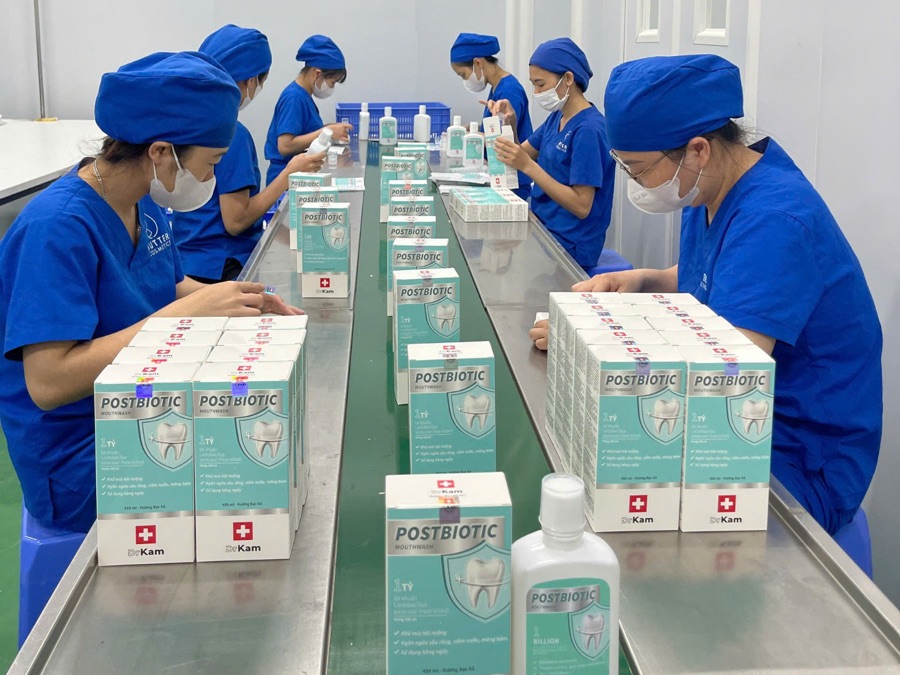
Commercial batches identical to the approved sample, with full records for traceability.
- Confirm the delivery schedule and shipping conditions
- Accept delivery against the retained sample
- Manufacture to the process established for the product
- Batch testing at a GLP / ISO 17025-accredited laboratory
- Packing, sample retention, delivery with the batch record
HandoverFinished batch · Batch certificate of analysis · Batch record · Retained sample
Milestone 3 — Finished batch
When things do not go as planned
Two loops back
The process is not a straight line. There are two points where Butter-C deliberately goes back instead of moving on:
- The sample fails stability testing — back to step 2 to adjust the formula, rather than adjusting the packaging to suit the sample.
- The label or claims go beyond the cosmetic scope — back to step 6: correct the dossier first, print labels afterwards.
At the end of the process you receive
The handover file
- Reference sample and retained samples from each batch
- The product’s in-house specification (TCCS)
- Stability and packaging compatibility report
- Product Information File (PIF)
- Notification receipt number
- Approved label
- Certificate of analysis and record for each batch
Get started
Talk to us about the product you plan to launch
Please send us your product direction and expected quantities. Our team will get back to you during business hours.
Head office: Huu Le village, Dai Thanh commune, Hanoi · Factory: Thanh Oai Industrial Cluster, Binh Minh commune, Hanoi, Vietnam
Hotline 0967 176 511 · [email protected] · privacy policy (in Vietnamese) Product catalog →