 BUTTER-C
Roselle (Hibiscus sabdariffa) flower extract in cosmetics
Roselle (also called red sorrel) appears on toner and mask labels with a “flower AHA” story and a natural red color. This article separates what is backed by data from what is only a story, and sets out the color, stability and safety points to consider when putting this extract into a formula.
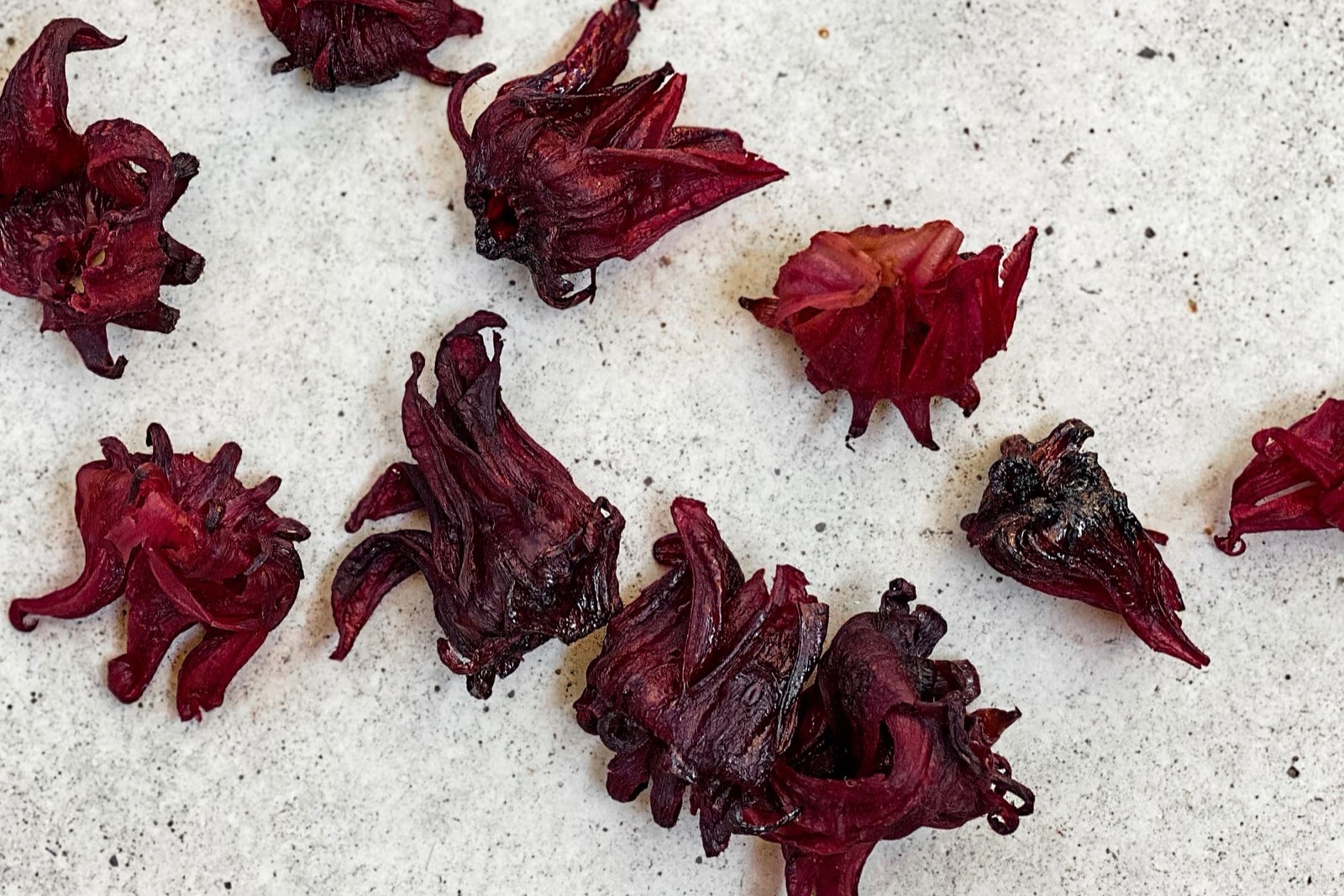
Roselle flower extract (INCI: Hibiscus Sabdariffa Flower Extract), also called red sorrel flower extract, is an extract of the flowers of Hibiscus sabdariffa L., of the mallow family (Malvaceae), used in cosmetics for skin conditioning according to CosIng. Its notable constituents are anthocyanins (red pigments) and organic acids. Because it contains organic acids, this ingredient is often promoted as a “flower AHA” — a label that should not be taken further than the data allow.
1. What is roselle flower extract?
According to CosIng (EU) data as cited by INCIDecoder, Hibiscus Sabdariffa Flower Extract is a “flower extract” of Hibiscus sabdariffa L. The definition does not specify a solvent. CAS number 84775-96-2 is also listed for the seed oil and the leaf extract of the same species, so the CAS number does not tell you which plant part was used. Most of the studies cited in this article used the deep red calyx.
| INCI | Plant part, form (CosIng) | Function (CosIng) |
|---|---|---|
| Hibiscus Sabdariffa Flower Extract | Flower extract | Skin conditioning |
| Hibiscus Sabdariffa Flower Water | Steam distillate of the flowers | Skin conditioning |
| Hibiscus Sabdariffa Leaf Extract | Leaf extract | Antioxidant, skin conditioning |
| Hibiscus Sabdariffa Seed Oil | Oil from the seeds | Emollient |
| Hibiscus Rosa-Sinensis Flower Extract | Chinese hibiscus flower — a different species | Hair conditioning, humectant, skin conditioning |
Data on the leaf, the seed or Chinese hibiscus do not apply to roselle flower extract.
2. Composition: anthocyanins and organic acids
According to a review by Izquierdo-Vega et al. (2020), roselle calyces contain four anthocyanins, mainly delphinidin-3-sambubioside and cyanidin-3-sambubioside; delphinidin-3-sambubioside alone accounts for about 85% of total anthocyanins. According to the same review, the organic acids include hibiscus acid (13–24%, the characteristic acid), citric acid (12–20%), malic acid (2–9%), tartaric acid (8%) and a small amount of ascorbic acid (0.02–0.05%); hydroxycitric acid is also present. The review does not state on what mass basis these percentages are calculated, so they should not be used as raw material specifications.
Content varies with cultivar and extraction method; a “rich in anthocyanins” claim requires quantitative data on the certificate of analysis (COA) for the raw material batch.
3. “Flower AHA”: how accurate is it?
Citric acid and malic acid belong to the alpha-hydroxy acid (AHA) group (Smith, 1996). Even so, three points need to be kept apart:
- A pure acid is not the same as an extract. In a study comparing AHAs at 0.5–1.15 M over six weeks, glycolic acid and the L(+) form of lactic acid were more effective; citric, malic and hydroxybutyric acids “appear to be less effective” and may be used in combination (Smith, 1996; the author was affiliated with a consulting company). Inference: the amount of acid that the extract contributes to a finished product is far lower than these levels.
- No human exfoliation data yet. A 2026 systematic review of the skin effects of roselle considered only preclinical studies (human studies were excluded), 16 studies in total: 9 in vitro, 6 in animals and 1 combined (Abimbola et al., 2026). We found no trial that measured the ability of this extract to make corneocytes shed.
- Not covered by the AHA entry in ASEAN Annex III. Entry Ref A6 lists only “Glycolic and lactic acid, their common salts and simple esters”. Roselle extract and its organic acids are not included in this entry, so the concentration limit, pH and warning statement of A6 do not apply to the extract itself. If a formula adds lactic acid or glycolic acid, the added acid must comply fully with A6 (see the articles on lactic acid (in Vietnamese) and citric acid (in Vietnamese)).
“Flower AHA” is therefore a marketing story. A smoothing or exfoliating claim should rest on an active ingredient with supporting data, such as lactic acid or gluconolactone (in Vietnamese), and on measurements made on the finished product.
4. Efficacy evidence
The mechanism usually cited is the antioxidant activity of anthocyanins and polyphenols. For topical use, the evidence is limited: only in vitro and animal data are available.
| Study | Design | Main findings | Notes |
|---|---|---|---|
| Abimbola et al., 2026 | Systematic review of 16 preclinical studies | Reduced inflammatory responses reported in 13 studies, antioxidant effects in 12, support for wound healing in 9, effects against fibrosis or photoaging in 7, reduced melanin formation in 4 | Studies varied widely; the authors concluded that clinical studies are needed |
| Li et al., 2020 | In vitro, aqueous calyx extract, UVB-irradiated dermal fibroblasts | Inhibited collagenase and tyrosinase activity, reduced UVB-induced reactive oxygen species, reduced MMP expression, increased TIMP-1 and collagen content | Cells; the abstract does not state the concentration |
| Pinsuwan et al., 2010 | Liposomes formulated with 10% (w/v) calyx extract; permeation tested through pig skin and irritation on rabbit skin | Liposomes increased the permeation rate of the active compounds and clearly reduced irritation compared with the unformulated extract | Efficacy not measured in humans |
Human trials that measured skin parameters all used oral intake; oral results do not translate into benefits of a topical product.
5. pH-dependent color and color stability
The color of the extract comes from anthocyanins and changes with pH. In a gelatin film containing roselle anthocyanins (a food packaging study), the color shifted clearly from red to yellow-green as the pH went from 3 to 10 (Latiff et al., 2025). Implication for cosmetics: a low-pH base tends to keep the red tone, while a near-neutral or alkaline base may cause the product to change color — test in the actual base.
Anthocyanins are also unstable in storage. In an aqueous roselle extract and in model solutions simulating the extract, stored for two months at 37 °C, raising iron from 1 to 13 mg/kg increased the degradation rate of delphinidin-3-sambubioside sixfold; oxygen concentration had no effect; the main degradation pathway was metal-catalyzed oxidation followed by condensation (Sinela et al., 2017).
| Factor | Effect | Formulation suggestion |
|---|---|---|
| pH | Red at acidic pH, gradually shifting to yellow-green as pH rises (tested in a film) | Fix the finished-product pH early and test the color in the actual base |
| Iron ions | Speed up anthocyanin degradation | Consider a chelating agent such as Disodium EDTA (inferred from Sinela 2017; needs testing in the finished product) |
| Temperature, time | Faster degradation at higher temperatures (extract storage study, food context) | Add during the cool-down phase (formulation experience); compare color at several temperatures during stability testing |
6. Typical concentrations and product formats
We have not been able to read any CIR report on roselle extract, so there is no survey of use concentrations; no effective concentration has been established. The 10% level in the liposome study is simply the level used in one research formulation. Commercial raw materials are usually blends (the extract diluted in water, glycerin or butylene glycol, with a preservative); the INCI label must list every component of the blend.
Common formats: toner, sheet mask, water-based serum and exfoliating products — the extract provides skin conditioning and supports a red-color story.
7. Safety: who should take care
- Assessments by expert bodies: we have not been able to read a CIR (US) report and found no SCCS (EU) opinion specific to this extract, so no conclusion is cited.
- Allergy: according to the LactMed database of the US National Institute of Child Health and Human Development (NICHD), roselle flower appears to be generally well tolerated, but allergic reactions can occur, including cross-allergy with other plants in the mallow family (ambrette, marshmallow). LactMed is written for the context of oral use.
- Irritation: the Pinsuwan group (2010) regarded skin irritation as a limitation of roselle extract; on rabbit skin, the unformulated extract caused more irritation than the liposome form. We have found no published human patch test data — tolerance should be tested on the finished product.
- Pregnancy and breastfeeding: LactMed notes that there are no data on whether roselle constituents pass into breast milk. For topical products, the data are insufficient — ask a doctor.
8. Notes for brand owners
- Raw material specification: species (H. sabdariffa, not H. rosa-sinensis), plant part (calyx or whole flower), solvent, carrier, preservative, pH, anthocyanin content if you plan to claim it, microbiology and heavy metals.
- ASEAN regulations: not listed in Annexes II, III and VI (version 2026-1, June 22, 2026) or Annex VII (version 2025-2) — searched for “hibiscus”, “sabdariffa”, “roselle” and CAS 84775-96-2; citric, malic and tartaric acids also have no entries of their own. Annex IV Part 1 (colorants, version 2026-1) has an entry “Anthocyanins” (red) in column 1, allowed in all cosmetic products. If the dossier states that the main role of the extract is to impart color, the regulatory team needs to review it under the colorant rules.
| Acceptable (when assessed on the finished product) | Avoid |
|---|---|
| Contains roselle flower extract, an antioxidant ingredient in the formula | “Natural AHA” or “flower exfoliant” without a supporting active ingredient and measurements |
| Helps skin feel soft and smooth (thanks to the whole formula) | “Anti-aging” or “stimulates collagen” based on cell data |
| Natural red color from anthocyanins (when the color holds up in stability testing) | “Whitening”, “removes melasma” or statements aimed at medical conditions |
| Rich in anthocyanins — only with a quantitative COA | Attributing results from drinking the tea or taking supplements to a topical product |
When manufacturing toners or masks containing roselle extract, Butter-C checks the INCI name, plant part, COA and claim wording before preparing the dossier.
Frequently asked questions
Is roselle extract an AHA?
It should not be called one. The extract contains some organic acids, among which citric and malic acids are AHAs, but no trial has measured the exfoliating effect of this extract on human skin.
Why does a roselle toner change color?
Anthocyanins change color with pH and break down faster in the presence of iron ions or at high temperatures. Store the product in a cool place.
Are roselle and Chinese hibiscus the same thing?
No. The two species belong to the same genus, Hibiscus, but have separate INCI names; data on one species do not apply to the other.
Can people with sensitive skin use roselle products?
No human tolerance data have been published. Try the product on a small area of skin first, and stop using it if redness or itching persists.
References
- Abimbola OG et al. Dermatoprotective Potential of Hibiscus sabdariffa L.: A Systematic Review of Preclinical Evidence. Int J Mol Sci. 2026. PMID 43027724
- Izquierdo-Vega JA et al. Organic Acids from Roselle (Hibiscus sabdariffa L.)-A Brief Review of Its Pharmacological Effects. Biomedicines. 2020. PMID 32354172
- Smith WP. Comparative effectiveness of alpha-hydroxy acids on skin properties. Int J Cosmet Sci. 1996. PMID 19245467
- Li J et al. Reversing UVB-induced photoaging with Hibiscus sabdariffa calyx aqueous extract. J Sci Food Agric. 2020. PMID 31583701
- Pinsuwan S et al. Liposome-containing Hibiscus sabdariffa calyx extract formulations with increased antioxidant activity, improved dermal penetration and reduced dermal toxicity. J Med Assoc Thai. 2010. PMID 21294418
- Latiff NF et al. Halochromic smart film: A gelatin-based pH-sensitive film embedded with anthocyanin from roselle (Hibiscus sabdariffa) extracts for potential food spoilage indicator application. J Food Sci. 2025. PMID 40111016
- Sinela AM et al. Exploration of reaction mechanisms of anthocyanin degradation in a roselle extract through kinetic studies on formulated model media. Food Chem. 2017. PMID 28554648
- Drugs and Lactation Database (LactMed). Hibiscus. National Institute of Child Health and Human Development. 2006– (updated 2026). PMID 30000942