 BUTTER-C
Signature ingredients
Cocoa butter body butter OEM/ODM manufacturing
Cocoa Butter Body Butter · Signature Ingredients · OEM/ODM
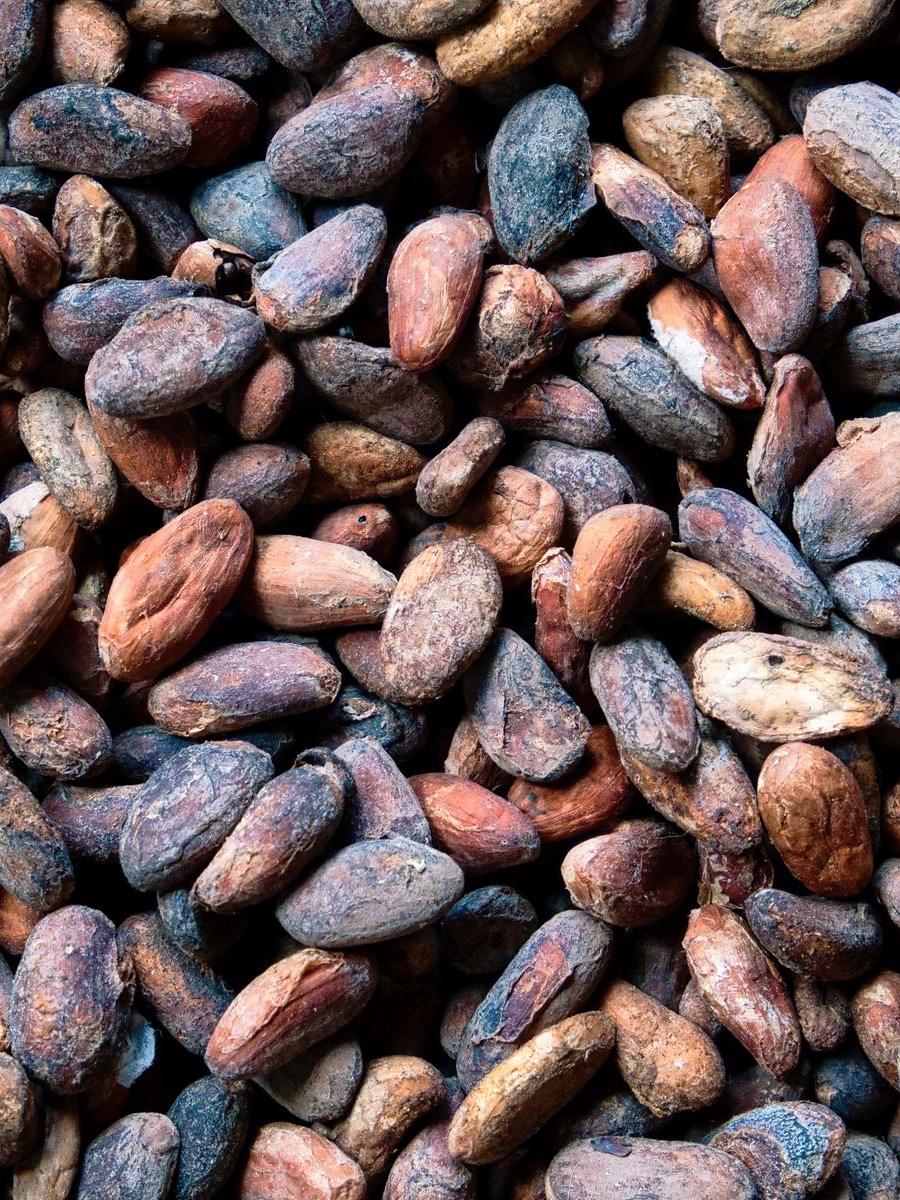
Cocoa butter is the fat obtained from the seeds of the cacao tree, Theobroma cacao; on cosmetic labels it carries the INCI name Theobroma Cacao Seed Butter (CAS 8002-31-1). More than half of its fatty acids are saturated, and three triglycerides — POP, POS and SOS — make up over 80% of all triglycerides, so the butter is solid in the jar yet melts on contact with skin: one source in the 2017 CIR report gives a melting point of 33.5 °C. A jar of body butter named after cocoa butter promises users exactly what this ingredient can do: a fatty layer that softens dry skin and seals in moisture. We have not found a human study measuring skin hydration or water loss after applying cocoa butter on its own, and two placebo-controlled trials in pregnant women found that cocoa butter products did not reduce stretch marks — so claims stop at softening and occlusion. The difficulty lies in the raw material itself: cocoa butter has six crystal forms and easily recrystallizes into grains or a white bloom when cooling is uncontrolled or the jar goes through hot–cold cycles in transit, and unrefined and deodorized butters differ in odor, color and natural antioxidants. The general body butter page covers blending several butters and whipping, and the shea page focuses on shea; this page focuses on choosing the form of cocoa butter, the melting–cooling process, lot-by-lot COAs and claims at the right level. Butter-C offers full-service OEM/ODM manufacturing, from raw material selection to a labeled finished product with its cosmetic product notification.
Formula base
Cocoa butter carries the name; oils and waxes set the hardness
In a body butter named after cocoa, cocoa butter is the main part of the oil phase; liquid oils make it easier to spread, wax holds its shape in hot weather, and dry-feel powders reduce greasiness. The first decision is the form of cocoa butter.
Cocoa butter (Theobroma Cacao Seed Butter)
According to the composition table in the 2017 CIR report: palmitic 24–29%, stearic 34–36%, oleic 30–40%, linoleic 2.4%; a set of properties in the same report lists an iodine value of 35–40, a saponification value of 190–200 and a melting point of 33.5 °C — reference data; each lot follows its COA. The 2010 concentration survey cited by CIR lists 0.000002–37% reported in leave-on products — actual use levels, not recommendations. The share of cocoa butter in the jar is set by hardness and skin feel on the sample (formulation experience).
The butter is not the bean or the powder
Cocoa butter is the fat fraction; cocoa powder is what remains after part of the butter is removed. In one analysis, the butter contained about 140 mg/kg theobromine and 400 mg/kg caffeine, with catechin and epicatechin below the detection limit, while a cocoa powder sample had up to 26,000 mg/kg theobromine and 1,800 mg/kg catechin (Risner 2008; the author worked at a company technical center). Data on cocoa polyphenols belong to extracts and powder — not to the butter.
Liquid oils, companion butters and wax
Jojoba oil (Simmondsia Chinensis Seed Oil) and Caprylic/Capric Triglyceride soften the butter and help it spread; shea butter adds richness and makes the structure less brittle; a small amount of beeswax raises the melting point of the blend so the jar holds its shape in hot weather (formulation experience). Tapioca starch reduces greasiness after application.
Antioxidants and fragrance
Cocoa butter contains few polyunsaturated fatty acids (linoleic about 2.4%), so it is thought to be less prone to oxidation than oils rich in polyunsaturated fatty acids — an inference from composition, with no comparative study in a cosmetic base; companion oils can still turn rancid. Tocopherol goes into the oil phase from the start, especially with deodorized butter. Unrefined butter already smells of cocoa — part of the fragrance design, and added fragrance may not be needed.
Key technical points
Four things specific to a jar named after cocoa butter
The points below come from cocoa butter itself: its crystallization behavior, softening in a hot climate, the difference between unrefined and deodorized butter, and the quality of a refined agricultural raw material.
Six crystal forms — the root of graininess and white bloom
Cocoa butter can crystallize in six forms (I–VI); form V melts at about 30.0–34.5 °C and form VI at about 33.5–38.5 °C, the stable form linked to “bloom” — the white haze on chocolate; temperature swings partly melt the butter, which then recrystallizes and favors form VI (Stobbs 2025). These are food science data; we have not found a peer-reviewed study in a cosmetic base. The inference for body butter: grains or a hazy surface can appear when the oil phase is not fully melted, cooling does not follow a set process, or the jar goes through hot–cold cycles in transit.
Melting and cooling under a fixed regime
Butter-C melts the oil phase completely (temperature set by the ingredient with the highest melting point in the formula, such as beeswax), then cools it under a fixed regime — rate, with or without stirring, filling temperature — recorded in the batch record. The principle of chocolate tempering (melt completely, cool to form seed crystals, rewarm gently to keep the stable seeds) can be tried at lab scale, but there is no study on cosmetics; the actual settings are fixed by hot–cold cycling on the formula itself (formulation experience).
Softening in Vietnam’s climate
Cocoa butter starts to melt around body temperature; unair-conditioned warehouses, trucks and shops in summer can be warmer than that, so jars rich in cocoa butter easily soften, weep oil and then recrystallize as they cool (an inference from melting point data). The melting point of the blend is adjusted with the ratio of wax, butter and oil; the label says store in a cool place, tightly closed. Butter and oil dropped on a bathroom floor make it slippery — the label advises applying after leaving the shower area (practical advice).
Unrefined or deodorized, and a COA for every lot
According to the CIR general description of vegetable oil refining, steam deodorization removes odor compounds and also part of the tocopherols and sterols. The inference: unrefined butter keeps its cocoa odor and a deeper yellow color; deodorized butter suits fragrance-free versions and should get added Tocopherol — to be confirmed by the supplier’s TDS and COA. CIR recommends controlling pesticide residues, heavy metals, glycidol and glycidyl esters in refined oils. Cocoa butter is not in Butter-C’s existing raw material database — sourced per order, COA required.
Three formulation directions
Three ways for cocoa butter to carry the name on the jar
Anhydrous unrefined cocoa butter
Cocoa butter makes up most of the formula, with liquid oil, beeswax and Tocopherol; the butter’s natural cocoa scent is part of the story, so fragrance may be left out. Firm, rich, melts when rubbed in; a small amount for dry, rough areas. “Unrefined” is stated only when the supplier confirms it.
Whipped deodorized cocoa butter
Deodorized cocoa butter with shea butter and jojoba oil, lightly whipped for an airy, easy-spreading texture; neutral color and odor, suited to fragrance-free versions or to your brand’s signature scent. Deodorizing removes part of the natural tocopherol — add antioxidant based on stability testing; net content is stated by weight, not by volume.
Cocoa butter body cream with water
A thick emulsion with a high share of cocoa butter, emulsifiers and glycerin; absorbs faster than an anhydrous butter and suits a hot, humid climate. Cocoa butter thickens the cream in the cold (internal experience); water means a preservative system — Phenoxyethanol at no more than 1% under Annex VI — and a challenge test.
Packaging is part of the formula
Wide-mouth plastic or glass jars with tight screw caps; aluminum tins suit firm anhydrous butters. Jars used in the bathroom should preferably be plastic (oily hands easily drop glass). Monitor oil seeping through the jar wall, the cap liner and the butter surface after transport.
Parameters we monitor
What our R&D lab measures on every sample
Below are the parameters Butter-C monitors while developing the formula and scaling it up for production. Specific limits are agreed with you on the approved sample and then written into the product’s in-house specification.
- Cocoa butter COA per lot
- Form (unrefined, deodorized), acid value, peroxide value, melting point, pesticide residues, heavy metals, glycidol and glycidyl esters (for refined butter); a retained sample of every lot to compare color and odor.
- Texture & graininess
- Surface and cross-section inspected; grains and white bloom assessed after hot–cold cycles and after a change of raw material lot.
- Melting behavior & hardness
- Samples held at high temperature to check shape retention and oil weeping; hardness compared with the approved sample.
- Oxidation indices
- Odor, peroxide value and acid value of the oil phase after accelerated aging; limits built from the formula’s own stability data.
- Microbiology
- Tested at a GLP / ISO 17025-accredited laboratory; anhydrous butters get a microbiological risk assessment under ISO 29621, versions with water a preservative efficacy (challenge) test under ISO 11930.
- Skin feel
- Spreadability, greasiness, time to a dry finish, feel after a few hours — the basis for “softens, eases the feeling of roughness”.
- Packaging compatibility
- Oil seeping through the jar wall, cap discoloration, liner tightness.
- Net weight
- Checked by weight on every lot; whipped versions by weight, not by volume.
Claims
Writing claims within the cosmetic scope
Evidence for cocoa butter is limited. Two randomized, double-blind, placebo-controlled trials in pregnant women: a cocoa butter lotion applied daily from the first trimester until delivery, 210 women enrolled and 175 completed, stretch marks in 45.1% versus 48.8% with placebo (P = 0.730), with no difference in severity (Osman 2008); a cocoa butter cream from week 16 until delivery, 300 women, stretch marks in 44% versus 55%, a difference that was not statistically significant (P = 0.09) (Buchanan 2010). Both author groups concluded that the cocoa butter products did not help prevent stretch marks of pregnancy; the abstracts do not state the cocoa butter concentration. We have not found a human trial measuring skin hydration or water loss after applying cocoa butter on its own. Claims for a cocoa butter jar therefore stop at softening and occlusion.
Softens the skin and eases the feeling of roughness
Instead of: claims about eczema, atopic dermatitis, bleeding cracks.
Seals in moisture for dry skin
State a figure only when measured on the finished product itself. Instead of: rebuilds the skin barrier, “boosts moisture by x%” without a basis.
Moisturizes and helps keep skin soft on the belly, thighs and hips
Instead of: prevents, fades or erases stretch marks during pregnancy — two placebo-controlled trials found no difference.
Contains cocoa butter (Theobroma Cacao Seed Butter)
State the INCI for the form actually used; “unrefined cocoa butter” and a geographic origin only when the supplier and COA confirm them. Instead of: “rich in cocoa polyphenols”, “antioxidants from cocoa” when only the butter is used.
Directions and label notes
Take a small amount, warm it between the hands, then apply; apply after leaving the shower area because an oily floor is slippery; do not apply to open wounds; store in a cool place, tightly closed; pregnant women should ask a doctor when choosing a new product — safety data in pregnancy are insufficient. Instead of: “safe for mums-to-be”, “for all skin types”.
Comedones and allergy: say only what the data support
Cocoa butter tested comedogenic in the rabbit ear (Nguyen 2007, animal model) and increased microcomedones on the backs of 6 people after 2 weeks under patches (Baek 2022; concentration not stated; the first author and one co-author worked for a dermatological testing company); finished products containing comedogenic ingredients are not necessarily comedogenic (Draelos 2006, 6 people) — people whose back and chest break out easily should try it first. A repeated insult patch test of a lip balm with 50.1% cocoa butter, semi-occluded, in 106 people who completed it: no irritation, no sensitization (unpublished data submitted by an industry association, CIR 2017); a PubMed search in October 2026 found no case report of contact allergy attributed to cocoa butter — which does not rule it out. Instead of: “non-comedogenic”, “hypoallergenic”.
Manufacturing specifications
Capabilities
- Texture
- Firm anhydrous butter, lightly whipped anhydrous butter, body cream with water.
- Formats
- Wide-mouth plastic jars, glass jars, aluminum tins. Weight agreed when packaging is selected.
- Minimum order quantity
- Agreed per order — depends on the form of cocoa butter, the formula direction and the chosen format.
- Testing
- Performed at a GLP / ISO 17025-accredited laboratory; certificates of analysis delivered with every lot.
- Documentation
- Product Information File (PIF) and cosmetic product notification prepared by Butter-C, including the lot-by-lot cocoa butter COA and the form of raw material actually used. Cocoa butter is not listed in ASEAN Annexes II, III, VI (June 2026 version) or VII.
- Packaging
- Label design, printing and packing run in parallel with formula development.
Suggested product concept
Cocoa butter body butter with natural cocoa scent for dry skin
One product direction to help you picture the result — not a ready-made product for sale. The actual formula is built around your brand positioning and price range.
Unrefined cocoa butter
Most of the oil phase; the butter’s own cocoa scent replaces fragrance; lot-by-lot COA and retained samples.
Shea butter and jojoba oil
Make the structure less brittle and easier to spread than solid cocoa butter.
Beeswax, tapioca starch, Tocopherol
Hold the shape in hot weather, reduce greasiness, protect the oil phase from rancidity; with beeswax the product is not labeled vegan.
200 g plastic jar with tight screw cap
Will not shatter in the bathroom; the label states a small amount, application after leaving the shower area, storage in a cool place.
Customization options
What you can specify
Within the same product type, every brand targets a different customer. Tell us your requirements in the areas below and our pharmacists will build the formula to match.
Form of cocoa butter
Unrefined or deodorized — decides odor, color, how much antioxidant to add, label wording and price.
Share of cocoa butter and hardness
A firm butter for very dry skin or a soft, easy-spreading one; markets that are hot all year need a higher melting point.
Anhydrous or with water
Anhydrous butter is microbiologically robust and rich; a body cream with water absorbs faster but needs a preservative system.
A line for mums-to-be
A deodorized, fragrance-free version can carry moisturizing and softening claims — no naming or promises around stretch marks; see the belly cream for mums-to-be page.
Fragrance
The natural cocoa scent of unrefined butter, vanilla, citrus or fragrance-free; fragrance is a source of contact allergy, so develop a fragrance-free version in parallel. The ASEAN annexes have no list of fragrance allergens that must be named; for export to the EU, allergens are named when above 0.001% (leave-on) under EU rules, based on the fragrance supplier’s composition sheet.
Ingredient preferences
Vegan (drop the beeswax, raise the butter share or use a plant wax), silicone-free, mineral-oil-free — please state these at the start.
Further reading
Related knowledge
Cocoa butter (Theobroma Cacao Seed Butter) in cosmetics
Fatty acids, six crystal forms, stretch mark trials in pregnancy, comedogenicity, caffeine and regulations (in Vietnamese).
Body butter manufacturing
General page: blending butters, oils and waxes, whipped butters and body creams with water.
Shea body butter manufacturing
A jar named after shea: variation by growing region, raw or refined.
Solid body lotion bar manufacturing
Cocoa butter, shea butter and beeswax in an anhydrous bar without plastic packaging.
Stretch marks
Evidence on topical products and stretch marks, and why we make no stretch mark promises (in Vietnamese).
Dry skin and dehydrated skin
Why dry skin needs both humectants and emollients such as cocoa butter (in Vietnamese).
How we work
From idea to finished batch
Eight steps and three milestones signed off by both sides: approved sample, notification number, finished batch. Step-by-step details (in Vietnamese) →
Get started
Tell us about the product you plan to launch
Send us your product direction and expected volume. Our team will get back to you during business hours (Vietnam time, GMT+7).
Head office: Huu Le village, Dai Thanh commune, Hanoi · Factory: Thanh Oai Industrial Cluster, Binh Minh commune, Hanoi, Vietnam
Hotline +84 967 176 511 · [email protected] · Privacy policy ← Full catalog