 BUTTER-C
Signature ingredients
B5 panthenol gel OEM/ODM manufacturing
B5 Panthenol Gel · OEM/ODM
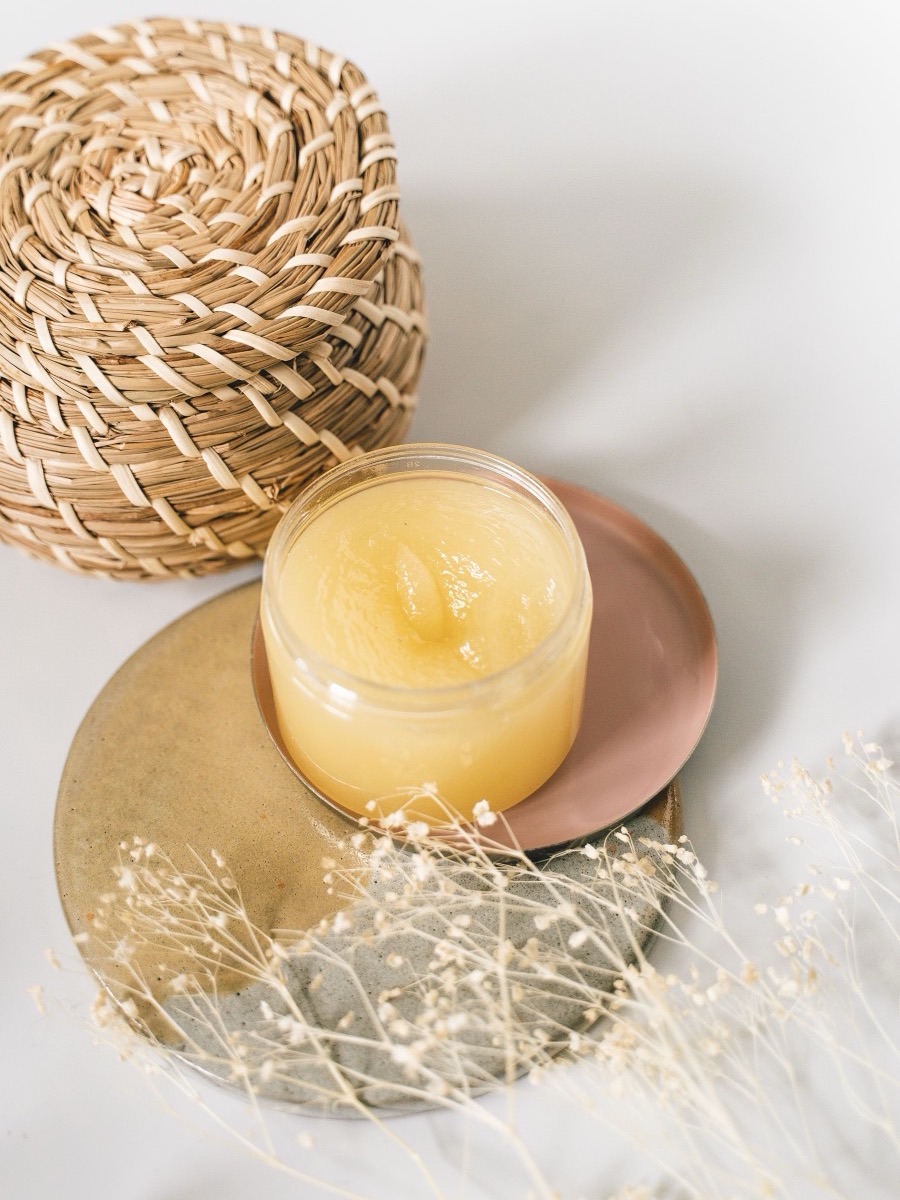
“B5” on a label is the familiar name for panthenol — pro-vitamin B5, the alcohol form of pantothenic acid. Once absorbed, panthenol is converted in the tissue to pantothenic acid, a component of coenzyme A, which takes part in synthesizing the fatty acids and sphingolipids of the skin barrier. Human data are fairly clear on the use level: on the forearms of healthy volunteers, formulations with 1% and 5% panthenol reduced transepidermal water loss after 30 days, while for 0.5% the study abstract reported no significant result; a randomized, double-blind trial found that dexpanthenol in a lipophilic base increased stratum corneum hydration after 7 days compared with the base. The checked sources have no study specific to a water-based gel, so the performance of a gel has to be shown on the finished product itself. A B5 gel developed by Butter-C is a clear, oil-free gel with panthenol as the named ingredient alongside sodium hyaluronate, with claims limited to hydrating and soothing the dry, tight feeling on intact skin. Panthenol is familiar from preparations for wounds and burns — that is a medical context, not something a cosmetic gel may promise. The formulation challenge lies in the active itself: choosing D- or DL-panthenol, weighing a viscous, hygroscopic liquid, and choosing a pH that suits both the gel network and panthenol stability. Butter-C offers full-service OEM/ODM manufacturing, from formula development to a labeled finished product with its cosmetic product notification.
Formula base
Panthenol, hyaluronate and the gel network
A B5 gel needs only a few ingredients, but each choice determines how it is weighed, how it is added and what the label can say. The three decisions below are settled first.
D-panthenol or DL-panthenol
Same INCI Panthenol, same formula C9H19NO4. D-panthenol (dexpanthenol, CAS 81-13-0) is a viscous, slightly hygroscopic liquid that may partly crystallize on long standing; DL-panthenol (CAS 16485-10-2) is a mixture of both isomers. Most human studies used the D form — switching forms means reassessing claims and cost; the COA must state the form.
Panthenol level
At 1%, a formulation already reduced transepidermal water loss after 30 days; 5% adds data on changes in stratum corneum structure after 2 hours in 10 healthy women; 0.5% showed no significant result in the study abstract.
Sodium Hyaluronate
A humectant polymer; creams with 0.1% HA at 5 molecular weights all increased hydration versus the vehicle cream after 60 days (76 women). CIR records use up to 2%; high-molecular-weight HA thickens the gel and turns tacky quickly, so it is kept low.
Gel network
Carbomer gives a very clear gel but needs neutralizing; Xanthan Gum and Hydroxyethylcellulose tolerate electrolytes better. No oil phase, no emulsifier needed — a short ingredient list.
Key technical points
Four things specific to a gel named after B5
Panthenol is easy to formulate, but not without conditions. The four items below decide whether the gel keeps its content, clarity and thickness through its shelf life.
Weighing and adding panthenol
D-panthenol is viscous and hygroscopic: weigh quickly, close the container at once, and warm gently per the TDS when it must be poured. Add it at the cool-down phase — prolonged heating causes racemization (PubChem), meaning D-panthenol gradually turns into a mixture of both isomers.
Choosing a pH between two requirements
Carbomer gels had stable rheology at pH 5–8 in a study; PubChem notes panthenol is more stable than pantothenate salts at around pH 3–5; solid HA is stable in the neutral pH range. The finished pH is therefore set by panthenol assay and viscosity measurements across stability time points, not by habit.
Gel clarity
PubChem notes dexpanthenol is slightly soluble in glycerin: with a lot of glycerin, check actual clarity. The polymer must be fully hydrated before neutralizing, HA sprinkled in slowly or pre-dispersed in glycol, and the batch mixed under vacuum to remove air.
Electrolytes and thickness
Sodium Hyaluronate is a negatively charged polymer; salts, salt-form actives and positively charged ingredients make Carbomer gels thin, hazy or precipitate. Viscosity is measured on the full formula, not inferred from the base gel.
Three formulation directions
Three B5 levels for three customer groups
Everyday 1% B5 gel
A clear gel that breaks into water when spread and dries quickly. A panthenol level with data on reduced transepidermal water loss after 30 days; for oily, dehydrated skin and hot, humid climates.
5% B5 gel
The top of the 0.5–5% range tested in humans. More panthenol makes the gel feel more moist and silky but easily tacky; glycerin is reduced accordingly.
B5 gel with two sizes of HA
Panthenol with Sodium Hyaluronate and Hydrolyzed Hyaluronic Acid: one part holds moisture at the surface, the other enters the stratum corneum. For skin dried out by air conditioning.
Packaging is part of the formula
Tubes or pump bottles limit finger contact with the gel; a jar needs a spatula and a stricter preservative challenge test. A clear body shows off the gel but reveals every air bubble or haze.
Parameters we monitor
What our R&D lab measures on every sample
Below are the parameters Butter-C monitors during formula development and scale-up to production. Specific limits are agreed with you on the approved sample and then written into the product's in-house specification.
- Sensory profile & clarity
- Color, odor, clarity, air bubbles; compared with a reference sample under the same lighting.
- pH
- Measured directly at 25°C on every batch — pH determines both the gel's thickness and panthenol stability.
- Viscosity
- Measured with a rotational viscometer at room temperature and after accelerated aging; a drop in viscosity can signal HA chain scission.
- Panthenol content
- Assayed in the finished product and across stability time points when the label declares a B5 percentage.
- Incoming panthenol form
- Each lot's COA checked: D or DL form, content; for the D form, optical rotation if the supplier publishes it.
- Stability
- 40°C, freeze–thaw cycling and light exposure; watching for gel thinning, haze, crystallization, off-odor and syneresis.
- Microbiology & challenge test
- A water-rich gel — preservative efficacy (challenge) test per ISO 11930; tested at a GLP / ISO 17025-accredited laboratory.
- Irritation & sensitization
- Human volunteer testing before the formula is finalized; contact allergy to panthenol has been reported, so this is the basis for any sensitive-skin wording.
- Hydration, transepidermal water loss
- Measured in volunteers with a base-gel control — only when you want a number on the label.
Claims
Writing claims within the cosmetic scope
The panthenol name is linked to medical preparations for wounds and burns, so promotional wording slips into that language very easily. A cosmetic B5 gel is used on intact skin. Butter-C reviews the wording on the label and in promotional material as soon as the notification dossier is prepared.
Hydrates, helps reduce water loss from the skin
Requires testing on the finished product: transepidermal water loss measurement; numbers only once measured. Instead of: repairs damaged skin, regenerates skin.
Helps soothe dry skin and mild discomfort
Instead of: for eczema, for skin conditions, soothes burns.
Supports the skin's protective barrier
Requires transepidermal water loss data on the finished product. Instead of: heals wounds, fades scars.
Contains pro-vitamin B5 (panthenol), contains X% panthenol
Content is declared only when it can be assayed; state D or DL correctly if mentioned. Instead of: pure vitamin B5.
Use as directed by the doctor who performed the procedure
The wording to use when the product is sold through spas or aesthetic clinics; no claims for post-procedure skin. Instead of: restores skin after laser, peels, microneedling.
Label precautions
Patch test on a small area first; stop use if the skin reacts. Instead of: non-allergenic, safe for all skin types, gentle by nature.
Manufacturing specifications
Capabilities
- Texture
- Clear water-release gel, soft gel or light gel-serum; colorless.
- Packaging format
- Tubes, pump bottles or jars. Fill weight agreed when selecting packaging.
- Minimum order quantity
- Agreed per order — depending on the panthenol level and the chosen packaging format.
- Testing
- Performed at a GLP / ISO 17025-accredited laboratory, with panthenol assay when the label declares content; a certificate of analysis delivered with each batch.
- Documentation
- Product Information File (PIF) and cosmetic product notification dossier prepared by Butter-C.
- Packaging
- Label design, printing and packing run in parallel with formula development.
Suggested product concept
Fragrance-free clear B5 gel for oily, dehydrated skin
A product direction to help you picture the idea — not a ready-made product for sale. The actual formula is developed around your brand's positioning and price range.
D-panthenol 1–5%
The named ingredient; the level is set from sensory feel, tackiness and stability results.
Sodium Hyaluronate, moderate Glycerin
Holds moisture without a sticky gel or pilling when layered under sunscreen.
Neutralized Carbomer, no fragrance, no color
A clear gel with a short ingredient list.
50 ml tube
Limits finger contact with the gel; the label directs use on intact skin and a patch test on a small area first.
Customization options
What you can specify
The same product type can serve very different customers depending on the brand. Tell us your requirements in the areas below, and our team of pharmacists will develop a matching formula.
Panthenol form
D-panthenol or DL-panthenol — determines the basis for claims and the cost.
Panthenol level and declared content
1%, 5% or in between; declaring a percentage requires an assay on every lot.
Thickness and feel
Firm standing gel, soft gel or light gel-serum.
Supporting ingredients
Sodium Hyaluronate, Allantoin, Ectoin; choose a few, not a long list.
Fragrance and color
We recommend fragrance-free and colorless for a soothing line.
Ingredient positioning
Oil-free, alcohol-free, fragrance-free — please state this at the outset so suitable raw materials are selected.
Further reading
Related knowledge
Panthenol (pro-vitamin B5) in cosmetics
Mechanisms, levels tested in humans, D and DL forms, allergy notes (in Vietnamese).
Hyaluronic acid in cosmetics
Molecular weight, concentration and stability of hyaluronate (in Vietnamese).
Carbomer in cosmetics
pH, electrolytes and clarity of Carbomer gels (in Vietnamese).
Moisturizing gel manufacturing
A multi-active gel named after Hyaluronic Acid, with panthenol in a supporting role.
Soothing repair essence manufacturing
A different direction: centella, Copper PCA and ceramides for sensitive skin.
Ectoin serum manufacturing
Another moisture-holding, soothing active, as a serum.
How we work
From idea to finished batch
Eight steps and three milestones signed off by both sides: approved sample, notification number, finished batch. Step-by-step details (in Vietnamese) →
Get started
Tell us about the product you plan to launch
Send us your product direction and expected volume. Our team will get back to you during business hours (Vietnam time, GMT+7).
Head office: Huu Le village, Dai Thanh commune, Hanoi · Factory: Thanh Oai Industrial Cluster, Binh Minh commune, Hanoi, Vietnam
Hotline +84 967 176 511 · [email protected] · Privacy policy ← Full catalog