 BUTTER-C
Signature ingredients
Ectoin serum OEM/ODM manufacturing
Ectoin Serum · OEM/ODM
Ectoin is a small molecule that bacteria living in salty, hot and dry environments make to hold water and protect their own cells; the grade used in cosmetics is produced by microbial fermentation. The molecule carries both a positive and a negative charge and has a strong affinity for water — which is why ectoin goes into moisturizing products. Human skin data exist, but they need careful reading: a randomized, double-blind trial in 104 healthy women compared an emulsion with 2% ectoin against the vehicle emulsion; the abstract gives no measured values, reporting only that participants generally preferred the ectoin formula and that no one had side effects. Studies using 5.5–7% ectoin were all run in a medical context, and many foundational studies have authors from raw material companies. An ectoin serum developed by Butter-C therefore keeps its claims to hydrating and soothing the dry, tight feeling, for sensitive skin and skin dried out by its environment — air conditioning, wind, sun. Ectoin also appears in nasal sprays and eye drops — those are medical products, and their data are not used for a serum. The formulation challenge lies in concentration and cost: ectoin is an expensive raw material, so every percentage point needs a reason. Butter-C offers full-service OEM/ODM manufacturing, from raw material selection and formula development to a labeled finished product with its cosmetic product notification.
Formula base
Choose the ectoin level first; the rest follows
For a serum named after ectoin, the first decision is the percentage. The level determines which statements can be quoted in sales material and drives most of the raw material cost.
Ectoin 2% — the level tested on healthy skin
INCI Ectoin (CAS 96702-03-3), a pure substance produced by fermentation, hydrophilic, added to the water phase. 2% is the level of a randomized, double-blind trial in 104 healthy women — but as an emulsion, so a water serum still has to be tested as the finished product itself.
Ectoin 5.5–7% — the level of the clinical studies
A systematic review of 6 studies used 5.5–7%; a split-face study in 30 people used a 7% cream. All of it is a medical context (skin under a doctor's follow-up, skin during a course of laser sessions, skin exposed to radiotherapy), so it supports tolerability at that level, not a claim for a cosmetic label.
Below 2%
The checked sources have no human trial at this level. The product can still say "contains ectoin", but does not quote results from the 2% or 7% studies.
The base around ectoin
Glycerin and Sodium Hyaluronate to hold moisture; Betaine — also an osmolyte and a zwitterion like ectoin; Panthenol if a soothing group is wanted. No fragrance, no essential oils, no exfoliating acids — so ectoin stays the lead of the ingredient list.
Key technical points
Four things specific to a serum named after ectoin
Ectoin is expensive and has few published physicochemical data. The four items below are settled before the texture is chosen.
Raw material file
The certificate of analysis (COA) for each lot states purity, impurities and microbiology — the material comes from fermentation. If the brand wants to talk about origin, ask the supplier to confirm in writing the production strain (genetically modified or not).
Stability and pH: no published figures
The checked sources (PubChem and the studies) give no numeric solubility, pKa, stable pH range or heat and light sensitivity for ectoin. Addition temperature and pH range follow the supplier's technical data sheet (TDS), then are confirmed by stability testing with ectoin assay.
Assay when a percentage is declared
Printing "ectoin 2%" or "5%" on the label means ectoin must be quantified in the finished product at each stability time point. Because the material is expensive, weighing is double-checked; a small deviation shifts both the cost and the claim.
Cost drives positioning
According to a 2022 publication, the market price of ectoin is about USD 1,000/kg; production in a high-salt medium is costly in equipment wear and wastewater handling. A rough estimate from that price: at 5–7%, ectoin can make up most of the raw material cost of a water-based serum — which is why the concentrated version usually comes in a small volume with premium positioning.
Three formulation directions
Three ways to tell the ectoin story
Ectoin 2% water serum
Fluid, clear, quickly absorbed, for morning and evening use under a moisturizer. The ectoin level follows the concentration tested on healthy skin; a short formula, easy to price for a daily line.
Concentrated ectoin serum 5–7%
The same water base, with ectoin at the level of the clinical studies (medical context). For brands that want a high declared content on the label — with assay on every lot; claims still stop at hydrating and soothing.
Ectoin – betaine – HA gel-serum
A light gel texture that feels cool on application; pairs two osmolytes with Sodium Hyaluronate. For skin dried out by air conditioning and dehydrated combination skin.
Packaging is part of the formula
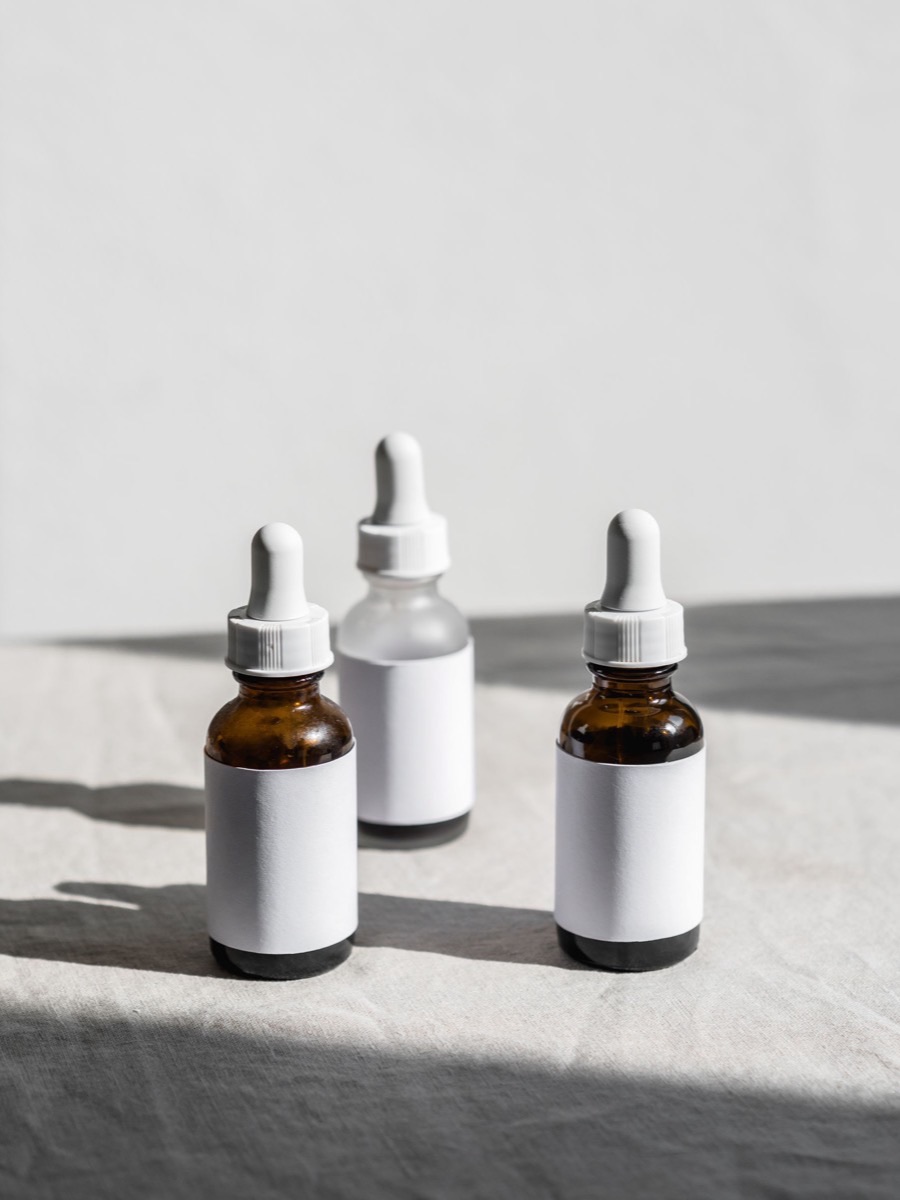
Glass dropper bottles for a fluid serum, pump bottles for a gel-serum. There are no light-sensitivity data for ectoin, so the degree of light protection is chosen from the stability results of the whole formula.
Parameters we monitor
What our R&D lab measures on every sample
Below are the parameters Butter-C monitors during formula development and scale-up to production. Specific limits are agreed with you on the approved sample and then written into the product's in-house specification.
- Sensory profile & clarity
- Color, odor, clarity; compared with a reference sample kept in the R&D lab.
- pH
- Measured directly at 25°C; pH drift tracked across stability time points — the main basis for setting the pH range when published figures are lacking.
- Viscosity
- Measured with a rotational viscometer, stating spindle and speed; tied to the dropper or pump.
- Ectoin content
- Assayed in the finished product and across stability time points when the label declares an ectoin percentage.
- Incoming raw material
- Each lot's COA checked: purity, impurities, microbiology.
- Stability
- Accelerated aging at 40°C, freeze–thaw cycling and light exposure; watching for color change, haze, crystallization and pH drift.
- Microbiology & challenge test
- Tested at a GLP / ISO 17025-accredited laboratory; preservative efficacy (challenge) test per ISO 11930 — a water-rich base.
- Irritation & sensitization
- Human volunteer testing before the formula is finalized. The checked sources include no CIR or SCCS report for ectoin, so the results for the formula itself are the basis for any sensitive-skin wording.
- Skin hydration in humans
- Stratum corneum hydration and transepidermal water loss measured in volunteers, with a vehicle control — only when you want a number on the label.
Claims
Writing claims within the cosmetic scope
All ectoin data at 5.5–7% come from a medical context, and many foundational studies have authors from raw material companies. A cosmetic serum is used on intact skin and stops at hydrating and soothing. Butter-C reviews the wording on the label and in promotional material as soon as the notification dossier is prepared.
Hydrates, helps skin feel less dry and tight
Instead of: repairs damaged skin, deep-layer hydration.
Helps soothe skin exposed to environmental stress
Dry air, air conditioning, wind, sun. Instead of: for skin with medical conditions, reduces redness and burning after procedures.
Supports the skin's protective barrier
Requires testing on the finished product: transepidermal water loss measurement. Instead of: restores the barrier after laser or peels.
Contains ectoin, contains X% ectoin
The content is declared only when it can be assayed. Instead of: quoting 7% study results when the product uses a lower level.
For daytime use under sunscreen
Ectoin is not a UV filter and is not listed in Annex VII. Instead of: UV protection, replaces sunscreen.
For sensitive skin
Only when tested on people with sensitive skin; the label advises a patch test on a small area first. Instead of: non-irritating, safe for all skin types, safe during pregnancy.
Manufacturing specifications
Capabilities
- Texture
- Clear water serum, light gel-serum or slightly thickened serum.
- Packaging format
- Glass dropper bottles, pump bottles. Volume agreed when selecting packaging.
- Minimum order quantity
- Agreed per order — depending on the ectoin level and the chosen packaging format.
- Testing
- Performed at a GLP / ISO 17025-accredited laboratory, with ectoin assay when the label declares content; a certificate of analysis delivered with each batch.
- Documentation
- Product Information File (PIF) and cosmetic product notification dossier prepared by Butter-C.
- Packaging
- Label design, printing and packing run in parallel with formula development.
Suggested product concept
Fragrance-free 2% ectoin serum for skin dried out by air conditioning
A product direction to help you picture the idea — not a ready-made product for sale. The actual formula is developed around your brand's positioning and price range.
Ectoin 2%
The named ingredient; the level follows the trial on healthy skin, with assay of the finished product to declare content.
Glycerin, Betaine, Sodium Hyaluronate
The moisture-holding group alongside ectoin; ratios chosen so the serum is not sticky.
No fragrance, no essential oils, no colorants
A short ingredient list for sensitive skin.
30 ml glass dropper bottle
The label directs use on intact skin, a patch test on a small area first and sunscreen in the daytime.
Customization options
What you can specify
The same product type can serve very different customers depending on the brand. Tell us your requirements in the areas below, and our team of pharmacists will develop a matching formula.
Ectoin level
2%, 5–7% or lower — determines which statements can be quoted and the cost.
Content on the label
Whether to print the ectoin percentage; if so, every lot needs an assay.
Texture
Water-thin, cooling gel-serum or slightly thickened.
Supporting ingredients
Glycerin, Betaine, Sodium Hyaluronate, Panthenol; choose a few, not a long list.
Fragrance and color
We recommend fragrance-free for sensitive skin; no added colorants.
Ingredient positioning
Fragrance-free, alcohol-free, vegan (the supplier must confirm fermentation origin of ectoin and HA) — please state this at the outset so suitable raw materials are selected.
Further reading
Related knowledge
Ectoin in cosmetics
Origin, mechanisms, levels tested in humans and how to word claims (in Vietnamese).
The skin barrier
What transepidermal water loss is and why skin feels tight (in Vietnamese).
Sensitive skin
The main customer group for an ectoin serum (in Vietnamese).
Soothing repair essence manufacturing
A different direction: centella, Copper PCA and ceramides lead; ectoin is just one option in the soothing group.
Moisturizing gel manufacturing
An oil-free gel named after Hyaluronic Acid, with ectoin in a supporting role.
B5 panthenol gel manufacturing
Another soothing, moisture-holding active, as a clear gel.
How we work
From idea to finished batch
Eight steps and three milestones signed off by both sides: approved sample, notification number, finished batch. Step-by-step details (in Vietnamese) →
Get started
Tell us about the product you plan to launch
Send us your product direction and expected volume. Our team will get back to you during business hours (Vietnam time, GMT+7).
Head office: Huu Le village, Dai Thanh commune, Hanoi · Factory: Thanh Oai Industrial Cluster, Binh Minh commune, Hanoi, Vietnam
Hotline +84 967 176 511 · [email protected] · Privacy policy ← Full catalog