 BUTTER-C
Mother & baby
Baby bottle cleanser OEM/ODM manufacturing
Baby Bottle Cleanser · Baby Dish Wash · OEM/ODM
Baby bottles, nipples and feeding tools are washed several times a day, so parents choose a dedicated cleanser expecting it to remove fatty milk residue, rinse quickly, leave no odor and have an easy-to-understand ingredient list. One point must be clear from the start: a baby bottle cleanser is a detergent for items that come into contact with food, not a cosmetic — the applicable standards, documentation and manufacturing conditions differ from a cosmetic product notification. If the product is to claim effects beyond cleaning, it may instead fall into the regulated household and medical preparations category, which has its own procedures. Butter-C therefore advises on the formula, packaging and manufacturing approach, and documentation is discussed separately for each project.
Formula base
Mild cleansers, easy rinsing, a short ingredient list
A baby bottle cleanser is a solution of mild surfactants, chosen to remove fatty and protein-based milk residue while still rinsing off quickly.
Cleansers
Glucosides from coconut oil and sugar, betaines — remove milk fats, rinse easily and are readily biodegradable.
Chelating agents
Sodium gluconate, citrates — support cleaning in hard water and limit white residue.
pH adjustment
Citric acid, sodium citrate — near-neutral pH, gentle on the hands doing the washing.
Preservation
Sodium benzoate, potassium sorbate; fragrance-free, color-free.
Key technical points
Four factors that define baby bottle cleanser quality
Removes milk residue
Milk residue consists of fats and proteins clinging to plastic and silicone — the cleansing system must handle both.
Quick rinsing, no residue
Moderate foam that breaks down easily on rinsing; fragrance-free and color-free so no odor remains on the bottle.
Ingredients suited to feeding items
Raw materials are selected with documentation supporting use in detergents for food-contact items.
Gentle on hands
Parents wash several times a day; near-neutral pH with a light humectant.
Three formulation directions
Three common baby bottle cleanser formats
Concentrated liquid
Diluted or applied directly to the bottle brush; economical.
Ready-to-use foam
Foaming bottle; the foam coats the inside of the bottle evenly and rinses quickly.
Also for baby's fruit and vegetables
A solution for both feeding tools and produce — requires documentation for that intended use.
Packaging is designed together with the formula
Pump bottles, foaming bottles, refill pouches; the label clearly states directions and rinsing with clean water.
Parameters we monitor
What our R&D lab measures on every sample
Below are the parameters monitored during formula development. Parameters for the product's documentation follow the regulations for detergents used on food-contact items.
- pH
- Measured on the solution and after aging.
- Surfactant content
- Per formula, assayed in the finished product.
- Viscosity, foam
- Checked across temperatures; compared with the reference sample.
- Cleaning performance
- Tested on plastic bottles and silicone nipples soiled with milk residue.
- Residue after rinsing
- Assessment of remaining odor, taste and foam after rinsing as directed.
- Microbiology
- Tested at a GLP / ISO 17025-accredited laboratory.
- Packaging compatibility
- Monitored for pump and foaming bottle performance after aging.
Claims
Writing claims for the correct product category
The claims on the label determine which category a product belongs to. Describing cleaning accurately keeps the product in the detergent category.
Removes milk residue and grease from bottles, nipples and feeding tools
Describes the cleaning function accurately.
Rinses easily, leaves no odor
Describes the sensory result after use.
Fragrance-free, color-free
State only to reflect the actual ingredients.
Derived from coconut oil and sugar
States the origin of the cleansers accurately. Instead of: 100% natural, chemical-free.
Claims beyond cleaning
State only when registered under the preparations category; otherwise, do not mention them.
Directions and warnings
Rinse with clean water after washing; avoid contact with eyes; keep out of reach of children.
Manufacturing specifications
Scope of cooperation
- Format
- Clear liquid, ready-to-use foam.
- Packaging format
- Pump bottles, foaming bottles, refill pouches. Fill size agreed when selecting packaging.
- Product category
- Detergent for food-contact items — not covered by a cosmetic product notification.
- Manufacturing and documentation
- Manufacturing conditions, applicable standards and documentation are discussed separately for each project.
- Minimum order quantity
- Agreed per order.
- Packaging
- Label design following the mandatory content for this product category, printing and packing.
Suggested product concept
Fragrance-free glucoside baby bottle cleanser
A product concept to help you picture the possibilities, not a ready-made product for sale. The actual formula is developed to your brand positioning and the regulations for this product category.
Glucosides and betaines
Remove milk residue and rinse easily.
Sodium gluconate
Limits white residue in hard water.
Fragrance-free, color-free
No odor left on the bottle.
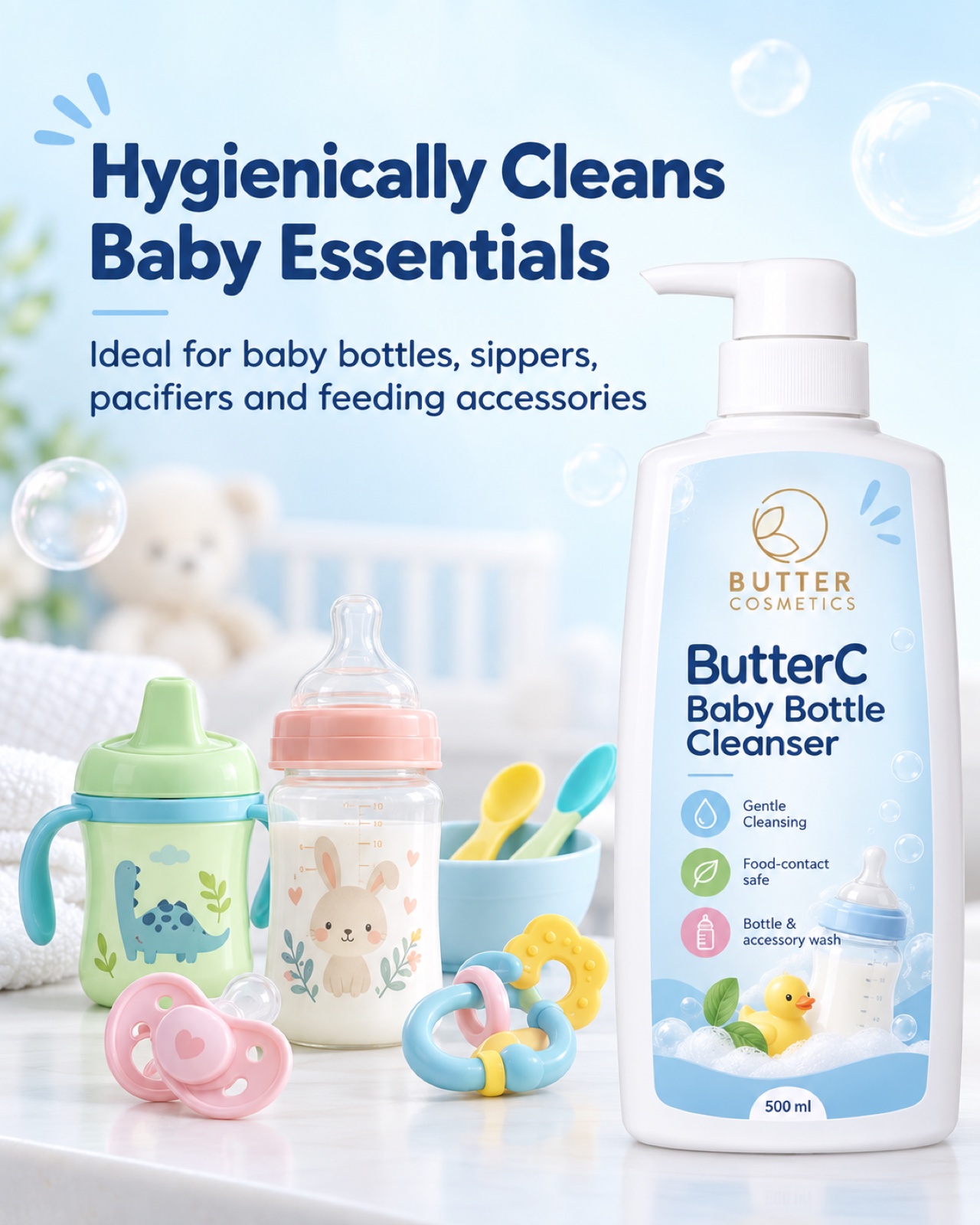
500 ml pump bottle
With a refill pouch; the label clearly states directions.
Customization options
What you can specify
The same product type can target very different customers depending on the brand. Tell us your requirements in the areas below, and our team of pharmacists will advise on a matching approach.
Format
Liquid, ready-to-use foam.
Scope of use
Baby bottles, nipples, feeding tools, fruit and vegetables.
Scent
Fragrance-free (recommended).
Positioning
Plant-based, biodegradable — stated only to reflect the actual ingredients.
Concentration
Ready to use or for dilution.
Packaging
Pump bottles, foaming bottles, refill pouches, sets with a bottle brush.
Further reading
Related topics
Baby hair and body wash manufacturing
A cosmetic cleansing product for babies.
Baby mosquito repellent spray manufacturing
Another baby product that falls outside the cosmetic category.
Cosmetic labeling rules
How cosmetic labels differ from detergent labels (in Vietnamese).
Cosmetic PIF dossiers
Cosmetic documentation — different from detergent documentation (in Vietnamese).
How we work
From idea to finished batch
Eight steps and three milestones signed off by both sides: approved sample, notification number, finished batch. Step-by-step details (in Vietnamese) →
Get started
Tell us about the product you plan to launch
Send us your product direction and expected volume. Our team will get back to you during business hours (Vietnam time, GMT+7).
Head office: Huu Le village, Dai Thanh commune, Hanoi · Factory: Thanh Oai Industrial Cluster, Binh Minh commune, Hanoi, Vietnam
Hotline +84 987 964 764 · [email protected] · Privacy policy ← Full catalog