 BUTTER-C
Signature ingredients
PHA gluconolactone toner OEM/ODM manufacturing
PHA Gluconolactone Toner · OEM/ODM
Gluconolactone is the cyclic lactone of gluconic acid, made by oxidizing glucose — the familiar representative of the polyhydroxy acid (PHA) group. Its many hydroxyl groups help it attract and hold water. In a 12-week study comparing two skin care regimens, the group using products with gluconolactone reported less stinging and burning than the glycolic acid group, at the cost of slightly smaller improvement in two measures. A PHA toner is therefore positioned as a gentle exfoliating and moisturizing step for sensitive and dry skin — with evidence that is still small, partly from authors employed by a cosmetics company. The difficulty lies in the chemistry of the active itself: in water, gluconolactone gradually hydrolyzes to gluconic acid; a freshly prepared aqueous solution at pH 3.6 can fall to 2.5 within two hours. Butter-C builds the buffer system, sets the pH after equilibrium and tracks pH through stability studies, offering full-service OEM/ODM manufacturing from formula to a labeled finished product with its cosmetic product notification.
Formula base
Gluconolactone and its buffer — two things that go together
For a PHA toner the first question is not “what percentage” but “where will the pH sit once gluconolactone has hydrolyzed”. Active, buffer and humectants are chosen at the same time.
Gluconolactone
INCI Gluconolactone (CAS 90-80-2, molecular weight 178.14); very soluble in water (about 590 g/L at 25 °C), poorly soluble in ethanol. Levels used in humans: 5% (serum), 14% (lotion). The 10–30% solutions in studies are peel procedures performed by professionals, not home-use products.
Gluconate buffer
Partial neutralization with Sodium Hydroxide creates a gluconic acid / gluconate pair; gluconic acid has a pKa of about 3.6 (HSDB: K = 2.5×10⁻⁴ at 25 °C, via PubChem), so buffering capacity is concentrated around that pH (inferred from pKa). Sodium Citrate can add further buffering.
Moisturizing and soothing group
Glycerin, Betaine, Panthenol, Allantoin, Sodium Hyaluronate (Allantoin only when the pH after equilibrium is 4 or above — the ingredient monograph gives a pH range of 4–8). Fragrance-free, alcohol-free, a short ingredient list — in keeping with a product for sensitive skin.
The right substance, the right INCI
CIR (2026) concluded only gluconolactone is safe in present practices of use and concentration; data are insufficient for galactonolactone, glucarolactone, glucoheptonolactone and ribonolactone — do not substitute them. Gluconolactone is not listed in ASEAN Annexes II, III or VI and is not covered by entry A6 (glycolic and lactic acid only), so it has no concentration limit or mandatory label warning of its own.
Key technical points
Hydrolysis and pH drift — what is specific to a PHA toner
Gluconolactone does not stand still in water. The four items below decide whether the toner holds its pH and gentle feel from the first lot to the end of shelf life.
Hydrolysis to gluconic acid
According to the EU food additive specification (via PubChem), in aqueous media gluconolactone hydrolyzes to an equilibrium mixture of 55–66% gluconic acid with the delta- and gamma-lactones. The finished product therefore always contains both lactone and acid; “X% gluconolactone” in the dossier is the amount added, not the amount of lactone remaining.
pH drift and when to adjust pH
HSDB records that a freshly prepared aqueous solution has a pH of 3.6, falling to 2.5 within two hours (concentration not stated). Butter-C dissolves the active, lets the solution equilibrate and only then makes the final pH adjustment; pH is tracked through stability checkpoints and the in-house specification sets an acceptable pH range, not a single point.
Heat and order of addition
Gluconolactone is added to the water phase during the cool-down stage, avoiding prolonged heating after addition to limit hydrolysis during manufacture. The time from compounding to filling is recorded in the batch record because pH changes over time.
Metal complexation
Gluconolactone complexes many metal ions: this can help stabilize a formula, but it also interacts with zinc and copper salts or mineral-rich extracts — no Zinc PCA or Copper PCA without compatibility testing. A supporting role in preservation counts only when a preservative challenge test proves it.
Three formulation directions
Three kinds of PHA toner
Clear, minimal PHA toner
Water-thin, gluconolactone with a few humectants, fragrance-free. Patted on by hand or with a pad; for sensitive skin wanting a light daily exfoliating step when tolerated.
Lightly thickened, extra-moisturizing PHA toner
Sodium Hyaluronate and a little gum give an essence-toner feel; for dry skin and environmental tightness. The gum must be tested at the buffer system’s pH and salt level.
Pre-soaked PHA pads
PHA solution absorbed into pads in a sealed jar, convenient on the go. Evaporation, solution uniformity between pads and microbiology must be tested separately for this format.
Packaging must be planned with the formula
Plastic or glass bottles with flip-top or screw caps; a sealed jar for pads. The sources reviewed do not report special light sensitivity for gluconolactone — stability is still tested in the actual packaging.
Parameters we monitor
What our R&D lab measures on every sample
Below are the parameters Butter-C tracks during formula development and scale-up. Specific limits are agreed with you on the approved sample and then written into the product’s in-house specification.
- Appearance & clarity
- Color, odor, clarity; compared with a reference sample kept in the R&D lab.
- pH after equilibrium
- Measured at 25°C once the solution has equilibrated, not right after dissolving; pH at compounding is also recorded to track the drop.
- pH drift
- pH tracked through stability checkpoints — the key parameter of a PHA toner, because gluconolactone keeps hydrolyzing.
- Active content
- Gluconolactone/gluconic acid assayed by a method agreed with the testing laboratory when the label names PHA or states its amount.
- Density & conductivity
- Quick lot-identity checks for an all-water system; conductivity reflects the buffer salts.
- Stability
- Accelerated aging at 40°C, freeze–thaw cycling and light exposure; watching pH, clarity, odor and viscosity where gum is used.
- Packaging compatibility
- Filled into the actual bottle, cap or pad jar; watching for loss, material odor and seal integrity.
- Microbiology & preservative challenge
- Tested at a GLP / ISO 17025-accredited laboratory; preservative efficacy (challenge) test per ISO 11930 — mandatory for an all-water system and for pre-soaked pads.
- Irritation & stinging
- Human volunteer testing, preferably including people with sensitive skin — the only basis for a sensitive-skin statement on the label.
Claims
Writing claims within the cosmetic scope
Gluconolactone has a reputation as a “gentle acid”, but human data are small and partly from a medical setting (acne, rosacea redness, professional peels). A cosmetic toner stops at gentle exfoliation, moisturizing and describing the suitable skin type. Butter-C reviews label and marketing wording when preparing the notification dossier.
Gently exfoliates for smoother-feeling skin
Instead of: peels the skin, skin renewal, skin regeneration.
Moisturizes, helps relieve dry tightness
Skin hydration rose after three applications of 10% and 30% solutions in 16 women — a small study of a peel format; specific figures are claimed only when measured on the finished product. Instead of: repairs a damaged skin barrier.
Suitable for sensitive skin
Only when the finished product has passed human irritation testing. Instead of: never irritates, safe for every skin.
Gentler than an AHA toner
Only with a comparative test of the finished product itself; existing data compare two skin care regimens, with authors from a cosmetics company. Instead of: works like an AHA without the sting.
Daytime sunscreen recommended
One study found gluconolactone did not significantly increase sunburn cells after UV exposure, but that is not a sun-protection effect. Instead of: sunscreen, protects skin from UV.
Directions and label notes
Patch test on a small area first; take care when combining with high-strength AHA or BHA; persistent redness calls for a doctor — a 5% gluconolactone serum improved mild redness less than a single IPL session. Instead of: clears redness, resolves rosacea, claims of an effect on acne.
Manufacturing specifications
Capabilities
- Texture
- Clear, water-thin liquid, or lightly thickened with hyaluronate or gum; colorless.
- Formats
- Flip-top or screw-cap bottles, or pre-soaked pads in a sealed jar. Volume agreed when packaging is selected.
- Minimum order quantity
- Agreed per order — depends on the formula direction and the chosen format.
- Testing
- Tested at a GLP / ISO 17025-accredited laboratory; certificate of analysis supplied with every lot, including pH after equilibrium.
- Documentation
- Product Information File (PIF) and cosmetic product notification prepared by Butter-C, including pH-over-time data from the stability study.
- Packaging
- Label design, printing and packing run in parallel with formula development.
Suggested product concept
Fragrance-free PHA toner for sensitive and dry skin
One product direction to help you picture the result — not a ready-made product for sale. The actual formula is built around your brand positioning and price range.
Gluconolactone
The named active; level set by tolerance testing and pH stability, with 5% — the serum level tested in humans — as a reference.
Sodium Hydroxide, Sodium Citrate buffer
pH adjusted after equilibrium; the in-house specification sets an acceptable pH range across shelf life.
Glycerin, Betaine, Panthenol
Humectants that go with PHA; no fragrance, no alcohol, no essential oils.
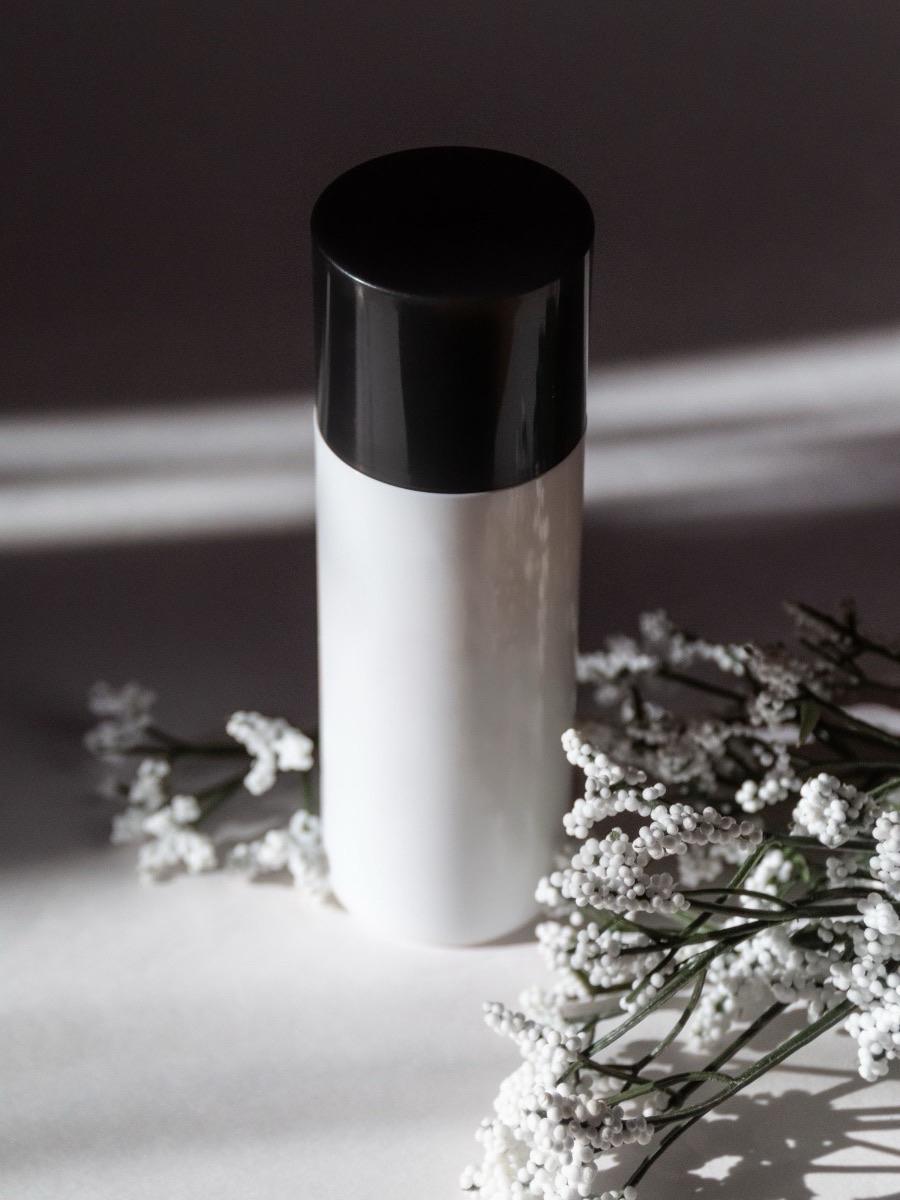
150 ml plastic bottle with flip-top cap
Applied with a pad or by hand; the label advises a patch test and daytime sunscreen.
Customization options
What you can specify
Within the same product type, every brand targets a different customer. Tell us your requirements in the areas below and our pharmacists will build the formula to match.
Gluconolactone level
Light for daily use or higher for experienced users; each comes with its own pH range and tolerance testing.
Texture
Water-thin or lightly thickened like an essence-toner.
Format
Toner bottle or pre-soaked pads — two different filling and microbiology control processes.
Moisturizing and soothing group
Glycerin, Betaine, Panthenol, Allantoin, Sodium Hyaluronate; a few well-chosen ingredients rather than a long list.
Combining other actives
Avoid zinc and copper salts until compatibility is tested; no high-strength AHA or BHA in the same bottle.
Ingredient preferences
Fragrance-free, alcohol-free, paraben-free, vegan — please state these at the outset so we can select suitable raw materials.
Further reading
Related knowledge
Gluconolactone (PHA) in cosmetics
Mechanism, evidence, comparison with AHA and formulation notes (in Vietnamese).
Sensitive skin
The main customer group for a PHA toner (in Vietnamese).
Glycolic acid (AHA) in cosmetics
The comparison active: stronger, with its own Annex III limits and label warning (in Vietnamese).
Toner manufacturing
Hydrating and balancing toners, where PHA is just one option among many.
Facial exfoliator manufacturing
Rinse-off formats: scrubs, enzymes, peeling gels, used once or twice a week.
BHA salicylic acid toner manufacturing
The direction for oily skin: a lipophilic active, limited to 2% under Annex III Ref 98.
How we work
From idea to finished batch
Eight steps and three milestones signed off by both sides: approved sample, notification number, finished batch. Step-by-step details (in Vietnamese) →
Get started
Tell us about the product you plan to launch
Send us your product direction and expected volume. Our team will get back to you during business hours (Vietnam time, GMT+7).
Head office: Huu Le village, Dai Thanh commune, Hanoi · Factory: Thanh Oai Industrial Cluster, Binh Minh commune, Hanoi, Vietnam
Hotline +84 967 176 511 · [email protected] · Privacy policy ← Full catalog