 BUTTER-C
Fermented rice bran: Saccharomyces/Rice Bran Ferment in cosmetics
Fermented rice bran is often promoted alongside the story of rice water and “skin brightening.” The INCI name only tells you that yeast of the genus Saccharomyces was used to ferment rice bran; the available data come from laboratory studies, from other microorganisms or from other rice ingredients, and there are no human trials yet.
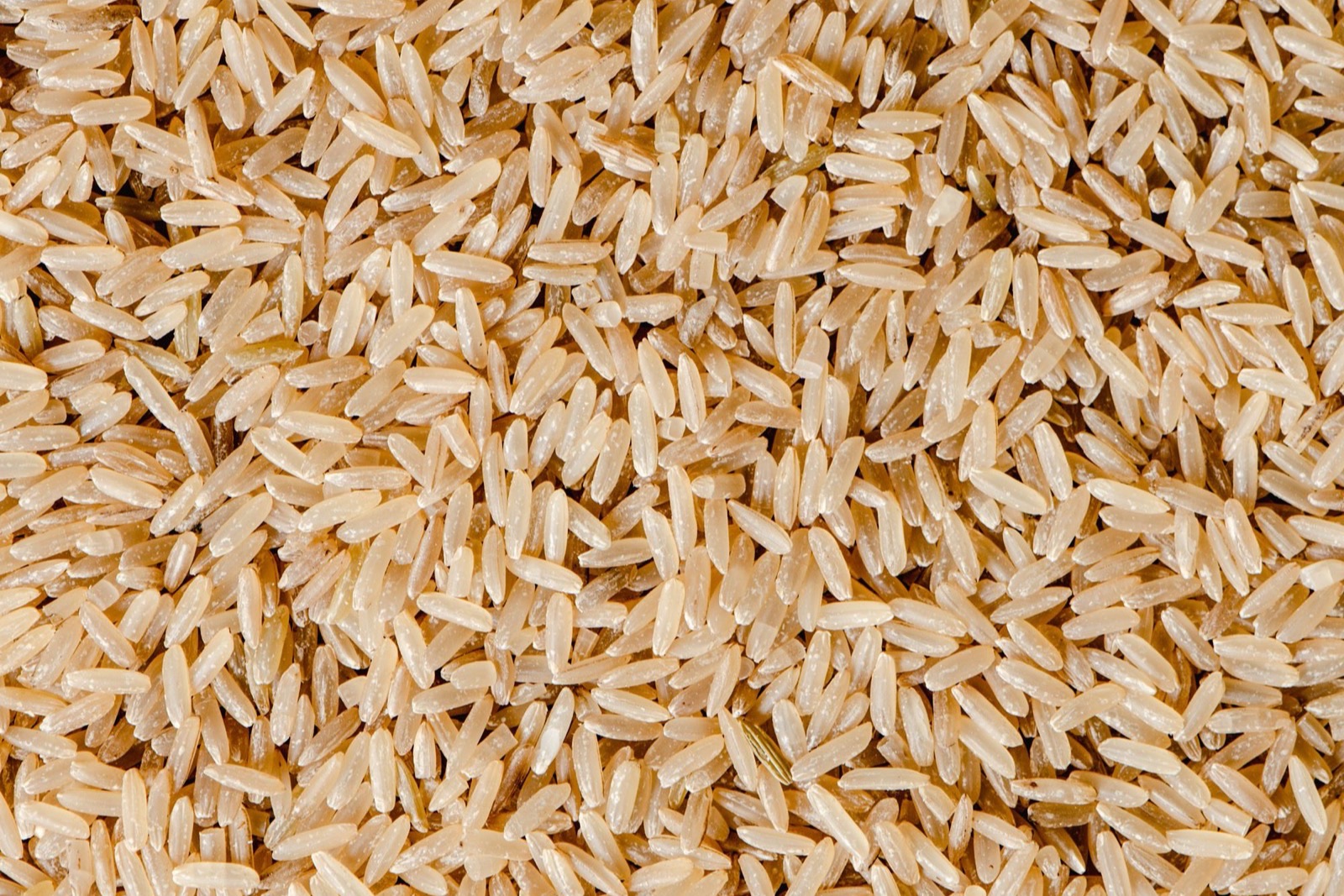
Saccharomyces/Rice Bran Ferment (fermented rice bran) is the INCI name of the product obtained when yeast of the genus Saccharomyces is used to ferment rice bran. It is a mixture with no defined chemical formula. Commercial grades are usually diluted solutions: for example, the grade Butter-C currently stocks is a blend of Water, Butylene Glycol, 1,2-Hexanediol and Saccharomyces/Rice Bran Ferment. In a PubMed search (November 17, 2026), we found no human trial that used this ingredient on its own.
1. What is Saccharomyces/Rice Bran Ferment?
Under the INCI naming conventions of the Personal Care Products Council (March 2021 edition), fermentation products without a common name are named in this pattern: the microbial genus, a slash, the substrate, then the word “Ferment.” The conventions also state that products fermented by yeast are named after the genus “Saccharomyces.” When the product is further processed by extraction or filtration, the word “Extract” or “Filtrate” is added to the name. The name Saccharomyces/Rice Bran Ferment therefore tells you three things:
- Microorganism: yeast of the genus Saccharomyces. The name does not state the species or strain; this information must come from the supplier’s documentation.
- Substrate: rice bran, i.e., the outer layer of the rice grain. It is not polished white rice and not rice water.
- Processing: the name contains only the word “Ferment,” not “Filtrate” or “Extract.” The specific process (fermentation time, separation method, inactivation method) is not described in the name.
This ingredient should not be called a “probiotic” or “live microorganisms”: the INCI name only describes how the ingredient is made, while the microbiological status of each batch must be confirmed by the supplier’s certificate of analysis (COA).
“Rice” on a label can refer to several different ingredients. Data for one of them cannot be used in place of another:
| INCI name | What it is | How it differs from fermented rice bran |
|---|---|---|
| Saccharomyces/Rice Bran Ferment | Rice bran fermented by Saccharomyces yeast | — |
| Saccharomyces/Rice Ferment Filtrate | Filtrate of rice fermented by Saccharomyces yeast | The substrate is rice, not bran; includes a filtration step |
| Oryza Sativa (Rice) Bran Extract | Extract of rice bran | Not fermented |
| Oryza Sativa (Rice) Bran Oil (in Vietnamese) | Fatty oil pressed from rice bran | An oil, not fermented; oil-soluble |
| Galactomyces Ferment Filtrate (in Vietnamese) | Filtrate of a ferment produced by fungi of the genus Galactomyces | Different microbial genus, different substrate |
2. What does fermentation change in rice bran?
Data on composition come from food and laboratory studies, not from commercial cosmetic ingredients:
- Baker’s yeast (Saccharomyces cerevisiae): Fahmy et al. (2022) subjected heat-stabilized Egyptian rice bran to solid-state fermentation with 3% yeast for 48 hours at 37 °C, then extracted it with 50% methanol. The ferulic acid content of the extract was 0.697 mg/g in the fermented sample and 0.318 mg/g in the unfermented control. The authors tentatively identified 21 compounds, mainly phenolic acids and flavonoids. Antioxidant activity was measured in vitro (DPPH, FRAP).
- Saccharomyces boulardii: Ryan et al. (2011) showed that rice bran fermented by S. boulardii had a metabolite profile different from that of unfermented rice bran, and that the extent of change differed among three rice varieties. Bioactivity was tested on lymphocytes, not on skin.
Composition depends on the yeast strain, the rice variety and the process; a laboratory methanol extract is also different from a cosmetic ingredient solution. Therefore, the figures above do not indicate the ferulic acid content or the activity of a commercial ingredient. The INCI name does not specify any marker compound.
3. Evidence on skin: still very limited
The closest studies all used a different microorganism or a different substrate, or were not conducted in humans:
| Study | Preparation and model | Results according to the abstract or full text | Why it is not a basis for claims |
|---|---|---|---|
| Chung et al., 2009 | Rice bran extract co-fermented with Lactobacillus rhamnosus and Saccharomyces cerevisiae; B16F1 mouse melanoma cells (in vitro) | Reduced α-MSH-stimulated melanin synthesis and reduced MITF expression; did not directly inhibit the tyrosinase enzyme; co-fermentation reduced the extract’s toxicity to these cells | Lactic acid bacteria also involved; mouse cells only; first author affiliated with a company research center |
| Yan et al., 2025 | Rice bran extract fermented for 14 days with the mold Aspergillus oryzae; cultured MSF cells, and a cream applied to the backs of mice for 14 and 28 days, compared with a cream base without the extract | Increased collagen expression in cells; collagen in mouse skin 10% higher than in controls; mouse skin moisture and elasticity coefficient increased by more than 10% | Different microorganism; mouse data; ingredient supplied by a company that employs one or more of the authors |
| Han et al., 2025 | Saccharomyces/Rice Ferment Filtrate loaded into a hyaluronic acid nanogel and delivered into the skin by iontophoresis; glycated human skin tissue outside the body (ex vivo) | Reduced the formation of advanced glycation end products (AGEs) and reduced tissue stiffness | Different INCI (rice, not bran); results belong to the whole nanogel-plus-iontophoresis system; ingredient supplied by a company that employs one or more of the authors |
There are also studies in which mice were given rice bran fermented by yeast or by other microorganisms by mouth. These are oral data and do not carry over to products applied to the skin.
Conclusion: limited evidence. There are no human trials and no skin-application data for this exact INCI. Benefits such as brightening, antioxidant effects on skin or increased collagen have not been demonstrated for Saccharomyces/Rice Bran Ferment.
4. Typical concentrations and product types
No use level has been established from independent sources. We found no Cosmetic Ingredient Review (CIR) report on this INCI, so there are no survey data on use concentrations. Use levels follow the supplier’s technical data sheet (TDS).
When the ingredient is a diluted solution, the percentage in the formula is the percentage of the whole blend, not of the fermented portion. The accompanying water, butylene glycol and 1,2-hexanediol must also be added to the total amount of each of these substances in the formula. The ingredient is water-soluble and suits toners, essences, serums and moisturizers, for example our fermented rice bran toner line.
5. Formulation and combinations
- Per the TDS: addition temperature, pH range, storage conditions and incompatibilities; the sources we read do not give these parameters.
- Accompanying butylene glycol: see our article on butylene glycol (in Vietnamese) for its role and safety.
- Accompanying 1,2-hexanediol: it is not listed in Annex VI (list of preservatives) of the ASEAN Cosmetic Directive, so it does not replace the preservative system. Water-containing finished products still need a preservative system and preservative efficacy (challenge) testing according to ISO 11930.
- For even skin tone claims: you need an active ingredient with its own data, for example niacinamide (in Vietnamese), and evaluation on the finished product. Fermented rice bran is not a basis for this claim.
6. Safety and who should take care
We found no safety assessment of Saccharomyces/Rice Bran Ferment by CIR or by the EU Scientific Committee on Consumer Safety (SCCS). The 2006 CIR report on rice-derived ingredients covers rice bran oil, rice bran extract, hydrolyzed rice bran extract, rice starch and several other ingredients, but no fermented ingredients. The report notes isolated cases of allergy to raw rice, while rice in general is considered non-allergenic; these data do not automatically apply to fermented products.
Our PubMed searches (November 17, 2026) found no case reports of contact allergy to fermented rice bran applied to the skin. Absence of data does not mean absence of risk. The butylene glycol and 1,2-hexanediol in the blend have their own safety profiles. People who have reacted to cosmetics before should read the full ingredient list and test the product on a small area of skin. Pregnant or breastfeeding women: data are insufficient; consult a doctor.
7. Perspective for brand owners
- ASEAN regulations: not listed in Annexes II, III and VI (version 2026-1, June 22, 2026) or Annex VII (version 2025-2, December 12, 2025). We searched for the terms “rice,” “Oryza,” “bran,” “Saccharomyces,” “yeast” and “ferment,” as well as “butylene glycol” and “hexanediol” from the blend. The finished product must still meet the general limits for microorganisms and heavy metals.
- Ingredient documentation: require the yeast species and strain, the source and rice variety of the bran, the fermentation and post-fermentation processing, the proportion of the fermented portion in the blend, and a microbiology and heavy-metal COA for each batch.
- Labeling: list all four INCI names of the blend.
- Proportionate claims: “contains fermented rice bran,” and “moisturizing” once evaluated on the finished product. Avoid: “probiotic,” “live beneficial bacteria,” “whitening,” “boosts collagen,” “anti-aging.”
- Ingredient story: a 2022 review notes that rice has been used for beauty purposes over many centuries (Zamil et al., 2022). That is a cultural story, not evidence of efficacy. Only say “Vietnamese rice” when the supplier’s documentation confirms the origin of the bran.
Butter-C can use fermented rice bran in contract manufacturing of toners, essences and moisturizers, with stability testing and preservative efficacy (challenge) testing for each formula.
Frequently asked questions
Is fermented rice bran the same as rice water?
No. Rice water is the water used to rinse rice grains. Saccharomyces/Rice Bran Ferment is a product of fermenting rice bran with yeast, and it has its own INCI name.
Does fermented rice bran whiten the skin?
There is no evidence in humans. The closest data come from an experiment on mouse melanoma cells using rice bran co-fermented with lactic acid bacteria (Chung et al., 2009). This result is not enough to support a skin-brightening claim.
Does this ingredient contain live beneficial bacteria?
The INCI name does not tell you this. It should not be promoted as “probiotic” or “live beneficial bacteria”; the microbiological status of each batch follows the supplier’s COA.
Can pregnant women use it?
Data are insufficient; consult a doctor before use.
References
- Personal Care Products Council. INCI Nomenclature Conventions (March 2021 edition; conventions 27d–e and 28, Biotech Materials and Ferments). https://www.personalcarecouncil.org/wp-content/uploads/2021/03/Conventions2021_v2.pdf
- Fahmy SA et al. Enhanced Antioxidant, Antiviral, and Anticancer Activities of the Extract of Fermented Egyptian Rice Bran Complexed with Hydroxypropyl-β-cyclodextrin. ACS Omega. 2022. PMID 35721952
- Ryan EP et al. Rice bran fermented with saccharomyces boulardii generates novel metabolite profiles with bioactivity. J Agric Food Chem. 2011. PMID 21306106
- Chung SY et al. Fermented rice bran downregulates MITF expression and leads to inhibition of alpha-MSH-induced melanogenesis in B16F1 melanoma. Biosci Biotechnol Biochem. 2009. PMID 19661697
- Yan X et al. Fermented rice bran extract delays skin aging by increasing the synthesis of collagen and elastin. Front Pharmacol. 2025. PMID 41333021
- Han Y et al. Iontophoretic Delivery of Hyaluronic Acid Nanogel-Loaded Fermented Rice Extract Mitigates Skin Glycation. Int J Nanomedicine. 2025. PMID 40989892
- Cosmetic Ingredient Review. Amended final report on the safety assessment of Oryza Sativa (rice) Bran Oil, Oryza Sativa (rice) Germ Oil, Rice Bran Acid, … Hydrolyzed Rice Extract, and Hydrolyzed Rice Protein. Int J Toxicol. 2006. PMID 17090480
- Zamil DH et al. Dermatological uses of rice products: Trend or true? J Cosmet Dermatol. 2022. PMID 35587098