 BUTTER-C
Coco-Caprylate/Caprate in cosmetics: coconut ester, CIR, safety
Coco-caprylate/caprate is often presented as a “coconut-based”, light, dry-feeling ester that can replace silicone. The 2015 CIR report confirmed that it is safe in the present practices of use when formulated to be nonirritating, but the descriptions of skin feel and “silicone replacement” mostly lack measurements made specifically on this ingredient.
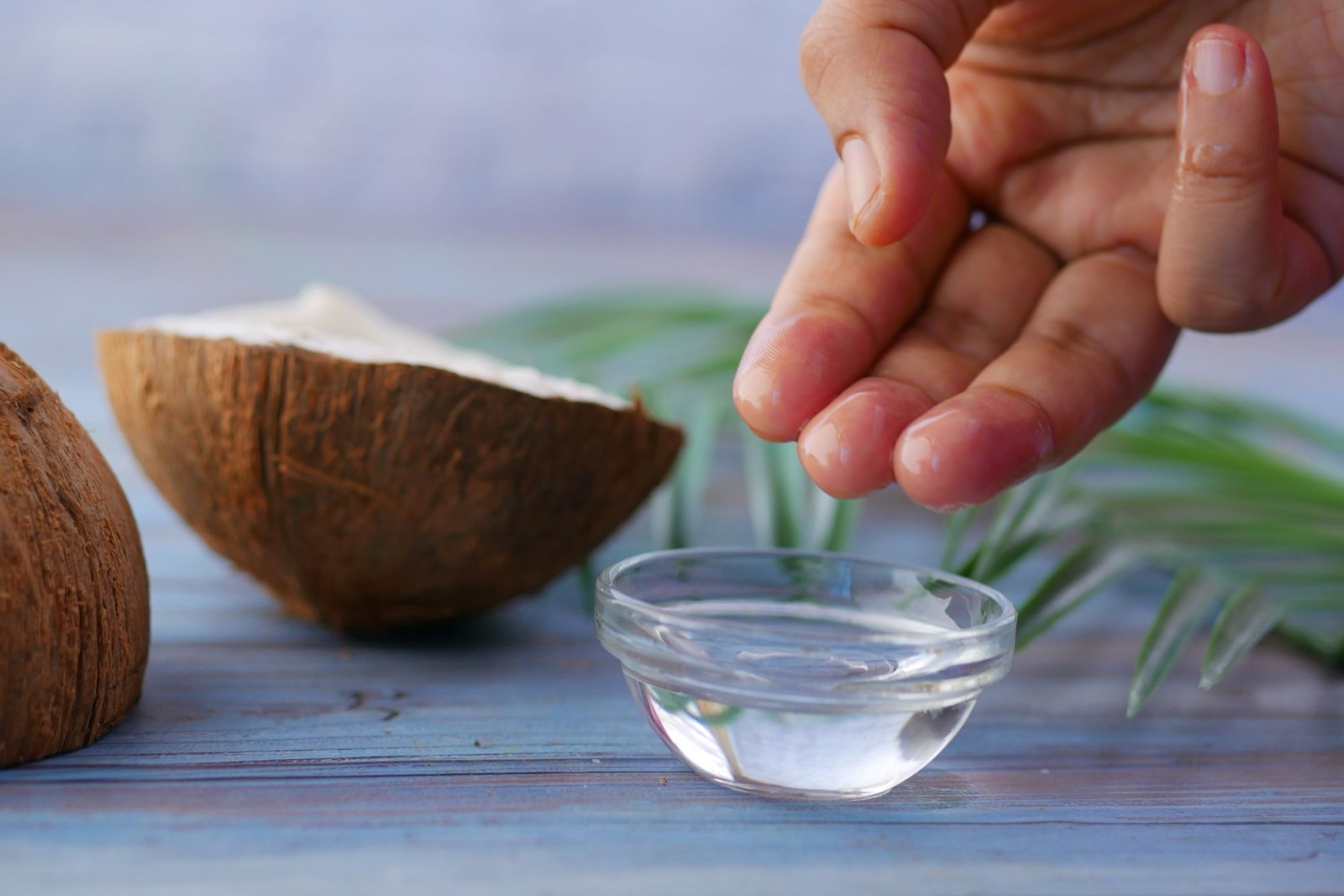
Coco-caprylate/caprate (INCI: Coco-Caprylate/Caprate) is a mixture of esters of coconut-derived fatty alcohols with caprylic acid (8 carbons) and capric acid (10 carbons). It is a liquid emollient; according to the use data reported in the 2015 CIR report, it is found in leave-on skin products, rinse-off products, eye-area products and hair products.
1. What is coco-caprylate/caprate?
The 2015 CIR report on 237 alkyl esters (Fiume et al.) defines Coco-Caprylate/Caprate as the mixture of esters obtained by reacting coconut-derived fatty alcohols (coconut alcohol) with a mixture of caprylic acid and capric acid; its function is listed as skin-conditioning agent – emollient. PubChem lists it under the chemical name “Fatty acids, C8-10, C12-18-alkyl esters”, CAS No. 95912-86-0, EC No. 306-082-7. Because it is a mixture, it has no single defined molecular formula.
Several ingredients have similar names but are different substances:
| INCI | Composition | Note |
|---|---|---|
| Coco-Caprylate/Caprate | Esters of coconut-derived fatty alcohols with C8 and C10 acids | The subject of this article |
| Coco-Caprylate | Esters of coconut-derived fatty alcohols with caprylic acid (C8) | A separate INCI; also covered by the 2015 CIR report |
| Caprylic/Capric Triglyceride | Triester of glycerin with C8 and C10 acids | Commonly called MCT oil (in Vietnamese) |
| Cocos Nucifera Oil | Oil pressed from coconut meat | See the article on coconut oil (in Vietnamese); data are not interchangeable |
“Coconut-derived”, “natural”: under the INCI definition, the alcohol portion comes from coconut; the definition does not say where the C8 and C10 acids come from, so ask the supplier. CIR notes that most alkyl esters are produced by (synthetic) esterification, and that some from natural sources may be produced by transesterification. This is therefore a substance made by a chemical reaction. A “natural origin” claim on the label must be based on the supplier’s documentation and the certification standard the brand chooses.
“Biodegradable”: we have not been able to read a published test report for this ingredient (November 2026); putting this claim on a label requires a test report from the supplier.
2. Role in formulations
Emollience, less greasy feel. The description “light, quick dry-down, low shine” comes mainly from suppliers and formulation practice; on PubMed (November 2026) we found no spreading, viscosity or sensory data measured specifically on this ingredient. The general basis is the study by Douguet et al. (2017) of 53 emollients (esters, silicones, vegetable oils, mineral oils) on synthetic skin: viscosity strongly influenced spreading in every class; for low-viscosity esters, structure (one or two ester groups, saturated or unsaturated, linear or branched) must also be taken into account. The abstract does not state whether coco-caprylate/caprate was among the 53 emollients; two co-authors are from an ingredient manufacturer. The feel of each ingredient grade needs to be tested in the finished product.
“Silicone replacement”. The review by Goussard et al. (2022) on alternatives to volatile silicones concluded that no carbon-based emollient, used alone, can yet mimic the dry, non-tacky feel of silicone oils; the authors propose combining alkanes with esters to improve the sensory profile and the ability to dissolve polar ingredients (UV filters, antioxidants, fragrances). So when coco-caprylate/caprate is used to reduce silicone (see dimethicone (in Vietnamese)), it should be treated as a partial replacement combined with other ingredients, not a “one-for-one” swap; the ratio is set by sensory testing (formulation practice).
Solvent for UV filters. Sohn et al. (2020; authors from an ingredient manufacturer) measured the spectra of four UV filters in six emollient oils, including coco-caprylate — a closely related INCI, but not coco-caprylate/caprate. The polarity of the oil shifted the absorption peak by 2–3 nm and changed the specific absorbance by 4–20%; the simulated SPF stayed almost unchanged, while UVA protection decreased in less polar oils. This result does not automatically apply to coco-caprylate/caprate.
3. Evidence: mainly formulation data
Coco-caprylate/caprate is an excipient. We found no human study measuring the emollient or moisturizing effect of this ingredient on its own — limited evidence. Studies that mention the ingredient by name:
| Study | Model | Relevant results |
|---|---|---|
| Lavarde et al., 2026 | Design of experiments for a cream emulsion | 1% of a blend of plant-derived alkanes and coco-caprylate/caprate was selected as the “sensory agent” to reach the target sensory quality. The result belongs to the blend and the whole formula; two authors are from an ingredient company |
| Gavinet et al., 2024 | In vitro permeation of diclofenac (a drug) through human skin (Franz cells, 3 skin donors × 3 replicates per test) | Replacing 16% isopropyl myristate with 8% coco-caprylate/caprate (alone or together with 8% mineral oil) lowered the amount of drug reaching the receptor fluid, but not statistically significantly; in the gel-in-oil form, 16% coco-caprylate/caprate gave a permeation profile close to the reference drug product, and 20% gave a lower level. The authors are employees of the company that funded the study |
| Balasubramaniam et al., 2020 | Bacterial culture and mouse skin | 2% coco-caprylate/caprate helped the skin bacterium Staphylococcus epidermidis ferment and produce short-chain fatty acids; applying the ingredient together with the bacteria to mouse skin reduced UVB-induced damage, whereas applying the ingredient alone did not. Not evidence for cosmetics in humans |
4. Reported concentrations
Table 8 of the 2015 CIR report gives the number of formulations from the FDA Voluntary Cosmetic Registration Program (VCRP, 2013) and the maximum concentrations from a survey by the US Personal Care Products Council (2012). These are levels that have been used, not recommended levels:
| Product category | Number of formulations (2013) | Maximum reported concentration (2012) |
|---|---|---|
| Total | 261 | 0.5–62% |
| Leave-on products | 232 | 0.5–35% |
| Rinse-off products | 23 | 1–62% |
| Eye area | 43 | 0.7–35% |
| Possibly ingested | 8 | 0.5–9% |
| Possibly inhaled: spray (including sunscreen products, not specified whether spray) / powder | 14 / 2 | 2–6% / 4–16% |
| Hair (non-coloring) | 1 | 30% |
The CIR conclusion applies to the “practices of use and concentration” described in the report; higher use (for example above 35% in leave-on products) needs a separate safety assessment in the Product Information File.
5. How to use and combine
- Oil phase: combine with vegetable oils, esters or alkanes to adjust how heavy or light the formula feels (formulation practice).
- The base oil is not “neutral”: the type and proportion of emollient change the penetration of active ingredients (Gavinet 2024) and the spectra of UV filters (Sohn 2020, with a related ingredient). If you change the ester, retest.
- Penetration enhancement: CIR notes that some alkyl esters enhance the skin penetration of other ingredients and advises caution when combining them with ingredients whose safety is based on low dermal absorption, or when dermal absorption is a concern.
- Acne: in the sources we checked, we found no comedogenicity data (rabbit ear or human) for coco-caprylate/caprate. Do not claim “non-comedogenic” without testing the finished product (see the article on isopropyl myristate (in Vietnamese) on how to read rabbit-ear data).
6. Safety
CIR conclusion (2015): 237 alkyl esters, including coco-caprylate/caprate, “are safe in cosmetic formulations in the present practices of use and concentration when formulated to be nonirritating”. The Panel relied on similarities in structure, properties and function to extrapolate data from the esters with data to the whole group. In the report, we found no irritation or sensitization test performed specifically on coco-caprylate/caprate. At the group level, CIR reports that irritation results varied between esters, that no sensitization reactions were seen in human studies, and that dermal penetration of alkyl esters is expected to be low. The alcohol component (coconut alcohol) has been concluded by CIR to be safe as used (2011).
Impurities: for esters made from plant-derived starting materials, CIR reminds the cosmetics industry to control pesticide residues and heavy metals.
Allergy: searching PubMed (November 2026), we found no case reports of contact allergy to coco-caprylate/caprate. An absence of data does not mean “does not cause allergy”. People who have previously been allergic to coconut-derived products should consult a dermatologist. Pregnant or breastfeeding women: data are insufficient; consult a doctor.
7. Notes for brand owners
| Ingredient | ASEAN Cosmetic Directive annexes (II, III, VI: version 2026-1 of June 22, 2026; VII: version 2025-2) |
|---|---|
| Coco-Caprylate/Caprate (CAS 95912-86-0; EC 306-082-7) | Not listed in Annexes II, III, VI or VII (searched by INCI name, “caprylate”, “caprate”, “coco”, CAS and EC) |
- Quality: require a certificate of analysis (COA) for each batch against the specifications the supplier publishes; ask about the source of the C8 and C10 acids if you need a vegan or “plant-based” story.
- Appropriate claims: “softens the skin”, “light, less greasy texture” (once sensory testing on the finished product has been done). Avoid: “non-comedogenic”, “non-allergenic”, “biodegradable”, “fully replaces silicone” without data for the product itself.
Butter-C uses coco-caprylate/caprate in some contract-manufactured products, such as hair oil and skin oils, to reduce the oily feel; the ratio is set by sensory and stability testing on the finished product; formulas above the levels reported to CIR need a separate safety assessment.
Frequently asked questions
Is coco-caprylate/caprate coconut oil?
No. Coconut oil (Cocos Nucifera Oil) is a pressed oil consisting mainly of triglycerides. Coco-caprylate/caprate is an ester made by reacting coconut-derived fatty alcohols with caprylic and capric acids; coconut oil data do not apply to it.
Is coco-caprylate/caprate the same as MCT oil?
No. MCT oil (Caprylic/Capric Triglyceride) is an ester of glycerin; coco-caprylate/caprate is an ester of fatty alcohols (PubChem lists 12–18-carbon chains).
Can coco-caprylate/caprate fully replace silicone?
According to a 2022 review, no carbon-based emollient, used alone, yet gives a feel like silicone oils. Esters usually have to be combined with alkanes and the sensory profile retested.
Is it safe?
CIR (2015) concluded that it is safe in the practices of use and concentration described, when formulated to be nonirritating. The conclusion is based on data for the ester group as a whole; there are no tests specific to this ingredient.
Can pregnant women use it?
There are not enough human data; consult a doctor.
References
- Fiume MM et al. Safety Assessment of Alkyl Esters as Used in Cosmetics. Int J Toxicol. 2015. PMID 26362120 · Full text on the CIR portal
- PubChem. Fatty acids, C8-10, C12-18-alkyl esters (Coco-caprylate/caprate), CAS 95912-86-0. https://pubchem.ncbi.nlm.nih.gov/substance/135312823
- Douguet M et al. Spreading properties of cosmetic emollients: Use of synthetic skin surface to elucidate structural effect. Colloids Surf B Biointerfaces. 2017. PMID 28371727
- Goussard V et al. Bio-based alternatives to volatile silicones: Relationships between chemical structure, physicochemical properties and functional performances. Adv Colloid Interface Sci. 2022. PMID 35512559
- Sohn M et al. Effect of emollients on UV filter absorbance and sunscreen efficiency. J Photochem Photobiol B. 2020. PMID 32065958
- Lavarde M et al. Minimalist, bioinspired and sensorial emulsion based on a Ca(2+) double cone vector system using Design of Experiment (DoE). Int J Cosmet Sci. 2026. PMID 41235541
- Gavinet B et al. Alternatives to Conventional Topical Dosage Forms for Targeted Skin Penetration of Diclofenac Sodium. Int J Mol Sci. 2024. PMID 39000538
- Balasubramaniam A et al. Repurposing INCI-registered compounds as skin prebiotics for probiotic Staphylococcus epidermidis against UV-B. Sci Rep. 2020. PMID 33299009