 BUTTER-C
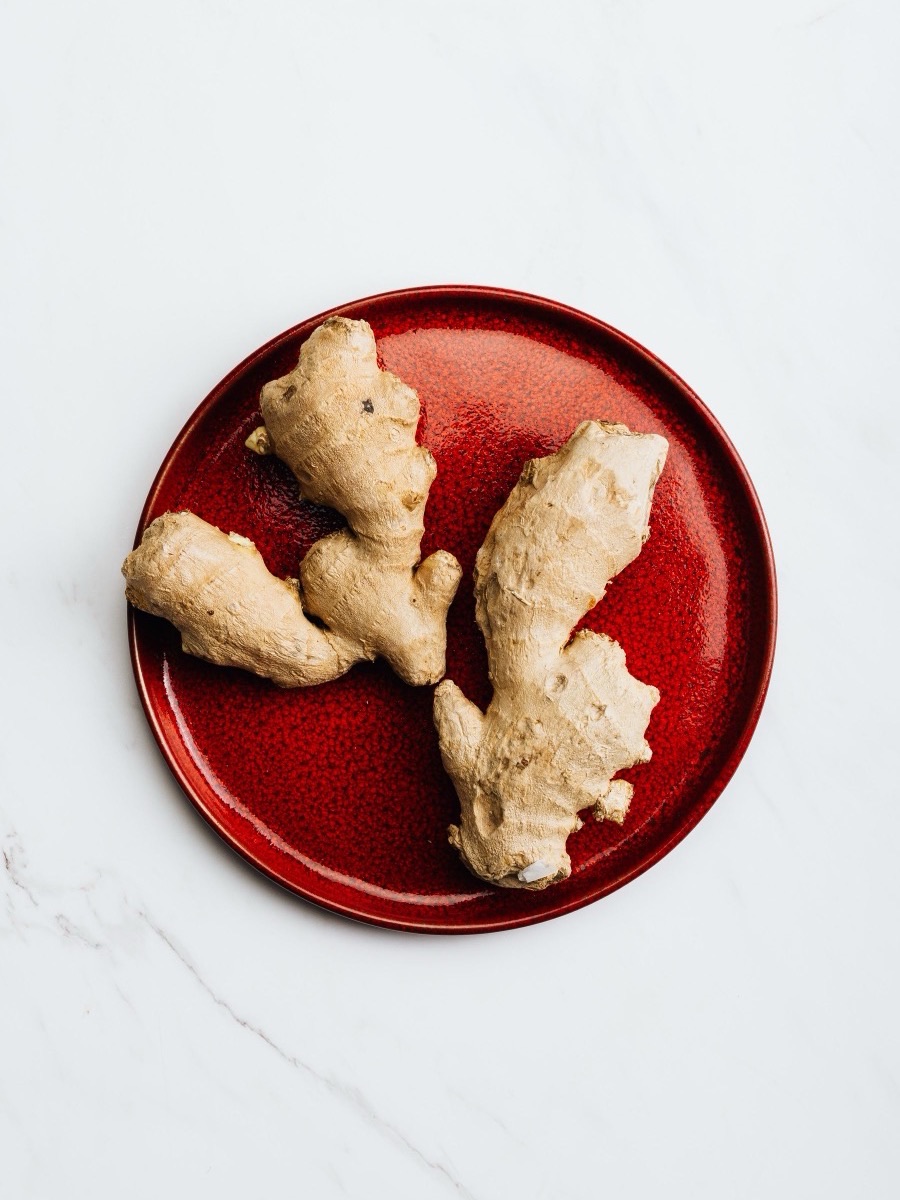
Signature ingredients
Ginger shampoo OEM/ODM manufacturing
Ginger Shampoo · OEM/ODM
Ginger is found in the kitchen and in the hair-care tips handed down in many families; in East Asia, ginger has traditionally been used in the hope of keeping hair. That is a cultural story, not evidence: no human trial has shown that topically applied ginger extract makes hair grow, and when Miao and colleagues (2013) tested 6-gingerol, the main pungent compound in ginger, on cultured human hair follicles and in mice, it actually slowed hair shaft growth (a pure compound, not a shampoo). What a ginger shampoo can do is clean the hair and scalp through its cleansing system, carry a warm ginger scent and possibly give a gentle warming feel, because gingerols act on the heat-sensing receptor TRPV1; that feel has to be confirmed by sensory testing on the finished product. This page differs from the herbal shampoo page because ginger is the named ingredient: the right ingredient form has to be chosen (extract or essential oil, two different INCI names), the dose has to be expressed as actual extract within the range covered by the CIR safety assessment, and claims have to stay at cosmetic level. Butter-C offers turnkey OEM/ODM manufacturing, from formula development and testing to labeled finished goods and the notification dossier.
Formula base
The cleansing system does the work; ginger brings scent, feel and story
A ginger shampoo cleans through its cleansing system; ginger extract at low levels cannot replace that. What is specific to this line is choosing the right ginger ingredient and reading its technical data correctly.
Ginger extract: read the preparation correctly
INCI Zingiber Officinale Root Extract: an extract of ginger root made with water, glycerin–water, propylene glycol–water or sunflower oil; its composition varies clearly with the solvent. Commercial grades are usually pre-diluted (CIR describes one at about 1.5% extract in propylene glycol–water and another at 1–5% in sunflower oil), so the percentage in the formula is the percentage of the preparation, and the label lists its solvents and preservatives according to the certificate of analysis (COA).
The in-stock ginger material: clarify its form
The ginger item in Butter-C's current ingredient list is recorded as dried ginger rhizome (crude herb or crude herbal concentrate), with the INCI "Zingiber Officinale Root", which CIR defines as the root itself, not an extract. Dried herb needs an extraction step; a concentrate or extract needs a COA (solvent, extract ratio, microbiology, heavy metals); whether a supplier's extract or an in-house process is used depends on equipment and order size and is agreed per project. The label INCI follows the form actually used.
Ginger essential oil is a different INCI
Zingiber Officinale Root Oil is distilled from dried rhizomes and is mostly sesquiterpenes (one sample had 29.5% zingiberene and 18.4% sesquiphellandrene, per CIR), giving a stronger ginger smell. The industry survey in the CIR report lists a maximum reported use of 0.004% for ginger oil in hair and rinse-off products; it is used at fragrance level under the supplier's IFRA certificate, and anything above the surveyed level needs its own safety assessment. The oil does not dissolve in water, so it needs a solubilizer.
Cleansing system
Sodium laureth sulfate with cocamidopropyl betaine for a mass-market line with rich foam; sodium lauroyl sarcosinate, disodium cocoyl glutamate and decyl glucoside for a sulfate-free line. These are synthesized from plant-derived raw materials, so "plant-derived" is used rather than "natural".
Conditioning and clarity
Polyquaternium-10, guar hydroxypropyltrimonium chloride and panthenol reduce tangling and ease combing. Ginger oil and fragrance are premixed with PEG-40 hydrogenated castor oil before going into the water phase. Herbal extracts can turn hazy with cationic polymers, so the order of addition and levels are set on the sample.
Key technical points
Warming feel, contact time, dose and stability
These four points are where a ginger shampoo differs from an ordinary herbal shampoo; each one is settled by testing on the sample.
The warming feel is sensory and must be tested
In cultured sensory neurons, 6- and 8-gingerol activate the TRPV1 receptor in the same way as capsaicin from chili (Dedov et al., 2002). In 17 healthy people taking footbaths, warm water with ginger raised perceived warmth, but skin temperature rose in every group, including plain warm water (Vagedes et al., 2018): ginger increases the sensation of warmth and does not show better blood flow. There are no data on the warming feel of ginger extract at shampoo levels, so the warmth level is set with a sensory scale on the scalp at 1, 5 and 10 minutes.
Short contact time
Shampoo stays on the scalp for a few minutes and is rinsed off; in safety assessment, the share of a rinse-off product left after rinsing is counted with a retention factor of 0.01 (SCCS). Most of the extract goes down the drain, so ginger in a shampoo is chosen for scent, feel and story, not for an expected effect on hair follicles.
Express the dose as actual extract
The 2020 US industry survey in the CIR report lists maximum reported use of ginger extract at 0.018% in non-coloring hair products and 0.22% in rinse-off products overall, calculated as extract and not a recommended level. Example: 1% of a preparation containing 1.5% extract gives about 0.015% extract in the finished product. Going beyond the surveyed range needs a dedicated safety assessment in the PIF; solvents and potential sensitizers (citral, citronellol) from the extract and the essential oil are added up, as CIR points out for plant-derived ingredients.
Color, clarity and scent over time
CIR describes one extract preparation in propylene glycol–water as a translucent, yellow-orange to orange liquid with slight sediment, so a clear shampoo needs clarity and sediment checks after aging. Disodium EDTA binds metal ions and a dark bottle limits darkening; the ginger smell of the essential oil evaporates and changes with oxidation, so it is added in the cool-down phase and the scent is checked at each stability point (formulation experience).
Three formulation directions
Three ginger shampoo lines
Mass-market ginger shampoo
Sulfate–betaine system, ginger extract, cationic polymer, ginger fragrance; rich foam, good price, easy to sell across channels. Viscosity is adjusted with salt at the end because the extract and fragrance shift the viscosity curve.
Sulfate-free ginger shampoo
Sarcosinate or glutamate with glucoside and betaine, moderate foam; positioned as gentle for sensitive scalps, with mildness tested on the finished product. Amino acid systems are sensitive to low pH and hard to thicken with salt; the preservative is chosen for the system's pH range.
Strong-scent ginger shampoo
Ginger extract with a small amount of ginger essential oil for a clear scent, suited to men's lines and oily scalps. The oil stays at fragrance level under IFRA and within the range CIR surveyed, predissolved with a solubilizer; no other warming agent acting on TRPV1 (vanillyl butyl ether, chili extract) is added, because burning sensations can add up.
Packaging is planned with the formula
Opaque or dark bottles protect the extract's color; 500 ml–1 liter pump bottles for families and refill pouches for repeat purchase. Tight caps limit loss of essential oil scent.
Parameters we monitor
What the R&D lab measures on every sample
Below is the set of parameters Butter-C tracks during formula development and scale-up. Specific limits are agreed with you on the approved sample and then written into the product's in-house specification.
- Ginger raw material certificate
- Ingredient form, solvent, extract ratio, carried-over preservatives, microbiology, heavy metals; for the essential oil, fragrance allergen content from the supplier's data sheet, lot by lot.
- pH
- Measured at 25°C; kept in a range that is mild for the scalp and suits the preservative system.
- Viscosity
- Rotational viscometer at 25°C; adjusted after the extract, essential oil and fragrance are in.
- Color, clarity, sediment
- Compared with the reference sample at room temperature, 40°C, cold and under light; checked for darkening, haze and settling.
- Warming feel and scent
- Sensory scale on the scalp at 1, 5 and 10 minutes, recording stinging or burning; ginger scent tracked across stability points.
- Foaming
- Foam height and stability, also assessed with oil on the hair.
- Microbiology and challenge test
- Tested at a GLP / ISO 17025-accredited laboratory; preservative efficacy (challenge) test to ISO 11930, since plant extracts are a microbial source that needs incoming checks.
- Fragrance allergens
- Annex III of the ASEAN Cosmetic Directive leaves entries 67–92 blank, so there is no list of fragrance allergens to be named separately; goods exported to the EU name these substances above 0.01% in rinse-off products, counting what comes from the essential oil and extract.
- Packaging compatibility
- Bottle staining, pump force, leakage, scent loss through the cap.
Claims
Claims for a shampoo containing ginger extract
Evidence for ginger extract on its own on human hair and scalp is limited: the human studies found are footbaths with ginger powder or multi-ingredient products in skin- or hair-disease settings, and the hair-follicle data on 6-gingerol run against hair-growth marketing. Appendix 03-MP (Circular 06/2011/TT-BYT) does not accept "prevents hair loss", "stimulates hair growth", "thickens the hair shaft", "restores hair cells/follicles" or "permanently removes dandruff". Butter-C reviews the wording on the label and in marketing materials when preparing the notification dossier.
Cleanses hair and scalp; "gentle" once irritation testing on the finished product supports it
Instead of: claims about effects on bacteria or fungi on the scalp.
Warm ginger scent; gives the scalp a pleasant warming feel (once sensory testing confirms it)
Instead of: "boosts blood flow to nourish hair follicles", "warms the body", "relieves pain".
Helps reduce breakage from combing, when breakage testing on the finished product supports it, thanks to the formula's conditioners
Instead of: prevents hair loss, stimulates hair growth, new hair growth, thickens hair. Heavy, prolonged or patchy hair loss needs a dermatologist.
Contains ginger extract; folk use of ginger in hair care is told as tradition
Instead of: using folk remedies as the basis for a claim about hair loss; citing studies on pure compounds, oral supplements or multi-ingredient shampoos in patients as evidence for a ginger shampoo.
No dandruff claims when ginger is the only feature
Instead of: "reduces dandruff", "dandruff-free"; ginger is not an anti-dandruff active, and an anti-dandruff shampoo needs an active with data and its own ASEAN limits.
Label reminders
Avoid contact with eyes, rinse with water if it happens; do not use on a scratched or freshly shaved scalp; stop if burning persists, or if redness or itching occurs; people with a known ginger allergy should not use it; pregnant or breastfeeding women should ask a doctor first. These are practical suggestions; the label text is agreed with you.
Manufacturing specifications
Available capabilities
- Texture
- Clear or pearly shampoo with the pale yellow tone of the extract; with or without sulfate.
- Ginger raw material
- Ginger extract with a COA; the dried ginger herb in the ingredient list is used only after a defined extraction step or as a concentrate with a COA, depending on equipment and order size, to be agreed. Ginger essential oil at fragrance level.
- Pack formats
- Pump bottle, flip-top bottle, refill pouch. Volume agreed when choosing packaging.
- Minimum order quantity
- Agreed per order and per fragrance.
- Testing
- Tested at a GLP / ISO 17025-accredited laboratory, with a certificate of analysis delivered with every batch.
- Dossier
- Product Information File (PIF) and cosmetic product notification dossier prepared by Butter-C, with the ginger raw material COA stating solvent and extract ratio.
- Packaging
- Label design including an avoid-eyes reminder; printing and packing run in parallel with formula work.
Suggested product concept
Sulfate-free ginger shampoo for oily scalps
A concept to help you picture the product, not a ready-made product for sale. The actual formula is built around your brand's positioning and price range.
Sarcosinate–betaine–glucoside base
Removes excess oil from the scalp with moderate foam; mildness and after-wash feel tested on the finished product.
Ginger extract as the named ingredient
The preparation level is chosen so the actual extract stays within the range CIR surveyed for hair products; added in the cool-down phase with disodium EDTA.
Polyquaternium-10 and panthenol
Less tangling and easier combing after washing; order of addition set so it does not turn hazy with the extract.
500 ml amber pump bottle
Protects the extract's color; the label carries avoid-eyes and stop-if-burning-persists reminders.
Customization options
Options you can specify
Within the same product type, each brand targets a different customer group. Tell us your requirements in the areas below and our pharmacists will build the matching formula.
Ginger form
Ginger extract, ginger essential oil at fragrance level, or both; each form is a separate INCI on the label.
Cleansing base
With or without sulfate; rich foam or gentle.
Level of sensation
Clearly warm, gently warm or ginger scent only, set by sensory testing.
Hair group
Oily scalp, dry and frizzy hair, hair that breaks when combed, sensitive scalp.
Fragrance
Pure ginger, ginger–lemongrass, ginger–citrus, or a light ginger note on a neutral base.
Product set
Shampoo, conditioner and scalp serum in one ginger line; leave-on scalp products have different use levels and safety assessment from a shampoo.
Further reading
Related knowledge
Ginger extract (Zingiber officinale) in cosmetics
How the warming feel works, the facts about "hair growth", CIR concentrations, allergy and measured claims (in Vietnamese).
Herbal shampoo OEM/ODM manufacturing
The general page for shampoos with several herbs; this page focuses on ginger as the ingredient.
Hair loss and hair breakage
The hair cycle, what cosmetics can do, hair claims under Appendix 03-MP and when to see a doctor (in Vietnamese).
Vanillyl butyl ether: a warming agent
A warming agent acting on the same TRPV1 receptor as ginger, and why the two should not be stacked without testing (in Vietnamese).
Anti-dandruff shampoo OEM/ODM manufacturing
When a dandruff claim is needed: anti-dandruff actives and ASEAN limits.
How we work
From idea to finished batch
Eight steps and three milestones signed off by both sides: approved sample, notification number, finished batch. Step-by-step details (in Vietnamese) →
Get started
Tell us about the product you plan to launch
Send us your product direction and expected volume. Our team will get back to you during business hours (Vietnam time, GMT+7).
Head office: Huu Le village, Dai Thanh commune, Hanoi · Factory: Thanh Oai Industrial Cluster, Binh Minh commune, Hanoi, Vietnam
Hotline +84 967 176 511 · [email protected] · Privacy policy ← Full catalog