 BUTTER-C
Signature ingredients
Sweet orange oil body wash OEM/ODM manufacturing
Sweet Orange Oil Body Wash · Signature Ingredients · OEM/ODM
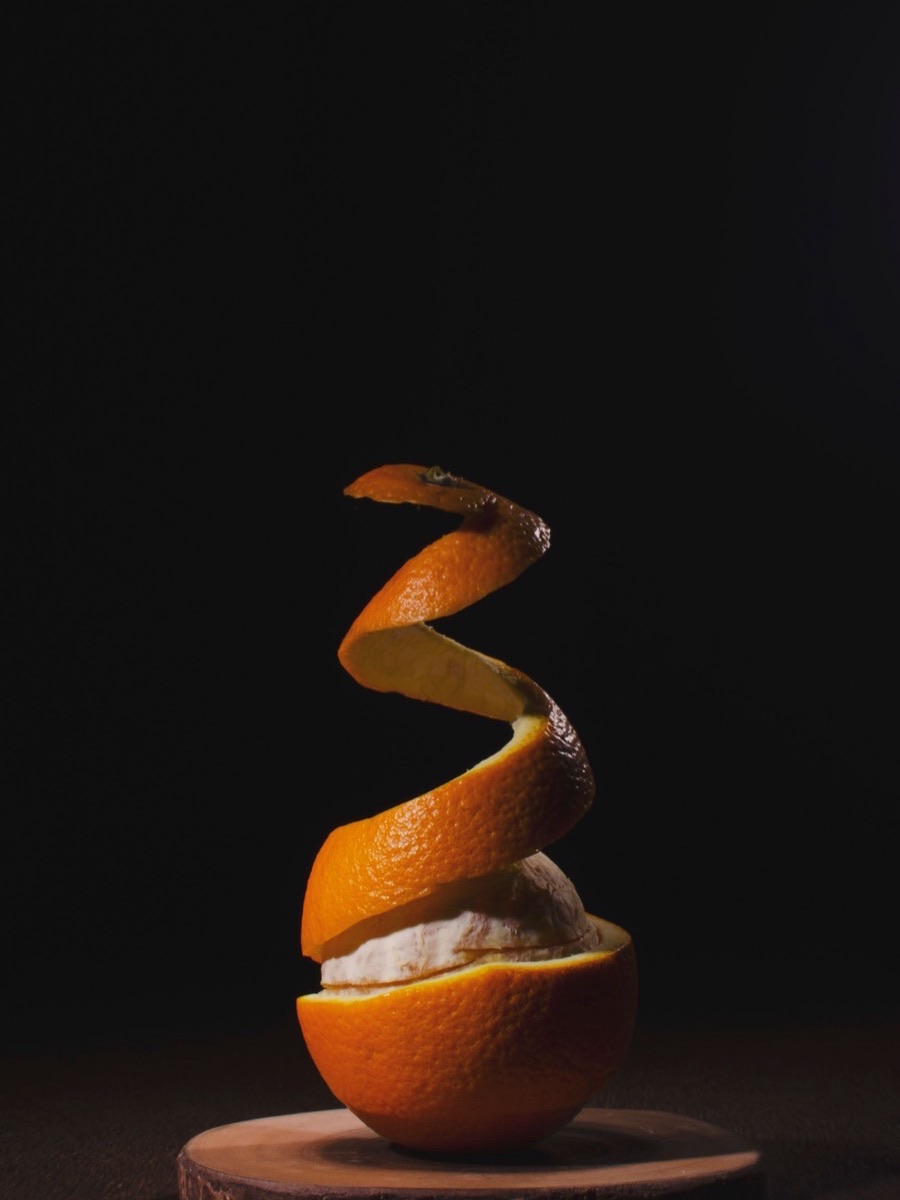
A fresh orange scent is a familiar choice for body washes, soaps and massage oils. The named ingredient is orange peel oil (INCI: Citrus Aurantium Dulcis Peel Oil), expressed from the peel of the sweet orange, Citrus sinensis. The INCI name and the scientific name do not match, and in the literature “Citrus aurantium” on its own usually means bitter orange — a different species — so the scientific name on the certificate of analysis decides the story. Its main component is limonene; on air exposure limonene oxidizes into hydroperoxides, contact allergens documented in patch-tested patients. Cold-pressed oil also contains furocoumarins, compounds that react with UVA light, though many times less than lemon oil. We have not found a controlled human trial of orange peel oil applied to the skin for a cosmetic benefit; the “orange scent reduces anxiety” data come from studies of ambient scent in dental waiting rooms, not evidence for a body wash. Butter-C’s sweet orange oil body wash therefore promises cleansing, fine lather and a fresh orange scent in the shower, with oil of the right species, a peroxide value and an antioxidant — not stress relief or brighter skin. Butter-C offers turnkey OEM/ODM manufacturing, from formula development and testing to labeled finished goods and the notification dossier.
Formula base
Cleansing system, orange peel oil and antioxidant
An orange oil body wash uses the same cleansing system as a standard body wash; what is specific is choosing true sweet orange oil, keeping limonene from oxidizing and solubilizing the oil into a water base.
Orange peel oil (Citrus Aurantium Dulcis Peel Oil)
The material in Butter-C’s current ingredient list is declared under this INCI. Under the Food Chemicals Codex specifications cited by CIR, the cold-pressed oil is deep yellow to orange with 1.2–2.5% aldehydes (as decyl aldehyde); the distilled oil is colorless to pale yellow with a lighter odor. CIR 2019 lists maximum reported levels in rinse-off products of 0.00002–29% (29% in a non-coloring hair conditioner) — market practice, not a recommendation; the level is set by scent intensity, the lot’s IFRA certificate, the safety assessment in the PIF and tolerance testing on the finished product.
Cleansing system
Sodium laureth sulfate with cocamidopropyl betaine for a high-lather, cost-effective gel; amino acid or glucoside systems for a sulfate-free line (mildness tested on the finished product; amino acid systems are sensitive to low pH) — as on the general body wash page.
Solubilizing the oil in a water base
Essential oil does not dissolve in water. In a body wash the surfactant system usually solubilizes a small amount; a clear gel may need a solubilizer such as PEG-40 hydrogenated castor oil or Polysorbate 20, premixed with the oil before adding. The ratio is chosen by clarity testing at cold, room and warm temperatures.
Antioxidant and moisture
The IFRA standard for limonene requires natural products rich in limonene to keep (hydro)peroxides low, with a peroxide value below 20 mmol/L, and gives adding 0.1% BHT or α-tocopherol as an example. In the formula: tocopherol premixed with the oil and disodium EDTA to bind metal ions; glycerin and panthenol for a soft after-rinse feel.
Key technical points
True sweet orange, unoxidized limonene, furocoumarins read correctly
These four points are where an orange oil body wash differs from a standard body wash; each is settled by a certificate of analysis or a test on the sample.
Sweet orange, not bitter orange
CIR 2019 defines the ingredient as the volatile oil expressed from the peel of Citrus sinensis, CAS 8008-57-9; Regulation (EU) 2023/1545, Annex III entry 351 accepts both names, “Citrus Aurantium Dulcis Peel Oil; Citrus Sinensis Peel Oil”. Bitter orange peel oil (Citrus Aurantium Amara Peel Oil) is a different material. If a supplier writes only “Citrus aurantium oil”, ask again for the full scientific name, plant part and extraction method.
Oxidized limonene creates allergens
CIR notes that limonene often makes up more than 90% of citrus peel oils; published orange oil samples vary widely by variety and extraction. A sweet orange oil sample left to autoxidize for two months contained limonene-2-hydroperoxide isomers totaling 19 µg/mg, about 1.9% by weight (Rudbäck 2014). Hence: a certificate with peroxide value, full and closed drums, prompt use after opening, and adding the oil in the cool-down phase with an antioxidant.
Furocoumarins: present, but a body wash is rinse-off
In commercial cold-pressed oils, total furocoumarins were 140.13 ppm (Navel orange) and 68.75 ppm (Valencia orange), versus 1,985–8,346 ppm in lemon oil samples (Dosoky 2022). ASEAN Annex II Ref 358 prohibits furocoumarins “except for normal content in natural essences used”, and below 1 mg/kg in sun protection and bronzing products. CIR’s 15 ppm bergapten condition applies to finished products other than rinse-off — a body wash is outside it. As summarized by CIR, sweet orange oil at 1% in water, occluded for 1 hour then exposed to UVA, caused phototoxic reactions in 3 of 5 people at 24 hours, with none at 0.1% or below (Kejlova 2010) — worth remembering if the same line includes a leave-on body lotion.
Summing limonene and labeling allergens
ASEAN: orange peel oil and limonene are not listed by name in Annexes II, III, VI (version 2026-1) or VII (version 2025-2); Annex III leaves entries 67–92 blank, so there is no separate naming threshold. EU exports: Regulation (EU) 2023/1545 requires “Citrus Aurantium Peel Oil” and Limonene to be named above 0.01% in rinse-off products, with a limonene peroxide value below 20 mmol/L; non-compliant goods could be placed on the EU market until 31 July 2026 (passed) and made available until 31 July 2028. Limonene, citral and linalool from other fragrances and oils go into the same calculation.
Three formulation directions
Three orange oil body wash lines
Clear orange shower gel
Sulfate–betaine system, salt-thickened, with a solubilizer for the oil; a clear gel needs clarity testing at several temperatures and odor tracking through aging.
Sulfate-free orange body wash
Amino acid–glucoside–betaine system, light orange scent, added glycerin and panthenol; a mild positioning — mildness tested on the finished product, and the label still advises a small-area test.
Pearlescent moisturizing orange body wash
Opaque base with glycol distearate, Polyquaternium-7 and emollients; orange oil blended with fragrance for a longer-lasting, rounder scent — allergens from both sources are summed.
Packaging is designed with the formula
Pump bottles of 500 ml–1 liter, refill pouches; plastics, gaskets and pumps must withstand the essential oil (compatibility testing), and light-blocking bottles help keep the scent. The orange color of body washes on the shelf usually comes from added colorant (formulation experience).
Parameters we monitor
What our R&D team measures on every sample
These are the parameters Butter-C tracks during formula development and scale-up. Specific limits are agreed with you on the approved sample and then written into the product’s in-house specification.
- Incoming essential oil file
- Scientific name (Citrus sinensis), plant part, extraction (cold-pressed or distilled), peroxide value, main components by gas chromatography, fragrance allergen declaration, IFRA certificate — lot by lot.
- Appearance and odor
- Compared with the reference sample at each stability time point; an orange note that loses its freshness or shifts signals oxidation and triggers a recheck.
- pH
- Measured at 25 °C; kept within the agreed range for mildness and preservative efficacy (body washes are typically pH 5–6.5 — as on the general body wash page).
- Viscosity and clarity
- Rotational viscometer at 25 °C; the oil shifts the viscosity curve, so thickness is adjusted last; the clear gel is checked for clarity at cold, room and warm temperatures.
- Foaming
- Foam height and stability, compared with the approved sample.
- Stability
- Freeze–thaw cycling, storage at 40 °C and under light; watching for separation, color change, odor change and viscosity drift.
- Microbiology and preservative efficacy
- Tested at a GLP / ISO 17025-accredited laboratory; preservative efficacy (challenge) test to ISO 11930. Essential oils are not in the ASEAN Annex VI preservative list (annex preamble) and do not replace the preservative system.
- Fragrance allergen calculation
- Limonene, citral, linalool and others summed from the oil and fragrance per supplier statements; EU exports checked against the 0.01% rinse-off threshold.
- Packaging compatibility
- Filled into the actual bottles and pouches; checking pump force, leakage, plastics and gaskets softened by the oil, staining and scent loss.
Claims
Claims for a body wash with orange peel oil
A body wash is a rinse-off product: its functions are cleansing and fragrance. For perfumes and fragrances, Annex 03-MP of Vietnam’s Circular 06/2011/TT-BYT lists “enhances emotions” and “sexual attraction” as unacceptable claims; “reduces stress or anxiety, helps you sleep” is the language of scent-inhalation studies in medical settings and is not used for cosmetics. Butter-C reviews the wording on labels and marketing materials when preparing the notification dossier.
Gentle cleansing, fine lather
Instead of: claims to act on bacteria, body odor control from the essential oil.
Fresh orange scent in the shower
Describes the scent. Instead of: relieves stress, uplifts the mood like a wellness regimen, helps you sleep, enhances emotions.
Contains sweet orange peel oil (Citrus sinensis) for fragrance
Instead of: “natural, so it won’t cause allergies”, “all-natural”, “natural preservative”.
Skin feels soft, not tight, after showering (with sensory testing)
Instead of: brightens skin, whitens skin thanks to orange, detoxifies skin.
Orange scent data: read in context
Lehrner 2005 assigned 200 patients in a dental waiting room to four groups (orange scent, lavender scent, music, control); compared with control, both scents reduced anxiety and improved mood. That is ambient scent in a waiting room, not skin application or a body wash; reviews of “Citrus aurantium reducing anxiety” usually concern bitter orange.
Label warnings
Avoid contact with eyes; stop use if redness, itching or stinging occurs; people already allergic to fragrance should choose fragrance-free products. In patch-test studies of referred patients (not the general population): oxidized limonene was positive in 0.3–6.5% depending on the clinic among 2,273 people (Matura 2002); limonene hydroperoxides 0.3% were positive in 5.0% of 4,731 people (Audrain 2014). Pregnancy: CIR found no reproductive toxicity studies — not enough data, so ask a doctor.
Manufacturing specifications
Available capabilities
- Texture
- Clear gel, opaque lotion or pearlescent cream; orange scent light or strong on request.
- Orange oil material
- Orange peel oil (Citrus Aurantium Dulcis Peel Oil) is in Butter-C’s current ingredient list; every lot comes with a certificate stating scientific name and peroxide value.
- Pack formats
- Pump bottle, flip-top bottle, refill pouch. Volume agreed when packaging is selected.
- Minimum order quantity
- Agreed per order and per fragrance.
- Testing
- Performed at a GLP / ISO 17025-accredited laboratory, with a certificate of analysis delivered with every lot.
- Documentation
- Product Information File (PIF) and cosmetic product notification dossier prepared by Butter-C, with a fragrance allergen calculation for EU exports.
- Packaging
- Label design, printing and packing run in parallel with formulation.
Suggested product concept
Sulfate-free sweet orange body wash with a fresh scent
A product concept to help you visualize the range — not a ready-made product for sale. The actual formula is developed around your brand positioning and price point.
Amino acid – glucoside – betaine system
Sodium cocoyl glycinate, decyl glucoside, cocamidopropyl betaine; fine lather, quick rinse, can be labeled “sulfate-free”.
Named sweet orange peel oil
Added in the cool-down phase with tocopherol; level by scent intensity and the lot’s IFRA certificate; certificate stating Citrus sinensis and peroxide value.
Glycerin, panthenol
Soft after-rinse feel; softness and absence of tightness assessed on the finished product.
500 ml light-blocking pump bottle with a refill pouch
Label directions to avoid the eyes; EU exports labeled “Citrus Aurantium Peel Oil” and Limonene when above the threshold.
Customization options
What you can specify
The same product type serves different customer groups for each brand. Tell us your requirements in the areas below and our pharmacists will build the matching formula.
Type of orange oil
Cold-pressed (fresh scent, yellow-orange color, contains furocoumarins) or distilled (lighter scent); terpene-reduced or furocoumarin-free grades are separate commercial products — process and specifications per TDS and certificate.
Source of the orange scent
Sweet orange peel oil only, blended with fragrance, or with other citrus oils (lemon, pomelo) — labeled according to the actual source, with allergens and furocoumarins summed.
Cleansing system
With or without sulfates; rich lather or extra mild.
Color
Natural base color, pearlescent, or orange from a colorant listed in ASEAN Annex IV (CI number on the label) — not “natural orange color from the oil” when the color comes from a colorant.
Market
Domestic or EU export — determines the fragrance allergen calculation and label.
Ingredient positioning
Vegan, paraben-free, colorant-free — please state this at the start, as it affects the base formula.
Further reading
Related knowledge
Orange peel oil (Citrus Aurantium Dulcis Peel Oil) in cosmetics
INCI name and Citrus sinensis, oxidized limonene and allergy, furocoumarins, scent and mood, ASEAN and EU rules (in Vietnamese).
Body wash manufacturing
General page on cleansing systems, viscosity and fragrance in body washes; this page focuses on orange peel oil.
Lavender body wash manufacturing
A body wash named after another essential oil, with the same oxidation and fragrance allergen questions.
Green tea body wash manufacturing
A body wash named after a plant extract, with the same approach to short contact time.
Lemon peel oil in cosmetics
A citrus oil with far higher furocoumarins — why levels must be summed when blending (in Vietnamese).
Contact dermatitis from cosmetics
Why people already allergic to fragrance should choose fragrance-free products (in Vietnamese).
How we work
From idea to finished batch
Eight steps and three milestones signed off by both sides: approved sample, notification number, finished batch. Step-by-step details (in Vietnamese) →
Get started
Tell us about the product you plan to launch
Send us your product direction and expected volume. Our team will get back to you during business hours (Vietnam time, GMT+7).
Head office: Huu Le village, Dai Thanh commune, Hanoi · Factory: Thanh Oai Industrial Cluster, Binh Minh commune, Hanoi, Vietnam
Hotline +84 967 176 511 · [email protected] · Privacy policy ← Full catalog