 BUTTER-C
Signature ingredients
Mango leaf essence OEM/ODM manufacturing
Mango Leaf Essence · OEM/ODM
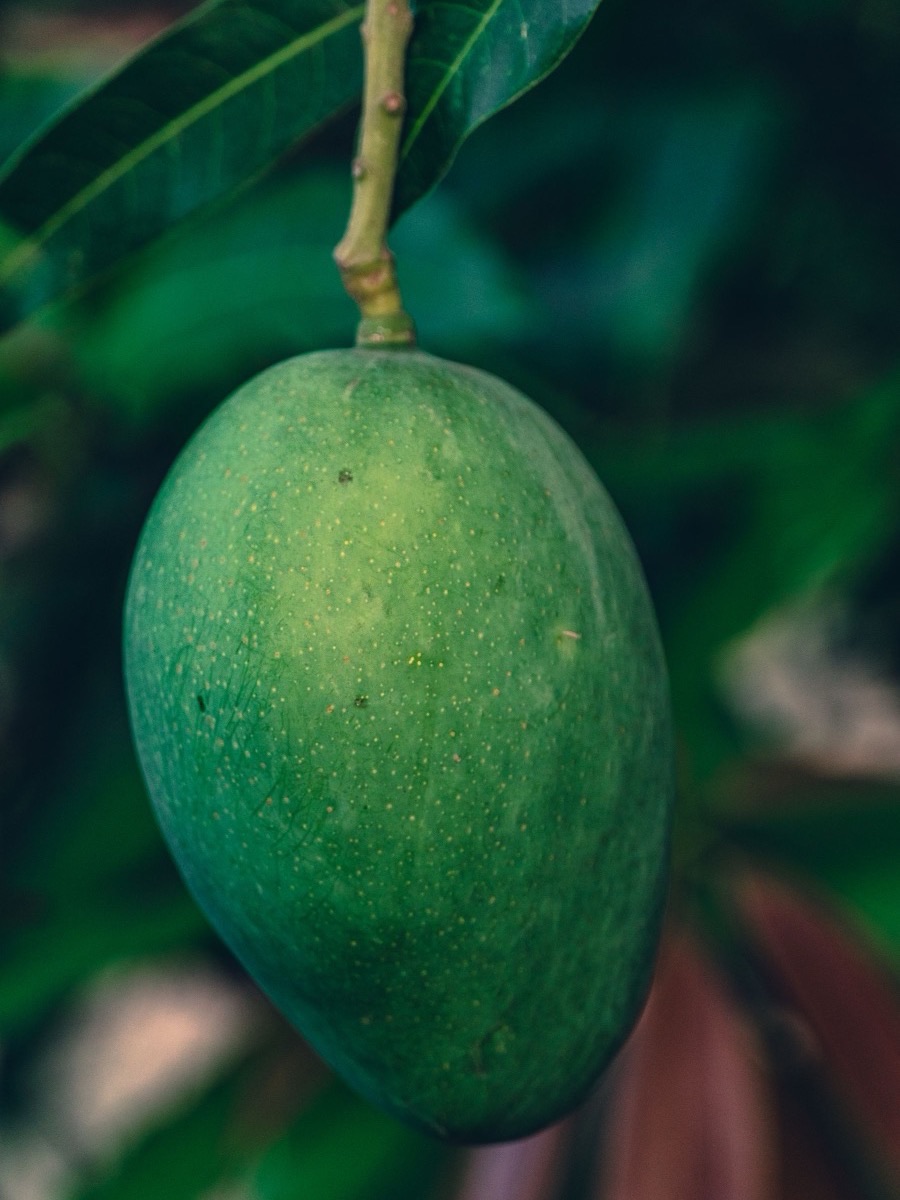
The mango tree (Mangifera indica) grows in many home gardens and fruit-growing areas of Vietnam; that is a familiar cultural story for a brand to tell, and the growing region goes on the label only when the COA or the supplier confirms it in writing. The featured ingredient is Mangifera Indica Leaf Extract, an extract of mango LEAVES, which CosIng lists as skin conditioning; mango leaves contain mangiferin, phenolic acids, flavonoids and other antioxidants. Evidence for the leaf extract itself is limited: the tyrosinase data (tyrosinase is the enzyme that makes melanin) come from test-tube work on a solvent fraction of the leaves or on purified mangiferin, and in our PubMed search we found no human trial of mango leaf extract on skin brightness or pigment spots. Butter-C therefore builds mango leaf essence as a skin-conditioning essence: mango leaf carries the story, while the “conditions skin, helps skin look fresh” claim rests on the humectant base and is tested on the finished product; if a brand wants an even-tone claim, it rests on niacinamide. Butter-C offers turnkey OEM/ODM manufacturing from formula development and testing to a labeled finished product and notification dossier.
Formula base
Mango leaf extract, humectants and water
An essence is almost entirely water, so the four groups below decide the skin feel, the stability and the product story.
Mangifera Indica Leaf Extract: reading the raw material label correctly
The mango leaf material on file at Butter-C declares the INCI “Glycerin (and) Mangifera Indica Leaf Extract (and) Water (and) Sodium Benzoate”: an extract in glycerin and water with a preservative already included. So “3% mango leaf extract” on a formula means 3% of the raw material solution, not 3% dry extract, and the INCI list on the label states every component of the material. The dry extract ratio and the mangiferin content are not in the verified file and must be requested from the supplier.
The right plant part
CosIng has separate entries for mango leaf, fruit, pulp, peel, seed, seed oil and seed butter, but assigns the same CAS number 90063-86-8 to the leaf, fruit, seed and seed butter extracts, so the CAS number cannot tell the plant parts apart. Purified mangiferin is a different INCI. Data on mango bark, peel, kernel or oral use do not apply to a topical leaf extract. The COA must state Mangifera indica, leaf, and the extraction solvent.
Base humectants
Glycerin, butylene glycol, betaine, panthenol and a small amount of sodium hyaluronate; this group is the main basis for the skin-conditioning and moisturizing claims. The glycerin carried in the mango leaf material is added to the total glycerin to balance tackiness.
Actives chosen for the positioning
2–5% niacinamide, the range with human data on even skin tone (per the niacinamide article). The even-tone claim rests on niacinamide, not on mango leaf; daily sunscreen remains the foundation.
Key technical points
The carried-in preservative, use level and color stability
Sodium benzoate carried in the raw material
Benzoic acid and its sodium salt are listed in ASEAN Annex VI (Ref 1): up to 0.5% as acid in leave-on products. The sodium benzoate already in the mango leaf material counts toward this limit if the formula adds more benzoate. The carried-in amount does not replace the finished product's preservative system, and benzoate works only at acidic pH, so the finished product must still pass preservative efficacy (challenge) testing to ISO 11930.
Not combined with vitamin C
Benzoate together with ascorbic acid and transition metal ions can form benzene (data from food model systems). Butter-C's mango leaf essence therefore does not combine ascorbic acid with this material; if a brand insists on vitamin C, we choose a benzoate-free mango leaf material, or use a chelating agent, light-blocking packaging and benzene testing on the finished product after aging.
Use level per the technical data sheet
No established use concentration exists for mango leaf extract: the CIR catalog lists only mango seed ingredients, not the leaf extract, and CosIng records no SCCS opinion. The level in the ERP record is a supplier recommendation not checked against an independent source. The level is set per the technical data sheet (TDS), then confirmed by stability work and tolerance testing on the finished product.
Color, odor and addition temperature
We have no verified source on the stable pH range or the light and heat sensitivity of mango leaf extract in cosmetics; the pH range and the “do not heat” note in the ERP record are supplier data. Following plant practice, the extract goes in at the cool-down stage, the formula includes a chelating agent, the packaging blocks light, and color, odor, pH and microbiology are tracked through accelerated aging.
Three formulation directions
Three styles of mango leaf essence
Water-light mango leaf essence
Mango leaf extract with glycerin, betaine and panthenol; patted on by hand after cleansing. For normal skin and for users who like a short, fragrance-free ingredient list.
Lightly thickened, rich-moisture mango leaf essence
A very low level of sodium hyaluronate or gum for a plumper feel. Absorbs more slowly; tackiness has to be balanced once the glycerin already in the raw material is counted.
Mango leaf and niacinamide essence
2–5% niacinamide in a mango leaf base. The “helps skin look more even-toned” claim rests on niacinamide, needs testing on the finished product and comes with a sunscreen recommendation; mango leaf carries the story.
Packaging is part of the formula
Brown glass or opaque plastic bottles with a dropper or pump to limit light and contamination in use; gaskets and dropper tubes are soak-tested with the sample.
Parameters we monitor
What the R&D lab measures on every sample
These are the parameters Butter-C tracks during formula development and scale-up. Specific limits are agreed with you on the approved sample and then written into the product's in-house specification.
- Incoming raw material file
- COA for every extract lot: species, leaf as the plant part, extraction solvent, sodium benzoate content, mangiferin content if the supplier standardizes it, microbiology, heavy metals.
- Appearance, color & odor
- Clarity, color and odor against the reference sample across stability time points; a parameter sensitive to botanical extracts.
- pH
- Measured directly at 25°C; pH drift tracked across stability time points. pH also decides how well the carried-in benzoate works.
- Total benzoate
- Benzoate from the raw material plus any added benzoate, expressed as benzoic acid and checked against the 0.5% limit in Annex VI.
- Niacinamide content
- Assayed by HPLC when the formula contains niacinamide; checked per lot.
- Stability
- Accelerated aging at 40°C, freeze–thaw cycling, light exposure and 4°C storage; watching for darkening, haze and precipitation.
- Microbiology & challenge test
- Tested at a GLP / ISO 17025-accredited laboratory; preservative efficacy (challenge) test to ISO 11930 on the final formula.
- Skin evaluation
- Tolerance testing on volunteers; to state “helps skin look fresh” or “more even-toned”, measurements on people using the finished product itself.
- Packaging compatibility
- Filled into the actual bottle, cap or pump; watching for material odor, light transmission and seal integrity.
Claims
Claims matched to the evidence for mango leaf
The data available for mango leaf extract: an ethyl acetate fraction of the leaves inhibited tyrosinase in a test tube (IC50 17.62 µg/mL; Shi 2020); purified mangiferin inhibited tyrosinase with an IC50 of 290 µM, comparable to kojic acid at 217.45 µM (Hering 2023), but that is a purified compound, not the leaf extract; a water extract of the leaves reduced lipid accumulation in cultured sebaceous gland cells (Jung 2024). Human data come from a single multi-stage study (in silico, in vitro, skin explants and Caucasian volunteers, with a placebo group) on sebum quality in acne-prone skin; the abstract gives no sample size, concentration or duration, and the authors mostly belong to the research department of a cosmetic ingredient company (Tollenaere 2022). We found no human trial on skin brightness or pigment spots (PubMed search, 16 October 2026). Level of evidence: limited. ASEAN: mango leaf extract and mangiferin are not named in Annexes II, III or VI (June 2026 version). Annex 03-MP of Circular 06/2011/TT-BYT does not accept claims of preventing or reversing aging.
Conditions and moisturizes skin
Based on the humectants in the formula. Instead of: anti-aging, regenerates skin, rejuvenates skin.
Helps skin look fresh (tested on the finished product)
Instead of: whitens skin, whitening thanks to mango leaf, “inhibits tyrosinase” as a promise on skin.
Contains mango leaf extract (Mangifera Indica Leaf Extract)
State “mangiferin” or a mangiferin figure only when the COA quantifies it. Instead of: results of purified mangiferin attributed to the extract, a growing region without origin documents.
Helps skin look more even-toned (only with 2–5% niacinamide, tested on the finished product)
With a daytime sunscreen recommendation; long-lasting dark patches should be seen by a dermatologist. Instead of: fades melasma, erases brown spots, fades freckles.
No oil or acne claims
The sebum data belong to one specific extract in a company study and to cultured cells. Instead of: oil control, reduces acne, claims to act on bacteria on the skin.
Mango allergy warning
People who have reacted to mango should not use it; people who have reacted to urushiol plants (such as poison ivy) should be cautious; patch-test a small area first and stop if redness or itching appears. Pregnant or breastfeeding women: data are insufficient, ask a doctor. Instead of: hypoallergenic, gentle because it comes from leaves, safe in pregnancy.
Manufacturing specifications
Capabilities
- Texture
- Liquid or lightly thickened essence with the natural tint of the leaf extract.
- Format
- Dropper or pump bottles, preferably brown glass or opaque. Fill volume agreed when the packaging is selected.
- Minimum order quantity
- Agreed per order, depending on the formula direction and the format chosen.
- Testing
- Performed at a GLP / ISO 17025-accredited laboratory; a certificate of analysis accompanies every lot.
- Documentation
- Product Information File (PIF) and notification dossier prepared by Butter-C, with the supplier's COA and TDS for the mango leaf extract stating the plant part and the carried-in preservative.
- Packaging
- Label design, printing and packing run in parallel with formula development.
Suggested product concept
Mango leaf and niacinamide essence in a light-blocking bottle
One product concept to help you picture the result; not a ready-made product for sale. The actual formula is built around your brand's positioning and price range.
Mango leaf as the featured ingredient
Mangifera indica leaf extract with a COA confirming the leaf; level per the TDS, fixed after color, odor and stability testing; the carried-in benzoate counted in the total.
Humectant group
Glycerin, betaine, panthenol and sodium hyaluronate; the basis for the skin-conditioning and moisturizing claims.
4% niacinamide
For the “helps skin look more even-toned” claim once tested on the finished product; assayed per lot.
50 ml brown glass bottle, fragrance-free
The label lists the full INCI of the mango leaf material, a warning for people allergic to mango, a daytime sunscreen recommendation and a patch-test instruction.
Customization options
What you can specify
The same product type can serve very different customers. Tell us your requirements in the areas below and our pharmacists will build the matching formula.
Mango leaf material
The glycerin–water extract with benzoate (in stock), or a benzoate-free, mangiferin-quantified material sourced per order; each comes with its own COA and cost.
Companion actives
Humectant base only, or niacinamide added for an even-tone claim. A multi-active brightening line is the brightening serum page; mulberry leaf essence is another leaf story in the same format.
Texture
Water-light or lightly thickened; fast-absorbing or leaving a moist layer.
Companion products
Toner, moisturizer and sunscreen carrying the same mango tree story, sold as a set.
Fragrance and color
Fragrance-free is recommended; the color is the natural color of the extract.
Ingredient direction
Alcohol-free, fragrance-free, vegan: please state these at the outset so the right raw materials can be selected.
Further reading
Related topics
Mango leaf (Mangifera indica) in cosmetics
Mangiferin, test-tube tyrosinase data, the limits of the evidence, mango allergy and ASEAN regulations (in Vietnamese).
Brightening serum manufacturing
A serum with several brightening active groups, unlike an essence featuring a single leaf extract.
Mulberry leaf essence manufacturing
The same leaf-essence format, with the even-tone claim resting on actives that have human data.
Niacinamide in cosmetics
The active behind the even-tone claim and the concentrations tested in humans (in Vietnamese).
Contact dermatitis from cosmetics
Why botanical extracts still need a warning and a small-area patch test (in Vietnamese).
How we work
From idea to finished batch
Eight steps and three milestones signed off by both sides: approved sample, notification number, finished batch. Step-by-step details (in Vietnamese) →
Get started
Tell us about the product you plan to launch
Send us your product direction and expected volume. Our team will get back to you during business hours (Vietnam time, GMT+7).
Head office: Huu Le village, Dai Thanh commune, Hanoi · Factory: Thanh Oai Industrial Cluster, Binh Minh commune, Hanoi, Vietnam
Hotline +84 967 176 511 · [email protected] · Privacy policy ← Full catalog