 BUTTER-C
Camellia (Camellia japonica) flower extract in cosmetics
Camellia flowers often appear on toners, facial mists and hair products, along with stories of Jeju Island or “Japanese-style glossy hair.” For Camellia japonica flower extract, the skin-related data currently come only from cells and cultured skin explants, and “camellia oil” is actually oil pressed from the seeds. This article separates the plant part, the material tested and the level of evidence before you choose an ingredient and write efficacy claims.
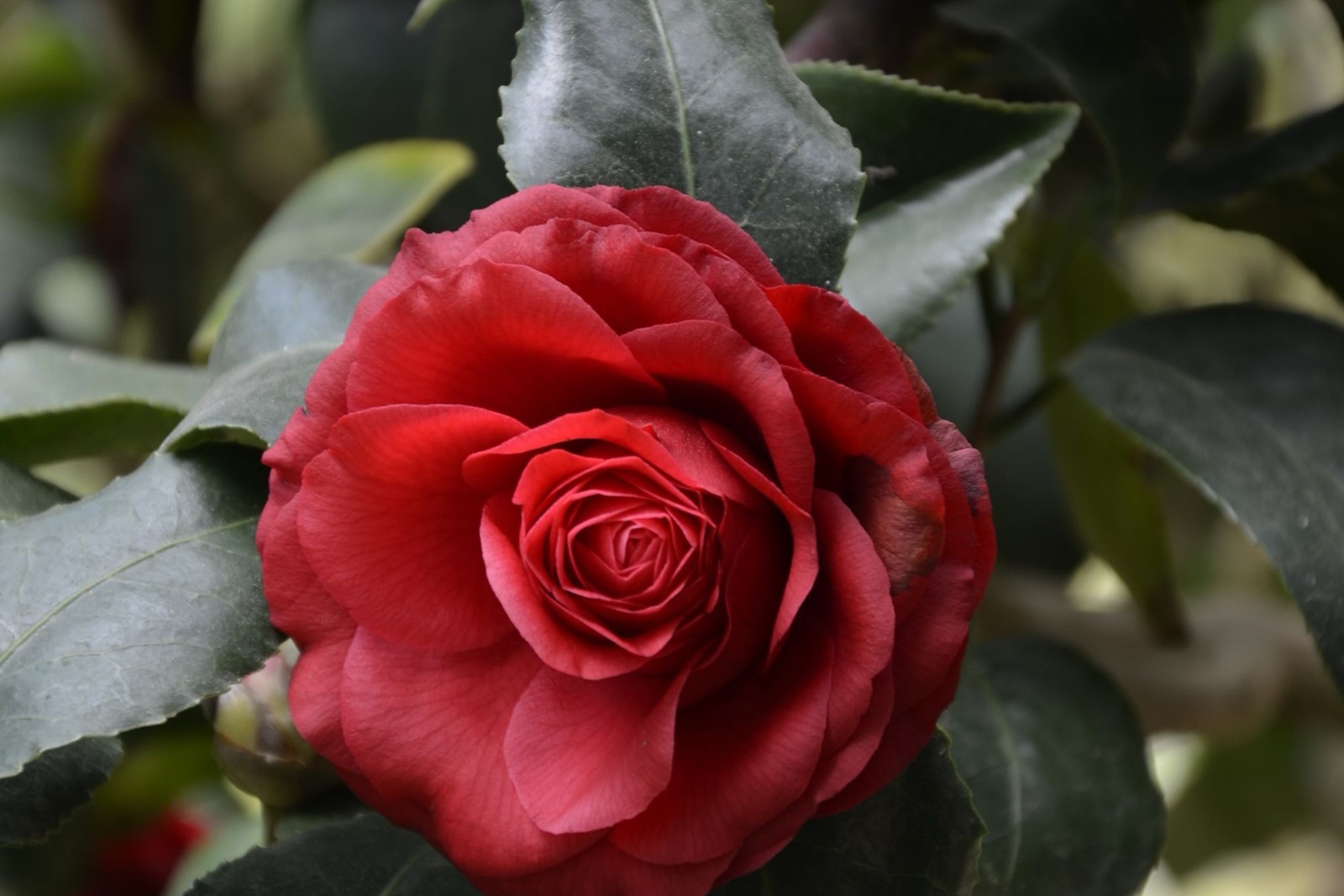
Camellia flower extract (INCI: Camellia Japonica Flower Extract) is an extract of the flowers of Camellia japonica L., of the tea family (Theaceae), a species that Vietnamese Wikipedia calls “sơn trà Nhật Bản” (Japanese camellia). According to CosIng (EU) information as cited by INCIDecoder, this ingredient’s functions in cosmetics are emollient and skin conditioning. Skin-related data on C. japonica flowers are currently limited to laboratory studies and cultured human skin explants; we have found no trials of topical application in humans.
Camellia flowers are not green tea: green tea is the leaf of the tea plant, Camellia sinensis, a different species in the same genus (see the article on green tea extract (in Vietnamese)).
1. What is Camellia japonica flower extract?
According to CosIng (cited by INCIDecoder, checked November 17, 2026), it is “the extract of the flowers of the camellia, Camellia japonica L., Theaceae”; the definition does not specify a solvent, extraction ratio or cultivar. GBIF lists Camellia japonica L. as the accepted species name. Each plant part and each species has its own INCI name:
| INCI | Species, plant part | Function (CosIng) |
|---|---|---|
| Camellia Japonica Flower Extract | C. japonica, flower | Emollient, skin conditioning |
| Camellia Japonica Seed Oil | C. japonica, oil pressed from the seeds | Emollient, skin conditioning |
| Camellia Japonica Leaf Extract | C. japonica, leaf | Skin conditioning |
| Camellia Sinensis Leaf Extract | Tea plant C. sinensis, leaf (green tea) | Multiple functions, including antioxidant and skin conditioning |
| Camellia Oleifera Seed Oil | C. oleifera, oil from the seeds | Skin conditioning |
Two points to note. First, the “camellia oil” sold on the market is oil pressed from the seeds, not from the flowers; data on the seed oil do not apply to the flower extract, and vice versa. Second, INCIDecoder shows the same CAS number, 223748-13-8, for the flower extract, the seed oil and the leaf extract of C. japonica: this CAS number is tied to the species and does not distinguish between plant parts. The certificate of analysis (COA) must therefore state clearly that the flowers were used.
Commercial ingredients usually come as solutions, sometimes blended with other extracts. For example, the ingredient on file at Butter-C is a water-based solution blend of cornflower extract (Centaurea Cyanus Flower Extract), camellia flower extract and aloe leaf extract. The percentage on the formula sheet is the percentage of the solution, not of dry extract. The effects of aloe (see the article on aloe in cosmetics (in Vietnamese)) must not be attributed to camellia flowers.
2. What is in camellia flowers?
Composition varies with cultivar, how far the flower has opened, the solvent and the extraction method. The studies we reviewed analyzed two groups of compounds:
- Polyphenols: Pereira and colleagues (2024) identified 36 phenolic compounds in flower extracts of several C. japonica cultivars, including anthocyanins, flavonols, flavones, hydroxybenzoic acids and hydroxycinnamic acids. An ethanol extract of the flowers contains quercetin, quercetin-3-O-glucoside, quercitrin and kaempferol (Piao et al., 2011). In a 70% ethanol extract of red flowers, Gao and colleagues (2025) measured ellagic acid at 2,258.83 ppm, hyperoside at 110.99 ppm and isoquercitrin at 106.99 ppm. A 70% ethanol extract of flowers grown on Jeju Island had a total polyphenol content of 97.7 µg gallic acid equivalents/mg (Kim et al., 2019).
- Triterpene saponins: from a 50% ethanol extract of flower buds grown in Korea, Nakamura and colleagues (2012) isolated camelliosides A, D, E and F; camellioside B is the main constituent of camellia flowers grown in Japan.
Two lots with the same INCI name can differ considerably; only the COA for each lot tells you what the ingredient actually contains.
3. Mechanisms and evidence of efficacy
The areas studied are antioxidant activity, protection of skin cells against pollution particles, and effects on pigment-producing cells:
| Study | Test material, model | Main results | Notes |
|---|---|---|---|
| Piao et al., 2011 | Ethanol extract of the flowers; human HaCaT keratinocytes and cell-free assays | Scavenged DPPH radicals, superoxide radicals, hydroxyl radicals and intracellular ROS; increased the levels and activity of the antioxidant enzymes superoxide dismutase, catalase and glutathione peroxidase | In vitro; 3 of 8 authors affiliated with a company research center |
| Kim et al., 2019 | 70% ethanol extract of the flowers; human dermal fibroblasts exposed to urban particulate matter; cultured human skin explants (ex vivo) | Reduced ROS, reduced MMP-1 (a collagen-degrading enzyme) and reduced activation of the AhR receptor; in skin explants: reduced malondialdehyde (a marker of lipid oxidation), reduced MMP-1, increased collagen I | Full text: 19 skin explants from a single donor; 5 of 6 authors affiliated with the research institute of a cosmetic ingredient company |
| Gao et al., 2025 | 70% ethanol extract of red flowers, and hyperoside; human dermal fibroblasts and HaCaT keratinocytes damaged by doxorubicin | Increased mitophagy via the FUNDC1 pathway, reduced ROS, reduced markers of cellular aging; restored collagen III and elastin (fibroblasts) and claudin 1 (HaCaT), which doxorubicin had reduced | In vitro; a 2026 correction changes the concentration unit from µg/mL to µg/L; 3 authors work for a company |
| Nakamura et al., 2012 | Purified saponins from the flower buds; B16 melanoma cells and neonatal human dermal fibroblasts | Camellioside B inhibited melanin production by 95.0% at 20 µM, partly related to inhibition of cell proliferation; the camelliosides tended to increase fibroblast proliferation | Pure compounds, not the extract; in vitro |
Conclusion: limited evidence. A PubMed search on November 17, 2026 found no trials of topical application on human skin using C. japonica flower extract. Results in cells and cultured skin explants do not prove that products containing this extract reduce wrinkles, brighten skin or protect skin from pollution. We have also found no studies of camellia flower extract on hair.
4. Typical concentrations and product formats
No established use concentration: we have found no CIR (US) report or SCCS (EU) opinion on camellia flower extract, and no formula that has been tested in humans. Use it as directed in the supplier’s technical data sheet (TDS), then confirm with stability studies and tolerance testing on the finished product.
- Toners, essences, facial mists: water-based formats that suit water-soluble extract solutions (see toner manufacturing and facial mist manufacturing).
- Creams, lotions, body mists, hand creams: add to the water phase during the cool-down stage (in-house practice; no measurements specific to this extract).
5. How to use and combine it
- Preservative system: any preservative already present in the ingredient solution is there only to preserve the ingredient; the finished product still needs its own preservative system that passes a challenge test.
- Color and odor: camellia flowers contain anthocyanins (pigments) and other polyphenols, and their composition differs between cultivars (Pereira et al., 2024). Monitor color and odor in stability studies before finalizing the formula.
- Combinations: it can be used with glycerin, panthenol and allantoin; there are no studies of these combinations, so base claims on active ingredients with human data.
- Sun protection: camellia flower extract is not a UV filter; sunscreen is still needed during the day.
6. Safety: who should take care
- Expert bodies: we have found no CIR report or SCCS opinion on Camellia Japonica Flower Extract (we checked the CIR website and the CIR priority lists for 2017 and 2018). CIR assessed the seed oil, Camellia Japonica Seed Oil, in its 2017 report on 244 plant-derived oils and concluded that this group of oils is safe as used (Burnett et al., 2017). That conclusion does not apply to the flower extract.
- Irritation, allergy: a PubMed search on November 17, 2026 found no reports of contact dermatitis caused by C. japonica flower extract, but there are also no human patch test data for this INCI ingredient itself. The absence of reports does not mean “non-allergenic.” People with easily irritated skin should try the product on a small area of skin first (see the article on sensitive skin (in Vietnamese)).
- Pregnancy and breastfeeding: the data are insufficient; ask a doctor.
7. Notes for brand owners
- Raw material specification: species Camellia japonica (not C. sinensis or C. oleifera), plant part (flower), solvent, carrier, preservative, extract content, microbiology and heavy metals on the COA for each lot. If the ingredient is a blend, declare the INCI names of all components according to the COA.
- ASEAN regulations: we searched for “camellia”, “japonica”, “theaceae”, CAS 223748-13-8, “tsubaki”, “hyperoside”, “ellagic”, “quercetin” and “kaempferol” in Annexes II, III and VI (version 2026-1, June 22, 2026) and Annex VII (version 2025-2, December 12, 2025): there are no entries. This ingredient has no specific concentration limit; the product must still be safe, and its claims must stay within the scope of a cosmetic.
- Origin story: use “Jeju Island camellia” only when the COA or the supplier’s documentation confirms where the plants were grown.
| Acceptable (when assessed on the finished product) | Avoid |
|---|---|
| Contains camellia flower extract; emollient, skin conditioning (functions per CosIng) | Calling the flower extract “camellia oil” |
| An antioxidant ingredient in the formula | “Anti-aging”, “boosts collagen” or “anti-pollution” based on cell studies |
| Moisturizes, helps soften skin: only when measured on the finished product itself | “Whitening” or “brightening” based on purified saponins |
| The story of the flower, cultural imagery | “The secret to glossy hair” linked to the flower extract; “non-allergenic”, “safe during pregnancy” |
Butter-C can use camellia flower extract in contract manufacturing of toners, facial mists, body mists and hand creams as a supporting botanical ingredient, combined with active ingredients that have human data.
Frequently asked questions
Is camellia flower extract the same as camellia oil?
No. Camellia oil is oil pressed from the seeds, INCI Camellia Japonica Seed Oil. The flower extract is an extract of the flowers, usually water-soluble, INCI Camellia Japonica Flower Extract. The two ingredients have different compositions and different data.
Does camellia flower extract have anti-aging or skin-brightening effects?
There is no evidence in humans. The available studies were done on cells and cultured skin explants. Only claim effects that have been measured on the finished product itself.
Can people with sensitive skin use it?
We have found no reports of allergy on PubMed, but there are also no human patch tests. Try it on a small area of skin first.
Can pregnant women use it?
There are not enough data on this ingredient; ask a doctor before use.
References
- INCIDecoder. Camellia Japonica Flower Extract (CosIng information: definition, function, CAS), accessed November 17, 2026. https://incidecoder.com/ingredients/camellia-japonica-flower-extract; INCI names compared: Camellia Japonica Seed Oil, Camellia Japonica Leaf Extract, Camellia Sinensis Leaf Extract, Camellia Oleifera Seed Oil
- GBIF Backbone Taxonomy. Camellia japonica L. (accepted name, family Theaceae), accessed November 17, 2026. https://api.gbif.org/v1/species/3189636; Vietnamese name: Vietnamese Wikipedia, Sơn trà Nhật Bản [Japanese camellia], https://vi.wikipedia.org/wiki/S%C6%A1n_tr%C3%A0_Nh%E1%BA%ADt_B%E1%BA%A3n
- Piao MJ et al. Antioxidant effects of the ethanol extract from flower of Camellia japonica via scavenging of reactive oxygen species and induction of antioxidant enzymes. Int J Mol Sci. 2011. PMID 21731461
- Kim M et al. Protective effects of Camellia japonica flower extract against urban air pollutants. BMC Complement Altern Med. 2019. PMID 30691451
- Gao H et al. Camellia japonica Flower Extract and the Active Constituent Hyperoside Repair DNA Damage Through FUNDC1-Mediated Mitophagy Pathway for Skin Anti-Aging. Antioxidants (Basel). 2025. PMID 40867864; correction: Antioxidants (Basel). 2026. PMID 42193275
- Nakamura S et al. Melanogenesis inhibitory and fibroblast proliferation accelerating effects of noroleanane- and oleanane-type triterpene oligoglycosides from the flower buds of Camellia japonica. J Nat Prod. 2012. PMID 22834923
- Pereira AG et al. Unraveling the Bioactive Potential of Camellia japonica Edible Flowers: Profiling Antioxidant Substances and In Vitro Bioactivity Assessment. Pharmaceuticals (Basel). 2024. PMID 39065796
- Burnett CL et al. Safety Assessment of Plant-Derived Fatty Acid Oils. Int J Toxicol. 2017. PMID 29243540; Camellia Japonica Seed Oil appears in the list of previously reviewed ingredients (“Safe as used, published in 2017”) in the CIR document Safety Assessment of Fatty Acids & Fatty Acid Salts as Used in Cosmetics (draft of January 4, 2019), https://www.cir-safety.org/sites/default/files/facids122018tent.pdf