 BUTTER-C
Ginkgo biloba leaf extract in cosmetics: evidence and safety
Ginkgo leaf extract is often presented as an antioxidant ingredient for the skin and scalp. Human topical data are scarce; what brand owners need to understand first is raw material quality, especially ginkgolic acid content, and the use levels the CIR report has reviewed.
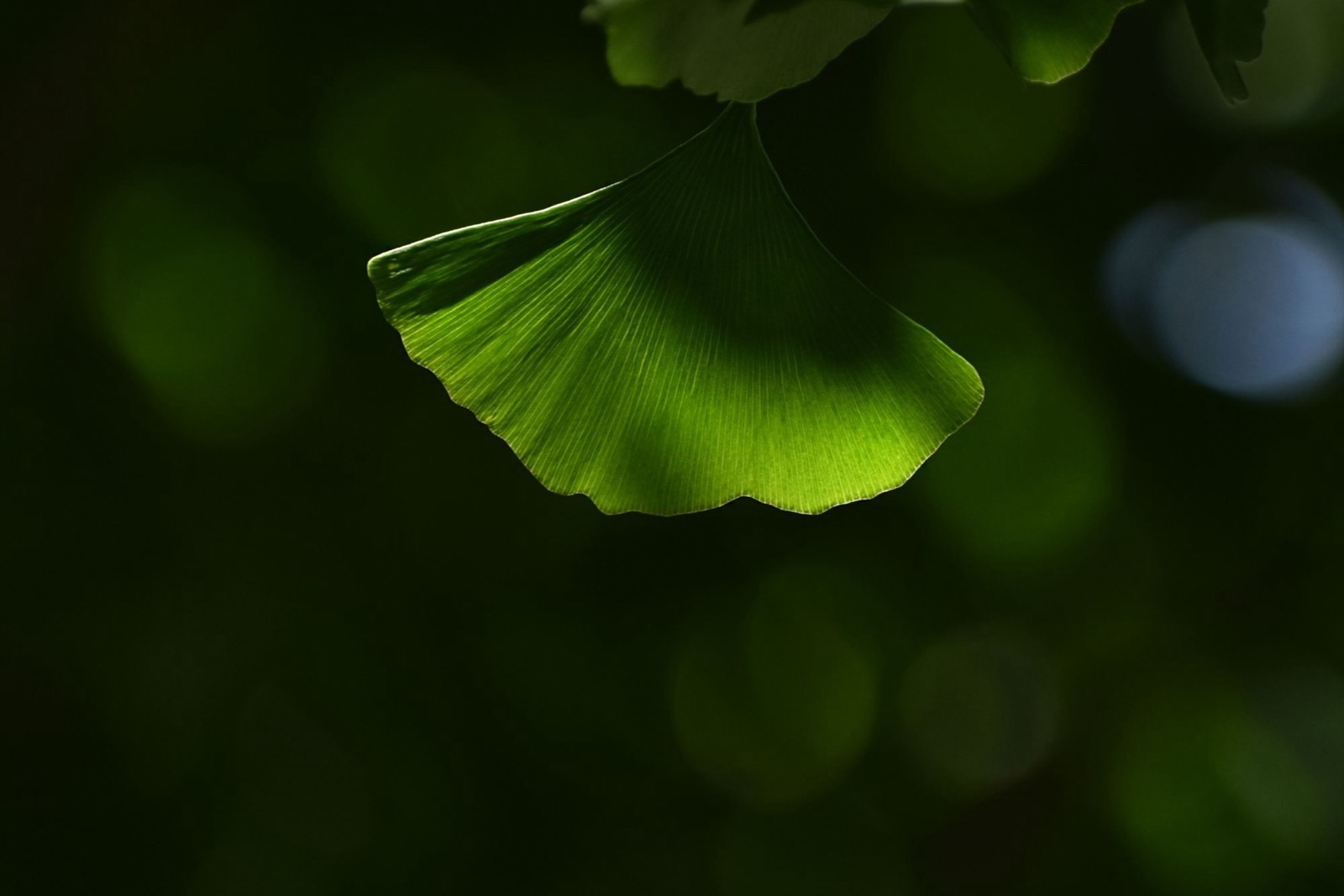
Ginkgo leaf extract (INCI: Ginkgo Biloba Leaf Extract) is an extract of the leaves of the ginkgo tree, Ginkgo biloba. The cosmetic ingredient dictionary lists its function as skin-conditioning; according to the CIR (Cosmetic Ingredient Review) Expert Panel, ginkgo-derived ingredients are commonly reported as skin-conditioning agents or antioxidants.
Ginkgo leaf is also used as an herbal medicine and as an oral dietary supplement. This article covers only topical use on the skin; results from oral tablets are not to be used as evidence for topical products.
1. What is ginkgo leaf extract?
According to the cosmetic ingredient dictionary (as cited in the 2018 CIR report), this is an extract of the leaves of Ginkgo biloba. CAS number 90045-36-6 is listed jointly for the leaf extract, leaf powder, nut extract and root extract, so the CAS number does not tell you which plant part was used.
The two main marker groups in the leaf are flavonol glycosides (based on quercetin, kaempferol and isorhamnetin) and terpene lactones (ginkgolides A, B and C, and bilobalide). The leaf also contains alkylphenols, including ginkgolic acid: a salicylic acid derivative with a 15-carbon side chain, which CIR calls a known skin sensitizer.
Content varies widely with the extraction method: among published leaf extracts, CIR records alkylphenols (ginkgolic acid, cardanol) ranging from less than 0.0005% to 9.0%. Two raw materials with the same INCI name can differ considerably:
| Leaf extract (data from CIR 2018) | Flavonol glycosides | Terpene lactones | Ginkgolic acid |
|---|---|---|---|
| Standardized extract used as an herbal medicine in Germany (acetone–water extraction) | 22–27% | 5–7% | below 5 ppm |
| A cosmetic raw material extracted with ethanol–water and diluted in butylene glycol (supplier data) | 0.51% | 0.16% | below 0.1 ppm |
| Crude 60% ethanol extract of dried green leaves | 3.4% | 0.7% | 5.5% |
According to a review by Boateng (2022), the Chinese, European and United States pharmacopoeias require ginkgolic acid in leaf extracts to be below 5 μg/g (5 ppm). The sources we reviewed do not give a separate limit for cosmetics, so check the figure on the certificate of analysis (COA) for each batch.
2. Mechanisms on the skin: what has been measured
- Antioxidant activity in vitro: a cream containing ginkgo leaf extract scavenged free radicals in the DPPH assay (Abdellatif et al., 2023). This is a chemical measurement, not a measurement on skin.
- Skin penetration (ex vivo): on human skin obtained after surgery and mounted in Franz diffusion cells, a formulation supplemented with 6% ginkgo extract delivered quercetin to the stratum corneum (0.17 μg/cm²) and more to the viable epidermis (0.23 μg/cm²); quercetin did not appear in the receptor fluid after 24 hours (dal Belo et al., 2009).
- UVB (mice and cells): applying a standardized leaf extract of the type used in medicines and dietary supplements (2 mg/cm²) before UVB irradiation over 3 months reduced coarse wrinkles and elastic fiber degeneration in mouse skin; in cultured human fibroblasts, the extract reduced MMP-1, inflammatory cytokines and reactive oxygen species (Chen et al., 2014). This extract is not necessarily the same as cosmetic raw materials.
This extract is not a UV filter: the spectrum of one raw material showed no absorption peak in the 280–450 nm range (CIR 2018). Sun protection is still needed during the day; see the article on light and skin (in Vietnamese).
3. Human evidence: still limited
In a PubMed search (November 17, 2026), the human topical studies were all small, short or used multi-active formulations:
| Study | Product | Design, sample size | Duration | Main results (per abstract) |
|---|---|---|---|---|
| Abdellatif et al., 2023 | Emulsion cream containing ginkgo leaf extract | Volunteers; the abstract does not state the sample size or a control group | 2 weeks | The authors describe firmer skin and reduced wrinkles |
| Chuarienthong et al., 2010 | Gel containing ginkgo extract | Compared with a tea–rooibos gel, not with a base gel; the abstract does not state the sample size (as reported by CIR: 20 people, formulation with 0.30% extract) | 28 days | Skin hydration up 27.88%, wrinkles down 4.63%; hydration higher than with the tea–rooibos gel (P = 0.05). The first author is affiliated with a company |
| Campos et al., 2014 | Formulations with green tea and/or ginkgo extracts | 48 people, applied to the forearm | 3 hours, 15 and 30 days | Moisturizing effect and improved skin surface microstructure; the two extracts acted synergistically on elasticity and the skin barrier, and the combined formulation improved elasticity more markedly |
| Gianeti et al., 2014 | UV filters, vitamins A, C and E, red algae, 1.5% ginkgo extract (full text) | 45 people, compared with a base cream | 90 days | Increased hydration, reduced wrinkles and roughness: results of the whole formulation |
Conclusion: limited evidence. In the abstracts reviewed, there is no trial comparing ginkgo leaf extract alone with a base cream that reports the sample size, concentration and data in full.
4. Typical concentrations and product types
Actual use levels come from the 2014 US cosmetic industry concentration survey, compiled in the CIR final report (2018):
| Product category (CIR 2018) | Maximum reported concentration |
|---|---|
| Rinse-off products (maximum in skin cleansing products) | 0.25% |
| Leave-on products (maximum in nail products) | 0.24% |
| Lipstick | 0.2% |
| Pump sunscreen sprays; face powders | 0.05% |
| Eye-area products (eye shadow, eye cream) | 0.01% |
| Hair products (non-coloring) | 0.00005–0.001% |
Studies have used higher levels (1.5% in the Gianeti formulation; 6% in the ex vivo test), but no effective concentration has been established. Commercial raw materials are usually extracts diluted in a solvent (CIR records one raw material redissolved in 50% butylene glycol), so the percentage in the formula is the percentage of the preparation. Aqueous or glycol extracts are usually added during the cool-down phase (formulation experience).
5. How to use and combine
- Can be combined with green tea extract, as in the study by Campos (2014); see the article on green tea extract in cosmetics (in Vietnamese).
- Daytime products: use together with sunscreen; antioxidants do not replace UV filters.
- Scalp: the hair-related data in the PubMed search results come from mice, hair follicle cells or purified compounds; we have found no human trial of topically applied leaf extract. See the article on hair shedding and hair breakage (in Vietnamese).
6. Safety: who should take care
CIR (final report 2018, published in 2024) concluded that ginkgo leaf extract and four other leaf-derived ingredients are safe in the present practices of use and concentration when formulated to be non-sensitizing. For the nut extract (Ginkgo Biloba Nut Extract), the root extract and three other ingredients, the data are insufficient to reach a conclusion.
- Ginkgolic acid: CIR is concerned about the presence of this substance in cosmetics, and recommends that manufacturers avoid levels of constituents that may cause sensitization and use good manufacturing practices to limit impurities. In 10 guinea pigs, all 10 were sensitized to pure ginkgolic acid; none were sensitized to a leaf extract containing about 1000 ppm ginkgolic acid.
- Human data (CIR): a 24-hour patch test of the undiluted extract in 20 people caused no irritation. Repeated insult patch tests (HRIPT) with products containing up to 0.2%, including 208 people with a 0.2% lotion and 201 people with a 0.1% product, recorded no sensitization.
- Contact with the plant: the fruit pulp of ginkgo causes contact dermatitis in people who separate the seeds; ginkgolic acid is the main allergen (CIR).
- Oral use is different from topical use: the drug interaction warnings (anticoagulants, NSAIDs, etc.) cited by CIR relate to leaf extract used as a dietary supplement. According to CIR, IARC classifies ginkgo leaf extract in Group 2B (possibly carcinogenic to humans) on the basis of inadequate evidence in humans and sufficient evidence in animals; the animal data come from studies in which rodents were given a special extract orally at high doses (by gavage). CIR judged these findings not relevant to cosmetic use.
- Pregnant and breastfeeding women: data for topical use are insufficient; consult a doctor.
7. Considerations for brand owners
- ASEAN regulations: not listed in Annexes II, III, VI (version 2026-1) or VII (version 2025-2); we searched for “Ginkgo”, “ginkgolic”, CAS 90045-36-6 and 22910-60-7 (ginkgolic acid). There is no specific concentration limit.
- Raw material documentation: a COA stating the solvent, ginkgolic acid (ppm), heavy metals and pesticide residues (impurities flagged by CIR).
- Concentration: the CIR conclusion is tied to the surveyed ranges (leave-on up to 0.24%, eye area up to 0.01%); higher levels require a separate safety assessment.
- Claims: “contains ginkgo leaf extract, an antioxidant ingredient” and “helps keep skin moisturized and smooth” may be used when tested on the finished product. Avoid wording listed in Appendix 03-MP (Phụ lục 03-MP) of Circular 06/2011/TT-BYT (Thông tư 06/2011/TT-BYT, Vietnam’s Ministry of Health circular on cosmetic product management), such as “anti-hair loss” and “stimulates hair growth”, and claims of reversing aging; avoid “increases blood circulation” (an oral-medicine context).
Butter-C can use ginkgo leaf extract in contract manufacturing of scalp essences, serums and moisturizers, with a COA showing ginkgolic acid content and use levels checked against the CIR report.
Frequently asked questions
Does ginkgo leaf extract make hair grow?
No human topical trial in the sources we searched has shown this. “Stimulates hair growth” is also a claim that is not accepted for cosmetics under Appendix 03-MP.
Is applying ginkgo extract the same as taking ginkgo tablets?
No. According to CIR, dietary supplements use 120–240 mg of extract per day; topical products contain at most 0.25% according to the survey. Results from the oral route do not apply to the skin.
What is ginkgolic acid, and is it a concern?
It is a group of skin-sensitizing alkylphenols found in the ginkgo tree. The content depends on the process: below 0.1 ppm in one cosmetic raw material, 5.5% in one crude extract (CIR). Choose raw materials whose COA reports this parameter.
Can people with sensitive skin use it?
Human patch tests with products containing up to 0.2% recorded no sensitization, but those are data for individual products. People with sensitive skin or a history of allergy to the ginkgo tree should first test on a small area of skin; see the article on sensitive skin (in Vietnamese).
Can pregnant women use it?
Data are insufficient; consult a doctor before use.
References
- Burnett CL et al. (Cosmetic Ingredient Review). Safety Assessment of Ginkgo biloba-Derived Ingredients as Used in Cosmetics. Int J Toxicol. 2024. PMID 37930133 · Final Report dated October 12, 2018: https://www.cir-safety.org/sites/default/files/ginkgo092018finalrep.pdf
- Boateng ID. A critical review of ginkgolic acids in Ginkgo biloba leaf extract (EGb): toxicity and technologies to remove ginkgolic acids and their promising bioactivities. Food Funct. 2022. PMID 36065842
- Abdellatif AAH et al. Ginkgo biloba leaves extract's cosmeceutical evaluation: a preliminary assessments on human volunteers towards achieving improved skin condition and rejuvenation. Drug Dev Ind Pharm. 2023. PMID 37074796
- Chuarienthong P et al. Clinical efficacy comparison of anti-wrinkle cosmetics containing herbal flavonoids. Int J Cosmet Sci. 2010. PMID 20412217
- Campos PM et al. Synergistic effects of green tea and ginkgo biloba extracts on the improvement of skin barrier function and elasticity. J Drugs Dermatol. 2014. PMID 25226010
- Gianeti MD et al. Efficacy evaluation of a multifunctional cosmetic formulation: the benefits of a combination of active antioxidant substances. Molecules. 2014. PMID 25389659
- dal Belo SE et al. Skin penetration of epigallocatechin-3-gallate and quercetin from green tea and Ginkgo biloba extracts vehiculated in cosmetic formulations. Skin Pharmacol Physiol. 2009. PMID 19786823
- Chen CC et al. EGb-761 prevents ultraviolet B-induced photoaging via inactivation of mitogen-activated protein kinases and proinflammatory cytokine expression. J Dermatol Sci. 2014. PMID 24802711