 BUTTER-C
Hydrolyzed Pearl in cosmetics
Hydrolyzed pearl is often chosen for its ingredient story. Data on skin brightening come largely from cells and animals, human studies are still few, and pearl must be clearly distinguished from shell, and freshwater sources from seawater sources.
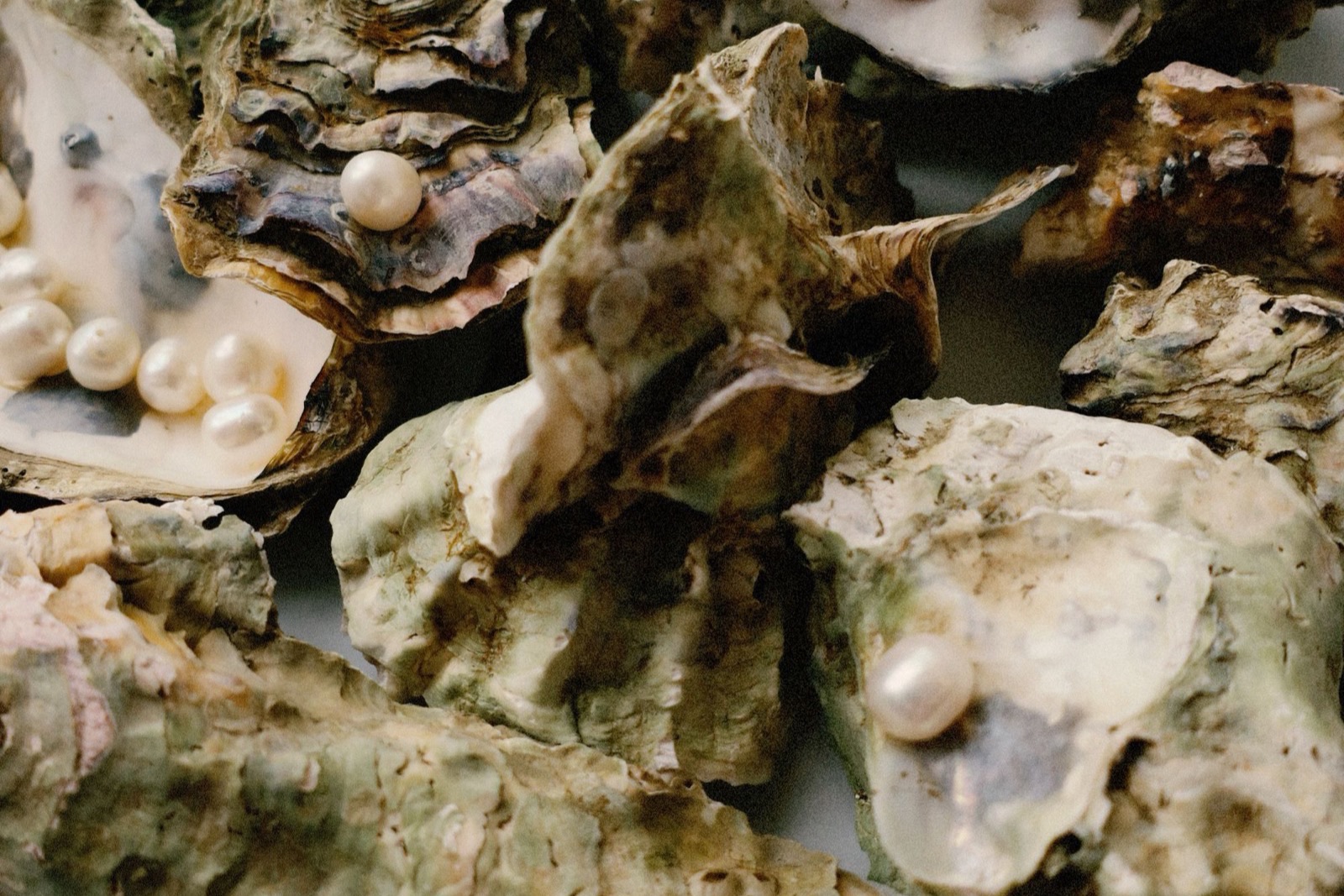
Hydrolyzed pearl (INCI: Hydrolyzed Pearl) is an ingredient obtained by hydrolyzing pearls (in published studies: dissolved in acid, then hydrolyzed with enzymes), yielding a mixture of peptides and minerals. In cosmetics it is mainly a storytelling ingredient: skin-brightening data come largely from cells and animals; controlled human trials of topical application currently exist only in melasma patients at a hospital.
We have not been able to read the official INCI definition (CosIng). For the form (powder or solution) and the ratio of peptides to minerals, see the supplier’s technical data sheet (TDS) and certificate of analysis (COA).
1. What is hydrolyzed pearl?
Pearls and nacre (the iridescent layer lining the inside of the shell) share the same type of structure. According to the review by Loh et al. (2021), nacre consists of about 95% by weight calcium carbonate in the aragonite form and about 5% organic matter (matrix proteins and other biopolymers); pearls contain more protein and trace metal ions than shell nacre. The review calls this protein component conchiolin. Five of the eight authors are affiliated with companies.
The same word “pearl” covers several different ingredients; data for one cannot be used in place of another:
| Ingredient | Preparation (per source) | Notes |
|---|---|---|
| Pearl hydrolysate (solution or powder) | Study example: powder of pearls from the freshwater mussel Hyriopsis cumingii dissolved in lactic acid, adjusted to pH 7, hydrolyzed with protease, filtered and freeze-dried (Shen 2025); Yang (2023) describes similar steps for “hydrolyzed conchiolin protein” (species not stated), protein 42.95% | Consistent with the name Hydrolyzed Pearl; commercial processes may differ |
| Hydrolyzed peptides from mussel shell | H. cumingii shells demineralized with acetic acid, hydrolyzed with papain, membrane-filtered (Zhang 2025) | Made from the shell, not from pearls |
| Pearl powder | Finely ground pearls, not hydrolyzed | Mainly calcium carbonate; commercial powders are often adulterated with cheap shell powder (Loh 2021) |
| Pearlescent agents | Mica (in Vietnamese) coated with titanium dioxide, glycol distearate | Contain no pearl |
The mussel or oyster source also varies: freshwater (Hyriopsis cumingii) or seawater (Pinctada fucata martensii). Results apply only to the source used.
On tradition: according to Loh 2021, pearl powder has been used for more than a thousand years in traditional Chinese medicine, in cosmetics and in food. Tradition is not evidence of efficacy when applied to the skin. We could not find an academic source for the imperial court anecdotes, so we do not use them.
2. Skin data: how far does the evidence go?
| Study | Ingredient, model | Results (abstract or full text) | Notes |
|---|---|---|---|
| Yang et al., 2023 | Hydrolyzed conchiolin protein from pearls; MNT-1 human melanocytes | Reduced α-MSH-stimulated melanin by 5.41%, 34.42% and 50.73% at 0.2, 0.45 and 0.7 mg/mL; also increased melanosome transfer to keratinocytes | Cells only; toxic to HaCaT keratinocytes from 2.5 mg/mL; ingredient supplied by a company |
| Wang et al., 2021 | Water-soluble pearl extract; mouse B16 cells stimulated with endothelin-1 | Abolished the endothelin-1-induced increase in melanin and tyrosinase, dose-dependently | Cells only; all authors are industry-affiliated |
| Zhang et al., 2025 | Peptides from mussel shell; cells, 3D skin model, zebrafish | Reduced melanin synthesis, reduced MITF and tyrosinase | From shell, not pearl; industry-affiliated authors |
| Han et al., 2021 | Seawater pearl powder in petrolatum at 50, 100 and 200 mg/g; mice UV-irradiated for 8 weeks, then given topical application for a further 4 weeks | Skin improved morphologically and histologically; reduced ROS, MMP-1, tyrosinase and melanin; increased collagen I | Animals; powder form, not hydrolyzed |
| Han et al., 2024 | Seawater pearl hydrolysate; UVB-irradiated HaCaT keratinocytes | Increased antioxidant enzymes; reduced ROS, senescence level and cell death rate | Cells only |
| Shen and Yao, 2025 | H. cumingii pearl hydrolysate applied every evening for 2 months; 80 women with melasma, randomized, single-blind (patients did not know their group), compared with 2% hydroquinone medicated cream | MASI score decreased more than in the hydroquinone group (p < 0.001) | Dermatology hospital, medical context; concentration and vehicle not stated; adverse effects not reported |
| Farris et al., 2021 | Multi-active product regimen (retinol, hydrolyzed pearl, caviar extract, peptides, growth factors…); 35 women, 12 weeks | Hyperpigmented spots decreased by 8% from baseline | No control group; results belong to the whole regimen; one of the three authors is industry-affiliated |
Conclusion: limited evidence. The proposed mechanisms (reducing MITF and tyrosinase, antioxidant activity) come only from cells and animals. In humans, only one study used pearl hydrolysate on its own, in hospital melasma patients and without stating the concentration; the other study used a multi-ingredient product regimen. These data are not sufficient to claim “whitening”, “fading melasma” or “skin regeneration”. Pigmentation mechanisms are explained in the article on managing skin pigmentation (in Vietnamese).
3. Typical concentrations and product types
- Concentration: no use level has been established from verified sources. Levels used in studies (not directly applicable to products): 5–20% pearl powder in mice; 0.001–0.1% HCP from mussel shell in the 3D skin model (reported inconsistently in the paper); not stated in the melasma study. Follow the TDS, stating clearly whether the level is calculated on the solution or on dry matter.
- Phase of addition: soluble forms are usually added to the water phase; temperature and pH range per the TDS. Powder forms that still contain calcium carbonate will dissolve and effervesce in acid (see the article on calcium carbonate (in Vietnamese)), so they are not suitable for acidic bases.
- The instant light-catching effect comes from pearlescent agents (mica coated with titanium dioxide). We have not seen any source measuring the optical effect of soluble hydrolyzed pearl.
- Product types: serums, moisturizing creams, masks, brightening body cream — used together with actives that have better evidence.
4. Safety: who should take care
- CIR: we found no CIR (Cosmetic Ingredient Review, USA) report on pearl or hydrolyzed pearl on PubMed or in the CIR priority lists for 2024/2025 and 2026 (searched November 19, 2026); we have not been able to check CIR’s ingredient status page.
- Contact allergy: a PubMed search (November 19, 2026) found no cases of contact allergy to cosmetics containing pearl and no human patch test data. One case report described contact urticaria and contact dermatitis caused by pearl oysters, not by cosmetics (Nakamori 1996). Absence of data does not mean absence of risk.
- People allergic to mollusk seafood: among 45 mollusk-allergic patients in northern Spain, 31% were allergic to bivalves and 15% (of the total) had contact urticaria; the main allergens were tropomyosin, actin and myosin (Azofra et al.). A sample of unhydrolyzed seawater pearl powder had beta-actin among its 20 most abundant proteins (Han 2021). No study has examined how people with mollusk allergy react to hydrolyzed pearl applied to the skin; people with this history should consult a doctor.
- Dust in manufacturing: pearl-oyster shell dust once caused hypersensitivity pneumonitis in a worker making ornaments (Weiss and Baur, 1987); dust should be controlled when weighing powders.
- Heavy metals: a sample of unhydrolyzed seawater pearl powder contained 3.50 mg/kg arsenic (Han 2021; 1 mg/kg = 1 ppm). The ASEAN guidelines on contaminant limits apply to finished products: lead ≤ 20 ppm, arsenic ≤ 5 ppm, mercury ≤ 1 ppm, cadmium ≤ 5 ppm. Each ingredient batch needs a heavy-metal COA.
- Pregnant and breastfeeding women: data are insufficient; consult a doctor.
5. Perspective for brand owners
| Item | ASEAN (Annexes II, III and VI, 2026-1 edition; Annex VII, 2025-2 edition) |
|---|---|
| Hydrolyzed Pearl | Not listed in Annexes II, III, VI or VII (searched by name, synonyms and species names); no specific limit or label warning |
| Animal origin | Annex II, Ref 419 prohibits category 1 and 2 materials as defined by ASEAN; category 3 (not covered by Ref 419) includes “Aquatic animals, and parts of such animals, except sea mammals, which did not show any signs of disease communicable to humans or animals”. The text does not mention pearls by name — supplier documentation should state the species and origin |
- Origin: state whether the mussel or oyster is freshwater or seawater, and the species name per the COA; only use “Vietnamese pearl” when the supplier confirms it with documentation.
- Do not state “vegan” (animal origin). “Premium” is price positioning, not evidence of efficacy.
- Ingredient documentation: whether it is made from pearl or from shell, peptide or protein content, heavy metals, microbiology, accompanying preservatives.
- Claims: Phụ lục 03-MP (Appendix 03-MP) of Thông tư 06/2011/TT-BYT (in Vietnamese; Circular 06/2011/TT-BYT, Vietnam’s Ministry of Health circular on cosmetic product management) does not accept “Removes scars” or “Prevents, reduces or reverses physiological changes and degeneration due to aging” for skin care products.
| Recommended | Avoid |
|---|---|
| “Contains hydrolyzed pearl”, “from freshwater pearls” (when the COA states so) | “Whitens the skin”, “whitens by several shades” |
| “Helps skin look brighter and more even-toned” – once measured on the finished product | “Fades melasma”, “erases dark spots” based on a hospital study |
| “Moisturizes, leaves skin soft and smooth” – once evaluated on the finished product | “Heals wounds”, “regenerates skin”, “imperial court secret” |
Butter-C can include hydrolyzed pearl in contract-manufactured formulas as a storytelling ingredient, with a COA that states the pearl source and heavy metals, and only proposes claims that have been measured on the finished product.
Frequently asked questions
Does hydrolyzed pearl whiten the skin?
There is no evidence in humans. Data on reduced melanin come only from cells and animals; “whitening” should not be used in claims.
Does hydrolyzed pearl help fade melasma?
There is no evidence for cosmetics. One hospital study in 80 women with melasma reported a greater decrease in MASI score than in the group using 2% hydroquinone medicated cream, but it did not state the concentration, did not report adverse effects and was set in a medical context. Melasma should be assessed by a dermatologist.
Can people with seafood allergies use it?
No study has answered this. People who have had an allergy to mollusk seafood (clams, cockles, oysters, squid…) should consult a doctor before use.
Can pregnant women use it?
Data are insufficient; consult a doctor before use.
References
- Loh XJ et al. Pearl Powder-An Emerging Material for Biomedical Applications: A Review. Materials (Basel). 2021. PMID 34074019
- Yang S et al. Hydrolyzed Conchiolin Protein (HCP) Extracted from Pearls Antagonizes both ET-1 and α-MSH for Skin Whitening. Int J Mol Sci. 2023. PMID 37108635 · Zhang Y et al. Hydrolyzed conchiolin protein inhibits melanogenesis through PKA/CREB and MEK/ERK signalling pathways. Int J Cosmet Sci. 2025. PMID 39128885
- Wang J et al. Soluble Pearl Extract provides effective skin lightening by antagonizing endothelin. J Cosmet Dermatol. 2021. PMID 33355986 · Han S et al. Seawater pearl hydrolysate inhibits photoaging via decreasing oxidative stress, autophagy and apoptosis of Ultraviolet B-induced human skin keratinocytes. J Cosmet Dermatol. 2024. PMID 37435953
- Han S et al. Therapeutic Effect of Seawater Pearl Powder on UV-Induced Photoaging in Mouse Skin. Evid Based Complement Alternat Med. 2021. PMID 34925534
- Shen L, Yao J. Margarita (Pearl) Extract Alleviates Melasma by Targeting CAMP-Responsive Element Binding Protein 1. J Cosmet Dermatol. 2025. PMID 40369904
- Farris P et al. Novel Facial Treatment Regimen Improves Aging Skin Appearance. J Drugs Dermatol. 2021. PMID 33683078
- Azofra J et al. Heterogeneity in Allergy to Mollusks: A Clinical-Immunological Study in a Population From the North of Spain. J Investig Allergol Clin Immunol. 2017;27(4):252-260. PMID 28045373 · Weiss W, Baur X. Antigens of powdered pearl-oyster shell causing hypersensitivity pneumonitis. Chest. 1987. PMID 3792071 · Nakamori M et al. Coexistence of contact urticaria and contact dermatitis due to pearl oysters in an atopic dermatitis patient. Contact Dermatitis. 1996. PMID 8879940
- ASEAN Cosmetic Directive. Annex II, 2026-1 edition (June 22, 2026), Ref 419 and Appendix 1. https://asean.org/wp-content/uploads/2026/07/Annex-II-Release_22nd-June-2026-clean.pdf · ASEAN Guidelines on Limits of Contaminants for Cosmetics · Cosmetic Ingredient Review. 2026 Final Priority List. https://www.cir-safety.org/sites/default/files/2026%20Priority%20List%20with%20Ingredient%20Groups%20--%20Finalized.pdf · Bộ Y tế. Thông tư 06/2011/TT-BYT, Phụ lục số 03-MP (văn bản hợp nhất) [Ministry of Health. Circular 06/2011/TT-BYT, Appendix No. 03-MP (consolidated text)]: https://dav.gov.vn/upload_images/files/07_%20VBHN%20BYT%20h%E1%BB%A3p%20nh%E1%BA%A5t%20Th%C3%B4ng%20t%C6%B0%20quy%20%C4%91%E1%BB%8Bnh%20v%E1%BB%81%20qu%E1%BA%A3n%20l%C3%BD%20m%E1%BB%B9%20ph%E1%BA%A9m%20PDF.pdf