 BUTTER-C
Signature ingredients
Coconut body oil OEM/ODM manufacturing
Coconut Body Oil · OEM/ODM
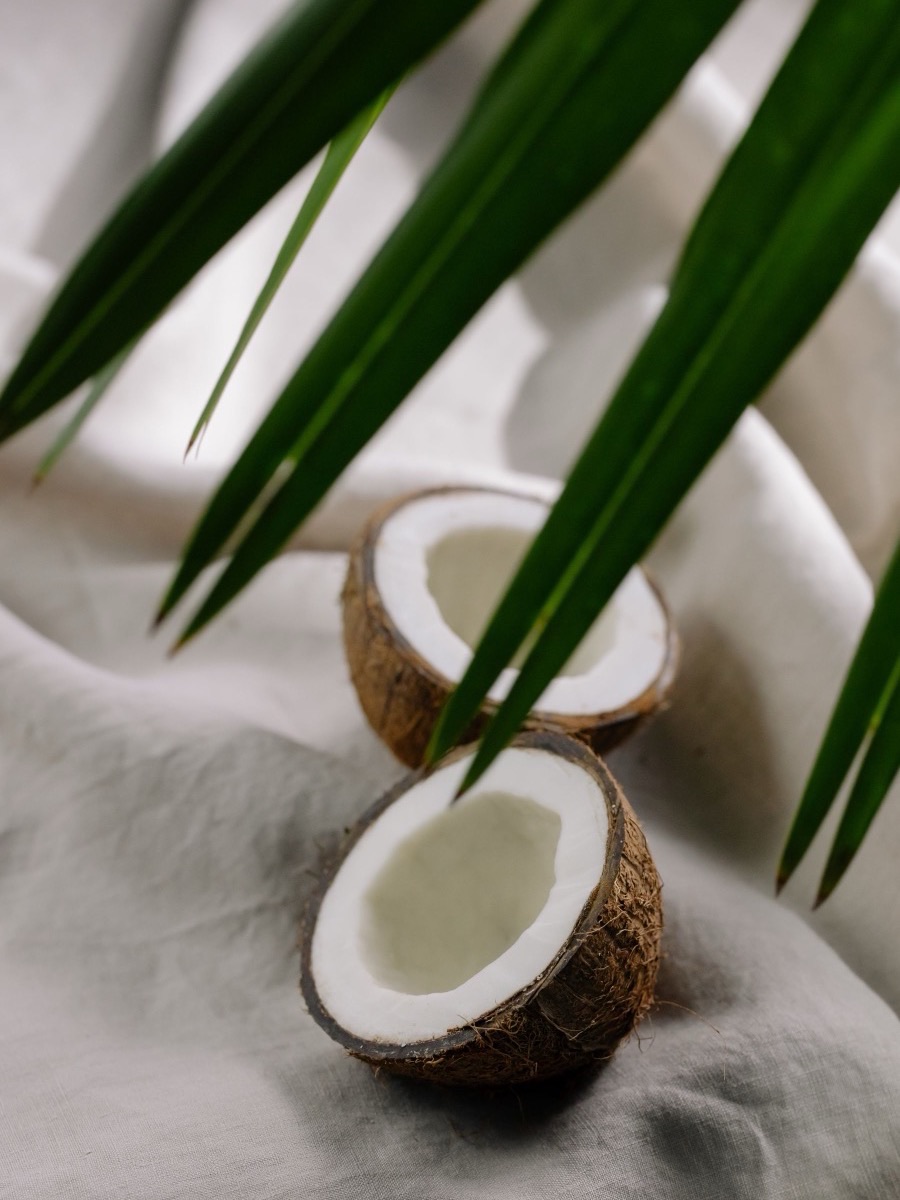
The coconut palm is part of daily life, food and home gardens in many regions of Vietnam; that is a cultural story, and a place of origin is stated for the raw material only when the supplier provides documents. Coconut oil is expressed from the coconut kernel; about 90% of it is saturated triglycerides (CIR 2011), with lauric acid as the main fatty acid, which is why the oil turns solid when it is cool and liquid when it is warm. A coconut body oil uses that profile: a thin oil film that leaves the skin on the body, arms and legs softer and less rough. Skin data are limited: in a randomized, double-blind trial in 34 people with mild to moderate dry skin, virgin coconut oil applied to the legs twice daily for 2 weeks increased skin hydration and surface lipids, on a par with mineral oil (Agero and Verallo-Rowell, 2004). This page differs from the massage oil and after-bath body oil pages because coconut oil is the named ingredient, so the formula must plan for three things specific to coconut oil: white crystallization in cold weather, the odor of virgin or refined oil, and oxidative stability when blended with other oils; on top of that comes the slip warning that applies to every oil product used around the bathroom. Butter-C offers turnkey OEM/ODM manufacturing, from formula development and testing to labeled finished goods and the notification dossier.
Formula base
Coconut oil as the named ingredient, liquid oils to keep the blend easy to use
A coconut body oil is an anhydrous (water-free) blend, so no emulsifier system is needed; anhydrous formulas usually contain no preservative (formulation practice), and a conclusion of low microbiological risk must be backed by a written assessment under ISO 29621 in the safety file. A product used around the bathroom can take in water from wet hands, so whether a microbial challenge test is needed is decided for each formula and pack.
Coconut oil
INCI Cocos Nucifera Oil (CosIng: oil expressed from the kernels of coconut seeds); virgin and refined oil share the same INCI and are distinguished on the certificate of analysis (COA). The CIR 2011 report lists use concentrations up to 80% and concludes the oil is safe as used; no "effective" concentration has been established. The level in a body oil is chosen by product format and cold-test results.
Liquid oils in the blend
Caprylic/capric triglyceride, which the market often calls "fractionated coconut oil", is a different INCI: a triester of glycerin with caprylic and capric acids that, according to CIR 2022, is rebuilt from fatty acids separated from coconut oil; it is liquid and has very few unsaturated components. High-oleic sunflower oil or jojoba can be added. Lowering the coconut oil share makes the blend solidify less in cold weather (formulation experience; the ratio is set by cold testing).
Esters to reduce greasiness
Coco-caprylate/caprate and isopropyl myristate help the oil set faster and leave fewer oil marks on clothing, which suits hot, humid climates when the oil covers a large skin area (formulation experience).
Antioxidant and scent
Tocopherol goes in when the oil phase is blended. Virgin coconut oil already smells of coconut, so added fragrance may not be needed. If fragrance is added, keep it low because a leave-on body oil covers a large area; ASEAN Annex III (version 2026-1) leaves entries 67–92 blank and has no list of fragrance allergens that must be named, while products exported to the EU name these substances above 0.001% in leave-on products, based on the fragrance COA.
Key technical points
Solidification, odor, oxidation and slipping: four issues for coconut oil
The four items below are settled on the sample together with the sensory profile, not after filling.
White crystallization in cold weather
Coconut oil is solid when cool and liquid when warm (background knowledge, because it is mostly saturated fat). White crystals, cloudiness or lumps in the bottle in cold weather are not a sign of spoilage if the oil melts back completely when warm and odor and color are unchanged. Coconut oil's melting and crystallization depend on composition and cooling rate, with several crystal forms (Guedes et al., 2026, a thermal energy storage study, not a cosmetic one), so the incoming specification records a melting range or cloud point from the supplier's TDS and COA rather than one fixed number.
Virgin or refined
Virgin oil keeps the coconut scent and contains phenolics such as ferulic and p-coumaric acids (Marina 2009, chemical assays, not evidence on skin); refined oil has been bleached and deodorized and suits products with their own fragrance. "Virgin" is stated only when the supplier confirms the process. Unrefined oil can carry coconut protein allergens (Iddagoda 2022, food allergy context); people allergic to coconut should ask a doctor.
Oxidation when oils are blended
Oils rich in saturated fat are usually more oxidation-stable than oils with many double bonds (background knowledge), but blending oils such as sunflower or jojoba brings unsaturated components into the whole mix. Peroxide value and acid value are tracked at intake and at each stability checkpoint; tocopherol, light-protective bottles and little headspace.
Limiting slips
Oil dripping onto the floor or bathtub makes surfaces slippery. Directions say to apply after leaving the shower area, standing on a dry surface; not to pour it into the bath or bathwater; a dispensing cap keeps each dose small; the label carries a slip warning. This is a practical suggestion, not a requirement of the ASEAN annexes.
Three formulation directions
Three formats of coconut body oil
Coconut–MCT oil, liquid year-round
Coconut oil at a moderate level in caprylic/capric triglyceride, with tocopherol; the ratio is set by cold testing at the expected storage temperature so the oil solidifies little or not at all in the bottle. Easy to sell across channels and works with a pump.
Virgin coconut oil in a jar
Almost only virgin coconut oil and tocopherol; it is allowed to set when cool and melts on contact with warm skin, keeping the natural coconut scent. A near-neat level is higher than the maximum in the CIR 2011 use survey (80%); the skin trials used virgin coconut oil itself as the test product, and the safety assessment in the PIF considers this level specifically. A wide-mouth jar is used because solid oil is hard to get out of a bottle; wet fingers bring water into the jar, so the microbiological risk is assessed for this pack.
Dry-touch oil
Refined coconut oil with coco-caprylate/caprate, MCT oil and jojoba; absorbs quickly with little shine, suited to hot, humid climates and users new to body oils.
Packaging is designed with the formula
Light-protective plastic flip-top or pump bottles for liquid formats (glass becomes slippery in oily hands in the bathroom); pumps are tested at low temperature because solid oil can block them. Wide-mouth jars for the solid format. No spray format, to limit oil on the floor.
Parameters we monitor
What our R&D team measures on every sample
Below are the parameters Butter-C monitors during formula development and scale-up to production. Specific limits are agreed with you on the approved sample and then written into the product's in-house specification.
- Melting range, cloud point
- Recorded from the TDS and COA for each coconut oil lot and written into the incoming specification.
- Solidify–melt cycling
- Freeze–thaw cycling in the final pack: the oil sets and then melts back completely, with no sediment and no separation from the blended oils; crystals are checked under magnification.
- Peroxide value, acid value
- Measured on the raw material at intake and on the finished product at each stability checkpoint; finished-product limits come from the formula's own stability data.
- Odor and color
- Compared with the reference sample at room temperature and 40 °C, with and without light; rancid odor or a change in coconut scent is tracked.
- Raw material impurities
- Fatty acid profile per COA; the incoming specification covers aflatoxin, pesticide residues and heavy metals, which CIR 2011 flags for control in plant-derived materials.
- Microbiology
- Tested at a GLP / ISO 17025-accredited laboratory; written microbiological risk assessment of the anhydrous system under ISO 29621.
- Skin evaluation
- Spreadability, set time, shine and oil marks on fabric when applied over a large area.
- Packaging compatibility
- Pump force and clogging when the oil sets, cap leakage, bottle deformation after long contact with oil.
Claims
Claims at the level of softening and moisturizing dry skin
The dry-skin data for coconut oil come from one small trial (34 people, 2 weeks; the authors concluded it was equivalent to mineral oil). Two other trials were run in patients with atopic dermatitis in a medical setting and are not used as cosmetic claims. Butter-C reviews the wording on the label and marketing materials as soon as the notification dossier is prepared.
Softens skin, moisturizes dry skin, helps skin feel less rough
Instead of: effects on atopic dermatitis, eczema or keratosis pilaris; use in place of medicine. These conditions need a dermatologist.
Contains coconut oil; "virgin coconut oil" when the supplier confirms it
Instead of: "better than mineral oil" (the trial found them equivalent); calling caprylic/capric triglyceride "coconut oil".
No claims about bacteria or fungi on the skin
Instead of: claims of acting on bacteria or fungi on the skin, citing laboratory data on lauric acid or monolaurin, or bacterial culture counts on the skin of patients with atopic dermatitis (a medical setting); these do not become a benefit of a body oil.
"Non-comedogenic" only after testing the finished product
Instead of: "pore-clogging" or "non-comedogenic" inferred from the oil's name; there is no human trial for coconut oil itself.
Vietnamese coconut, growing-region names
Stated only when the COA and supplier documents confirm them; the coconut palm story is cultural, not evidence of a benefit.
Label notes
The oil may solidify in cold weather; warm it to melt (stated only when stability testing confirms quality is unchanged); oil makes floors and bathtubs slippery, so apply after leaving the shower area and wipe up spills; for external use only, do not apply to broken skin; stop use if redness or itching occurs; people allergic to coconut and pregnant women should ask a doctor first. These are practical suggestions; label content is agreed with you.
Manufacturing specifications
Current capabilities
- Texture
- Liquid oil, dry-touch oil, or coconut oil that sets naturally in a jar.
- Pack formats
- Light-protective plastic flip-top bottles, pump bottles, wide-mouth jars. Volume agreed when packaging is selected.
- Minimum order quantity
- Agreed per order, depending on the formula direction and pack format chosen.
- Testing
- Performed at a GLP / ISO 17025-accredited laboratory; certificate of analysis delivered with every batch.
- Documentation
- Product Information File (PIF) and notification dossier prepared by Butter-C, with a coconut oil COA stating the oil type (virgin/refined) and fatty acid profile.
- Packaging
- Label design with a slip warning and a cold-weather crystallization note; printing and packing run in parallel with formula development.
Suggested product concept
Coconut–MCT body oil for after the shower
A product concept to help you picture the possibilities, not a ready-made product for sale. The actual formula is developed to match your brand positioning and price range.
Virgin coconut oil
The named ingredient with a light natural coconut scent; the level is set by cold testing.
MCT oil
Keeps the blend more liquid in cool weather, with a light feel and very few unsaturated components.
Tocopherol, no added fragrance
Antioxidant for the oil phase; the scent comes from the coconut oil itself.
200 ml light-protective plastic flip-top bottle
Small dose each time; the label carries a slip warning, directions to apply after leaving the shower area, and a cold-weather crystallization note.
Customization options
What you can specify
The same product type can serve very different customer groups depending on the brand. Tell us your requirements in the areas below and our team of pharmacists will develop a matching formula.
Type of coconut oil
Virgin with coconut scent, or refined and nearly odorless.
Product format
Liquid year-round, naturally setting in a jar, or dry-touch oil.
Blending oils
MCT oil, high-oleic sunflower oil, jojoba, dry esters; any other oil added is rechecked for oxidative stability and solidification behavior.
Scent
Natural coconut scent, fragrance-free, or a light fragrance version with fragrance allergens declared for the target market.
Packaging
Flip-top, pump or jar; retail or family size.
Ingredient direction
Vegan, mineral-oil-free, silicone-free; please state these from the start so suitable raw materials can be selected.
Further reading
Related topics
Coconut oil (Cocos Nucifera Oil) in cosmetics
Data on dry skin, the "pore-clogging" question, virgin, refined and fractionated oil, safety and ASEAN regulation (in Vietnamese).
Caprylic/capric triglyceride (MCT oil) in cosmetics
Why "fractionated coconut oil" is a different INCI (in Vietnamese).
Choosing oils in formulation
Oxidative stability, peroxide value and acid value of each oil group (in Vietnamese).
After-bath body oil OEM/ODM manufacturing
A fragrance-free sunflower–MCT body oil with a focus on older users.
Massage oil OEM/ODM manufacturing
Oils for spas: slip, working time and essential oil requirements differ from a body oil.
How we work
From idea to finished batch
Eight steps and three milestones signed off by both sides: approved sample, notification number, finished batch. Step-by-step details (in Vietnamese) →
Get started
Tell us about the product you plan to launch
Send us your product direction and expected volume. Our team will get back to you during business hours (Vietnam time, GMT+7).
Head office: Huu Le village, Dai Thanh commune, Hanoi · Factory: Thanh Oai Industrial Cluster, Binh Minh commune, Hanoi, Vietnam
Hotline +84 967 176 511 · [email protected] · Privacy policy ← Full catalog