 BUTTER-C
Signature ingredients
Aloe vera gel OEM/ODM manufacturing
Aloe Vera Gel · OEM/ODM
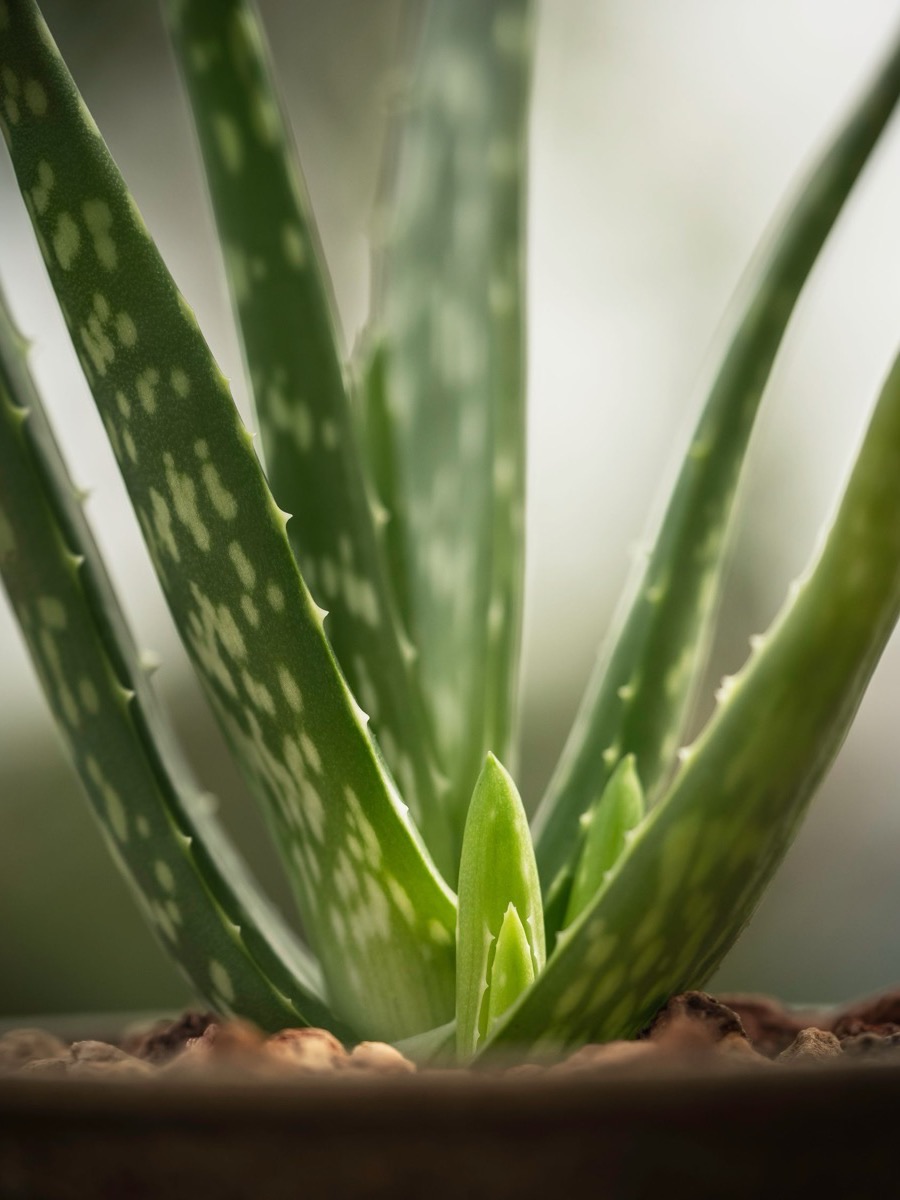
Aloe vera (Aloe barbadensis Miller) is known for the cool feel it gives the skin, and many Vietnamese households keep a pot of it at home. But "aloe" is not a single substance: according to the CIR Expert Panel (2007), the gel from the central part of the leaf, rich in polysaccharides, is the part used in cosmetics, while the yellow latex from the cells just under the leaf skin contains anthraquinones, a group of compounds that are phototoxic, irritating to the gut and laxative. This page therefore starts with the raw material: the INCI name Aloe Barbadensis Leaf Extract only says the part is the leaf, so the exact leaf part, processing, concentration ratio and anthraquinone content must be read from the supplier's technical data and certificate of analysis (COA); CIR recommends that anthraquinones in aloe ingredients for cosmetics not exceed 50 ppm. Evidence for moisturizing is limited: one trial in 20 women found that formulations with 0.10–0.50% freeze-dried aloe extract increased stratum corneum hydration after 2 weeks versus the vehicle, while a plain aloe polysaccharide solution dehydrated the skin after repeated application. The aloe gel Butter-C develops therefore always carries humectants, and its claims stop at moisturizing, soothing a dry, tight feeling and a cool feel on the face and body; it is not a product for burns or wounds. Unlike the general moisturizing gel page, this page centers on the aloe raw material itself. Butter-C offers turnkey OEM/ODM manufacturing, from formula development and testing to labeled finished goods and the notification dossier.
Formula base
Water gel: aloe raw material, humectants and gel network
An aloe gel has almost no oil phase: water, aloe raw material, humectants and a gelling polymer. Because it is water-rich and polysaccharide-rich, the formula needs a preservative system confirmed by a challenge test.
Aloe raw material
INCI Aloe Barbadensis Leaf Extract; the material stocked at the plant is a liquid. According to CIR (2007), the aloe content of commercial raw materials ranges from undiluted to 0.0005%; in products, aloe ingredients are usually used at ≤ 0.1%, sometimes up to 20%. The formula states "% raw material as supplied" together with the concentration ratio from the supplier's technical data.
Humectants
Glycerin, Butylene Glycol, Panthenol, Sodium Hyaluronate. This part is essential: a plain aloe polysaccharide solution dehydrates the skin after repeated application (Fox et al., 2014), so the gel needs humectants working alongside it.
Gel network
Carbomer neutralized with Sodium Hydroxide for a very clear gel; Xanthan Gum, Hydroxyethylcellulose, Sclerotium Gum for a carbomer-free version that tolerates electrolytes better but is less clear.
Preservation and stability
Phenoxyethanol up to 1% (ASEAN Annex VI, Ref 29) with Ethylhexylglycerin; Disodium EDTA chelates metal ions. The aloe raw material may already contain preservatives or pH adjusters from the supplier: read the technical data, list them in full on the label and count them toward the Annex VI limits.
Key technical points
Four points specific to a gel named after aloe
The gel network itself is familiar; what makes an aloe gel trustworthy is control of the aloe raw material. The four items below are settled before the formula is approved.
Leaf part and anthraquinones
The aloe leaf has two parts: the gel in the center and the cells under the skin that secrete a yellow latex containing anthraquinones such as aloin and aloe-emodin (CIR, 2007). The COA must state the leaf part, the process (decolorized, filtered or not), the concentration ratio and the anthraquinone content; CIR recommends no more than 50 ppm, whatever the aloe species. This level is a CIR recommendation, not an ASEAN limit: aloe, aloin and aloe-emodin are not named in Annexes II, III or VI. ASEAN Annex II Ref 1603 bans only the parent compound 9,10-anthraquinone (CAS 84-65-1); it is not an entry for the naturally occurring anthraquinones of aloe, but the COA should confirm this compound is absent.
Hydration on repeated use
Fox et al. (2014): a polysaccharide fraction of A. vera gel hydrated the skin after a single application but caused dehydration after multiple applications. The gel is combined with humectants; a moisturizing claim rests on the finished product, with stratum corneum hydration measured if a figure is to be stated.
Microbiology
Aloe liquid is a water base rich in polysaccharides: incoming raw material is tested for microbes lot by lot, and the finished product goes through an ISO 11930 preservative challenge test; wide-mouth jars need a stronger preservative system than tubes.
Clarity, color and viscosity
The aloe raw material, salt-type preservatives and Sodium Hyaluronate can thin or cloud a Carbomer gel, so viscosity is measured on the complete formula. The raw material is added in the cool-down phase without heating (in-house guidance, to be checked against the technical data); no verified literature data exist on its color stability, so discoloration is followed in light-exposure stability testing.
Three formulation directions
Three types of aloe gel
Clear aloe gel for face and body
Neutralized Carbomer, aloe raw material, glycerin, panthenol; breaks into water when spread and dries quickly. For daily use on oily and combination skin and on the body in hot weather.
Gum-based aloe gel, no carbomer
Xanthan Gum with Sclerotium Gum or Hydroxyethylcellulose; a slightly hazy, soft gel that tolerates electrolytes well; suits a plant-origin positioning.
Large-size aloe gel for use after sun exposure
A thin gel in a large bottle or tube, cool as the water evaporates; the label states clearly that it does not replace sunscreen. This is a care gel for intact skin, not a product for sunburned skin.
Packaging is designed with the formula
Tubes and pump bottles limit finger contact with the gel; jars need a spatula and a stricter challenge test. Clear packaging shows off the gel but also every air bubble, haze or color shift, so consider frosted or light-blocking packs.
Parameters we monitor
What our R&D lab measures on every sample
Below are the parameters Butter-C monitors during formula development and scale-up to production. Specific limits are agreed with you on the approved sample and then written into the product's in-house specification.
- Appearance & clarity
- Color, odor, clarity, air bubbles; compared with the reference sample under the same lighting.
- pH
- Measured directly at 25°C on every lot; pH governs the thickness of a Carbomer gel.
- Viscosity
- Rotational viscometer at room temperature and after accelerated aging, on the complete formula.
- Stability
- 40°C, freeze–thaw cycling and light exposure; watch for discoloration, haze, thinning, syneresis.
- Incoming aloe raw material
- COA checked for every lot: leaf part, process, concentration ratio, anthraquinones (CIR recommendation ≤ 50 ppm), microbiology; pesticide residues and heavy metals per CIR recommendations for botanical ingredients.
- Microbiology & preservative challenge
- Tested at a GLP / ISO 17025-accredited laboratory; preservative efficacy (challenge) test per ISO 11930.
- Irritation & tolerance
- Volunteer testing before the formula is finalized; CIR notes case reports of acute eczema, contact urticaria and dermatitis in people applying aloe ingredients.
- Skin hydration
- Stratum corneum hydration measured on volunteers against the plain gel base, when you want a figure on the label.
- Packaging compatibility
- Filled into the actual tube, bottle or jar; check sealing, weight loss from water evaporation, staining.
Claims
Claims at the level of moisturizing and a soothing, cool feel
Aloe carries word-of-mouth stories about burns and sunburn; data on wounds and burns belong to the medical setting, the evidence is weak, and it is not used as a basis for a cosmetic. A trial in which a 97.5% gel reduced UVB-induced redness (Reuter et al., 2008; 40 people, occluded application) is a test model and is not turned into a claim for sunburned skin. Butter-C reviews the wording on the label and marketing materials as soon as the notification dossier is prepared.
Moisturizes, helps skin feel soft
Hydration figures are stated only after measurement on the finished product. Instead of: restoring damaged skin, skin regeneration.
Soothes a dry, tight feeling; cool feel on the skin
Instead of: closing burns, drug-like claims about sunburn, soothing wounds, reducing inflamed redness.
Contains x% aloe raw material
Stated only when defined as the percentage of aloe raw material as supplied, backed by the formula record; it does not imply active content. Instead of: "99% pure aloe" without a definition.
For use after sun exposure; does not replace sunscreen
Instead of: restores skin after sun, "natural sunscreen".
No claims about microorganisms
CIR summarizes data on inhibition of microorganisms and viruses and on wound closure in animals; these are not cosmetic benefits. Instead of: claims to act on bacteria, promises about acne.
Label notes
Test on a small area of skin first; stop use if redness or itching occurs; do not apply to open wounds or severe burns, which need medical care; avoid the eyes; pregnant or breastfeeding women should ask a doctor (insufficient data). Do not write "non-allergenic" or "safe for all skin types". Label content is agreed with you.
Manufacturing specifications
Available capabilities
- Texture
- Clear water-break gel or soft, slightly hazy gum-based gel; color-free.
- Format
- Tube, pump bottle, flip-top bottle, jar. Volume agreed when selecting packaging.
- Minimum order quantity
- Agreed per order, depending on the formula direction and chosen format.
- Testing
- Tested at a GLP / ISO 17025-accredited laboratory; certificate of analysis delivered with every lot.
- Dossier
- Product Information File (PIF) and cosmetic product notification dossier prepared by Butter-C, with the aloe raw material COA stating the leaf part and anthraquinones.
- Packaging
- Label design, printing and packing run in parallel with formula development.
Suggested product concept
Clear aloe gel for face and body, fragrance-free
A product direction to help you picture the concept, not a ready-made product for sale. The actual formula is built around your brand's positioning and price range.
Aloe raw material with COA
The named ingredient; the percentage refers to the raw material as supplied, from lots with an anthraquinone specification.
Glycerin, Panthenol, Sodium Hyaluronate
Hold moisture and offset the dehydrating effect of repeatedly applied aloe polysaccharide solution.
Neutralized Carbomer, fragrance-free, color-free
A clear, cool gel with a short ingredient list.
200 ml tube
Limits finger contact with the gel; the label reminds users to test on a small area and that the gel does not replace sunscreen.
Customization options
Options you can specify
The same product type serves different customer groups for each brand. Tell us your requirements below and our pharmacists will build the matching formula.
Aloe raw material level
A moderate level for the story, or a high level replacing part of the water; levels above the maximum in the CIR use survey are assessed separately in the PIF safety assessment.
Gel network
Clear Carbomer or slightly hazy plant-origin gums.
Thickness and feel
Firm gel that holds a peak, soft gel or a fluid serum-like gel.
Companion ingredients
Panthenol, Sodium Hyaluronate, Allantoin; a few, not a long list.
Fragrance and color
We recommend fragrance-free and color-free; the green color often seen on the market comes from an Annex IV colorant, not from aloe.
Ingredient preferences
Alcohol-free, carbomer-free, vegan: please state these at the outset so we can choose suitable raw materials.
Further reading
Related topics
Aloe vera in cosmetics
Inner-leaf gel, leaf extract and leaf latex; evidence on moisturizing and soothing; levels, allergy and the anthraquinone limit (in Vietnamese).
Moisturizing gel OEM/ODM manufacturing
The general page: a multi-active gel named after Hyaluronic Acid, with aloe as just one soothing option.
B5 panthenol gel OEM/ODM manufacturing
A clear gel named after panthenol, an active with human data on use levels.
Carbomer in cosmetics
pH, electrolytes and clarity of Carbomer gels (in Vietnamese).
ISO 11930 preservative challenge test
Why water-rich, polysaccharide-rich gels must pass a challenge test (in Vietnamese).
Light and skin
Why an after-sun gel does not replace sunscreen (in Vietnamese).
How we work
From idea to finished batch
Eight steps and three milestones signed off by both sides: approved sample, notification number, finished batch. Step-by-step details (in Vietnamese) →
Get started
Tell us about the product you plan to launch
Send us your product direction and expected volume. Our team will get back to you during business hours (Vietnam time, GMT+7).
Head office: Huu Le village, Dai Thanh commune, Hanoi · Factory: Thanh Oai Industrial Cluster, Binh Minh commune, Hanoi, Vietnam
Hotline +84 967 176 511 · [email protected] · Privacy policy ← Full catalog