 BUTTER-C
Signature ingredients
Epsom bath salt OEM/ODM manufacturing
Epsom Bath Salt · Signature Ingredients · OEM/ODM
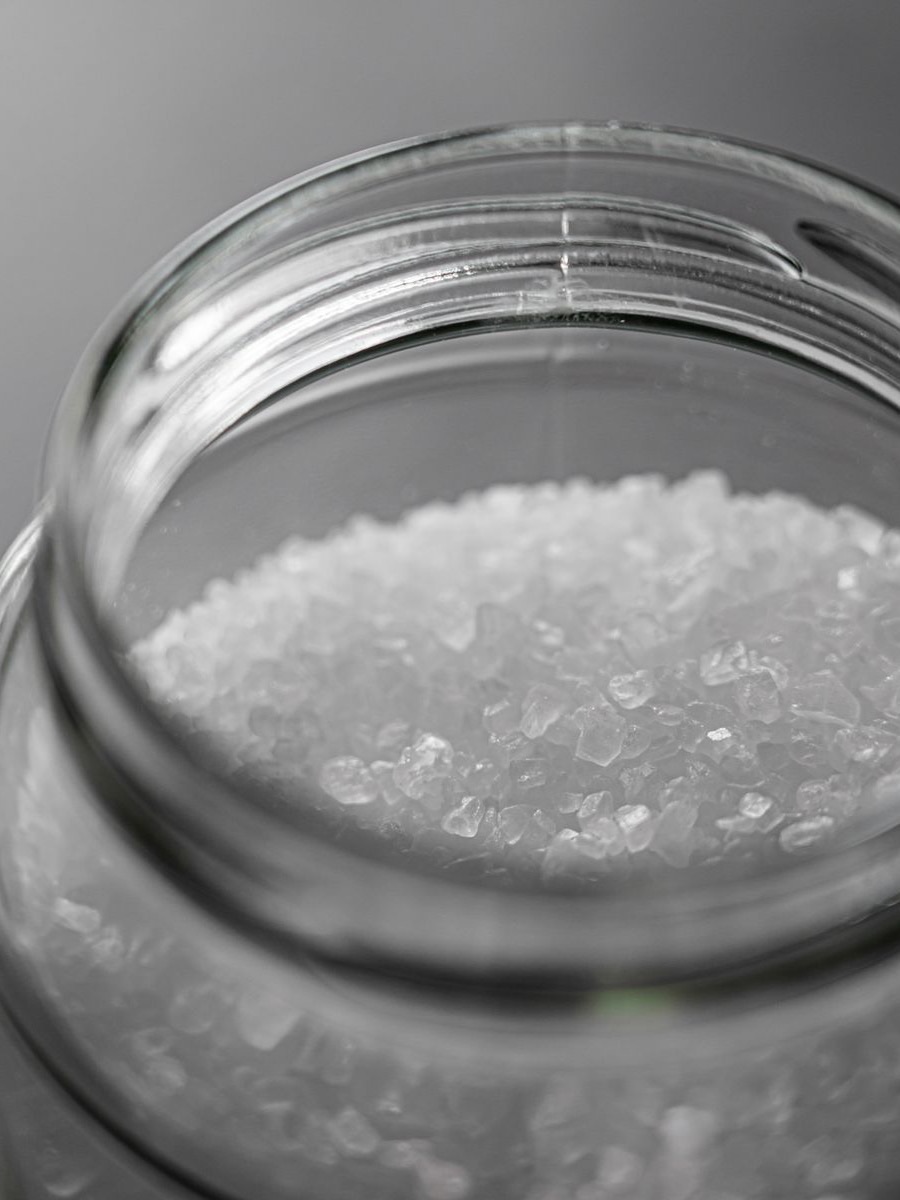
Epsom salt is the common name of magnesium sulfate with seven molecules of water (INCI: Magnesium Sulfate; MgSO4·7H2O) — clear white crystals that dissolve quickly in warm water, familiar in bath soaks and foot soaks. On the label the hydrated and anhydrous forms share one INCI name, yet 1 g of the anhydrous form corresponds to about 2.05 g of the heptahydrate, so the formula and the certificate of analysis (COA) must state the form. Epsom salt attracts many promises that “magnesium absorbs through the skin to relax muscles and top up magnesium”. Studies that actually measured this found otherwise: a review concluded that promoting transdermal magnesium is scientifically unsupported, a lotion containing magnesium sulfate did not change blood magnesium compared with placebo, and a magnesium gel applied to the thighs was no different from placebo for muscle soreness after exercise. Butter-C’s Epsom bath salt therefore promises what it can deliver: a warm, scented soak with a relaxing feel while soaking (sensory), and skin that feels soft after bathing — with crystals that do not cake, the right salt form, a heavy metal certificate and a label warning against eating or drinking. Butter-C offers turnkey OEM/ODM manufacturing, from formula development and testing to labeled finished goods and the notification dossier.
Formula base
Magnesium sulfate, blending salts, fragrance and anti-caking agent
An Epsom bath salt is a dry product: most of it is salt, and the rest decides the scent, how free-flowing it stays and how it dissolves in the tub.
Magnesium sulfate (Magnesium Sulfate) — Epsom salt
The material in Butter-C’s current ingredient list is magnesium sulfate heptahydrate (Epsom salt). The anhydrous form (a strongly hygroscopic powder) shares the INCI name and is sourced per order. The COA states the form (anhydrous, monohydrate or heptahydrate), MgSO4 content, moisture or loss on drying, heavy metals and particle size.
Blending salts and fizz
Sea salt (Maris Sal) adds bulk and lowers cost; sodium bicarbonate (Sodium Bicarbonate) brings the bath water to mildly alkaline and fizzes with citric acid — by molecular weight, a complete reaction needs about 1.31 g of sodium bicarbonate per 1 g of anhydrous citric acid.
Fragrance and dispersant
Essential oil or fragrance is sprayed onto the crystals; Polysorbate 20 premixed with the oil helps it disperse in the bath water instead of floating as a film. The oil level follows the lot’s IFRA certificate; for example, CIR records a maximum reported level of 0.33% for sweet orange peel oil in bath products diluted for use (market practice, not a limit).
Anti-caking
Silica keeps crystals free-flowing in humid weather; oils and fragrance sprayed onto the crystals also bring moisture, so the anti-caking level is set on real samples together with moisture-barrier packaging.
Key technical points
The right salt form, no caking, the right proportion and the right promise
These five points are where an Epsom bath salt differs from a standard bath salt; each is settled by a certificate of analysis or a test on the sample.
Anhydrous or heptahydrate — same INCI, different weights
The anhydrous form is 120.37 g/mol and hygroscopic; the heptahydrate is 246.48 g/mol, slowly loses water in dry air (effloresces), takes water back in humid air and loses 4 molecules of water at 70–80 °C (PubChem/HSDB). Switching forms at the same weight shifts the real MgSO4 content by close to a factor of two; heat-drying the heptahydrate also changes its water of crystallization. The formula states the form and the 2.05 conversion factor.
No caking, no weeping
The heptahydrate effloresces when dry and cakes when damp; the anhydrous form absorbs moisture strongly. Moisture is checked lot by lot, packing is done in a dry room, with moisture-barrier packaging. In fizzing salts with sodium bicarbonate and citric acid, the reaction itself produces water, so a little moisture makes the salt “fizz in the pack”, lose its fizz and swell the packaging — the fizzing version considers the anhydrous form or pre-dried salt (background knowledge, to be tested).
How much magnesium sulfate in the salt
CIR gives no recommended level; the 2013 industry survey reported magnesium sulfate at 0.1–49% in bath products diluted for use (CIR 2018, Table 1). Near-pure Epsom salt exceeds the surveyed range, so it should have its own safety assessment in the Product Information File (PIF) — Butter-C completes this before the proportion is fixed.
Magnesium through the skin: what studies measured
Gröber 2017 (narrative review): promoting transdermal magnesium is scientifically unsupported. Eisenkraft 2009 (randomized, double-blind, placebo-controlled, 34 healthy volunteers): a skin protectant lotion containing magnesium sulfate produced no difference in blood magnesium versus placebo — the result belongs to the whole product. Coates 2025 (randomized, double-blind, 35 active participants): a commercial magnesium gel applied to the thighs was no different from placebo for muscle soreness, strength, creatine kinase or interleukin-6. Ex vivo on intact pig skin, magnesium permeation after 24 hours did not differ from the control; on tape-stripped skin it rose by orders of magnitude (Camili 2026). Conclusion: there is no evidence that magnesium from bath salt reaches the blood enough to “top up magnesium” or relax muscles.
Heavy metals and regulations
Salt from natural minerals needs a heavy metal certificate; the finished product meets Annex 06-MP of Vietnam’s Circular 06/2011/TT-BYT (mercury 1 ppm, arsenic 5 ppm, lead 20 ppm). ASEAN: magnesium sulfate is not listed in Annexes II, III, VI (version 2026-1) or VII (version 2025-2); Annex II Ref 396 is “Dithio-2,2'-bispyridine-dioxide-1,1' (additive with trihydrated magnesium sulphate)” — pyrithione disulfide with magnesium sulfate trihydrate (CAS 43143-11-9), a different substance that does not apply to magnesium sulfate.
Three formulation directions
Three Epsom bath salt lines
Scented coarse Epsom salt
Almost entirely magnesium sulfate heptahydrate, plus essential oil premixed with a dispersant and an anti-caking agent; the clearest “Epsom salt” story. It exceeds the range surveyed by CIR, so it needs its own safety assessment in the PIF.
Epsom – sea salt soak
Magnesium sulfate blended with sea salt, optionally with dried flowers; the magnesium sulfate share is chosen by positioning, price and safety assessment. Dried flowers must be tested for microbiology.
Fizzing Epsom salt
Magnesium sulfate (usually anhydrous) with sodium bicarbonate and citric acid, fizzing when dropped into water; it needs tighter moisture control than the other two lines.
Packaging is designed with the formula
Stand-up zip pouches, screw-cap jars with a scoop, single-use sachets for spas and hotels. Packaging must block moisture; salt can rust metal caps; the fizzing version needs a good water-vapor barrier.
Parameters we monitor
What our R&D team measures on every sample
These are the parameters Butter-C tracks during formula development and scale-up. Specific limits are agreed with you on the approved sample and then written into the product’s in-house specification.
- Incoming magnesium sulfate file
- Salt form, MgSO4 content, loss on drying, heavy metals, particle size — lot by lot.
- Moisture
- Measured on the base salt and the finished product; the parameter that decides caking and fizz strength.
- Particle size distribution
- Sieved through the agreed mesh sizes; checking the share of fines and oversize crystals.
- Dissolution and oil film
- One dose added to warm water per the directions: time to dissolve, floating oil film, cloudiness; for the fizzing version, fizz time.
- pH of the diluted solution
- Measured on a solution made at the use dose. Magnesium sulfate heptahydrate gives a neutral solution (pH 6–7, HSDB); versions with sodium bicarbonate are mildly more alkaline.
- Heavy metals
- Checked against the raw material certificate and tested on the finished product per Annex 06-MP.
- Microbiology
- Tested at a GLP / ISO 17025-accredited laboratory, especially with dried flowers or botanical powders.
- Fragrance stability
- Odor assessed after accelerated aging and after repeated opening; citrus oils are also watched for oxidized notes.
- Packaging compatibility
- Watching for caking, efflorescence, cap rust, oil seepage, pack swelling (fizzing version) and moisture ingress through zips.
Claims
Claims for a bath soak containing magnesium sulfate
A bath soak is a cosmetic diluted in the bath: its functions are cleansing, scent and the feel of the soak. “Topping up magnesium” and “relieving muscle or joint pain” belong to drugs or food supplements; a trial of Epsom salt soaking in people with knee osteoarthritis (Kumar 2025) is a medical setting and is not used as a claim. We also avoid “softens the water” in the technical sense: magnesium is one of the two main ions that make water hard (basic chemistry). Butter-C reviews the wording on labels and marketing materials when preparing the notification dossier.
A relaxing feel while soaking
Describes the sensory experience of a warm soak. Instead of: magnesium supplementation through the skin, magnesium absorbed into muscles, muscle relaxation, relief of muscle or joint pain, fewer cramps.
A soothing scent
Describes the fragrance. Instead of: detox, body cleansing, helps you sleep, reduces stress.
Skin feels soft and clean after bathing (with sensory testing)
Instead of: restores skin, borrowing Dead Sea salt data for atopic skin (a mixed salt rich in magnesium chloride, a different material).
Contains Epsom salt (magnesium sulfate)
Describes the ingredient; INCI “Magnesium Sulfate”. Instead of: “Dead Sea mineral salt” when the material is magnesium sulfate, “natural, so completely safe”.
Label warnings
Not for eating or drinking; keep out of reach of children — according to CIR, the FDA requires magnesium sulfate heptahydrate in drug products to be labeled “Epsom salt”, a type that may be used as a laxative, and there are case reports of severe hypermagnesemia after drinking Epsom salt. Do not soak in concentrated salt on scratched or burned skin; people with reduced kidney function should ask a doctor before soaking regularly (a precautionary recommendation; no specific data).
Pregnancy
The pregnancy data on magnesium sulfate cited by CIR are intravenous use in obstetrics, not cosmetics. There are not enough data on bath salts in pregnancy — the label advises asking a doctor, especially for long hot baths.
Manufacturing specifications
Available capabilities
- Texture
- Coarse crystals, medium crystals, salt with dried flowers or fizzing powder.
- Magnesium sulfate material
- Magnesium sulfate heptahydrate is in Butter-C’s current ingredient list; the anhydrous form is sourced per order. Every lot comes with a certificate stating salt form and heavy metals.
- Pack formats
- Stand-up zip pouch, screw-cap jar with scoop, single-use sachet. Net weight agreed when packaging is selected.
- Minimum order quantity
- Agreed per order and per fragrance.
- Testing
- Performed at a GLP / ISO 17025-accredited laboratory, with a certificate of analysis delivered with every lot.
- Documentation
- Product Information File (PIF) and cosmetic product notification dossier prepared by Butter-C, with a separate safety assessment when the magnesium sulfate share exceeds the range surveyed by CIR.
- Packaging
- Label design with a not-for-consumption warning, printing and packing run in parallel with formulation.
Suggested product concept
Epsom – sea salt soak with sweet orange scent
A product concept to help you visualize the range — not a ready-made product for sale. The actual formula is developed around your brand positioning and price point.
Coarse magnesium sulfate heptahydrate and sea salt
Magnesium sulfate share set by positioning and safety assessment; certificate stating salt form and heavy metals.
Sweet orange peel oil with Polysorbate 20
Premixed so the oil disperses in the bath; tocopherol added as antioxidant; certificate with peroxide value; oil level per the lot’s IFRA certificate.
Silica anti-caking agent
Keeps crystals free-flowing in the humid season; level set after moisture and caking tests on samples.
500 g stand-up zip pouch with scoop
Moisture barrier; label with directions (dose per bath or foot basin) and “not for eating or drinking, keep out of reach of children”.
Customization options
What you can specify
The same product type serves different customer groups for each brand. Tell us your requirements in the areas below and our pharmacists will build the matching formula.
Epsom salt share
Near-pure Epsom salt or blended with sea salt — high shares need a separate safety assessment and affect cost.
Salt form and crystal size
Coarse heptahydrate for sensory appeal, anhydrous for the fizzing version; coarse, medium or fine.
Fragrance
Unscented, essential oil (sweet orange, lavender…) or fragrance; you can provide a reference scent.
Color and dried flowers
Natural salt color, a colorant listed in ASEAN Annex IV, or dried petals (microbiology tested).
Market
Domestic or EU export — EU goods need a fragrance allergen calculation; regulatory affairs decide the product category and labeling threshold (0.001% leave-on, 0.01% rinse-off).
Pack format
Family pouch, gift jar, refill pouch, single-use sachets for spas and hotels.
Further reading
Related knowledge
Magnesium sulfate (Epsom salt) in cosmetics
Anhydrous and heptahydrate forms, roles in W/O creams and bath salts, whether magnesium really crosses the skin, CIR and regulations (in Vietnamese).
Bath salt manufacturing
General page on bath soaks and salt scrubs; this page focuses on magnesium sulfate.
Shower oil manufacturing
Another water-free bathing format that turns milky on contact with water.
Sodium bicarbonate (baking soda) in cosmetics
The fizzing agent and mild alkaline buffer in bath salts and bath bombs; moisture is the main risk (in Vietnamese).
Sodium chloride in cosmetics
Telling Sodium Chloride, Maris Sal, Sea Salt and Dead Sea salt apart (in Vietnamese).
How we work
From idea to finished batch
Eight steps and three milestones signed off by both sides: approved sample, notification number, finished batch. Step-by-step details (in Vietnamese) →
Get started
Tell us about the product you plan to launch
Send us your product direction and expected volume. Our team will get back to you during business hours (Vietnam time, GMT+7).
Head office: Huu Le village, Dai Thanh commune, Hanoi · Factory: Thanh Oai Industrial Cluster, Binh Minh commune, Hanoi, Vietnam
Hotline +84 967 176 511 · [email protected] · Privacy policy ← Full catalog