 BUTTER-C
Signature ingredients
Rose water toner OEM/ODM manufacturing
Rose Water Toner · OEM/ODM
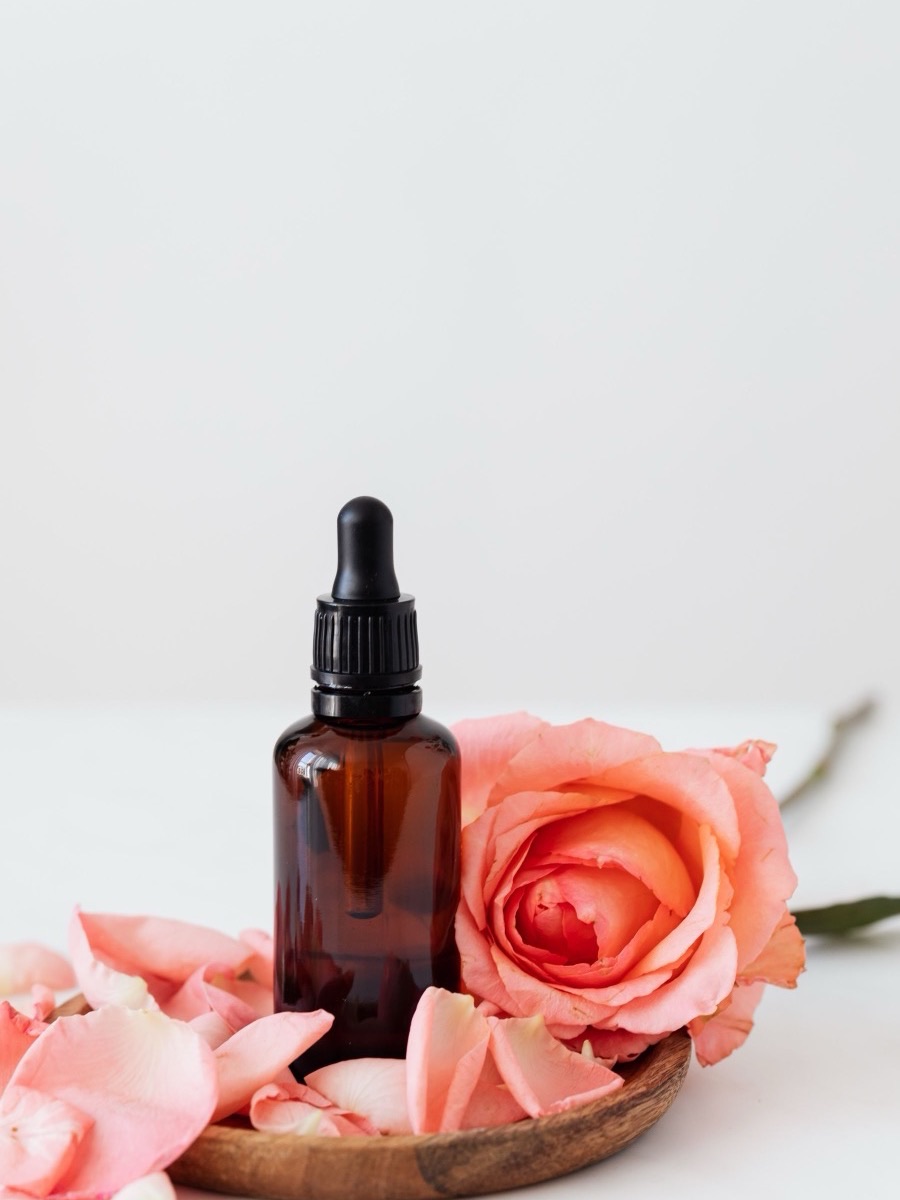
In Vietnam, “rose water” is the everyday name for any toner, whether or not it contains rose. This product lives up to the name: a toner made with Damask rose water (INCI Rosa Damascena Flower Water) — the water collected when rose petals are steam distilled, usually a by-product of rose oil distillation — Damask rose is grown widely in Turkey, Bulgaria and Iran; in Iran, rose water has its own name, “golab”. That is a cultural story, not evidence. Scientifically, the distillate carries under 1 g/L of aromatic compounds, mainly phenylethyl alcohol, geraniol and citronellol; data on skin effects are very limited, so its established role is a background scent and an ingredient story, while the hydrating and softening benefits come from the formula as a whole. Two things decide quality: hydrosols are highly prone to microbial contamination, and they contain small amounts of fragrance allergens. Butter-C offers full-service OEM/ODM manufacturing, from formula development to a labeled finished product with its cosmetic product notification.
Formula base
Rose water, humectants and the preservative system
A toner is almost entirely water, so every ingredient in the water phase affects scent, clarity and microbial safety. The groups below are the directions Butter-C works with.
Rose water (Rosa Damascena Flower Water)
The 2019 US cosmetic industry survey (in the 2022 CIR report) records use at 0.09–1.9% in leave-on products. Higher levels fall outside the surveyed range and need a separate safety assessment plus certificates of analysis for microbiology and methyleugenol. Some commercial materials contain only 0.1–1% rose water in a glycol base — always ask for the actual composition.
Humectants and soothing agents
Glycerin, Butylene Glycol, Betaine and Trehalose hold water; Panthenol and Allantoin soothe; Sodium Hyaluronate or Xanthan Gum for a slightly thicker version. This is the part that carries the product's hydrating and softening benefits.
Preservation and stability
Phenoxyethanol/Ethylhexylglycerin, or Sodium Benzoate/Potassium Sorbate when the pH is low enough; Citric Acid and Sodium Citrate to adjust and buffer pH; Disodium EDTA to protect color and scent. Rose water does not replace a preservative: ASEAN Annex VI notes that essential oils can inhibit microbes but are not on the list of preservatives.
Points to weigh when choosing
Do not add rose essential oil for a “stronger scent” without recalculating methyleugenol (Annex II, Ref 451) and fragrance allergens. Alcohol-free for the sensitive-skin version. Any preservative already present in the rose water raw material counts toward the Annex VI limits.
Key technical points
Microbiology, heat, methyleugenol and raw material origin
These are the points that set a rose water toner apart from a standard hydrating toner.
Hydrosols are highly prone to contamination
In one study, every rose and orange blossom hydrosol sample stored in non-sterile containers grew bacteria, both at room temperature and at 5 °C, reaching about 7 log10 CFU/mL (the French Pharmacopoeia recommends a maximum of 2 log10 CFU/mL); mostly Gram-negative environmental bacteria such as Pseudomonas and the Burkholderia cepacia complex. Hence: a microbiological certificate of analysis for every lot, retesting on receipt, sealed storage, small portions, labeling the opening date, and an ISO 11930 challenge test on the finished product.
No heating of rose water
Phenylethyl alcohol — the main aromatic compound in rose water — is completely lost under conventional heat pasteurization. Rose water goes into the cool-down phase, replacing part of the water (factory practice, validated on each formula).
Methyleugenol at high use levels
ASEAN Annex II, Ref 451 limits methyleugenol from natural sources to 0.0002% in leave-on products. In an illustrative example combining two sources (not a lot measurement), a toner made of about half rose water could already approach this limit. High use levels require a methyleugenol certificate of analysis.
Origin and adulteration
Some market samples of rose water have been found adulterated with other plant oils or synthetic fragrance, and a chromatogram showing the “three main compounds” does not prove a genuine distillate. The supplier dossier should state the rose species, fresh or dried flowers, distillation method, carrier, preservative and the storage container material.
Three formulation directions
Three ways to use the same ingredient
Liquid toner for cotton pad or hands
Water-clear, lightly rose-scented, dries quickly. The format Vietnamese consumers know well; a large size is a selling point.
Lightly thickened toner
Sodium Hyaluronate or a gum gives a more nourishing feel for patting on in layers. For dry skin.
Fine-mist spray toner
For use during the day on bare skin. According to CIR, accidental inhalation from cosmetic sprays is not a significant exposure route for this ingredient group; directions still advise against spraying into the eyes. A fine mist pump defines the experience.
Packaging designed alongside the formula
Screw caps or flip-tops with a small opening limit contamination from fingers better than wide-mouth bottles. Clear bottles show off clarity but need light-exposure testing; colored bottles reduce light (practice) — choose after the stability results.
Parameters we monitor
What our R&D lab measures on every sample
Below are the parameters Butter-C monitors during formula development and scale-up to production. Specific limits are agreed with you on the approved sample and then written into the product's in-house specification.
- Incoming raw materials
- A microbiological certificate of analysis for every rose water lot (total aerobic count, total yeast and mold count, objectionable organisms per in-house specification), retested on receipt; scent compared with a reference sample; preservatives and carriers already present.
- Sensory profile & scent
- Color, scent and clarity. A changed scent between lots may signal microbial contamination — bacteria in hydrosols can transform geraniol — so it is always checked against microbiology results.
- pH
- Measured directly at 25°C and tracked for drift; pH is chosen to suit the preservative system. The pH value is a product parameter, not a skin benefit.
- Viscosity
- For the thickened version: rotational viscometer; tied to the flip-top or spray pump.
- Stability
- 40°C, freeze–thaw cycling and light exposure in the actual packaging; monitoring for haze, scent change and color change.
- Methyleugenol & fragrance allergens
- Calculated from certificates of analysis when rose water is used at high levels, when essential oil is added, or for EU export (geraniol, citronellol, eugenol, linalool…).
- Microbiology & preservative challenge
- Tested at a GLP / ISO 17025-accredited laboratory; preservative efficacy (challenge) test according to ISO 11930 on the finished product.
- Skin tolerance
- Repeat insult patch test or in-use test on volunteers before a sensitive-skin positioning is stated — needs testing.
- Packaging compatibility
- Filled into the actual bottles, caps and spray pumps to be used; checking seal integrity, material odor and weight loss.
Claims
Writing claims within the cosmetic scope
Searching PubMed, Butter-C found only one human study applying rose water itself to skin, and it showed no significant reduction in bacteria on the hands; the rest is laboratory data. No study supports “balances skin pH” or “tightens pores” for rose water. Butter-C reviews the wording on labels and marketing materials while preparing the cosmetic product notification.
Contains Damask rose water
Use the correct INCI, Rosa Damascena Flower Water. Instead of: “pure rose water” when the raw material is a glycol blend or made from essential oil or fragrance.
Soft, natural rose scent
Only when no synthetic fragrance is added. Instead of: relieves stress, helps you sleep, relieves pain.
Hydrates, cools and softens skin
A benefit of the finished product, to be tested on the finished product. Instead of: repairs skin, anti-inflammatory, heals.
Leaves skin soft and smooth, ready for the next step
Describes the after-use feel. Instead of: balances skin pH, tightens pores, shrinks pores — consider only with testing on the finished product.
Labeling and cautions
Vietnam has no mandatory threshold for naming geraniol or citronellol separately: declare the full INCI including the raw material's solvent and preservative; “People allergic to perfume or essential oils should test on a small area of skin first”; avoid the eyes. EU export: name geraniol, citronellol, etc. when above 0.001% (leave-on) per certificate of analysis. Instead of: hypoallergenic, suitable for all skin types, safe during pregnancy.
Preservation
Describe the preservative system actually used. Instead of: cleanses away bacteria, prevents acne, “naturally preserved”, “preservative-free”.
Manufacturing specifications
Current capabilities
- Texture
- Liquid toner, lightly thickened toner or fine-mist spray; clear, colorless or faintly tinted.
- Packaging format
- Screw-cap, flip-top or fine-mist spray bottles. Volume agreed when selecting packaging.
- Minimum order quantity
- Agreed per order — depending on the formula direction and the chosen packaging format.
- Testing
- Performed at a GLP / ISO 17025-accredited laboratory, with a certificate of analysis delivered with each batch.
- Documentation
- Product Information File (PIF) and cosmetic product notification dossier prepared by Butter-C, including the origin dossier and certificates of analysis for the rose water.
- Packaging
- Label design, printing and packing run in parallel with formula development.
Suggested product concept
Hydrating rose water toner with no added fragrance
A product concept to help you picture the possibilities, not a ready-made product for sale. The actual formula is developed to your brand positioning and price range.
Damask rose water
Within the range surveyed for leave-on products, from a raw material with a microbiological certificate for every lot and an origin dossier; the rose scent comes from the distillate itself.
Glycerin and Panthenol
The part that carries the hydrating and softening benefits; an alcohol-free base.
No added fragrance or essential oil
Fewer fragrance allergens for sensitive users; a sensitive-skin positioning is stated only after tolerance testing.
150 ml screw-cap bottle
Small opening, for use with a cotton pad or poured into the hand; a fine-mist spray version can share the same base formula.
Customization options
What you can specify
The same product type can serve very different customers depending on the brand. Tell us your requirements in the areas below, and our team of pharmacists will develop a matching formula.
Rose water level
Within the surveyed range, or higher with a separate safety assessment and certificates of analysis for methyleugenol and microbiology.
Application
Cotton pad, patted on by hand or fine-mist spray.
Texture
Water-thin or lightly thickened.
Supporting care ingredients
Glycerin, Betaine, Panthenol, Allantoin, Sodium Hyaluronate, Trehalose.
Origin dossier
Rose source, country of distillation, fresh or dried flowers — stated on the label only with supplier documentation.
Ingredient direction
Alcohol-free, no added fragrance, vegan — please specify these from the start so suitable raw materials and preservatives can be selected.
Further reading
Related topics
Rose water (Rosa damascena) in cosmetics
Composition, limited evidence, microbial risk, fragrance allergy and ASEAN regulation (in Vietnamese).
Toner manufacturing
Three toner types: hydrating, second cleanse and gentle exfoliating.
Facial mist manufacturing
A fine-mist format that can include botanical distillates.
Toner, essence, serum and moisturizer
Where toner sits in a skincare routine (in Vietnamese).
Microbial control in cosmetics
Why water-rich raw materials such as botanical distillates need tight microbial control (in Vietnamese).
How we work
From idea to finished batch
Eight steps and three milestones signed off by both sides: approved sample, notification number, finished batch. Step-by-step details (in Vietnamese) →
Get started
Tell us about the product you plan to launch
Send us your product direction and expected volume. Our team will get back to you during business hours (Vietnam time, GMT+7).
Head office: Huu Le village, Dai Thanh commune, Hanoi · Factory: Thanh Oai Industrial Cluster, Binh Minh commune, Hanoi, Vietnam
Hotline +84 967 176 511 · [email protected] · Privacy policy ← Full catalog