 BUTTER-C
Signature ingredients
Petrolatum balm OEM/ODM manufacturing
Petrolatum Balm · Signature Ingredients · OEM/ODM
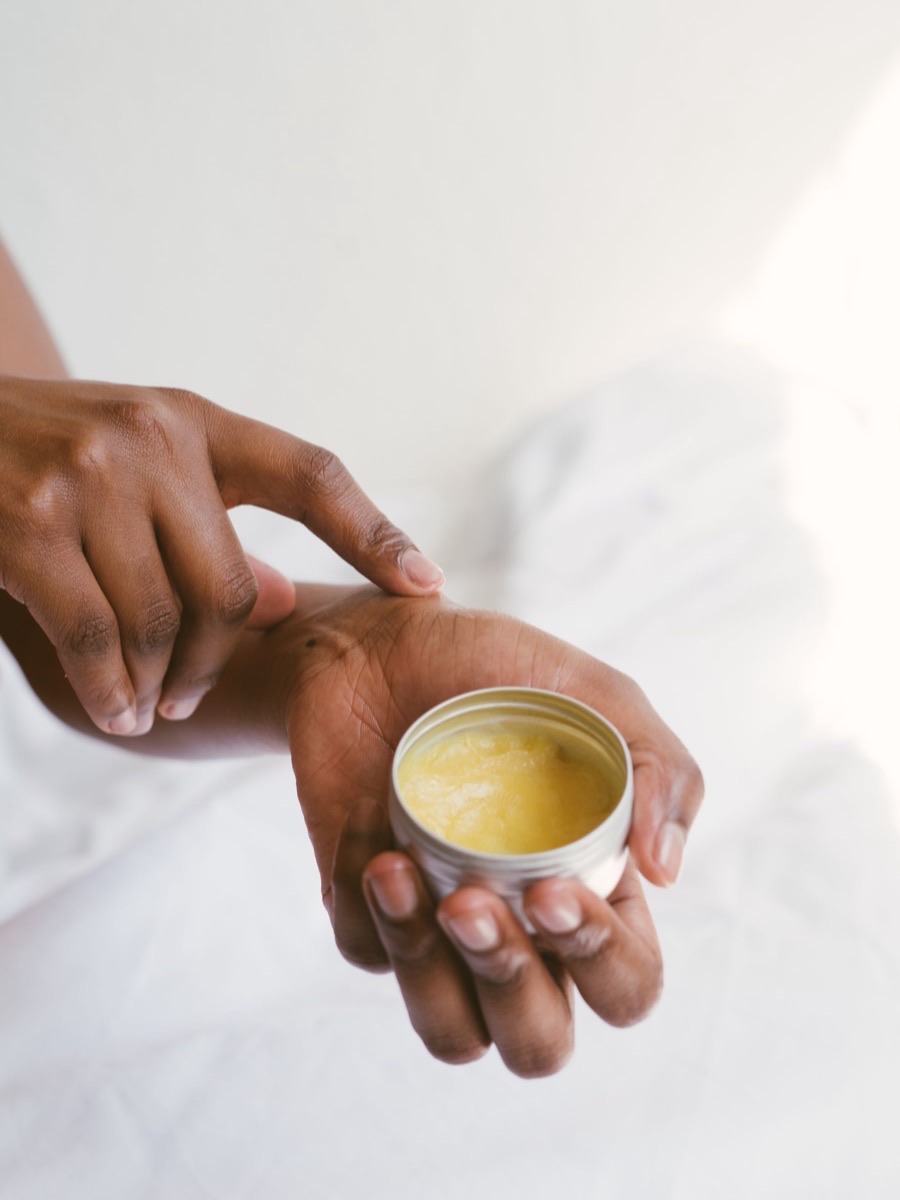
Petrolatum — petroleum jelly — is a semisolid mixture of hydrocarbons obtained from petroleum by refining. It has no defined molecular formula, carries CAS number 8009-03-8 and appears on labels under the INCI name Petrolatum (this page does not use trade names for the raw material). A tin of balm named after petrolatum promises users exactly what this ingredient can do: an occlusive layer that helps dry, rough hands, elbows and heels feel softer. On the forearms of 26 healthy young women, a single application of petrolatum reduced transepidermal water loss after 15 minutes and kept skin hydration raised for more than 4 hours (De Paepe 2014); petrolatum permeates the spaces between stratum corneum cells rather than forming a sealed film on the surface (Ghadially 1992). The difficulty lies elsewhere: ASEAN Annex II accepts petrolatum only when the full refining history is known and it can be shown that the substance it is produced from is not a carcinogen — so the supplier dossier matters as much as the formula; the balm also has to hold its shape in a hot climate and must not be promoted as a product for wounds. The heel cream and hand cream pages cover emulsions with urea and fragrance; the shea body butter page covers plant butter; this page focuses on an anhydrous balm named after petrolatum. Butter-C offers full-service OEM/ODM manufacturing, from raw material selection to a labeled finished product with its cosmetic product notification.
Formula base
Petrolatum is the backbone; the rest adjusts hardness and feel
In an anhydrous balm, petrolatum is the main ingredient; waxes, liquid oils and butters only adjust hardness, spreadability and the story. The first decision is therefore choosing the right grade of petrolatum with refining records.
Petrolatum (petroleum jelly)
A semisolid mixture of hydrocarbons; mineral oils and waxes used in cosmetics are mainly saturated straight-chain, branched and ring hydrocarbons with carbon chains longer than C14 (Chuberre 2019). Petrolatum is stable and does not oxidize or turn rancid like plant oils (Chuberre 2019). We do not yet have a verified source for the usual market concentration range of petrolatum, so its share in the balm is set by hardness and sensory testing on samples, not by a generic figure.
Structuring waxes
Microcrystalline Wax (CIR 1984 gives a melting range of 63–90.5 °C depending on grade) or a small amount of beeswax (Cera Alba) keeps the balm from softening in hot weather and makes a stick format possible. Microcrystalline wax is also a petroleum hydrocarbon and needs a COA; beeswax does not fit a vegan positioning.
Liquid oils and butters alongside
Refined mineral oil (Paraffinum Liquidum) or Caprylic/Capric Triglyceride softens the balm and helps it spread; shea butter (Butyrospermum Parkii Butter) adds richness and a plant story. Plant oils and butters can turn rancid and need Tocopherol — petrolatum itself does not.
Water-free, fragrance optional
With no water phase, a preservative for water is usually unnecessary, but an open tin and wet fingers can still bring in water and microbes — Butter-C prepares a microbiological risk assessment under ISO 29621 for anhydrous formats. Fragrance is optional; a fragrance-free version suits dry, sore hands.
Key technical points
Four things specific to a tin named after petrolatum
The points below come from petrolatum itself: the legal condition on refining, petroleum impurities, the occlusive mechanism and how a hydrocarbon base behaves in a hot climate.
Refining records are a legal condition
ASEAN Annex II (version 2026-1, 22 June 2026), Ref 904, CAS 8009-03-8: “Petrolatum, except if the full refining history is known and it can be shown that the substance from which it is produced is not a carcinogen”. Refs 905–910 set the same condition for oxidised, alumina-treated, hydrotreated, carbon-treated, silicic acid-treated and clay-treated petrolatum. This is a condition on refining records, not a concentration limit; petrolatum has no entry in Annexes III, VI or VII. Butter-C asks suppliers for origin documents, the refining process, a pharmacopoeia certificate where available and a COA for every lot, kept in the Product Information File (PIF).
Petroleum impurities: PAH, MOAH
The safety concern lies with polycyclic aromatic hydrocarbons (PAH) in unrefined material; refining is designed to exclude substances with carcinogenic potential and minimize the aromatic MOAH fraction (Chuberre 2019, first author from a cosmetics company). Authors from the German Federal Institute for Risk Assessment (BfR) found no indication of carcinogenic effects in animals dermally or orally exposed to highly refined mineral oils and waxes (Pirow 2019). A German state testing laboratory measured 27 mineral hydrocarbon samples (including petroleum jelly) by NMR: MOAH 0.02–1.10 g/100 g (Lachenmeier 2017). Purity depends on the crude oil stock, production and packaging (Ulrich 2004) — a new supplier means a new dossier.
Occlusive, but not a sealed film
After a single application on the forearms of 26 young women, petrolatum reduced transepidermal water loss after 15 minutes and raised skin hydration for more than 4 hours; three silicone excipients tested alongside did not moisturize the skin (De Paepe 2014). In a within-person randomized trial completed by 54 participants, both olive oil and petrolatum increased stratum corneum hydration, and only petrolatum reduced transepidermal water loss (Rubio-Santoyo 2025). In volunteers whose barrier was disrupted with acetone, sites where petrolatum was applied recovered barrier function faster than untreated sites; petrolatum was found in the intercellular spaces at all levels of the stratum corneum (Ghadially 1992; the abstract does not give the sample size). The “90–98% less water loss” figure does not appear in the study abstracts we have read, so we do not use it.
Heat, shine and gloves
An anhydrous balm left in a car or handbag in summer can soften and weep oil: the melting behavior of the blend is set by the ratio of waxes to oils and confirmed by holding samples at high temperature (formulation experience; specific temperatures follow each grade’s COA and TDS). A hydrocarbon base looks shiny and greasy if applied thickly — directions say to apply a thin layer. According to the WHO hand hygiene guidelines (2009), petroleum-based creams can damage latex gloves — worth printing on the label for people who wear gloves at work.
Three formulation directions
Three ways for petrolatum to carry the name on the tin
Near single-ingredient petrolatum balm
Refined petrolatum makes up almost the whole formula; a short label, stable, no antioxidant needed. Rich and shiny; consistency depends on the raw material grade (per TDS and COA); suited to very dry areas such as elbows and heels.
Petrolatum balm with shea butter and oils
Shea butter and Caprylic/Capric Triglyceride make the balm softer and easier to spread and add a plant story; the oil and butter phase needs Tocopherol, and graininess of the butter after heat–cold cycles must be monitored (see the shea body butter page).
Petrolatum stick
Microcrystalline wax or beeswax raises hardness for a twist-up stick applied directly to the backs of hands, elbows and heels without fingers touching the product. This page covers hands and body; lip products, where part of the product is swallowed, need a separate assessment (petrolatum article, Niederer 2016) and are not combined here.
Packaging is part of the formula
Aluminum, tin or plastic wide-mouth jars for soft balms; twist-up sticks for firm ones; aluminum tubes for soft balms when contamination during shared use is a concern. Monitor oil seeping through jar walls, lid seals and stick deformation in heat.
Parameters we monitor
What our R&D lab measures on every sample
Below are the parameters Butter-C monitors while developing the formula and scaling it up for production. Specific limits are agreed with you on the approved sample and then written into the product’s in-house specification.
- Petrolatum records per lot
- COA for every lot, origin documents and refining process meeting the condition of Annex II Ref 904, pharmacopoeia certificate where available; a new supplier means a new dossier.
- Texture & hardness
- Hardness, spreadability and surface compared with the approved sample; sticks checked for breaking or cracking when twisted.
- Melting at high temperature
- Samples held at high temperature and through freeze–thaw cycling; shape retention, oil weeping and separation observed.
- Oxidation of the plant oil phase
- For versions with plant butters or oils: odor and peroxide value after accelerated aging; Butter-C does not apply one generic limit but sets it from the stability data of the formula itself.
- Microbiology
- Tested at a GLP / ISO 17025-accredited laboratory; anhydrous formats get a microbiological risk assessment under ISO 29621.
- Skin feel
- Shine, greasiness, time to a dry finish, feel after a few hand washes — the basis for “helps dry, rough skin feel softer”.
- Packaging compatibility
- Oil seeping through jar walls, corrosion or discoloration of metal tins, lid tightness.
- Net content
- Checked by weight on every lot, especially small tins and sticks.
Claims
Writing claims within the cosmetic scope
Human data for petrolatum in healthy skin come from small, short-term studies on occlusion. Data in atopic dermatitis (Czarnowicki 2016 — 36 healthy people and 13 people with atopic dermatitis, a mechanistic study) and in wound care after dermatologic procedures (Smack 1996) are a medical setting and do not become claims for a cosmetic product. A product intended to form a protective film over skin that is damaged or uncomfortable may fall under medical devices — see the multi-purpose skin cream page. Butter-C reviews the wording on labels and promotional materials as soon as the notification dossier is prepared.
Occlusive; helps limit water loss from the skin surface
State a figure only when measured on the finished product itself. Instead of: “98% less water loss through the skin”, “a completely sealed protective film”.
Helps dry, rough skin feel softer
Instead of: drug-like claims about cracked skin, eczema, atopic dermatitis.
Moisturizes dry hands, elbows and heels
Instead of: closes cracks, restores wounds, for burns.
Contains refined petrolatum (petroleum jelly)
INCI “Petrolatum”; the word “refined” goes with the supplier’s refining records; no trade names for the raw material. Instead of: “non-toxic”, “safe for all ages”.
Directions and label notes
Apply a thin layer to clean, dry skin; do not apply to open wounds, burns or weeping skin; petroleum-based creams can damage latex gloves (WHO, 2009); stop use if the skin turns red or itchy; keep out of reach of children. Instead of: suitable for any wound, skin care for premature infants.
Acne and allergy: say only what the data support
A 2024 review regards “petrolatum causes acne” as a misconception (Kamrani 2024; the abstract gives no figures); in the rabbit ear model, petrolatum was not among the comedogenic materials (Nguyen 2007 — animal data). Sensitization to petrolatum is rare (case report, Ulrich 2004); the authors name PAH such as phenanthrene derivatives as the sensitizing impurities of petrolatum. Breakouts still depend on the formula and the individual. Extremely low birth weight infants are a separate medical setting (Campbell 2000); pregnancy: not enough data, ask a doctor. Instead of: “never causes breakouts”, “gentle for every skin”.
Manufacturing specifications
Capabilities
- Texture
- Soft balm in a jar, stick, soft balm in a tube.
- Pack formats
- Aluminum tins, tin cans, plastic jars, twist-up sticks, aluminum tubes. Fill weight agreed when packaging is selected.
- Minimum order quantity
- Agreed per order — depends on the petrolatum grade, formula direction and pack format chosen.
- Testing
- Tested at a GLP / ISO 17025-accredited laboratory, with a certificate of analysis delivered with every lot.
- Dossier
- Product Information File (PIF) and cosmetic product notification prepared by Butter-C, including the refining records and lot COAs for petrolatum to check against ASEAN Annex II.
- Packaging
- Label design, printing and packing run in parallel with formula development.
Suggested product concept
Fragrance-free petrolatum balm for backs of hands and elbows
A product concept to help you picture the range, not a ready-made product for sale. The actual formula is built around your brand’s positioning and price range.
Refined petrolatum with records
Most of the formula; refining records and lot COAs meeting Annex II Ref 904.
Shea butter, Caprylic/Capric Triglyceride
Make the balm softer and easier to spread than solid petrolatum.
Microcrystalline wax, Tocopherol
Hold the shape in hot weather; protect the plant butter and oil phase from rancidity.
30 g aluminum tin
Pocket-sized; the label says apply a thin layer, do not use on open wounds, note on latex gloves, store in a cool place.
Customization options
What you can specify
The same product type can serve very different customers. Tell us your requirements in the areas below and our pharmacists will build a matching formula.
Petrolatum grade
Pharmacopoeia or cosmetic grade, consistency per TDS — decides feel, dossier and price; every grade needs refining records.
Format and hardness
Soft balm in a jar, twist-up stick or soft balm in a tube; markets that are hot year-round need a higher melting point.
Plant ingredients
Petrolatum alone or with shea butter and oils — changes feel, oxidative stability and label wording.
Area of use
Backs of hands, elbows, heels, dry areas of the body; lip and eye-area products are not combined into the same formula.
Fragrance
Fragrance-free or fragranced; fragrance is a source of contact allergy. The ASEAN annexes have no list of fragrance allergens that must be named; for export to the EU, allergens are named when they exceed 0.001% (leave-on) under EU rules, based on the fragrance supplier’s composition sheet.
Ingredient positioning
Petrolatum is a mineral hydrocarbon: a brand that needs “mineral oil-free” should choose the shea body butter instead of this page; a vegan version swaps beeswax for microcrystalline wax — please tell us at the start.
Further reading
Related knowledge
Petrolatum in cosmetics
Occlusive mechanism, degree of refining, PAH, MOSH and the condition in ASEAN Annex II (in Vietnamese).
Heel cream manufacturing
Emulsions with urea and acids for thick skin — different from an anhydrous balm named after petrolatum.
Hand cream manufacturing
Fast-absorbing, perfumed creams used many times a day.
Shea body butter manufacturing
A plant-based anhydrous butter for brands that want “mineral oil-free”.
Multi-purpose skin cream manufacturing
When the purpose is a protective film over uncomfortable skin: the cosmetic–medical device boundary.
Dry, cracked hands from frequent washing
Causes, gloves and how to choose a hand cream (in Vietnamese).
How we work
From idea to finished batch
Eight steps and three milestones signed off by both sides: approved sample, notification number, finished batch. Step-by-step details (in Vietnamese) →
Get started
Tell us about the product you plan to launch
Send us your product direction and expected volume. Our team will get back to you during business hours (Vietnam time, GMT+7).
Head office: Huu Le village, Dai Thanh commune, Hanoi · Factory: Thanh Oai Industrial Cluster, Binh Minh commune, Hanoi, Vietnam
Hotline +84 967 176 511 · [email protected] · Privacy policy ← Full catalog