 BUTTER-C
Signature ingredients
Pomegranate extract serum OEM/ODM manufacturing
Pomegranate Extract Serum · OEM/ODM
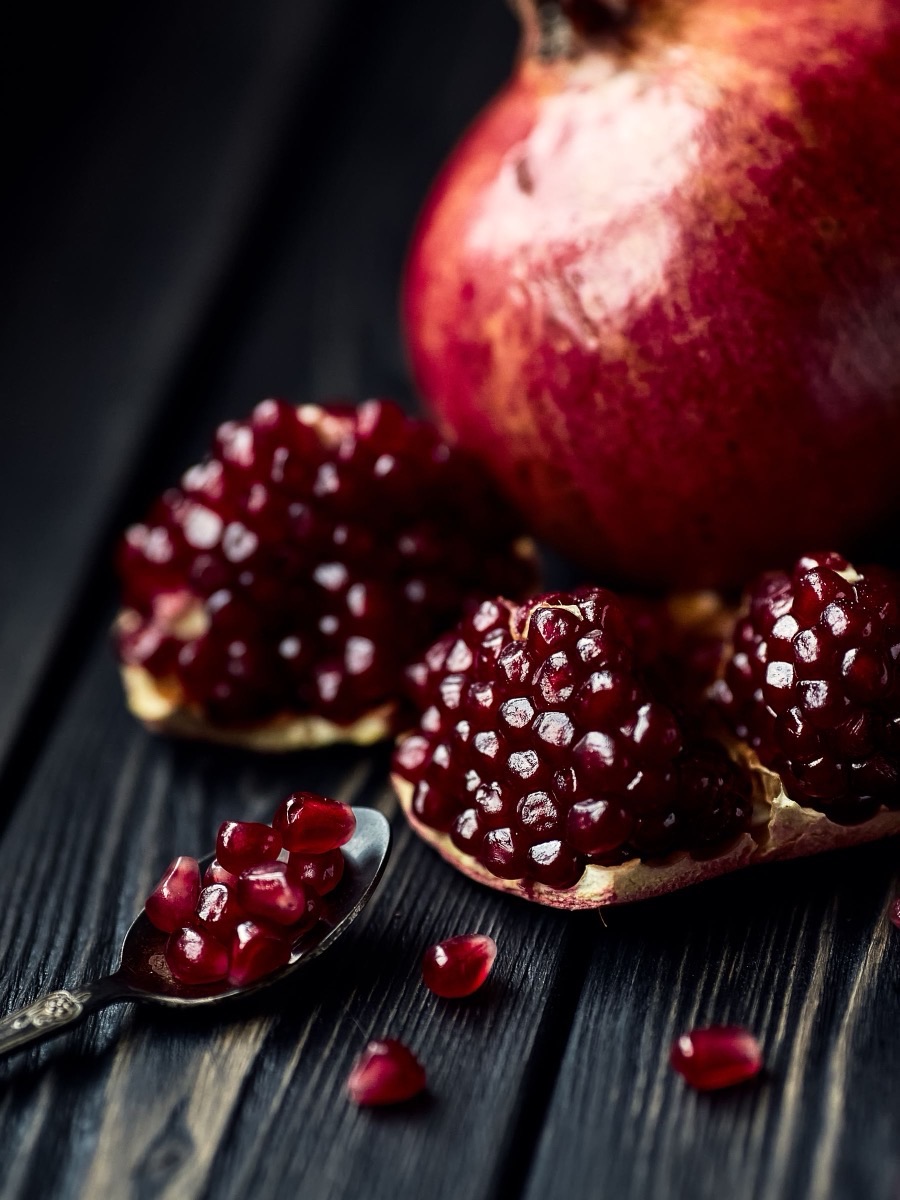
The pomegranate (Punica granatum) comes from the Middle East and is now grown in many regions, including Southeast Asia; its red, seed-filled fruit is a familiar image for antioxidant “superfruit” lines. The story is easy to tell, but the raw material needs a careful read: pomegranate fruit extract (INCI: Punica Granatum Fruit Extract), pericarp (peel) extract, juice and seed oil are different INCI names, and punicalagin — the main pomegranate ellagitannin — is measured in grams per kilogram of dry matter in the peel and pith, but only a few to a few hundred milligrams per liter in juice. Human topical evidence is limited and mostly concerns peel extract, so a pomegranate serum comes down to three things: choosing the right raw material from its certificate of analysis, keeping color and polyphenols stable in a water base, and keeping claims measured — moisturizing, pomegranate extract as an antioxidant ingredient of the formula, and skin radiance only when measured on the finished product. Butter-C offers turnkey OEM/ODM manufacturing, from formula development and testing to a labeled finished product with its notification dossier.
Formula base
Pomegranate fruit extract, humectants, serum base and preservation
A pomegranate serum is a water-based moisturizing serum that also carries a colored plant extract; what is specific is reading the raw material correctly and keeping it stable in a water base.
Pomegranate fruit extract — know the raw material
According to CosIng (as quoted by INCIDecoder), Punica Granatum Fruit Extract is an extract of the pomegranate fruit with a skin-conditioning function; the definition does not say whether the whole fruit or only the edible part is extracted, nor which solvent is used, and CAS 84961-57-9 is shared with other pomegranate INCI names. Commercial material is usually a preparation (extract in water, glycerin or butylene glycol, plus preservatives): the formula percentage is that of the preparation, and the label lists every component of it. This material is not in Butter-C’s current raw-material list — it is sourced per order with a COA.
Humectants
Glycerin, Propanediol, Sodium Hyaluronate, Panthenol and Betaine are the moisturizing part — the basis of a “moisturizing” claim, not the pomegranate extract. Levels are set by tackiness and the desired body (formulation experience).
Serum base
A fluid water serum lightly thickened with Xanthan Gum, or a neutralized carbomer fluid gel for a bouncier feel. The extract is colored, so a clear base takes on color with the use level; body and color are fixed on the sample (formulation experience).
pH buffer, chelation and preservation
Sodium Citrate with Citric Acid keeps pH in the agreed range, away from alkaline; Disodium EDTA binds metal ions (formulation experience, no source measuring this for pomegranate extract). Phenoxyethanol (maximum 1.0% — ASEAN Annex VI, Ref 29) with Ethylhexylglycerin; preservatives already in the extract preparation are counted, and the system is confirmed by an ISO 11930 challenge test.
Key technical points
Fruit part, use level, color stability and evidence
The four points below are where a pomegranate serum differs from an ordinary moisturizing serum.
The fruit part decides the composition
Analysis of each part of the fruit found punicalagin at 11–20 g/kg dry matter in the pith and peel, against only 4–565 mg/L in juices depending on co-pressing with the peel and on pressure (Fischer et al., 2011); a 2024 review notes the peel has higher levels of compounds than other parts. So “rich in punicalagin” or “rich in ellagic acid” is used only when the lot’s COA has an HPLC assay; material made from the peel must be labeled Punica Granatum Pericarp Extract.
No standard use level
Butter-C has not been able to read a CIR report on pomegranate-derived ingredients, so no use-concentration survey is cited; the human topical studies we read do not state extract concentrations. The preparation level is set from the supplier’s technical data, acceptable color, stability testing and the formula’s safety assessment.
Color and polyphenol stability
For an aqueous pomegranate peel extract (a food study), after 180 days the sample at pH 3.5 in dark packaging kept 67% of total soluble phenolics and 58% of antioxidant activity, versus 61% and 43% at pH 7.0; pH and light affected color (Qu et al., 2012). In practice: a non-alkaline finished pH, light-blocking bottles, tight closures and color checks at each stability time point.
Topical evidence is limited
The two human topical studies that measured melanin both used peel extract, in 11 and 30 people; the fermented-pomegranate serum trial compared only against baseline; data on a higher UVB dose needed to redden skin come from capsules and juice taken by mouth. Among the studies we found, none measured pomegranate fruit extract alone on human skin — serum claims rest on the whole formula and on tests of the finished product. Pomegranate extract is not listed in ASEAN Annexes II, III, VI (version 2026-1) or VII (version 2025-2).
Three formulation directions
Three pomegranate serum lines
Hydrating pomegranate water serum
Pomegranate fruit extract with Glycerin, Propanediol, Sodium Hyaluronate, Panthenol and Betaine in a lightly thickened water base; claims stop at moisturizing, softer and smoother-feeling skin, and pomegranate extract as an antioxidant ingredient of the formula — suited to mass-market channels.
Pomegranate – niacinamide serum
Niacinamide at 2–5% — the range tested in people according to our niacinamide article — for customers who want a radiance or even-tone claim. “Helps skin look brighter and more even” rests on niacinamide and on measurement of the finished product, and is a claim for the whole formula; niacinamide is assayed by HPLC.
Pomegranate – vitamin C derivative serum
3-O-Ethyl Ascorbic Acid added as an antioxidant pair within the formula, as on our ethyl ascorbic serum page. Each ingredient has its own data; the vitamin C derivative is assayed at end of shelf life before any percentage is stated, and color is monitored because both materials can tint the base.
Packaging is part of the formula
Amber glass dropper bottles or light-blocking airless pumps with tight closures; clear bottles are not recommended because light affected the color of a pomegranate peel extract in a storage study (Qu et al., 2012). Compatibility is tested in the actual pack before sign-off.
Parameters we monitor
What our R&D team measures on every sample
These are the parameters Butter-C tracks during formulation and scale-up. Specific limits are agreed with you on the approved sample and then written into the product’s in-house specification.
- Incoming extract certificate
- Species, fruit part, solvent, carrier, preservatives in the preparation, microbiology, heavy metals — every lot; punicalagin and ellagic acid assays if they will appear in sales materials.
- Color and appearance
- Compared with a reference sample at 4 °C, room temperature, 40 °C and under light; darkening, haze, sediment and odor change are recorded.
- pH
- Measured at 25 °C; kept within the agreed range for the preservative system and color stability, without drifting toward alkaline.
- Viscosity
- Rotational viscometer at 25 °C, with spindle and speed recorded.
- Polyphenols over time
- Total polyphenols or punicalagin at stability time points when a content-related claim is made — method agreed with the testing laboratory.
- Accompanying active content
- Niacinamide or 3-O-Ethyl Ascorbic Acid assayed by HPLC in the combination versions, including at end of shelf life.
- Tolerance in people
- Irritation and facial tolerance testing of the finished product at an independent test center; skin hydration or brightness measured if a matching claim is wanted.
- Microbiology and challenge test
- Tested at a GLP / ISO 17025-accredited laboratory; preservative efficacy (challenge) test to ISO 11930 — a plant extract in a water base needs a confirmed preservative system.
- Packaging compatibility
- Filled into the actual bottle; color, odor and weight loss are monitored.
Claims
Claims for a serum containing pomegranate extract
Human topical data available: Parveen et al. (2014) — pomegranate peel extract microemulsion, split-face, single-blind, 11 men, 12 weeks, melanin and redness indices decreased; Kanlayavattanakul et al. (2020) — peel extract serum and mask, randomized, double-blind, split-face, 30 people, 28 days, lighter skin than placebo; Chan et al. (2022) — fermented pomegranate extract serum, 40 people split into groups, 4 weeks, slight improvement versus baseline. Henning et al. (2019) was an oral study. These data concern materials from other plant parts or forms and do not become claims for a fruit-extract serum. Butter-C reviews the wording of labels and marketing materials when preparing the notification dossier.
Moisturizes and softens skin (from the humectants; to be tested on the finished product)
Instead of: restores or regenerates the skin.
Contains pomegranate fruit extract (Punica Granatum Fruit Extract) — an antioxidant ingredient of the formula
Describes the ingredient’s role with the correct INCI name; “rich in punicalagin” only with a COA assay. Instead of: “antioxidant protection for skin” as an effect proven in people, “super-antioxidant”.
Helps skin look brighter and more even (niacinamide version; only when measured on the finished product)
A claim for the whole formula. Instead of: “whitening”, promises to erase or fade melasma, citing peel-extract or capsule studies as the serum’s effect.
The pomegranate “superfruit” story
Told as a cultural story; growing region only when the COA confirms it. Instead of: “anti-aging”, “boosts collagen”, “rejuvenates skin”.
Use morning and evening; apply sunscreen by day
Pomegranate extract is not a UV filter. Instead of: sun protection, protection from UV rays, “raises sun tolerance” borrowed from an oral study.
Directions and label reminders
Patch test on a small area first; not for people allergic to pomegranate; avoid the eyes; stop if redness or itching occurs; keep closed, away from light and heat; keep out of reach of children. Pregnancy and breastfeeding: insufficient data, ask a doctor. Instead of: “natural so it is safe”, “non-allergenic”.
Manufacturing specifications
Available capabilities
- Texture
- Lightly thickened water serum or fluid gel; natural color of the extract.
- Pomegranate raw material
- Pomegranate fruit extract sourced per order (not in the current raw-material list); COA for every lot, label by the INCI names of the preparation.
- Packs
- Colored glass dropper bottles, light-blocking airless pumps. Volume agreed when packaging is chosen.
- Minimum order quantity
- Agreed per order — depends on the formulation direction and pack chosen.
- Testing
- Carried out at a GLP / ISO 17025-accredited laboratory, with a certificate of analysis delivered with every lot.
- Dossier
- Product Information File (PIF) and cosmetic product notification prepared by Butter-C, with the extract COA and the formula’s safety assessment.
- Packaging
- Label design, printing and packing run in parallel with formulation.
Suggested product concept
Pomegranate – niacinamide water serum in colored glass
One product direction to help you picture the idea — not a ready-made product for sale. The actual formula is built around your brand’s positioning and price range.
Pomegranate fruit extract in the name
A preparation whose COA states the fruit part and solvent; added in the cool-down phase; level set by color and stability testing.
Niacinamide 4%
Within the 2–5% range tested in people; HPLC assay of every lot; a radiance claim only when measured on the finished product.
Glycerin, sodium hyaluronate, panthenol
The moisturizing part of the serum; the “moisturizing” claim rests on testing the finished product.
30 ml amber glass dropper bottle
Light-blocking with a tight closure; the label carries patch-test directions, daytime sunscreen and storage away from light.
Customization options
What you can specify
The same format can serve very different customers. Tell us your requirements in the areas below and our pharmacists will build the matching formula.
Pomegranate raw material
Fruit extract or peel extract — two INCI names with different compositions; set at the outset because it decides color, cost and labeling.
Accompanying active
None, niacinamide, or 3-O-Ethyl Ascorbic Acid; each active brings its own assay and claim wording.
Texture
Fluid water serum or fluid gel; with or without a bouncy feel.
Finished color
The extract’s natural color or a nearly clear base (lower extract level); no added colorant to “redden” the serum unless needed.
Target market
Exports outside ASEAN: regulatory affairs confirms the destination market’s rules for plant extracts and for the preservatives in the preparation.
Ingredient direction
Fragrance-free, alcohol-free, vegan — please state these at the start so a preparation with a suitable carrier and preservative can be chosen.
Further reading
Related knowledge
Pomegranate extract in cosmetics
Pomegranate INCI names, evidence, color stability and regulation (in Vietnamese).
Vitamin C serum OEM/ODM manufacturing
The general antioxidant serum page; this page focuses on pomegranate extract.
Resveratrol serum OEM/ODM manufacturing
Another antioxidant serum built on a plant polyphenol, with its own solubility and light issues.
3-O-Ethyl ascorbic acid serum OEM/ODM manufacturing
The vitamin C derivative used in the combination direction of the pomegranate serum.
Niacinamide – zinc serum OEM/ODM manufacturing
Niacinamide 2–5% data behind the pomegranate – niacinamide direction.
Skin reactions to cosmetics
Allergy and irritation from cosmetics, how to recognize them and when to see a doctor (in Vietnamese).
How we work
From idea to finished batch
Eight steps and three milestones signed off by both sides: approved sample, notification number, finished batch. Step-by-step details →
Get started
Tell us about the product you plan to launch
Send us your product direction and expected volume. Our team will get back to you during business hours (Vietnam time, GMT+7).
Head office: Huu Le village, Dai Thanh commune, Hanoi · Factory: Thanh Oai Industrial Cluster, Binh Minh commune, Hanoi, Vietnam
Hotline +84 967 176 511 · [email protected] · Privacy policy ← Full catalog