 BUTTER-C
Signature ingredients
Succinic acid serum OEM/ODM manufacturing
Succinic Acid Serum · Signature Ingredients · OEM/ODM
Succinic acid — also called amber acid — is a four-carbon dicarboxylic acid, an intermediate of the citric acid cycle found in nearly all cells. Baltic amber contains it (about 1.44% of bead weight), but commercial raw material is usually made synthetically. Online, succinic acid is often presented as an active for oily, blemish-prone skin; when checked against the sources, its officially recorded roles in cosmetics are pH adjuster, buffer and fragrance ingredient (CIR 2012, CosIng). We found no human study of succinic acid alone applied to the skin: the data on acne-associated bacteria come from test-tube and mouse experiments, and the two 2024 human studies were open-label, used multi-ingredient products containing niacinamide, and their abstracts do not state the succinic acid concentration. So the succinic acid serum Butter-C builds tells the ingredient story honestly: succinic acid serves as the named ingredient and pH buffer within the 0.001–0.2% range CIR recorded for leave-on products; how the serum feels comes from the whole formula — humectant base, gel texture, companion actives — and the claim stops at the sensory “skin feels clean, fresh and soft” after testing on the finished product. Butter-C offers turnkey OEM/ODM, from formula development and testing to labeled finished product and notification dossier.
Formula base
Succinic acid in its real role, a serum base that carries the feel
For an ingredient whose official function is pH buffering, the first question is not “what percentage works” but “where must the finished-product pH sit” — the four points below are settled before formulation begins.
What succinic acid is
INCI Succinic Acid (butanedioic acid), CAS 110-15-6, formula C4H6O4, molecular weight 118.09 g/mol (PubChem). An odorless crystalline powder with a sour taste; soluble in water at about 83 g/L at 25 °C, soluble in ethanol and glycerin; two dissociation constants, pKa1 4.21 and pKa2 5.64. It has two carboxyl groups and no hydroxyl group, so it is not a hydroxy acid (AHA, BHA).
Recorded functions: buffer, pH adjuster, fragrance
CosIng lists two functions: buffering and fragrance. The CIR Expert Panel report (2012) lists fragrance ingredient and pH adjuster. With pKa values of 4.21 and 5.64, succinic acid partly neutralized with sodium hydroxide forms an acid – succinate salt pair that holds the finished-product pH in the mildly acidic range. This is a technical role of the raw material, not a skincare benefit.
Concentration per the CIR survey
Use data supplied by the US cosmetics industry in 2009–2010 (CIR 2012): succinic acid in leave-on products 0.001–0.2%; rinse-off 0.001–26% (the 26% level is a bath product diluted in use); disodium succinate leave-on 0.005–0.4%. These are declared market levels, not efficacy recommendations. The “0.5–2%” range circulating online has no verified source and Butter-C does not use it. The actual amount in a formula is set by the target pH.
A light humectant serum base
Glycerin, Panthenol and Sodium Hyaluronate hold moisture; Hydroxyethylcellulose — a nonionic polymer — makes a clear, oil-free fluid gel. The humectants and the texture are the main basis for a “soft, fresh” feel when tested on the finished product. Niacinamide is an optional companion active, following the data and claim wording of the niacinamide & zinc serum page.
Key technical points
Buffer system, solubility, worker safety and regulation
The succinate buffer
Succinic acid goes into the water phase and is partly neutralized with sodium hydroxide to the target pH; from the pKa values, buffering capacity is high around pH 4.2 and 5.6 (inferred from the dissociation constants). The finished-product pH is set according to the companion actives, stability testing and tolerance testing, then pH drift is tracked across time points. The exact acid – base ratio is formulation experience, confirmed for each formula.
Solubility and order of addition
1 g of succinic acid dissolves in about 13 mL of cold water or 1 mL of boiling water (HSDB data via PubChem). Below 0.2% in a serum it dissolves completely in the water phase; it is still fully dissolved before neutralizing and before adding the polymer. The checked sources give no data on succinic acid degradation in cosmetic formulas — the serum's stability is confirmed by stability testing.
Safety: eye irritation when undiluted
The CIR Expert Panel (2012) concluded that the dicarboxylic acids, salts and esters — including succinic acid, sodium succinate and disodium succinate — are safe in the present practices of use and concentration; the significant toxicity is limited to skin and eye irritation, as expected for acids. Undiluted succinic acid caused severe eye irritation in rabbits and mild irritation on rabbit skin; human irritation and sensitization data in the report exist only for adipic and azelaic acid. So staff weighing and dissolving the powder wear goggles and gloves; the finished-product label advises avoiding the eyes; the finished product is tolerance-tested before sign-off.
ASEAN regulation
Succinic acid (CAS 110-15-6) is not named in Annexes II, III, VI (06/2026 version) or Annex VII (12/2025 version) of the ASEAN Cosmetic Directive. It must not be confused with Succinonitrile (CAS 110-61-2) — a prohibited substance in Annex II, Ref 150 — which is a different substance. Not being listed does not replace a safety assessment: the PIF must still demonstrate the safety of the finished product.
Three formulation directions
Three serums named for succinic acid
Minimal succinate-buffered gel serum
Succinic Acid partly neutralized with Sodium Hydroxide, with Glycerin, Panthenol and Sodium Hyaluronate in a Hydroxyethylcellulose gel; oil-free, fragrance-free. A short ingredient list and a clear story: a light moisturizing serum with a stably buffered pH.
Succinic acid – niacinamide serum
Adds Niacinamide within the 2–5% range tested in humans (per the niacinamide & zinc serum page) and Betaine as a humectant. The two 2024 studies used a product with niacinamide and succinic acid plus a plant complex — that product's results do not carry over to this formula. Niacinamide claims follow the wording of the niacinamide & zinc serum page, only after testing on the finished product.
Light milky serum for combination skin
A light oil-in-water emulsion with Squalane, Caprylic/Capric Triglyceride and the emulsifier Cetearyl Olivate; succinic acid and sodium hydroxide in the water phase act as the buffer. For users who want a little more softness with a dry finish; emulsion stability is monitored at the chosen pH.
How it differs from existing serum pages
The niacinamide & zinc serum and the BHA toner are named for actives with human data; the blemish serum combines several active groups for blemish-prone skin. This page is for a serum named after a technical ingredient: succinic acid in its real pH-buffering role, use levels per the CIR survey, and the gap between marketing claims and published data.
Parameters we monitor
What our R&D team measures on every sample
Below are the parameters Butter-C monitors during formula development and scale-up. Specific limits are agreed with you on the approved sample and then written into the product's in-house specification.
- Raw-material COA
- Succinic acid: CAS 110-15-6, purity, impurities, origin (synthetic or fermentation) per the supplier's statement; “from amber” is used only when the supplier can document the source.
- pH and buffering
- Measured directly at 25 °C on every batch; pH drift tracked across stability time points — the key parameter of a serum using succinic acid as its buffer.
- Sensory & clarity
- Color, odor, clarity of the gel; watch for haze or crystals at low temperature, against the reference sample kept in R&D.
- Viscosity
- Rotational viscometer, spindle and speed recorded; compared before and after accelerated aging.
- Niacinamide content
- HPLC assay at the start and at stability time points for the niacinamide version; mandatory when a percentage is printed on the label.
- Stability
- Accelerated aging at 40 °C, freeze–thaw cycles, storage at 4 °C; the milky version is monitored for separation.
- Microbiology & preservative challenge
- Tested at a GLP/ISO 17025 laboratory; preservative efficacy test per ISO 11930 on the final formula — a high-water base.
- Tolerance & sensory assessment
- Irritation testing on volunteers using the finished product itself; to state “skin feels clean, fresh and soft”, a sensory assessment is run in the same study.
- Packaging compatibility
- Filled into the actual bottle, dropper or pump; seal, gaskets and rubber bulbs checked against the mildly acidic solution.
Claims
Claims matched to succinic acid's real role
The data on succinic acid and blemishes have three layers. Test tube and mouse: Wang et al. (2014) found that skin bacteria, mostly S. epidermidis, ferment glycerol into succinic acid; succinic acid inhibited growth of P. acnes (now Cutibacterium acnes) in vitro and in mice, and injecting it into or applying it on lesions reduced the inflammatory response in mice — preclinical data. Human cells: Nissen et al. (2019) found that succinic acid did not reduce inflammatory cytokines from cultured macrophages and was toxic to the cells at high concentrations. In humans: De Lucas et al. (2024, 44 people with mild–moderate facial acne) and Guerra-Tapia et al. (2024, 43 people with acne on the trunk) used a cream-gel or lotion containing a biotechnological plant complex, niacinamide and succinic acid for 8 weeks, open-label, with no succinic acid concentration in the abstracts; many authors are employees of or consultants to the manufacturer — the results belong to the whole formula. Appendix 03-MP of Circular 06/2011/TT-BYT does not accept claims of effects on diseases for cosmetics, so the label uses only the statements below.
Helps skin feel clean, fresh and soft (sensory, to be tested on the finished product)
Basis: a sensory assessment on volunteers using the finished product itself; the feel comes from the humectant base and texture. Instead of: claims about acne, reducing blemishes, claims to act on acne-associated bacteria.
pH adjusted to suit the skin
Stated only with the finished-product pH reading in the batch record; succinic acid is the buffer here. Instead of: “exfoliating acid”, “natural BHA”, oil control, pore tightening.
Contains succinic acid
An ingredient statement, with the correct INCI in order of content; origin stated only per the supplier's declaration. Having “succinic acid” in the product name only names the featured ingredient; it does not imply that succinic acid is an active for oily or blemish-prone skin, and the label and marketing do not use the name to suggest a benefit. Instead of: “amber extract” without documents, an “active” percentage with no basis.
Suitable for oily and combination skin
Describes the skin type, not a benefit. Instead of: soothes blemish-prone skin, reduces redness and swelling, reduces sebum production.
Numbers on the label
Only figures from testing of the finished product itself. Instead of: copying percentages for lesion or sebum reduction from studies of other combination products.
Directions and label cautions
Use after cleansing and avoid the eye area; if the product gets into the eyes, rinse at once with clean water. Patch-test on a small area first and stop if redness or itching occurs. Pregnant or breastfeeding: data are insufficient, ask a doctor. Use sunscreen during the day. Instead of: non-irritating, safe for sensitive skin, safe for pregnancy.
Manufacturing specifications
Current capabilities
- Texture
- Clear oil-free gel serum, watery serum or light milky serum.
- Pack format
- Glass bottle with dropper, pump bottle. Volume agreed when packaging is selected.
- Minimum order quantity
- Agreed per order — depends on the formula direction and the pack format chosen.
- Testing
- Performed at a GLP/ISO 17025 laboratory, with results delivered with every batch; the niacinamide version includes an assay.
- Dossier
- Product information file (PIF) and notification dossier prepared by Butter-C, including the succinic acid COA, batch pH readings and a safety rationale based on the CIR report.
- Packaging
- Label design, printing and packing run in parallel with formula development; the label carries an avoid-eye-contact instruction.
Suggested product concept
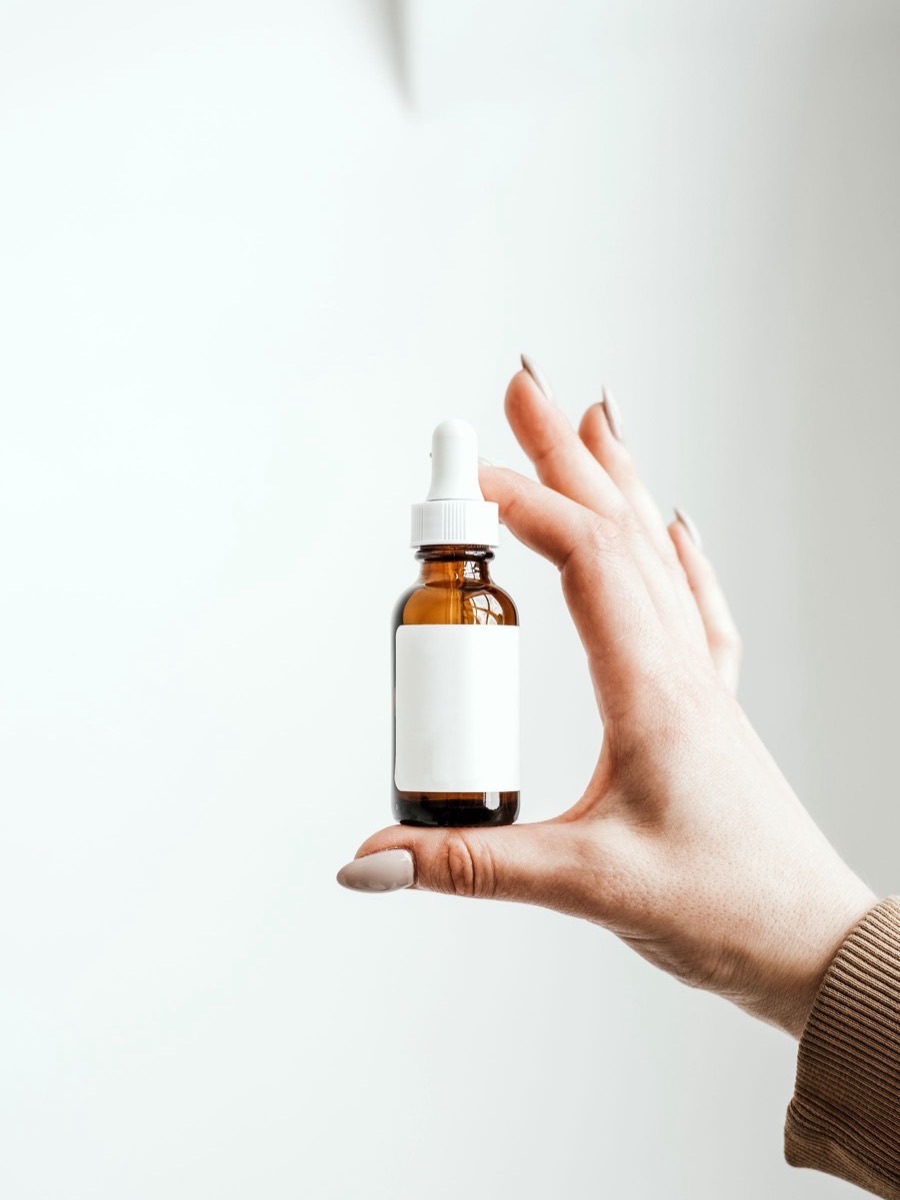
Fragrance-free succinate-buffered gel serum, 30 ml bottle
One product direction to help you picture the result — not a ready-made product for sale. The actual formula is built around your brand's positioning and price range.
Succinic Acid as the named ingredient
Within the 0.001–0.2% leave-on range CIR recorded, partly neutralized with Sodium Hydroxide to the chosen pH; a higher level needs its own safety rationale in the PIF.
Glycerin, Panthenol, Sodium Hyaluronate
Humectant base in a Hydroxyethylcellulose gel; oil-free, fragrance-free, no colorants.
Testing before sign-off
pH tracked across stability time points, ISO 11930 preservative challenge, tolerance testing and sensory assessment on the finished product.
30 ml glass bottle with dropper
The label lists the full INCI, avoid the eye area, patch-test on a small area; the claim stops at “helps skin feel clean, fresh and soft” after testing on the finished product.
Customization options
What you can specify
The same product type can serve very different customers. Tell us your requirements in the areas below and our pharmacists will build the matching formula.
Companion actives
None, or niacinamide added — each ingredient has its own data, concentration and claim wording; Butter-C does not stack benefits.
Target pH
Set according to the companion actives, stability testing and tolerance testing; the succinate buffer is calculated for that pH.
Texture
Clear gel, watery fluid or light milk.
Origin documents
To tell an amber or fermentation story, the supplier needs a written declaration of origin — tell us early so we can choose the supplier.
Companion products
Gel cleanser, toner and light moisturizer for oily and combination skin in the same line, to sell as a set.
Ingredient direction
Fragrance-free, alcohol-free, oil-free, vegan — please tell us at the start so suitable raw materials can be chosen.
Further reading
Related topics
Succinic acid in cosmetics
Its real role (buffer, pH adjuster, fragrance), how far the blemish evidence goes, CIR use levels, safety and ASEAN status (in Vietnamese).
Niacinamide in cosmetics
The optional companion active, with human data at 2–5% (in Vietnamese).
Oily skin and enlarged pores
Why skin produces a lot of oil and how far cosmetics can help (in Vietnamese).
Niacinamide & zinc serum manufacturing
A different direction: a serum named for two actives with human data, zinc converted per Annex III.
BHA salicylic acid toner manufacturing
A different direction: salicylic acid, with data for helping the skin shed dead cells, limited to 2.0% under Annex III Ref 98.
How we work
From idea to finished batch
Eight steps and three milestones signed off by both sides: approved sample, notification number, finished batch. Step-by-step details →
Get started
Tell us about the product you plan to launch
Send us your product direction and expected volume. Our team will get back to you during business hours (Vietnam time, GMT+7).
Head office: Huu Le village, Dai Thanh commune, Hanoi · Factory: Thanh Oai Industrial Cluster, Binh Minh commune, Hanoi, Vietnam
Hotline +84 967 176 511 · [email protected] · Privacy policy ← Full catalog