 BUTTER-C
Signature ingredients
Licorice (dipotassium glycyrrhizate) essence OEM/ODM manufacturing
Licorice (Dipotassium Glycyrrhizate) Essence · OEM/ODM
Licorice is familiar in Vietnam for its distinctive sweetness and its place in traditional herbal recipes; that is a cultural story. The featured ingredient in this essence is not licorice root extract but dipotassium glycyrrhizate: the potassium salt of glycyrrhizic acid, a defined substance that can be isolated from the licorice plant. The US Cosmetic Ingredient Review (CIR) panel reports a purity of at least 95% for this material and use in cosmetics at concentrations up to 1%, and concluded that this group of ingredients is safe in the current practices of use and concentration. The brightening data on licorice root extract (glabridin, licochalcone) belong to a different material and do not apply to dipotassium glycyrrhizate. Human evidence for the substance on its own is limited: the trials all used multi-ingredient products or compared against using nothing. Butter-C therefore builds licorice essence as a soothing, moisturizing essence, with the claim “soothes feelings of discomfort, helps skin look calmer” kept at a cosmetic level and tested on the finished product. Butter-C offers turnkey OEM/ODM manufacturing from formula development and testing to a labeled finished product and notification dossier.
Formula base
Dipotassium glycyrrhizate, humectants and water
A short, fragrance-free ingredient list: each group below has one clear job.
Dipotassium Glycyrrhizate: a defined substance, not an extract
The dipotassium salt of glycyrrhizic acid (C42H60K2O16, molecular weight 899.1 per PubChem). CIR stresses that the glycyrrhizates are specific chemical species that may be isolated from licorice, not plant extracts, powders or juices. The label states the INCI “Dipotassium Glycyrrhizate”; the pack may say “derived from licorice”.
Not to be confused with related substances
CIR reports different use levels for each substance: dipotassium glycyrrhizate up to 1%; ammonium glycyrrhizate up to 5%; glycyrrhetinic acid (the sugar-free part) up to 2%. Licorice root extract is a mixture of many compounds with its own article and data. The figure for one substance is not used for another.
Base humectants and soothers
Glycerin, butylene glycol, betaine, panthenol, allantoin and a small amount of sodium hyaluronate; the basis for the moisturizing claim and the gentle feel of the formula.
Common soothing combinations
Panthenol, allantoin, ectoin or beta-glucan are common pairings in soothing products. No study exists for these specific pairings; the complete formula goes through stability and tolerance testing.
Key technical points
Purity, impurities and use level
Impurities per the CIR recommendation
Because these substances may be isolated from plants, CIR recommends: total PCB/pesticide residues no more than 40 ppm (no more than 10 ppm for any single residue), arsenic no more than 3 mg/kg, heavy metals no more than 0.002%, lead no more than 1 mg/kg. Butter-C writes these limits, together with purity (at least 95%), into the incoming specification and requires a COA for every lot.
Use level within the CIR-reported range
Up to 1% is the actual use level reported by CIR, not a level proven effective; the human studies do not give concentrations in their abstracts. The specific level is chosen from the TDS, the clarity of the solution and tolerance testing on the finished product.
Dissolving and pH
The material is a powder added to the water phase. PubChem has no experimental data on solubility or pKa; the ERP notes on solubility and possible precipitation at low pH are supplier data not checked against an independent source. The pH range is fixed by stability testing, with clarity checked after cold cycling.
A large molecule working at the surface
In a pig-skin permeation test, dipotassium glycyrrhizate was not detected in the receptor chamber, and CIR expects this group to be poorly absorbed through the skin. CIR concluded that at the current maximum use concentration these substances are not considered irritants, sensitizers or phototoxic agents; systemic effects such as salt and water retention and raised blood pressure were reported with prolonged or high exposure, and CIR notes that ingestion can have physiological effects. The product is positioned to soothe how the skin surface feels, with no promise of deep action.
Three formulation directions
Three styles of licorice essence
Water-light licorice essence
Dipotassium glycyrrhizate with panthenol, glycerin and betaine; liquid and clear, patted on after cleansing. For dry, easily uncomfortable skin and users who need a short ingredient list.
Lightly thickened, rich-moisture licorice essence
Sodium hyaluronate, beta-glucan or a low level of gum for a plumper feel suited to air-conditioned rooms. Tackiness has to be balanced for layering.
Licorice and ectoin essence
Ectoin and allantoin added for skin that feels tight from its environment; can serve as a soothing step in a routine with strong actives, without “canceling out” the irritation of retinoids or AHAs.
Packaging is part of the formula
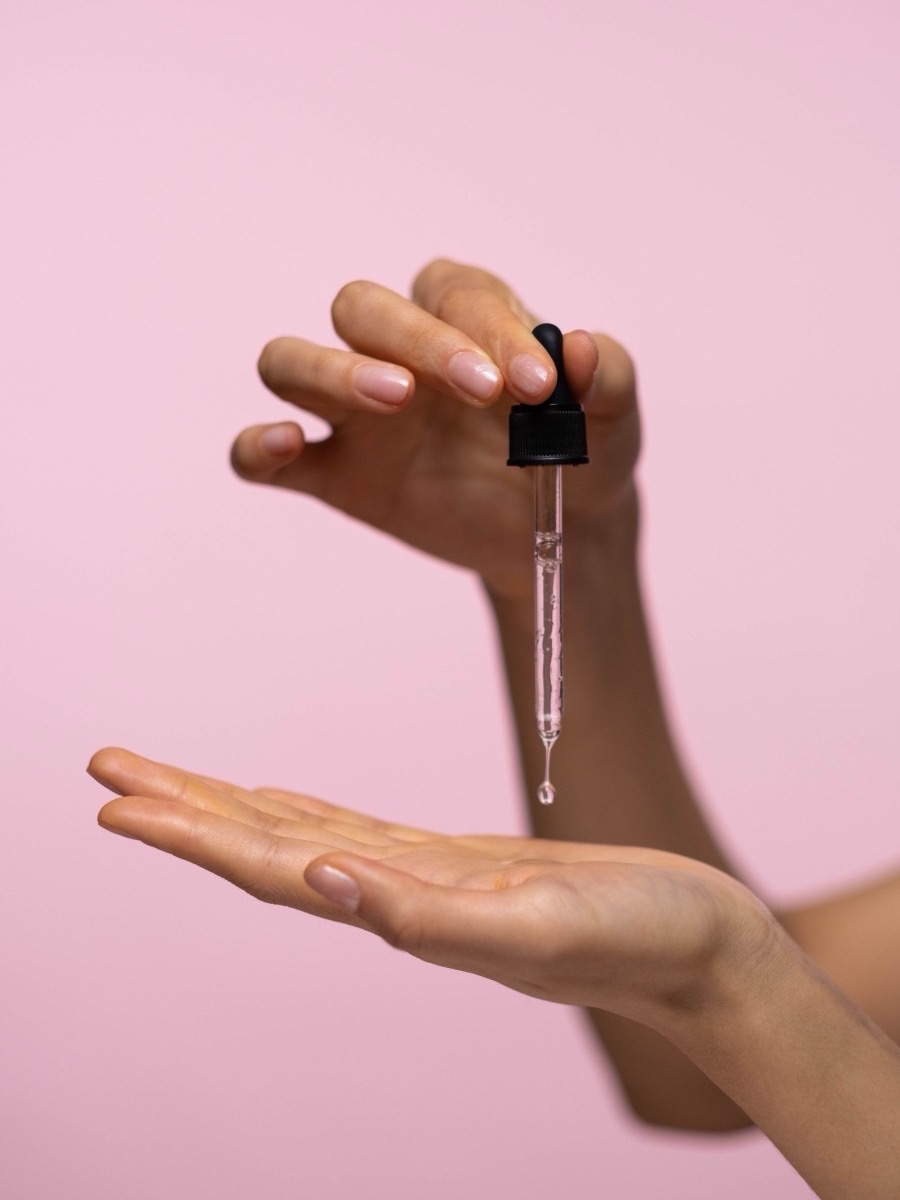
Dropper or pump bottles, preferably opaque or brown glass; an airless pump limits contamination in use for a fragrance-free version with a gentle preservative system.
Parameters we monitor
What the R&D lab measures on every sample
These are the parameters Butter-C tracks during formula development and scale-up. Specific limits are agreed with you on the approved sample and then written into the product's in-house specification.
- Incoming raw material file
- COA for every dipotassium glycyrrhizate lot: purity, PCB/pesticide residues, arsenic, lead and heavy metals per the CIR recommendation, microbiology.
- Appearance & clarity
- Color, odor and clarity against the reference sample; checks for haze or precipitation after cold cycling.
- pH
- Measured directly at 25°C; pH drift tracked across stability time points.
- Viscosity
- Measured with a rotational viscometer, spindle and speed recorded; important for the lightly thickened version.
- Stability
- Accelerated aging at 40°C, freeze–thaw cycling, light exposure and 4°C storage; watching for color change, precipitation and separation.
- Microbiology & challenge test
- Tested at a GLP / ISO 17025-accredited laboratory; preservative efficacy (challenge) test to ISO 11930 on the final formula.
- Skin evaluation
- Tolerance testing on volunteers; to state “suitable for sensitive skin”, testing on people with sensitive skin; any hydration figure measured on the finished product itself.
- Packaging compatibility
- Filled into the actual bottle, cap or pump; checking seal integrity, pump force and material odor.
Claims
Claims matched to the evidence for dipotassium glycyrrhizate
In humans, the studies including dipotassium glycyrrhizate all used combination products or compared against using nothing: a randomized split-leg trial in 35 people with dry skin using a cream with panthenol, niacinamide and dipotassium glycyrrhizate, with the control leg left untreated, over 28 days; the authors note the effect cannot be attributed to any single active (Morgado-Carrasco 2026); a trial in adults with atopic dermatitis comparing an emollient containing the substance with no emollient (Xia 2025); and a split-face trial in 30 people after photorejuvenation with a multi-ingredient mask (Du 2025). The last two are medical settings, not a basis for cosmetic claims. None of the sources reviewed compared the same base with and without dipotassium glycyrrhizate. Level of evidence: limited. ASEAN: dipotassium glycyrrhizate and related substances are not named in Annexes II, III or VI (June 2026 version). Annex 03-MP of Circular 06/2011/TT-BYT does not accept claims of effects on skin disease.
Soothes feelings of discomfort, helps skin look calmer (tested on the finished product)
Instead of: reduces inflammation, reduces swelling, drug-like claims about dermatitis, eczema or irritation.
Moisturizes, eases the feeling of tightness
Based on the humectants in the formula; hydration figures only when measured on the finished product. Instead of: restores damaged skin, regenerates skin.
Contains dipotassium glycyrrhizate, derived from licorice
Instead of: “licorice extract”, brightening or fading dark marks thanks to licorice; those data belong to licorice root extract (glabridin), not to this substance.
Suitable for sensitive skin (only after testing on people with sensitive skin)
Instead of: absolutely safe, non-irritating for every skin type.
When to use
Stated as part of the daily skincare routine. Instead of: use after laser or peels in place of a doctor's advice, a replacement for corticosteroid creams.
Label notes
Patch-test a small area before use; stop if redness or itching appears; widespread redness, oozing or long-lasting problems need a doctor's examination. People using a prescription corticosteroid cream should ask their doctor (CIR notes that glycyrrhetinic acid, a related substance, increased the effect of hydrocortisone on skin). Pregnant women: the CIR data concern dietary intake, with no specific data on topical use, so ask a doctor. Instead of: safe in pregnancy.
Manufacturing specifications
Capabilities
- Texture
- Clear liquid or lightly thickened essence; colorless or with a very faint tint.
- Format
- Dropper, pump or airless bottles; opaque or brown glass. Fill volume agreed when the packaging is selected.
- Minimum order quantity
- Agreed per order, depending on the formula direction and the format chosen.
- Testing
- Performed at a GLP / ISO 17025-accredited laboratory; a certificate of analysis accompanies every lot.
- Documentation
- Product Information File (PIF) and notification dossier prepared by Butter-C, with the raw material COA meeting the CIR impurity criteria.
- Packaging
- Label design, printing and packing run in parallel with formula development.
Suggested product concept
A soothing licorice essence for dry, easily uncomfortable skin
One product concept to help you picture the result; not a ready-made product for sale. The actual formula is built around your brand's positioning and price range.
Dipotassium glycyrrhizate as the featured ingredient
Within the use range reported by CIR (up to 1%); COA for purity and impurities per the CIR recommendation.
Panthenol, allantoin, glycerin, betaine
The accompanying soothing and humectant group; the basis for the moisturizing claim.
Fragrance-free, alcohol-free, essential-oil-free
A short ingredient list for easily uncomfortable skin.
30 ml brown glass bottle with dropper
The label states the correct INCI, a patch-test instruction and a note for people using prescription skin creams.
Customization options
What you can specify
The same product type can serve very different customers. Tell us your requirements in the areas below and our pharmacists will build the matching formula.
Accompanying soothers
Panthenol, allantoin, ectoin, beta-glucan: choose one or two rather than spreading thin. A multi-group recovery essence (centella, PCA minerals, ceramides) is the recovery essence page; an essence featuring centella extract is the centella serum page.
Texture
Water-light or lightly thickened; fast-absorbing or leaving a moist layer.
When to use
Morning and evening, or as a soothing step in a routine with strong actives.
Companion products
Toner, moisturizer and facial mist with the same soothing positioning, sold as a set.
Fragrance and color
Fragrance-free and colorless is recommended for a soothing line.
Ingredient direction
Fragrance-free, alcohol-free, essential-oil-free, vegan: please state these at the outset so the right raw materials can be selected.
Further reading
Related topics
Dipotassium glycyrrhizate (licorice) in cosmetics
Mechanism, the limited evidence, the CIR safety conclusion and measured claims (in Vietnamese).
Licorice root extract in cosmetics
Glabridin and the brightening data: a different material, not a substitute for dipotassium glycyrrhizate (in Vietnamese).
Recovery essence manufacturing
A different direction: a multi-active essence with centella, PCA minerals and ceramides.
Centella serum manufacturing
A soothing serum featuring a plant extract, unlike a defined substance such as dipotassium glycyrrhizate.
Sensitive skin
The main customer group for soothing products (in Vietnamese).
How we work
From idea to finished batch
Eight steps and three milestones signed off by both sides: approved sample, notification number, finished batch. Step-by-step details (in Vietnamese) →
Get started
Tell us about the product you plan to launch
Send us your product direction and expected volume. Our team will get back to you during business hours (Vietnam time, GMT+7).
Head office: Huu Le village, Dai Thanh commune, Hanoi · Factory: Thanh Oai Industrial Cluster, Binh Minh commune, Hanoi, Vietnam
Hotline +84 967 176 511 · [email protected] · Privacy policy ← Full catalog