 BUTTER-C
Signature ingredients
Chamomile toner OEM/ODM manufacturing
Chamomile Toner · Signature Ingredients · OEM/ODM
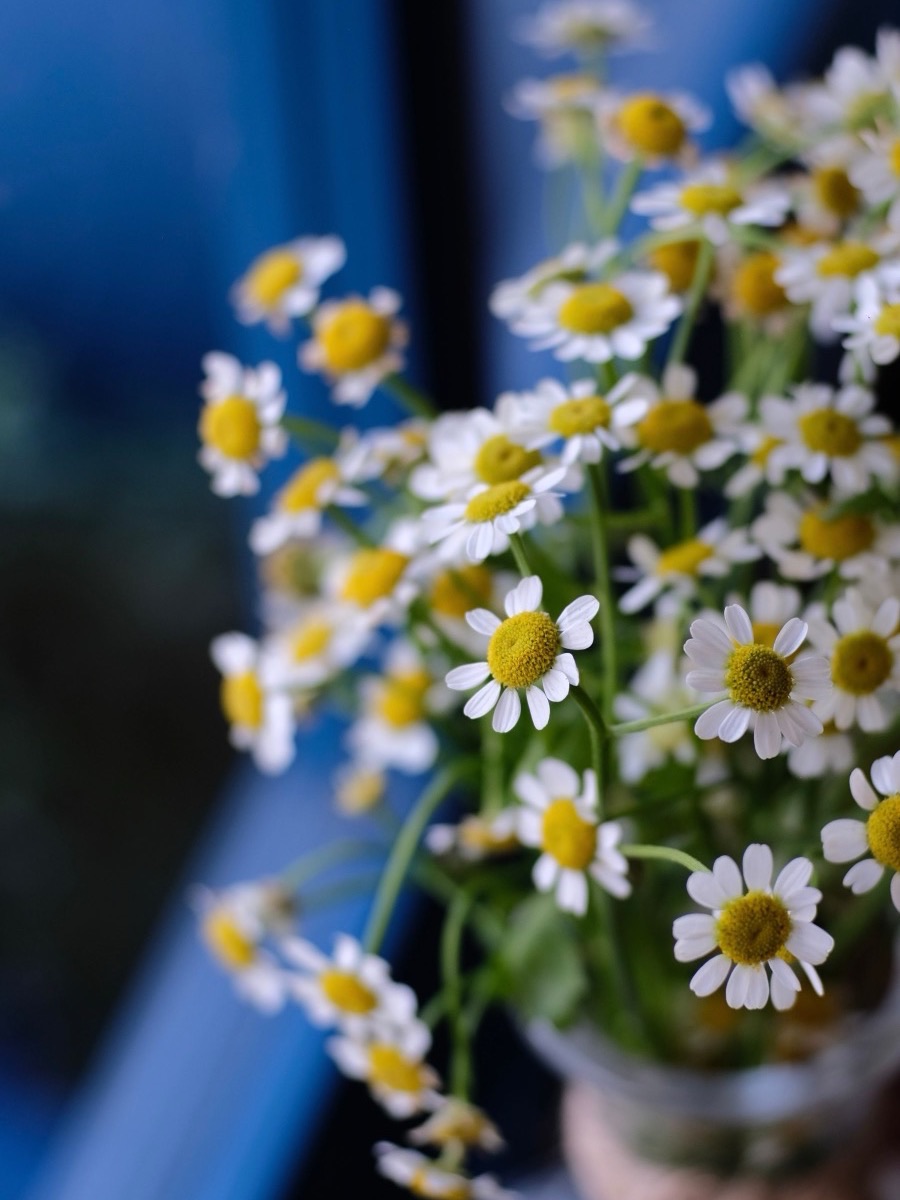
A cup of chamomile tea is associated with gentleness, and chamomile has long featured in products for sensitive skin and for children — that is a cultural story, not yet evidence. The Vietnamese name of this product (literally “Roman daisy”) is used loosely for any chamomile, but the INCI ingredient Chamomilla Recutita (Matricaria) Flower Extract is botanically German chamomile (Matricaria chamomilla), not Roman chamomile (Chamaemelum nobile, INCI Anthemis Nobilis); the CIR Expert Panel assessed the two species in two separate reports (2016 and 2017). Scientifically, the evidence on human skin is limited: a 2010 systematic review found no study that had been able to substantiate an effect significantly, mainly because of study design and quality; the recent controlled trials were all in a medical setting (skin under radiation) and showed no significant difference in the primary outcome. A chamomile toner is therefore a hydrating, alcohol-free, fragrance-free water toner with claims at the level of “soothes, helps skin feel comfortable” (to be tested on the finished product), in which the flower extract is the signature ingredient — chosen for the right species and plant part, with a certificate of analysis (COA) stating its origin and a note for people allergic to plants of the daisy family. Butter-C offers full-service OEM/ODM manufacturing, from formula development and testing to labeled finished product with its notification dossier.
Formula base
Chamomile flower extract in an alcohol-free hydrating toner base
A toner is almost all water, so every ingredient shows; hydration, clarity and microbial stability are decided by the base, while the chamomile extract is the signature ingredient. Unlike the general toner page, this page centers on the issues that come from the chamomile raw material itself.
Chamomile flower extract in glycerin – water
The raw material on file at Butter-C is a blend declared as “Glycerin (and) Water (and) Chamomilla Recutita Flower Extract”: the percentage in the formula is the percentage of the blend, not of dry extract, and the label must list all three INCI names; the herb-to-extract ratio is read from the supplier's technical data sheet (TDS) and COA. The industry survey in the CIR report (2016) recorded the flower extract at up to 0.5% in leave-on products (makeup); human repeated insult patch tests (HRIPT) with products containing 0.2%, 0.3% and 0.4% flower extract were negative. Commercial raw materials are usually mixtures with carrier solvents, so a percentage does not equal the active content — convert using the supplier's documents.
Humectants and a comfortable feel
Glycerin, Butylene Glycol and Betaine hold water in the stratum corneum; Panthenol and Allantoin give a comfortable feel; Sodium Hyaluronate or Xanthan Gum for a slightly thicker version. The ingredient article suggests placing chamomile extract alongside panthenol, allantoin and glycerin in a gentle base. This is the part that carries the hydrating and softening claims of the product.
Preservative system and pH
Phenoxyethanol (max. 1.0% — Annex VI Ref 29) with Ethylhexylglycerin; Disodium EDTA, because the internal raw material record notes that metal ions discolor the extract; Citric Acid and Sodium Citrate to adjust and buffer pH. The general toner page sets hydrating toners at pH 5.0–6.0; there is no verified data on the optimal pH for chamomile extract, so pH is fixed through stability testing. The glycerin in the blend does not replace the finished product's preservative system.
Points to weigh when choosing
Alcohol-free and fragrance-free for a sensitive-skin positioning. No chamomile essential oil added just to “boost the scent”: the essential oil is a different raw material with different constituents. Avoid stacking several daisy-family plants (calendula, arnica…) in one formula — CIR notes that several botanical ingredients may contribute the same group of sensitizers, so the total needs to be controlled.
Key technical points
Four points specific to putting chamomile into a toner
The issues below come from the raw material itself: species name, origin, extract type and the stability of the extract in an all-water system.
Right species: German chamomile, not Roman chamomile
Chamomilla recutita (synonyms Matricaria chamomilla, Matricaria recutita) is German chamomile; Roman chamomile is Chamaemelum nobile (synonym Anthemis nobilis), INCI Anthemis Nobilis Flower Extract. CIR assessed the two species in separate reports (CIR 2016, 11 ingredients; Johnson et al. 2017, 4 ingredients), and data for one species should not be assigned to the other. The COA must state the right species, plant part (flower) and solvent; the INCI name on the COA decides the name on the label, and the English label does not say “Roman chamomile” for this ingredient.
Origin and species adulteration
CIR (2016) notes that material of Argentinian origin may be contaminated with Anthemis cotula (dog fennel), which contains up to 7.3% anthecotulide — a strongly allergenic sesquiterpene lactone — whereas plants of European origin contain only traces; a later publication cited by CIR found no anthecotulide in 34 chamomile preparations. The supplier file therefore needs to state geographic origin and how species adulteration is controlled, together with pesticide residues and heavy metals (CIR stresses good manufacturing practice to limit impurities).
A water–glycerin extract is not the essential oil
The main water-soluble constituents of the flower are flavonoids (apigenin 7-glucoside, glycosides of luteolin and quercetin) and the coumarins herniarin and umbelliferone. (−)-α-Bisabolol and chamazulene are constituents of the ESSENTIAL OIL; chamazulene forms from matricine during steam distillation (CIR 2016). A water–glycerin blend does not contain them by default — do not claim “rich in bisabolol, azulene” unless the COA shows it, and data on pure bisabolol is not assigned to the flower extract. Herniarin is 7-methoxycoumarin, listed in Annex II Ref 442 “7-Methoxycoumarin, when used as a fragrance ingredient”: the entry applies to the substance when used as a fragrance ingredient, and the text sets no threshold for natural content in an extract; ask the supplier for composition information, especially if essential oil is to be added (CIR reports 540 µg herniarin/ml in the neat essential oil).
Heat, color and microbiology
CIR (2016) records that drying the flowers at 80 °C sharply reduces total phenols and apigenin 7-glucoside compared with fresh flowers — the composition changes with heat. The internal raw material record (written for the class “liquid extracts”, not the supplier's TDS) notes heat and light sensitivity and that the extract darkens easily — Butter-C adds the blend in the cool-down phase, runs a light-exposure test on the first sample and checks against the TDS. An all-water toner plus a water-based blend favors microbial growth: microbiological testing of each incoming raw material lot and ISO 11930 preservative efficacy testing on the finished product.
Three formulation directions
Three chamomile toners for three customer groups
Fragrance-free chamomile – panthenol liquid toner
Water-clear, alcohol-free, fragrance-free; chamomile blend, glycerin, panthenol, allantoin. Applied with a cotton pad or patted in by hand — for sensitive skin, skin that feels tight easily, and a gentle positioning. “For sensitive skin” is claimed only after tolerance testing.
Slightly thickened chamomile – hyaluronate toner
A low level of Sodium Hyaluronate or Xanthan Gum for a more nourishing feel, layered by patting. For dry, dehydrated skin in air-conditioned rooms; in exchange it absorbs more slowly than the liquid version.
Chamomile – niacinamide toner for combination skin
Niacinamide 2–5% as on the general toner page, in an acid-free base; “helps reduce the look of shine” is claimed only after testing on the finished product. Niacinamide is not compatible with acids or strong alkalis — pH is fixed through stability testing with niacinamide assay. For combination or oily skin wanting a light toner with a chamomile story.
Packaging is designed together with the formula
Screw-cap or flip-cap bottles with a narrow opening limit contamination from hands; tinted bottles limit light, and clear bottles are used only after the sample passes light-exposure testing. This page does not cover mist sprays — a spray format needs a separate assessment (see the facial mist page).
Parameters we monitor
What our R&D lab measures on every sample
Below are the parameters Butter-C monitors during formula development and scale-up to production. Specific limits are agreed with you on the approved sample and then written into the product's in-house specification.
- Incoming raw material
- COA of each chamomile blend lot: species, flower as plant part, solvent, geographic origin, microbiology, heavy metals, pesticide residues; color and odor against the retained sample.
- Sensory profile & clarity
- Color, odor and clarity against a reference standard; monitoring darkening of the extract across stability time points, including light-exposed samples.
- pH
- Measured directly at 25 °C on every batch; pH drift monitored over time.
- Density & conductivity
- Two quick batch-identity checks for an all-water system, catching mixing errors.
- Stability
- Accelerated aging at 40 °C, freeze–thaw cycling, storage at 4 °C and light exposure in the final packaging; monitoring haze, precipitation, color and odor change.
- Niacinamide content
- For the niacinamide version: HPLC assay at the start and after stability testing.
- Microbiology & preservative challenge
- Finished product tested at a GLP / ISO 17025-accredited laboratory; ISO 11930 preservative efficacy (challenge) test — mandatory for an all-water system.
- Tolerance
- Patch testing and in-use testing on volunteers before the formula is finalized — a mandatory basis if the label says “for sensitive skin”.
- Packaging compatibility
- Filled into the exact bottle and cap to be used; monitoring seal integrity, material odor, weight loss and light transmission.
Claims
Writing claims within the cosmetic scope
A systematic review of chamomile's effects on the skin found no study that had been able to substantiate an effect significantly (Rügge et al., 2010). The controlled trials found — atopic eczema, wounds, skin under radiation — are medical settings: two recent randomized, double-blind trials in people receiving radiation to the head and neck (Meneses et al. 2024, 60 people) and to the breast (Meneses 2025, 100 people) showed no significant difference in the primary outcome. Those data do not become cosmetic claims, and Annex 03-MP of Circular 06/2011/TT-BYT does not accept drug-like claims. Below is the wording Butter-C proposes.
Soothes, helps skin feel comfortable
A sensory claim, used once tested on the finished product. Instead of: drug-like claims about redness, itching, irritation, eczema or skin after radiation.
Hydrates, leaves skin soft
A benefit of the whole formula (glycerin, panthenol, hyaluronate); hydration figures only when measured on the finished product. Instead of: restores skin, regenerates skin.
Contains chamomile flower extract (Chamomilla recutita)
An ingredient and story claim; the English label says chamomile or German chamomile. Instead of: “Roman chamomile” for this ingredient; “rich in bisabolol, azulene” without COA support; citing pure bisabolol data for the extract.
For sensitive skin
Claimed only after tolerance testing on volunteers, always with an advice to patch test first. Instead of: hypoallergenic, safe for every skin type, safe for every newborn.
Label notes
“Patch test on a small area before use. Do not use if you are allergic to plants of the daisy family (Asteraceae).” plus avoid the eye area — CIR records cases of allergic eye reactions after rinsing the eyes with chamomile tea and eyelid swelling after chamomile tea compresses. Sensitization to German chamomile seems to occur rarely in general users (Paulsen 2002), but 8 of 12 chamomile-sensitive patients reacted positively to chamomile-containing preparations such as tea, creams, ointments and oil (Paulsen et al., 2008) — so the label never says “hypoallergenic”.
Pregnancy, young children
There is not enough data specific to topical cosmetics during pregnancy or breastfeeding — advice is to ask a doctor. This page is an adult facial toner; products for babies need their own formula safety assessment (see the baby moisturizer page). Instead of: safe for pregnancy.
Manufacturing specifications
Our capabilities
- Texture
- Clear liquid or slightly thickened toner; colorless to the natural pale yellow tint of the extract.
- Pack formats
- Screw-cap or flip-cap bottles. Volume agreed when choosing packaging.
- Minimum order quantity
- Agreed per order — depends on the formula direction and pack format chosen.
- Testing
- Performed at a GLP / ISO 17025-accredited laboratory, with a certificate of analysis delivered with every batch.
- Documentation
- Product Information File (PIF) and cosmetic product notification dossier prepared by Butter-C, including the full INCI list of the chamomile blend and the origin COA.
- Packaging
- Label design, printing and packing run in parallel with formula development; the daisy-family allergy note is laid out from the first label draft.
Suggested product concept
Alcohol-free, fragrance-free chamomile – panthenol toner for sensitive skin
A product concept to help you picture the result, not a ready-made product for sale. The actual formula is developed around your brand's positioning and price range.
Chamomile flower extract
Glycerin – water blend at the TDS level, converted against the CIR survey range for leave-on products; INCI matching the COA, species name Chamomilla recutita on the label.
Glycerin, Panthenol, Allantoin
The humectant and comfort group — the basis for the hydrating and comfort claims once tested on the finished product.
No alcohol, no fragrance, no other daisy-family plants
A short ingredient list, fewer potential allergen sources for people with sensitive skin.
150 ml screw-cap bottle
Used with a cotton pad or poured into the hand; label notes on patch testing, not for people allergic to daisy-family plants, avoid the eyes.
Customization options
What you can specify
The same product type can serve very different customer groups. Tell us your requirements in the areas below and our pharmacists will develop the matching formula.
Texture and use
Water-thin or slightly thickened; cotton pad or patted in by hand.
Supporting ingredients
Panthenol, Allantoin, Betaine, Sodium Hyaluronate, Niacinamide — chosen by target skin type and pH range.
Chamomile story on the label
Flower imagery, chamomile tea as culture; growing region stated only when the supplier has documents.
Fragrance
Fragrance-free (recommended). To add chamomile essential oil: recalculate herniarin (Annex II Ref 442 when used as a fragrance ingredient), request an IFRA certificate if the supplier has one; for EU exports, name fragrance allergens (such as linalool) above the EU thresholds — ASEAN has no such list (Annex III Ref 67–92 are blank).
Target users
Sensitive, dry or combination skin — decides the formulation direction and the tolerance testing needed.
Ingredient positioning
Alcohol-free, fragrance-free, vegan — please state these at the outset so the right raw materials can be chosen; “organic” only with certification for both raw material and formula.
Further reading
Related knowledge
Chamomile in cosmetics
German vs Roman chamomile, constituents, limited evidence, CIR survey concentrations and daisy-family allergy (in Vietnamese).
Toner manufacturing
General page: hydrating, balancing and exfoliating toners.
Rose water toner manufacturing
Another toner named after a botanical: rose distillate, microbiology and fragrance allergens.
Calendula cream manufacturing
Same daisy family: a cream named after calendula, with the same daisy-family allergy note.
Bisabolol in cosmetics
A single compound from chamomile essential oil — separate data, not assigned to the extract (in Vietnamese).
Contact reactions to cosmetics
Irritation versus allergy, and patch testing done by a doctor (in Vietnamese).
How we work
From idea to finished batch
Eight steps and three milestones signed off by both sides: approved sample, notification number, finished batch. Step-by-step details (in Vietnamese) →
Get started
Tell us about the product you plan to launch
Send us your product direction and expected volume. Our team will get back to you during business hours (Vietnam time, GMT+7).
Head office: Huu Le village, Dai Thanh commune, Hanoi · Factory: Thanh Oai Industrial Cluster, Binh Minh commune, Hanoi, Vietnam
Hotline +84 967 176 511 · [email protected] · Privacy policy ← Full catalog