 BUTTER-C
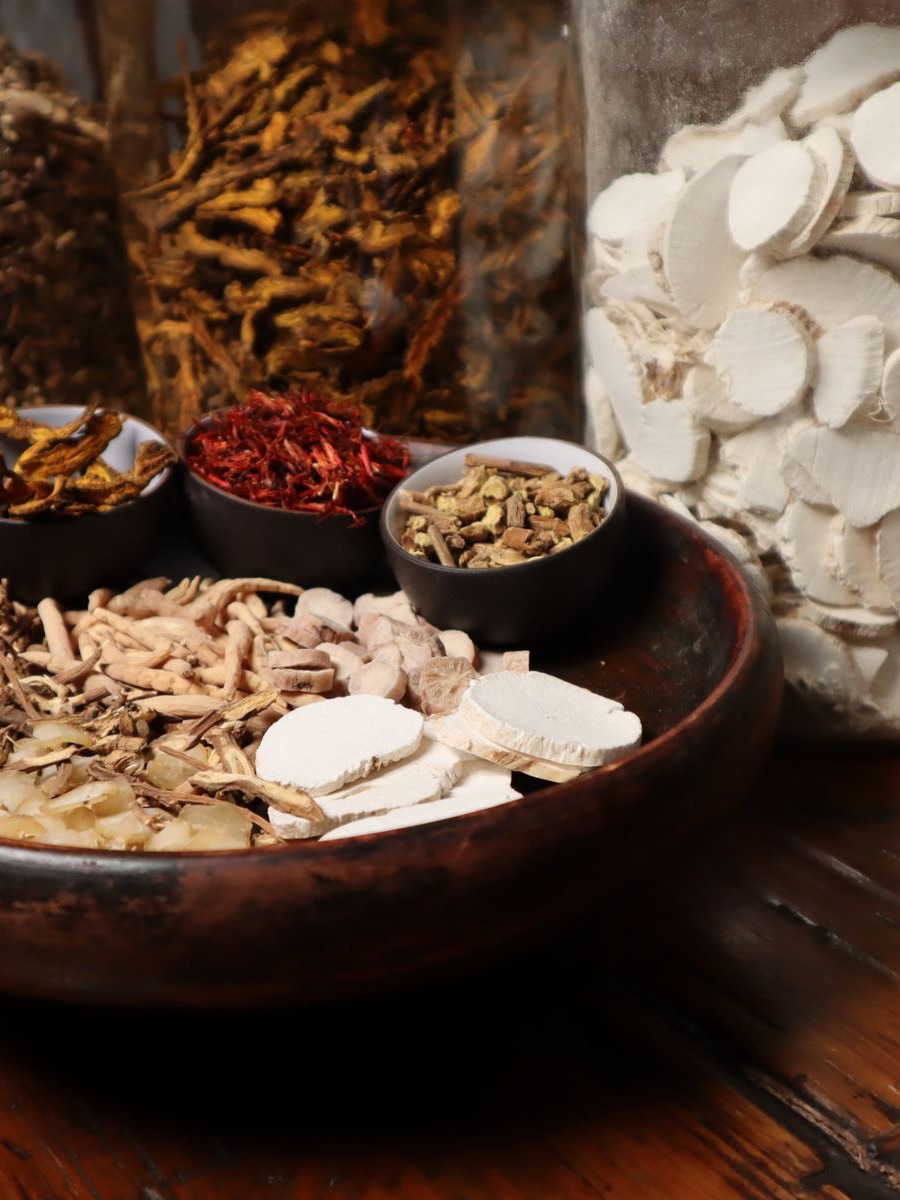
Signature ingredients
Fo-Ti shampoo OEM/ODM manufacturing
Fo-Ti (Polygonum Multiflorum) Shampoo · OEM/ODM
Red Fo-Ti (Polygonum multiflorum, known in Vietnam as ha thu o) is familiar to Vietnamese consumers through the saying that it "darkens hair and grows hair"; that is folk and traditional medicine experience, mainly with oral use: a cultural story for your brand, not evidence. Hair data on the extract itself come from cells, fish embryos, mice and isolated human hair follicles; we have not found a controlled human trial of Fo-Ti extract applied on its own. So this Fo-Ti shampoo follows the principles of our herbal shampoo page: cleansing, lather and viscosity come from the surfactant system; Fo-Ti root extract is the named ingredient that carries the story. This page focuses on what is specific to Fo-Ti: species identity and the two INCI names on the certificate of analysis, the extract's brown color (not a hair dye), the context of the liver warning for oral use, and claim limits: no darkening of hair, no prevention of gray hair, no hair growth, no reduction of hair loss. Covering gray hair right away is the job of a gray-coverage shampoo, a hair dye product with its own rules. Butter-C offers turnkey OEM/ODM manufacturing, from formula development and testing to labeled finished goods and the notification dossier.
Formula base
Fo-Ti root extract in a complete cleansing system
The formula has the same four groups as any shampoo; the difference is that the named Fo-Ti extract changes the color, clarity and microbial risk of the base, so it goes into the very first sample rather than being added at the end.
Fo-Ti root extract, sourced per order
Butter-C does not hold this material in stock; the extract is selected for each order, with a technical data sheet (TDS) and a COA for every batch. According to CosIng, Polygonum Multiflorum Root Extract is an extract of the roots of Polygonum multiflorum, function skin conditioning, with no function listed for hair color or hair growth; CosIng also has a separate INCI, Reynoutria Multiflora Root Extract, and related entries give Fallopia multiflora as the accepted scientific name of the species. The label uses the INCI name on the COA (check both names), plus the solvents carried by the material.
Primary surfactant system
Sodium Laureth Sulfate with Cocamidopropyl Betaine for the mass-market version; amino acid surfactants (Sodium Lauroyl Glutamate, Sodium Lauroyl Sarcosinate), glucosides and betaine for the sulfate-free version, on the same principle as our herbal shampoo page. This is what determines cleansing, lather and viscosity; mildness is a property of the whole blend, measured on the finished product.
Hair conditioners
Guar Hydroxypropyltrimonium Chloride, Polyquaternium-10 and panthenol reduce tangling and ease combing after washing. Our internal monograph notes that tannins may react with cationic polymers, but we have not found a checked source confirming the tannin content of Fo-Ti root, so cationic polymers are tested for compatibility (haze, sediment) on real samples.
Texture, chelation, preservation and fragrance
Sodium chloride or xanthan gum for viscosity; Disodium EDTA or Tetrasodium Glutamate Diacetate to limit metal-ion discoloration; the preservative system is challenge-tested per ISO 11930; a light herbal scent balances the botanical odor. The formula contains no hair dye: the product's brown color is the color of the extract.
Key technical points
Six things specific to a shampoo with Fo-Ti extract
These are the points where a Fo-Ti shampoo differs from a standard one; each is settled by raw-material documents, checked literature or testing on samples.
"Darkens hair, grows hair" is tradition, not data from the human scalp
In folk experience and traditional Chinese medicine, Fo-Ti root, mainly taken orally, is believed to darken hair (Lin et al., 2015). In the laboratory, the root extract increased melanin synthesis in SKMEL-28 human melanoma cells and in zebrafish embryos and larvae (Thang et al., 2017); reduced death of cultured human melanocytes under oxidative stress and gave higher melanin than vehicle alone in cultured human hair follicles ex vivo (Sextius et al., 2017, most authors from one cosmetics company); and, applied to the backs of mice, activated the growth phase of resting hair follicles (Park et al., 2011). Cells, fish embryos and mice are not the human scalp: we have not found a controlled human trial of Fo-Ti extract applied on its own for gray hair or hair loss. Level of evidence: limited.
Human data come only from multi-ingredient products
Feng et al. (2026) assessed a shampoo containing ginger root, Fo-Ti and Platycladus leaf extracts in 41 people with seborrheic hair loss, compared with 29 healthy people, over 12 weeks: the abstract reports less hair loss and sebum and a scalp microbiota closer to the healthy group, but gives no figures and describes no control-product group; some authors work for a chemical company. The result belongs to the whole formula, in people with a hair condition that needs a doctor; the Fo-Ti share cannot be separated, and it is not used as a claim. A shampoo also stays on the scalp for only a few minutes before rinsing.
The extract's brown color is not hair dye
The root extract is brown, turns the shampoo brown and may darken over time; that color stays in the bottle and does not dye the hair fiber. A gray-coverage shampoo creates color with oxidative dyes that have concentration limits and mandatory warnings under Annex III; the allergy risk of that category comes mainly from the dyes, and herbal extracts do not lower it. This page adds no dye; if you need to cover gray hair, see our gray-coverage shampoo page.
Right species, right plant part
The review by Lin et al. (2015) lists nine species from six plant families that have been used as substitutes for Fo-Ti. The easiest mix-up is Polygonatum multiflorum, an entirely different plant that CosIng places in the asparagus family, with a Latin name only a few letters apart; CAS 93165-64-1 belongs to that plant's INCI, not to Fo-Ti. The COA should state species, plant part (root), solvent, extraction ratio, identification method, heavy metals and microbiology; Butter-C asks suppliers to add the content of TSG (the marker stilbene glycoside) and anthraquinones if available.
Liver: an oral-use context; topical use is a data gap
Oral Fo-Ti is linked to liver injury: a systematic review pooled 450 cases from 76 papers, with symptoms usually about one month after use; 441 people recovered or improved after stopping, 7 died and 2 needed a liver transplant (Lei et al., 2015). It is an idiosyncratic injury that occurs only in some people (Li et al., 2019). We have not found reports of liver injury from shampoos or topical products containing Fo-Ti, nor reports of contact allergy specific to this extract; skin absorption of the extract has not been measured. No reports does not mean proven safe: this gap is covered by tolerance testing of the finished product; the label does not say "liver-safe", and there is no need to cause alarm either.
Regulation and concentration
Polygonum Multiflorum Root Extract, Reynoutria multiflora and Fallopia multiflora are not in ASEAN Annexes II, III, VI (version 2026-1) or VII (version 2025-2); emodin, physcion and TSG are not named either. Annex II Ref 1603 prohibits "9,10-anthraquinone / Anthraquinone" (CAS 84-65-1), the parent compound, not emodin or physcion. There is no CIR safety assessment, so there is no checked survey of use concentrations: the level follows the supplier's TDS, with extraction ratio and solvent, then is confirmed by stability studies and tolerance testing of the finished product.
Three formulation directions
Three ways to put Fo-Ti into a shampoo bottle
Mass-market Fo-Ti shampoo
Sodium Laureth Sulfate with Cocamidopropyl Betaine, Fo-Ti root extract, guar polymer and a herbal scent. Rich lather, good price; cannot claim "sulfate-free"; the extract's color makes a clear shampoo hard to keep.
Sulfate-free Fo-Ti shampoo for dyed hair
Amino acid, betaine and glucoside system, panthenol, natural light-brown color; positioned as a daily shampoo for people already using a gray-coverage product: two products, two separate dossiers, and this shampoo contains no dye. A color-retention claim is made only after measuring fading on dyed hair tresses; mildness is tested on the finished product.
Fo-Ti and gleditsia shampoo
A herbal pair familiar to Vietnamese consumers. We have not found any study on this combination; it is an ingredient story. The gleditsia material is a solution in glycerin and water, and the two extracts add up in color, sediment and microbial load.
Packaging is designed with the formula
300 ml to 1 liter pump bottles, refill pouches. Opaque or amber bottles mask the extract's gradual darkening; pumps and gaskets are tested for compatibility with fragrance and extract.
Parameters we monitor
What our R&D lab measures on every sample
Below is the set of parameters Butter-C tracks during formula development and scale-up. Specific limits are agreed with you on the approved sample and then written into the product's in-house specification.
- Appearance, color & sediment
- Color, odor, clarity or opacity, sediment; compared with a reference sample kept in the R&D lab, since the extract darkens over time and varies by batch.
- pH
- Measured at 25°C; pH drift tracked across stability checkpoints because both the amino acid system and the preservatives depend on pH.
- Viscosity & salt curve
- Rotational viscometer at 25°C; the salt curve is redone whenever the extract level or material batch changes.
- Foaming
- Foam height and stability, also assessed with oil on the hair; compared with the approved sample.
- Conditioning performance
- Assessed on hair tresses: slip when rinsing, ease of wet and dry combing; plus a combing breakage test if the label claims less breakage.
- Stability
- Freeze–thaw cycling, storage at 40°C and under light; watching for separation, sediment, color and odor change, viscosity drift.
- Incoming extract COA
- INCI name (Polygonum Multiflorum Root Extract or Reynoutria Multiflora Root Extract) in full including solvents; species, root as plant part, identification method (ruling out Polygonatum and substitute species), extraction ratio, heavy metals, microbiology; TSG and anthraquinone content if the supplier declares it.
- Microbiology & preservative challenge
- Tested at a GLP / ISO 17025-accredited laboratory; preservative efficacy (challenge) test per ISO 11930.
- Tolerance of the finished product
- Irritation and tolerance assessment of the finished product in the safety file, covering the data gap on topical use of Fo-Ti extract.
- Fragrance allergens
- ASEAN has no list of fragrance allergens that must be named individually (Annex III, entries 67–92 left blank); for EU export, allergens are named above 0.01% in rinse-off products.
Claims
Claims for a shampoo with Fo-Ti extract
Evidence for Fo-Ti extract on hair is limited: data on pigmentation and the hair follicle cycle come from cells, fish embryos, mice and isolated follicles; human data come only from multi-ingredient products, with no control-product group described. Appendix 03-MP (Circular 06/2011/TT-BYT) does not accept "prevents hair loss", "stimulates hair growth", "thickens the hair strand" or "restores hair cells / hair follicles". The appendix does not mention gray hair specifically; in Butter-C's reading, "darkens hair from the root" and "prevents gray hair" imply an effect on the hair follicle and so fall outside the cosmetic scope. Butter-C reviews label and marketing wording when preparing the notification dossier.
Cleanses hair and scalp ("gentle" only after testing the finished product)
Instead of: milder than sulfate shampoos, germ-free scalp, scalp detox.
With Fo-Ti root extract; inspired by Fo-Ti in folk tradition
Instead of: darkens hair, darkens hair from the root, prevents gray hair, gets rid of premature gray hair.
Helps hair feel smooth and easy to comb (with conditioning polymers and tress assessment)
Instead of: restores damaged hair, nourishes hair follicles.
Helps reduce breakage from combing (when breakage has been tested on the finished product)
Instead of: prevents hair loss, reduces hair loss, stimulates hair growth, new hair growth, thickens the hair strand.
Helps hair look glossy and healthy
Instead of: tonifies the blood, tonifies the kidneys, a gentle herb so no allergy worries, liver-safe, fully herbal when the formula contains synthetic surfactants.
Warnings and users
"Avoid contact with eyes; if contact occurs, rinse immediately with plenty of water"; do not use on a scratched scalp; stop if redness, itching or burning occurs. People who have had liver injury from taking Fo-Ti orally should ask a doctor before use. Pregnancy and breastfeeding: not enough data, ask a doctor. Heavy, prolonged or patchy hair loss needs a dermatologist. Instead of: tear-free, safe for pregnancy.
Manufacturing specifications
Capabilities
- Texture
- Clear or slightly opaque shampoo, natural light-brown color of the extract or adjusted to the label.
- Format
- Pump bottle, flip-top bottle, refill pouch. Volume agreed when choosing packaging.
- Minimum order quantity
- Agreed per order and per fragrance.
- Testing
- Performed at a GLP / ISO 17025-accredited laboratory; certificate of analysis delivered with every batch.
- Documentation
- Product Information File (PIF) and cosmetic product notification dossier prepared by Butter-C, with the species-identity COA of the Fo-Ti extract.
- Packaging
- Label design, printing and packing run in parallel with formula development.
Suggested product concept
Sulfate-free Fo-Ti shampoo with a light herbal scent
One product concept to help you picture the range, not a ready-made product for sale. The actual formula is built around your brand's positioning and price point.
Amino acid and betaine system
Sodium Lauroyl Glutamate, Cocamidopropyl Betaine and a glucoside; fine lather, quick rinse, suited to daily washing.
Named Fo-Ti root extract
Species-identity COA for every batch; level per the supplier's TDS, label lists all accompanying INCI names; label wording: "with Fo-Ti root extract".
Guar polymer and panthenol
Less tangling and easier combing after washing; assessed on hair tresses before any smoothness claim.
500 ml amber pump bottle and refill pouch
Masks the extract's natural darkening; the label carries an eye-contact warning.
Customization options
Options you can specify
The same product type can target very different customers. Tell us your requirements in the areas below and our pharmacists will build the matching formula.
Surfactant system
With sulfate for rich lather and a good price; sulfate-free (amino acids, glucosides) for a gentle positioning; a glucoside-free version for people with known allergy to this group.
Extract level and color
The Fo-Ti level is tied to color, sediment and cost; keep the natural brown or adjust it. There is no checked standard concentration: a higher level does not make the story "stronger" in terms of benefits.
INCI name on the label
Polygonum Multiflorum Root Extract or Reynoutria Multiflora Root Extract, following the name on the supplier's COA; both are listed in CosIng for the root extract.
Fragrance
Herbal, warm woody, light scent or fragrance-free.
Hair type
Oily hair, dry and frizzy hair, breakage-prone hair, dyed hair, sensitive scalp; this sets the cleansing and conditioning levels.
Product set
Shampoo and conditioner sharing the Fo-Ti story; a gray-coverage shampoo is a separate hair dye product with its own dossier and warnings.
Further reading
Related knowledge
Fo-Ti in cosmetics
INCI names and species, what the literature has tested, the liver warning for oral use, ASEAN regulation and measured claims (in Vietnamese).
Herbal shampoo OEM/ODM manufacturing
General principles of multi-herb shampoos; this page focuses on Fo-Ti.
Gray-coverage shampoo OEM/ODM manufacturing
When gray hair needs covering: an oxidative dye product with mandatory limits and warnings.
Gray hair and gray-coverage dyeing
Why hair turns gray, dye and gray-coverage shampoo types, PPD allergy, patch testing and label warnings (in Vietnamese).
Hair loss and hair breakage
The hair cycle, follicle-driven hair loss versus fiber breakage, and claims for hair products (in Vietnamese).
How we work
From idea to finished batch
Eight steps and three milestones signed off by both sides: approved sample, notification number, finished batch. Step-by-step details (in Vietnamese) →
Get started
Tell us about the product you plan to launch
Send us your product direction and expected volume. Our team will get back to you during business hours (Vietnam time, GMT+7).
Head office: Huu Le village, Dai Thanh commune, Hanoi · Factory: Thanh Oai Industrial Cluster, Binh Minh commune, Hanoi, Vietnam
Hotline +84 967 176 511 · [email protected] · Privacy policy ← Full catalog