 BUTTER-C
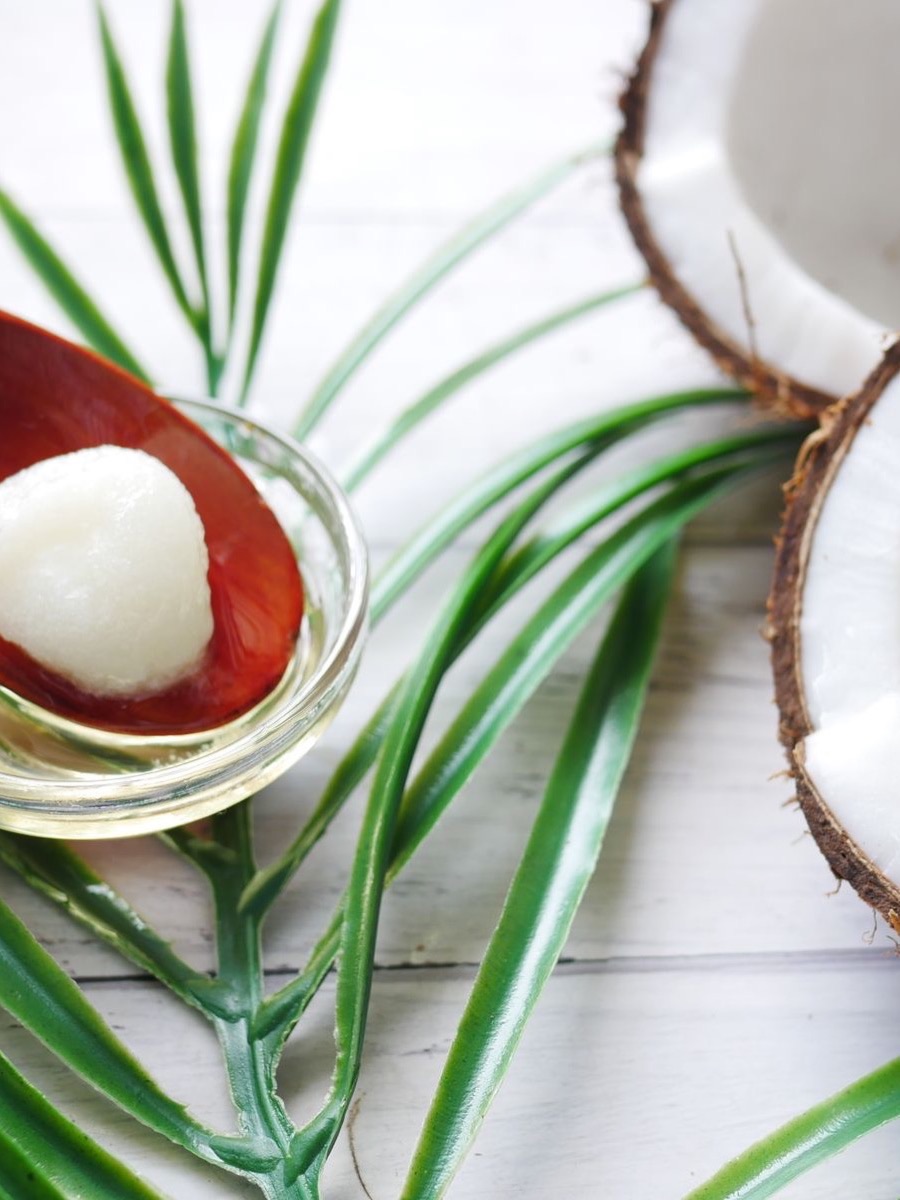
Signature ingredients
Coconut pre-wash hair oil OEM/ODM manufacturing
Coconut Pre-Wash Hair Oil · OEM/ODM
Putting coconut oil on the hair for a while before washing is a familiar habit in many Vietnamese families; that is a cultural story, and a place of origin is stated for the oil only when the supplier provides documents. The data behind the habit come from laboratory work on hair fibers: of the three oils tested, coconut, sunflower and mineral oil, only coconut oil used before and after washing clearly reduced protein loss in both undamaged and damaged hair (Rele and Mohile, 2003), and cross-section analysis showed that coconut oil enters the hair shaft while mineral oil does not (Ruetsch et al., 2001). The authors belonged to or worked with the research department of a hair oil manufacturer, the abstracts do not give sample sizes, and these are not trials in users: the evidence is limited, enough to say "helps limit protein loss from the hair fiber during washing" with a data note, not enough to say "restores damaged hair". This page differs from the hair mask page (applied after washing, on a cationic conditioner base) and the hair oil page (left on the hair after drying): a pre-wash oil is applied before shampooing and rinsed off, close to the test conditions of the research. The formula therefore has to handle four issues specific to coconut oil: solidifying in cool weather, how easily it rinses out, odor and oxidation when blended, plus the slip warning. Butter-C offers turnkey OEM/ODM manufacturing, from formula development and testing to labeled finished goods and the notification dossier.
Formula base
Coconut oil makes up most of the blend; liquid oils and emulsifiers are optional
A coconut oil pre-wash oil is an anhydrous (water-free) blend. The laboratory results belong to coconut oil used before and after washing; the more other oils the formula contains, the further it moves from the test conditions, so the coconut oil share is the first decision.
Coconut oil
INCI Cocos Nucifera Oil (CosIng: oil expressed from the kernels of coconut seeds); about 90% saturated triglycerides (CIR 2011), with lauric acid as the main fatty acid. Virgin and refined oil share the same INCI and are told apart on the COA. The CIR 2011 report lists use concentrations up to 80% and concludes the oil is safe as used; no "effective" concentration has been established.
Liquid oils in the blend
Caprylic/capric triglyceride (often sold as "fractionated coconut oil") is a different INCI; it is liquid and helps the blend solidify less in cold weather, but coconut oil's hair data do not carry over to it. Sunflower oil did not reduce protein loss in the same 2003 study, so adding a lot of it weakens the coconut oil story.
Emulsifiers for easier rinsing
Oil-soluble emulsifiers such as polyglyceryl-4 oleate paired with polyglyceryl-10 laurate, or PEG-20 glyceryl triisostearate, turn the oil milky on contact with water so it rinses out more easily. These are not yet in Butter-C's in-stock ingredient data; source and COA are confirmed per order. PEG-7 glyceryl cocoate is water-loving; according to CIR it does not dissolve in paraffin oil and only disperses in sunflower oil, so clarity must be tested in the actual oil phase.
Antioxidant and scent
Tocopherol is added when the oil phase is blended. Virgin oil already smells of coconut, so added fragrance may not be needed; if it is added, a rinse-off product still declares fragrance allergens according to the market (EU export: above 0.01%).
Key technical points
Solidification, rinse-off, fine hair and slipping
The four items below are settled on the sample together with the sensory profile, not after filling.
White crystallization in cold weather
Coconut oil is solid when cool and liquid when warm (background knowledge, because it is mostly saturated fat). White crystals or lumps in the bottle in cold weather are not a sign of spoilage if the oil melts back completely when warm and odor and color are unchanged. There is no verified source for one fixed melting point, so the incoming specification records a melting range or cloud point from each lot's TDS and COA; the share of liquid oil is set by cold testing at the expected storage temperature.
Rinsing out with shampoo
Oil does not dissolve in water; a pure-oil product often needs two shampoo washes to lose the greasy feel, especially on thick, long hair (practical experience). Oil-soluble emulsifiers make rinsing faster but move the formula away from the pure coconut oil used in the research. Ease of rinsing is assessed on hair tresses after one and two washes with a standard shampoo.
Fine hair and oily scalps
Coconut oil can leave fine hair limp and heavy if not rinsed well; directions suggest applying to the lengths and ends, using just enough, and keeping it off the roots for oily scalps (practical experience). Wrapping hair in a warm towel is a common habit: in a hair-fiber experiment, heat made the coconut oil film on the surface thin faster, which the authors explained as oil being absorbed into the fiber (Keis et al., 2005); this is not evidence of a benefit in people.
Slipping and oxidation
Oil dripping onto the floor or bathtub makes surfaces slippery: directions say to apply outside the shower area or over a towel and wipe up drips, a dosing cap keeps each portion small, and the label carries a slip warning (practical suggestion, not an ASEAN annex requirement). Oils high in saturated fat are usually more oxidation-stable than highly unsaturated oils, but blended oils and oleate-based emulsifiers bring in unsaturated components, so peroxide value is monitored.
Three formulation directions
Three coconut oil pre-wash formats
Virgin coconut oil in a jar
Almost only virgin coconut oil and tocopherol, close to the hair-fiber test conditions; it is accepted that it solidifies when cool and melts when rubbed between the palms. Near-neat use is above the maximum in the CIR 2011 survey (80%), so the PIF safety assessment considers this level specifically. Wide-mouth jar; wet fingers bring water into the jar, so microbiological risk is assessed for this pack.
Coconut–MCT liquid oil in a bottle
Coconut oil still makes up most of the blend, with caprylic/capric triglyceride so it solidifies little or not at all in the bottle; works with flip-top caps and pumps. The ratio is set by cold testing; cutting coconut oil too far moves away from the hair data's test conditions.
Self-emulsifying easy-rinse oil
Coconut oil with oil-soluble emulsifiers: it turns milky with water and rinses out with water and a lighter shampoo wash. Suits people who dislike a greasy feel; clarity at 4°C, emulsifying behavior and scalp tightness after rinsing are tested on the finished product.
Packaging is planned with the formula
Light-protective plastic flip-top or pump bottles for liquid formats (glass gets slippery in oily hands in the bathroom); pumps are tested at low temperature because solid oil can block them. Wide-mouth jars for the solid format. No spray format, to limit oil on the floor.
Parameters we monitor
What the R&D lab measures on every sample
Below is the set of parameters Butter-C tracks during formula development and scale-up. Specific limits are agreed with you on the approved sample and then written into the product's in-house specification.
- Melting range, cloud point
- Recorded from the TDS and COA of each coconut oil lot and written into the incoming specification.
- Freeze–thaw behavior
- Hot–cold cycling in the real pack: the oil solidifies and melts back completely, with no sediment and no separation from blended oils or emulsifiers.
- Peroxide value, acid value
- Measured on the raw material at receipt and on the finished product at each stability point; finished-product limits are set from the formula's own stability data.
- Odor and color
- Compared with the reference sample at room temperature, 40°C, with and without light; checked for rancidity.
- Ease of rinsing on tresses
- Greasy or limp feel after one and two washes with a standard shampoo; for self-emulsifying formats, time to turn milky with water and residual oil film.
- Hair assessment
- Softness and wet and dry combing slip after washing, on fine and thick hair and on chemically treated hair.
- Raw material impurities
- Fatty acid profile per COA; the incoming specification covers aflatoxin, pesticide residues and heavy metals, which CIR 2011 says should be controlled in plant-derived ingredients.
- Microbiology
- Tested at a GLP / ISO 17025-accredited laboratory; written microbiological risk assessment for the anhydrous system under ISO 29621.
- Packaging compatibility
- Pump force and blocking when the oil solidifies, cap leakage, plastic softening from long contact with oil and emulsifiers.
Claims
Claims at the level of soft, smooth hair fibers, with a data note
Coconut oil's hair data are laboratory work on hair fibers by a group with industry links, and the abstracts do not give sample sizes; there is no trial in people using a pre-wash product. Appendix 03-MP (Circular 06/2011/TT-BYT) does not accept "restores hair cells/follicles", "thickens the hair shaft", "prevents hair loss" or "stimulates hair growth". Butter-C reviews the wording on the label and in marketing materials when preparing the notification dossier.
Leaves hair soft, smooth and easy to comb after washing (once assessed on the finished product)
Instead of: restores damaged hair, rebuilds hair structure, "restores from the root".
Coconut oil used before washing helps limit protein loss from the hair fiber (laboratory data on hair fibers)
Only for formats where coconut oil makes up most of the product and is used before washing, always with the data note. Instead of: protein percentages, "total hair protection", or applying this result to conditioners or masks with only a few percent coconut oil.
Helps reduce breakage from combing, only when breakage testing on the finished product supports it
Instead of: prevents hair loss, stimulates hair growth, thickens hair. Heavy, prolonged or patchy hair loss needs a dermatologist.
No claims about bacteria, fungi, lice or dandruff
Instead of: claims built on laboratory data for lauric acid or monolaurin, or on coconut oil and lice data from a medical review; these do not become benefits of a pre-wash oil.
Contains coconut oil; "virgin coconut oil" and origin when the supplier confirms
Instead of: calling caprylic/capric triglyceride "coconut oil"; naming a growing region without documents.
Label reminders
Apply to hair before washing and rinse out with shampoo (two washes may be needed); oil makes floors and tubs slippery, so apply outside the shower area and wipe up drips; avoid the eyes; the oil may solidify in cold weather, warm it to melt (when stability testing confirms quality is unchanged); stop if the scalp turns red or itchy; people allergic to coconut should ask a doctor first. These are practical suggestions; the label text is agreed with you.
Manufacturing specifications
Available capabilities
- Texture
- Liquid oil, naturally solid coconut oil in a jar, or self-emulsifying oil that turns milky with water.
- Pack formats
- Light-protective plastic flip-top bottle, pump bottle, wide-mouth jar. Volume agreed when choosing packaging.
- Minimum order quantity
- Agreed per order, depending on the formula direction and pack chosen.
- Testing
- Tested at a GLP / ISO 17025-accredited laboratory, with a certificate of analysis delivered with every batch.
- Dossier
- Product Information File (PIF) and cosmetic product notification dossier prepared by Butter-C, with a coconut oil COA stating the oil type (virgin/refined) and fatty acid profile.
- Packaging
- Label design with pre-wash directions, slip warning and a cold-weather crystallization note; printing and packing run in parallel with formula work.
Suggested product concept
Virgin coconut–MCT pre-wash oil with an easy-rinse emulsifier
A concept to help you picture the product, not a ready-made product for sale. The actual formula is built around your brand's positioning and price range.
Virgin coconut oil as the main part
The named ingredient, with a light natural coconut scent; ratio set by cold testing.
MCT oil
Keeps the blend more liquid in cool weather, with a light feel.
Oil-soluble emulsifier and tocopherol
Lets the oil turn milky with water so it rinses out faster; tocopherol protects the oil phase from oxidation.
150 ml light-protective plastic flip-top bottle
Small portions each time; the label gives pre-wash directions, a slip warning and a cold-weather crystallization note.
Customization options
Options you can specify
Within the same product type, each brand targets a different customer group. Tell us your requirements in the areas below and our pharmacists will build the matching formula.
Coconut oil type
Virgin with coconut scent, or refined and nearly odorless.
Product format
Pure oil, liquid year-round, naturally solid in a jar, or self-emulsifying for easy rinsing.
Hair group
Dry and frizzy hair, permed or colored hair, thick long hair; for fine hair and oily scalps, an easy-rinse format is advisable.
Scent
Natural coconut scent, fragrance-free, or a light fragrance version with fragrance allergens declared for the target market.
Packaging
Flip-top, pump or jar; retail size or salon size.
Product set
Pre-wash oil, shampoo and after-wash mask in one coconut line, each step with its own claim based on the data for that format.
Further reading
Related knowledge
Coconut oil (Cocos Nucifera Oil) in cosmetics
Data on dry skin and hair, virgin, refined and fractionated oil, safety and ASEAN rules (in Vietnamese).
Hair mask OEM/ODM manufacturing
The intensive after-wash step on a cationic conditioner base, unlike a pre-wash oil.
Hair oil OEM/ODM manufacturing
Oil left on the hair after drying: silicones, plant oils, light esters.
Coconut body oil OEM/ODM manufacturing
The same coconut oil ingredient for body skin: solidification, odor, oxidation, slipping.
Hair loss and hair breakage
What hair-shaft care can do and hair claims under Appendix 03-MP (in Vietnamese).
How we work
From idea to finished batch
Eight steps and three milestones signed off by both sides: approved sample, notification number, finished batch. Step-by-step details (in Vietnamese) →
Get started
Tell us about the product you plan to launch
Send us your product direction and expected volume. Our team will get back to you during business hours (Vietnam time, GMT+7).
Head office: Huu Le village, Dai Thanh commune, Hanoi · Factory: Thanh Oai Industrial Cluster, Binh Minh commune, Hanoi, Vietnam
Hotline +84 967 176 511 · [email protected] · Privacy policy ← Full catalog