 BUTTER-C
Signature ingredients
Baking soda toothpaste OEM/ODM manufacturing
Baking Soda Toothpaste · OEM/ODM
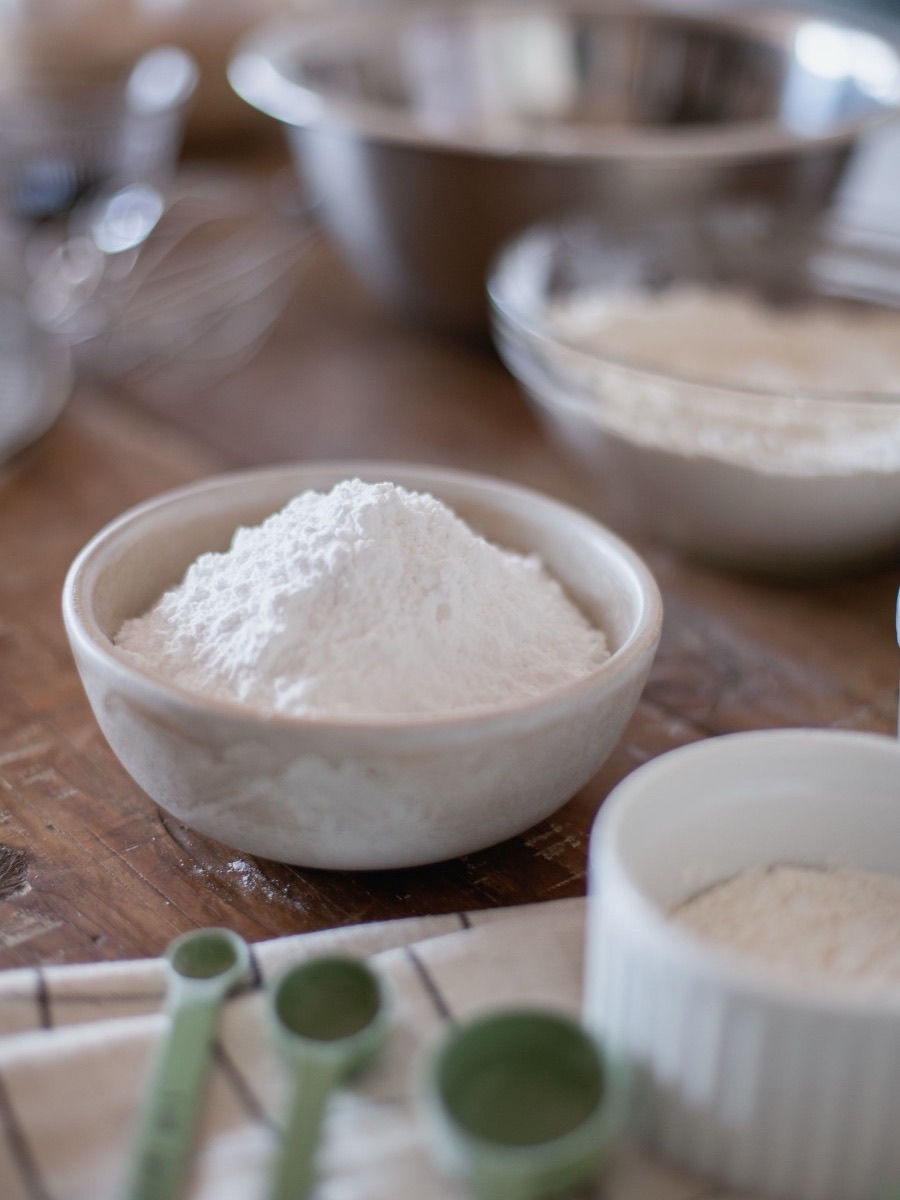
Baking soda — sodium bicarbonate — is a kitchen staple and part of many word-of-mouth tooth-brushing tips; that familiarity is the story behind a baking soda toothpaste. In cosmetics the material carries the INCI name Sodium Bicarbonate: a white crystalline powder that dissolves partly in water to give a mildly alkaline solution (a 1% solution has a pH of 8.0–8.6). According to a dental review, baking soda is intrinsically low in abrasivity because it is softer than enamel and dentin (Hara and Turssi, 2017); many plaque trials have been run on toothpastes containing baking soda, but those are dental data for specific formulas, not claims. A baking soda toothpaste uses sodium bicarbonate as the main abrasive or together with silica, and its claims stay at cleaning teeth, helping clean surface stains and fresh breath. Unlike our general toothpaste page, this page goes into what is specific to sodium bicarbonate: the salty taste that must be balanced, the release of CO2 in water so the phase containing it is never heated and tubes are checked for swelling, incompatibility with acids and the gradual loss of active fluoride, the relative dentin abrasivity (RDA) of the whole formula measured on the finished product, and a reminder not to use baking soda powder as a home remedy for young children. Butter-C offers full-service OEM/ODM manufacturing, from formula development and testing to labeled finished product and notification dossier.
Formula base
Sodium bicarbonate, companion abrasive, humectant base and flavor
A baking soda toothpaste is a suspension like any standard toothpaste; the difference is that much of the abrasive is sodium bicarbonate, which brings a salty taste and a mildly alkaline base.
Sodium bicarbonate: read the material correctly
INCI Sodium Bicarbonate (CAS 144-55-8; NaHCO3, 84.01 g/mol per PubChem); the material Butter-C keeps on file is sodium bicarbonate under internal code 10244. It dissolves at about 10.3 g per 100 g of water at 25 °C (HSDB), so at high levels most of it stays as undissolved particles that work as the abrasive — particle size is stated on the COA. Per the Food Chemicals Codex (cited in CIR 1987), purity is not less than 99.0% NaHCO3 on a dry basis. The label states the INCI name “Sodium Bicarbonate”, not “Baking Soda”; the material is usually made synthetically by the Solvay process (CIR 1987), so “natural” is used only with documented origin.
Companion abrasive, humectants and thickeners
Hydrated silica adjusts cleaning and builds body; silica was inert toward fluoride in storage experiments (Hattab, 1989). Sorbitol and glycerin keep the paste from drying out; xanthan gum and cellulose gum give structure — as on our toothpaste page. Dissolved calcium and magnesium ions can form carbonate precipitates with sodium bicarbonate (background chemistry), so companion materials are chosen with stability in mind.
Foaming agents
Sodium Lauryl Sulfate for rich, familiar foam; Cocamidopropyl Betaine for a moderate-foam, SLS-free version. Mildness on the oral mucosa is a property of the whole formula, assessed on the finished product.
Salty taste, flavor and preservation
The salty taste of sodium bicarbonate is balanced with peppermint oil, menthol, xylitol and sodium saccharin; the taste is set on samples. Because the base is mildly alkaline, the preservative is chosen by pH: Sodium Benzoate works at acidic pH and suits this base poorly (formulation experience); Phenoxyethanol (ASEAN Annex VI, Ref 29: maximum 1.0%) is one option; performance is confirmed by challenge testing per ISO 11930. The version described on this page contains no fluoride.
Key technical points
Six things specific to a toothpaste with sodium bicarbonate
These are the points where a baking soda toothpaste differs from a standard toothpaste; each is settled with the material file, measurements or tests on samples.
Low abrasivity is intrinsic; RDA belongs to the whole formula
According to the review by Hara and Turssi (2017), baking soda is low in abrasivity because it is less hard than enamel and dentin; toothpastes with added stain-removal ingredients can be more abrasive. In vitro, across 26 retail toothpastes, relative dentin abrasivity (RDA) ranged from 36 to 269; pastes using dicalcium phosphate, sodium bicarbonate or calcium carbonate generally had lower RDA and usually lower pellicle cleaning ratio (PCR) scores (Schemehorn et al., 2011; the authors work for a testing services company). RDA and PCR are therefore measured on the finished product itself; “non-abrasive” or “safe for enamel” is not written as an absolute claim.
No heating; watch for gas and pH drift
In solution, sodium bicarbonate begins to break down into CO2 and sodium carbonate at about 20 °C and fully on boiling; alkalinity rises when the solution stands, is stirred or heated; the solid starts losing CO2 at about 50 °C (HSDB on PubChem). In practice: the phase containing sodium bicarbonate is never heated and is added at the cool-down stage; pH is checked after 24 hours and after temperature cycling; tubes are checked for swelling. Acids (citric acid, acidic raw materials) release CO2 on contact with sodium bicarbonate — they are not combined in a sealed tube without stability testing.
Fluoride activity declines over time
In storage experiments, sodium bicarbonate and sodium metaphosphate inactivated 20–25% of the added fluoride after 9 months, while silica was inert toward the fluoride of sodium fluoride and MFP (Hattab, 1989). The version on this page has no fluoride; if you choose a fluoride version, soluble fluoride is assayed at manufacture and throughout the stability study.
Salty taste and grittiness
The higher the sodium bicarbonate level, the more noticeable the salty taste and grittiness. Finer particles reduce grittiness (practice); sweeteners and mint balance the taste — the level is set on brushing samples with you, not on the idea that “more baking soda is better”.
Dental data: reported by study design, not turned into claims
A systematic review of 21 publications (43 comparisons): after a single brushing, baking soda toothpaste gave significantly better plaque scores than negative and positive control pastes; in studies with follow-up, this was confirmed only against negative controls; gingival bleeding indices showed a small reduction against negative controls and gingival index scores did not differ; overall risk of bias was moderate with considerable heterogeneity; the research group had previously received fees or grants from toothbrush and toothpaste manufacturers (Valkenburg et al., 2019). In a single-center, examiner-blind trial, 190 adults with localized gingivitis were randomized and 188 completed, brushing twice daily for 12 weeks; the sodium bicarbonate group showed significant reductions in bleeding sites, gingival index and plaque index versus a conventional fluoride toothpaste (West et al., 2025). The abstract does not state the sodium bicarbonate concentration; four authors received funding from or are employees of a toothpaste company. These are gum-disease data for the formulas tested, not a basis for claims.
ASEAN regulation and safety data
Sodium bicarbonate (searched by name, synonyms and CAS 144-55-8) is not listed in Annexes II, III, VI (version 2026-1) or VII (version 2025-2); the alkali entries of Annex III, Ref 15a–15d, cover only hydroxides, and the “pH < 11” condition of Ref 15a does not apply to sodium bicarbonate. CIR concluded it was safe as used in 1987, did not reopen the report in 2005, and the 2025 re-review reaffirmed it as safe in the practices of use and concentrations described; the 2023 survey recorded 42 uses in toothpaste with maximum reported concentrations of 0.35–66.4% — reported levels, not recommended levels.
Three formulation directions
Three lines of baking soda toothpaste
Mint baking soda with silica
Sodium bicarbonate combined with hydrated silica, SLS, mint and xylitol; an everyday line with a light salty taste, RDA measured on the finished product.
High-level baking soda
Sodium bicarbonate as the main abrasive, a clearly salty taste and a dense, gritty texture; the CIR survey records toothpastes reported at up to 66.4%. Gas, pH stability and grittiness are the focus. A meta-analysis of 7 trials on a 67% sodium bicarbonate toothpaste in people with gingivitis (Taschieri et al., 2022) is dental data, not a claim.
Moderate-foam, SLS-free baking soda
Cocamidopropyl Betaine instead of SLS, gentle mint, xylitol; “mild” is written only after assessment on the finished product.
Packaging is designed with the formula
Laminate tube, screw cap or flip-top cap; tubes are checked for swelling from gas. Aluminum tubes are used only after compatibility testing with the mildly alkaline base (corrosion, liner delamination).
Parameters we monitor
What our R&D lab measures on every sample
Below are the parameters Butter-C monitors during formula development and scale-up. Specific limits are agreed with you on the approved sample and then written into the product's in-house specification.
- pH
- Measured on a diluted slurry by the prescribed method at manufacture, after 24 hours and across stability time points — watching for an upward drift.
- Gas and tube swelling
- Check for gas bubbles in the paste, tube swelling and cap leakage after freeze–thaw cycling and storage at 40°C.
- Abrasivity & stain removal
- RDA and PCR measured on the finished product when claiming stain removal; cross-checked with the supplier data for the companion silica.
- Viscosity, extrusion
- Paste extrudes evenly, sits on the brush, no water separation, no settling of particles.
- Color, taste & odor
- Compared with the reference sample after accelerated aging; tracking saltiness, grittiness and flavor change.
- Incoming sodium bicarbonate COA
- NaHCO3 assay on a dry basis, loss on drying, heavy metals, particle size; rechecked when the lot changes, stored sealed and dry.
- Microbiology & preservative challenge
- Tested at a GLP / ISO 17025-accredited laboratory; preservative efficacy (challenge) test per ISO 11930 at the actual pH of the base.
- Heavy metals
- Mineral abrasives are a source to control; cross-checked with certificates of analysis and tested on the finished product.
- Packaging compatibility
- Monitoring aluminum tube corrosion, tube liner delamination and cap leakage.
Claims
Claims for a toothpaste with sodium bicarbonate
For oral hygiene and care products, Appendix 03-MP of Circular 06/2011/TT-BYT (the ASEAN cosmetic claims guidelines) does not accept claims about preventing tooth abscess, gum disease, gingivitis, mouth ulcers, periodontitis, pus around the teeth, palatitis, misaligned teeth or oral infections, nor whitening tetracycline stains. Dental results for baking soda toothpastes on gum bleeding and gingival index are gum-disease data, not claims. Butter-C reviews the wording on the label and promotional materials when preparing the notification dossier.
Cleans teeth; helps remove plaque during brushing
Instead of: drug-like claims about gums, bleeding gums, periodontal disease.
Helps clean surface stains, teeth look brighter (when measured on the finished product)
Instead of: bleaches teeth, whitens tetracycline stains.
Helps keep breath fresh (for the whole product, with testing)
Instead of: drug-like claims about bad breath, claims to act on bacteria.
Contains baking soda (sodium bicarbonate — Sodium Bicarbonate)
Instead of: “non-abrasive”, “completely safe for enamel”, “balances mouth pH”, all-natural.
Fluoride-free — a statement of composition only
Instead of: prevents cavities, replaces fluoride, remineralizes, restores enamel.
Warnings and intended users
Spit out after brushing, rinse, do not swallow. Stop use if burning or irritation occurs. Not a substitute for home-made baking soda powder remedies for young children — CIR 1987 summarized cases of children given baking soda as a folk remedy with symptoms consistent with alkalosis; products for children follow our children's toothpaste page. Pregnancy and breastfeeding: data are insufficient, we advise asking a doctor. Persistent tooth sensitivity or bleeding gums need a dentist. Instead of: suitable for babies, drug-like claims about gums or periodontal disease.
Manufacturing specifications
Available capabilities
- Texture
- Smooth white paste or dense, gritty paste depending on the sodium bicarbonate level.
- Pack formats
- Laminate tube, aluminum tube (after compatibility testing), screw cap or flip-top cap. Fill weight agreed when selecting packaging.
- Minimum order quantity
- Agreed per order and per flavor.
- Testing
- Performed at a GLP / ISO 17025-accredited laboratory; certificate of analysis delivered with every batch.
- Dossier
- Product Information File (PIF) and notification dossier prepared by Butter-C, with the sodium bicarbonate COA.
- Packaging
- Label design, carton, printing and packing run in parallel with formula development.
Suggested product concept
Fluoride-free mint baking soda toothpaste
A product direction to help you picture the idea, not a ready-made product for sale. The actual formula is developed to match your brand's positioning and price range.
Sodium bicarbonate and silica
Sodium bicarbonate as the named ingredient, hydrated silica to tune cleaning; RDA measured on the finished product before any stain claim is printed.
Mint and xylitol balance the salt
Moderate cooling, light saltiness, sugar-free sweet finish; the taste is set on brushing samples.
Monitored stability
pH, gas and tube swelling across temperature cycling; the sodium bicarbonate phase is never heated.
120 g tube and carton
The carton tells the baking soda story and carries the full warnings and claims reviewed against Appendix 03-MP.
Customization options
Options you can specify
The same product type serves different customer groups for different brands. Tell us your requirements in the areas below and our pharmacists will develop the matching formula.
Fluoride
This page describes a fluoride-free version. When needed, the formula moves to a fluoride toothpaste as on our toothpaste page: sodium fluoride in oral hygiene products at a maximum of 0.15% calculated as F, totaled across all fluorine compounds, with the mandatory warning (ASEAN Annex III, Ref 31); “helps prevent cavities” is used only when confirmed by regulatory review; soluble fluoride is assayed throughout shelf life because sodium bicarbonate reduces active fluoride (Hattab, 1989).
Baking soda level
Combined with silica for a light salty taste, or sodium bicarbonate as the main abrasive for a “high baking soda” story — this changes taste, texture and the stability work.
Foaming agent
With SLS for rich foam; SLS-free for a gentle positioning.
Flavor
Strong mint, gentle mint, mint – green tea; saltiness set on samples.
Texture and color
Smooth white paste, dense gritty paste, two-color striped paste.
Product set
Baking soda toothpaste paired with a mouthwash in the same flavor family; the mouthwash claims stay at fresh breath.
Further reading
Related knowledge
Sodium bicarbonate (baking soda) in cosmetics
pH, abrasivity, CIR 2025 data, irritation and ASEAN status (in Vietnamese).
Toothpaste OEM/ODM manufacturing
The general technical base, fluoride and mandatory warnings; this page goes into sodium bicarbonate specifically.
Charcoal toothpaste OEM/ODM manufacturing
Another line built around surface stains, with abrasivity measured on the finished product.
Hydrated silica in cosmetics
How to read RDA values and companion abrasives (in Vietnamese).
Circular 06/2011/TT-BYT
Appendix 03-MP: claims not accepted for oral care products (in Vietnamese).
How we work
From idea to finished batch
Eight steps and three milestones signed off by both sides: approved sample, notification number, finished batch. Step-by-step details (in Vietnamese) →
Get started
Tell us about the product you plan to launch
Send us your product direction and expected volume. Our team will get back to you during business hours (Vietnam time, GMT+7).
Head office: Huu Le village, Dai Thanh commune, Hanoi · Factory: Thanh Oai Industrial Cluster, Binh Minh commune, Hanoi, Vietnam
Hotline +84 967 176 511 · [email protected] · Privacy policy ← Full catalog