 BUTTER-C
Signature ingredients
Mung bean clay mask OEM/ODM manufacturing
Mung Bean Clay Mask · Signature Ingredients · OEM/ODM
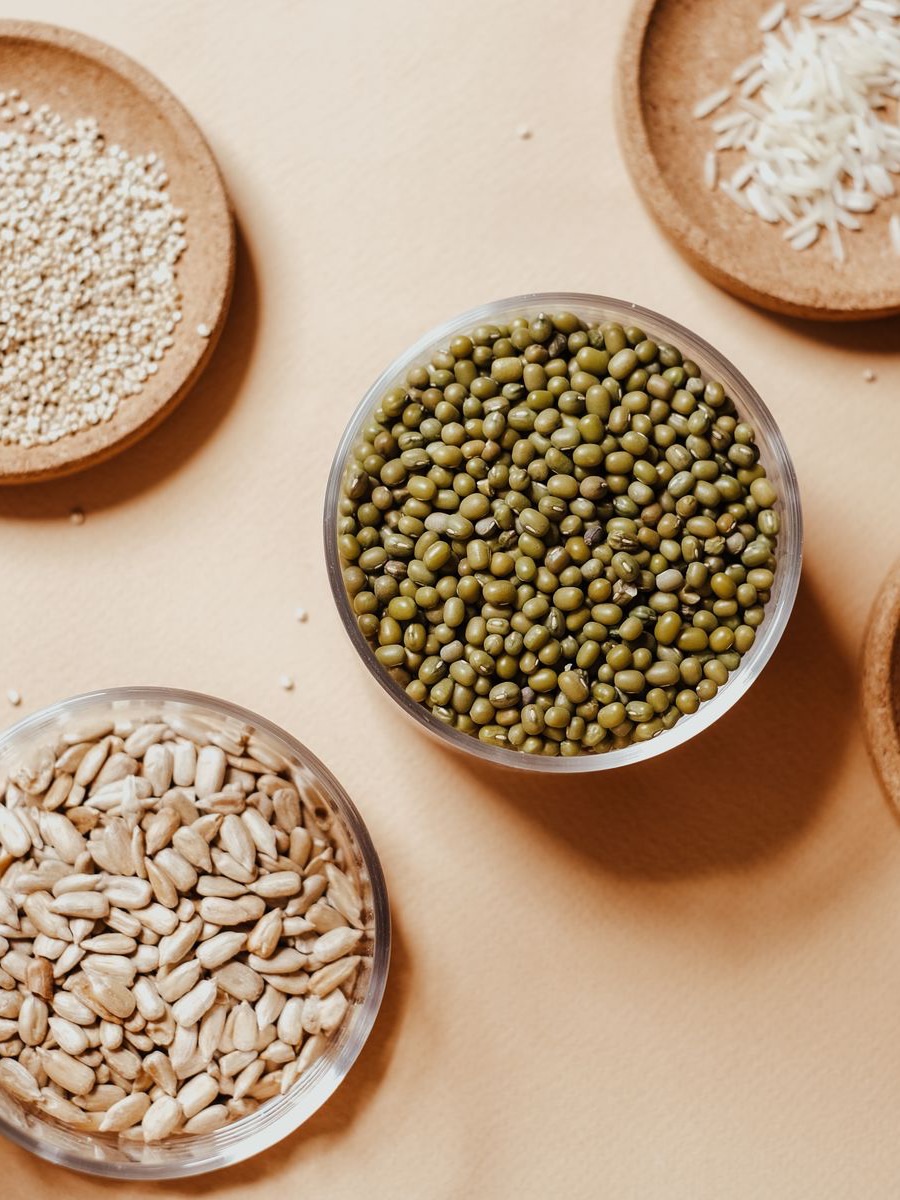
Washing the face with mung bean powder is a familiar Vietnamese folk beauty habit — a tradition, not evidence: we have found no human trial that evaluated mung bean powder or seed extract on its own for skin tone, acne or hydration. A mung bean clay mask places that story on a base with a clear material rationale: kaolin and bentonite hold oil and water on the skin surface by a physical mechanism and are then rinsed away with the dirt. Mung bean can enter the formula in two ways, under two different INCI names: the seed extract (Phaseolus Radiatus Seed Extract, a skin-conditioning ingredient) or the dried, ground seed powder (Phaseolus Radiatus Seed Powder), which is closer to the traditional mung bean powder. Both naturally mined clay and agricultural powder can carry microorganisms, and clay can carry heavy metals, so product quality starts with lot-by-lot raw material control. Label claims stop at cleansing and absorbing excess oil. Butter-C offers full-service OEM/ODM manufacturing, from formula development and testing to labeled finished product with its notification dossier.
Formula base
Clay as the base, mung bean as the story
The mask's cleansing and oil absorption come from the clay; mung bean is a skin-conditioning ingredient and the product's identity. The concentration figures below are maximum levels reported in the US market as compiled by CIR, not recommended levels.
Kaolin — the main clay mass
Non-swelling, holds oil and water on the skin surface and gives the cream its body. 2022 survey: maximum reported concentration in paste masks 5–33%. CIR concluded kaolin is safe in current practices of use and concentration.
Bentonite — structure
A smectite clay that swells in water and keeps the clay from settling; paste masks 1.5–10% (2022 survey). CIR concluded it is safe in current practices of use, except in products that may be inhaled (insufficient data) — suited to a rinse-off cream.
Mung bean seed extract
The blend on file at Butter-C is declared as “Water (and) Butylene Glycol (and) Phaseolus Radiatus Seed Extract (and) Ethyl Hexanediol (and) Phenoxyethanol”: the percentage in the formula is that of the blend, and the label lists all five INCI names. No use concentration has been independently established — it is used per the TDS and confirmed by stability and tolerance testing.
Mung bean seed powder (optional)
INCI Phaseolus Radiatus Seed Powder — dried, ground seeds; CosIng lists its function as viscosity controlling. The abrasive function belongs to the seed starch (Seed Starch), so the powder is not presented as an exfoliating particle. As a raw agricultural product, the powder must be processed by the supplier to reduce microbial load and come with a COA for each lot.
Humectants and emollients
Glycerin, Butylene Glycol (including the amount carried in by the mung bean blend), Panthenol, Squalane — slow down drying and reduce the tight feel after rinsing.
Key technical points
Two natural raw materials, four things to control
Mined clay and agricultural mung beans are both natural raw materials whose quality varies by source and by lot. This is where this page differs from the general clay mask page.
Heavy metals in clay
CIR expressed concern about heavy metals in clays and recommends good manufacturing practices to limit impurities; a survey in Poland found mercury in every cosmetic clay sample analyzed, although at levels far below 1 ppm (Fischer et al., 2025). The finished product must meet the limits of Annex 06-MP of Circular 06/2011/TT-BYT: mercury 1 ppm, arsenic 5 ppm, lead 20 ppm. The clay COA for each lot states heavy metals and crystalline silica (bentonite may contain cristobalite).
Microbes in clay and agricultural powder
CIR notes that the bacteria found in kaolin are mainly aerobic, spore-forming Gram-positive bacteria. Plant powders can also carry a microbial load, and CIR flags pesticide residues and heavy metals in plant-sourced raw materials. Butter-C only uses raw materials that the supplier has processed to reduce microbial load (method stated in the raw material file), with a COA for microbiology and moisture on every lot, retested before production; the finished product must meet Annex 06-MP: total viable count ≤ 1,000 CFU/g, and no P. aeruginosa, S. aureus or C. albicans in 0.1 g of sample.
Cumulative phenoxyethanol
The mung bean blend already contains phenoxyethanol. Total phenoxyethanol in the finished product is limited to 1.0% (ASEAN Annex VI, Ref 29), including the amount carried in by the blend: carried-in amount = % blend in the formula × % phenoxyethanol in the blend (ask the supplier). This amount does not replace the preservative system; clay can retain some substances on the mineral surface (especially cationic ones), including preservatives, so the system is confirmed by an ISO 11930 challenge test on the actual formula.
Drying speed and suspension stability
The ratio of clay, water and humectants determines how fast the mask sets and how tight the skin feels. Bentonite is sprinkled into the water phase and stirred until fully swollen before salts or alcohol are added (practice); water separation, clay settling and edge drying are monitored across stability time points.
Three formulation directions
Three ways to bring mung bean into a clay mask
Mung bean clay cream
Kaolin–bentonite with mung bean seed extract, a smooth rinse-off cream. The common format: easy to stabilize and to keep under microbial control. For oily and combination skin.
Clay–mung bean powder mixed with water at use
An anhydrous blend of kaolin and mung bean seed powder that the user mixes with water just before applying — close to the traditional experience. There is no water in the pack, but a microbial risk assessment and microbial testing of the finished product are still needed. Because CIR has insufficient data on bentonite in products that may be inhaled, the powder version favors kaolin (a cautious choice); directions say to mix only enough for one use.
Gentle clay cream for combination skin
Less bentonite, more humectants and emollients; the mask dries more slowly and feels less tight. Tolerance tested on volunteers before the formula is finalized.
Packaging designed alongside the formula
Tubes retain moisture and are more hygienic than jars; jars need a tight inner liner so the mask does not dry at the edges. The powder version needs moisture-proof packaging, closed tightly after each use.
Parameters we monitor
What our R&D lab measures on every sample
Below are the parameters Butter-C monitors during formula development and scale-up to production. Specific limits are agreed with you on the approved sample and then written into the product's in-house specification.
- Incoming raw materials
- COA for every lot of clay and mung bean: identity, heavy metals, microbiology, moisture (powder), crystalline silica (clay); retested before going into production.
- Sensory profile & color
- Color, odor, smoothness, no grittiness; the color of clay and mung bean powder varies between lots, so it is compared against a reference standard.
- pH
- Measured on a diluted solution; clay pH varies by type and lot (no verified figure for cosmetic kaolin), so pH is measured on each sample and adjusted to a skin-appropriate range.
- Viscosity & consistency
- Rotational viscometer or penetrometer; determines spreadability and how easily product is taken from the pack.
- Heavy metals in the finished product
- Mercury, arsenic and lead against Annex 06-MP limits; cadmium according to the in-house specification.
- Stability
- 40°C and freeze–thaw cycling; monitoring water separation, clay settling, edge drying, color and odor change.
- Drying time and ease of rinsing
- On-skin evaluation: time to set, tightness, amount of water and number of rinses needed to remove.
- Microbiology & preservative challenge
- Tested at a GLP / ISO 17025-accredited laboratory; preservative efficacy (challenge) test according to ISO 11930 for the cream version.
- Packaging compatibility
- Filled into the actual tubes or jars to be used; weighing for weight loss, checking seal integrity and staining.
Claims
Writing claims within the cosmetic scope
The current mung bean data are laboratory tests: inhibition of melanin formation by solvent fractions extracted from sprouts (Jeong et al., 2016), protection of cells against oxidative stress by fractions from the seed hull (Hao et al., 2022). The one human mask trial found used a selenium-enriched mung bean fermentation broth — a different INCI — and its results belong to the whole formula. Annex 03-MP of Circular 06/2011/TT-BYT does not accept acne statements implying a medical intervention, nor claims to “prevent, reduce or reverse physiological changes and degeneration due to age”.
Cleanses and absorbs excess oil on the skin
Instead of: detoxifies skin, draws out toxins, cools the skin.
With mung bean seed extract, conditions the skin
Instead of: whitens skin, fades dark marks, inhibits melanin thanks to mung bean.
Inspired by the traditional mung bean face powder
A story, not a claim. Instead of: a folk formula that clears acne.
Helps skin look less shiny
Requires testing on the finished product. Instead of: reduces sebum production, permanently tightens pores, anti-aging.
Directions for use
State the leave-on time and uses per week, avoid the eye and lip area, rinse well and then moisturize; powder version: mix just enough for one use.
Allergy note
Mung bean contains proteins that cross-react with birch pollen, peanut and soy allergens (dietary data; no data on skin application). The label should advise trying the product on a small area first; people with a known legume allergy should ask a doctor before use.
Manufacturing specifications
Current capabilities
- Texture
- Smooth clay cream or anhydrous powder mixed with water at use; the natural color of clay and mung bean.
- Packaging format
- Tubes, jars with an inner liner; moisture-proof packaging for the powder version. Volume agreed when selecting packaging.
- Minimum order quantity
- Agreed per order — depending on the formula direction and the chosen packaging format.
- Testing
- Performed at a GLP / ISO 17025-accredited laboratory, with a certificate of analysis delivered with each batch, including heavy metals and microbiology.
- Documentation
- Product Information File (PIF) and cosmetic product notification dossier prepared by Butter-C, including an INCI list with every component of the mung bean blend.
- Packaging
- Label design, printing and packing run in parallel with formula development.
Suggested product concept
Kaolin–bentonite clay cream with mung bean extract for oily skin
A product concept to help you picture the possibilities — not a ready-made product for sale. The actual formula is developed to match your brand positioning and price range.
Kaolin and bentonite
Kaolin as the clay mass, bentonite for cream structure; COA for heavy metals and microbiology on every lot.
Mung bean seed extract
A “Vietnamese mung bean” identity; blend level per the TDS, with its phenoxyethanol counted toward the 1.0% total.
Glycerin, panthenol
Slow down drying and reduce tightness; “no tight feeling” is used only after sensory testing.
100 ml tube, fragrance-free
Applied for the time stated on the label, once or twice a week, then rinsed and followed by a moisturizer.
Customization options
What you can specify
The same product type can serve very different customers depending on the brand. Tell us your requirements in the areas below, and our team of pharmacists will develop a matching formula.
Form of mung bean
Seed extract, seed powder or both — different INCI, different raw material controls and different label wording.
Clay type and oil absorption
Kaolin as the main clay mass; add bentonite for structure. No study has compared their oil absorption on skin directly — it is assessed on the finished product.
Product format
Rinse-off cream in a tube or jar, or an anhydrous powder mixed with water at use.
Supporting ingredients
Niacinamide, Zinc PCA, panthenol, centella asiatica — safety-assessed before being added.
Scent and color
Fragrance-free or lightly scented; the natural color of clay and mung bean.
Ingredient direction
Vegan, paraben-free, fragrance-free — please specify these from the start so suitable raw materials can be selected.
Further reading
Related topics
Mung bean (Phaseolus Radiatus) in cosmetics
Extract versus seed powder, limits of the evidence, legume allergy and the preservative in the blend (in Vietnamese).
Kaolin (white clay) in cosmetics
Physical oil absorption, heavy metals, microbiology and regulations (in Vietnamese).
Bentonite in cosmetics
Swelling clay, crystalline silica and the CIR conclusion (in Vietnamese).
Clay mask manufacturing
Clay mask formats and parameters we monitor in general.
Microbiological control of cosmetics
Contamination from natural raw materials and microbial limits for finished products (in Vietnamese).
How we work
From idea to finished batch
Eight steps and three milestones signed off by both sides: approved sample, notification number, finished batch. Step-by-step details (in Vietnamese) →
Get started
Tell us about the product you plan to launch
Send us your product direction and expected volume. Our team will get back to you during business hours (Vietnam time, GMT+7).
Head office: Huu Le village, Dai Thanh commune, Hanoi · Factory: Thanh Oai Industrial Cluster, Binh Minh commune, Hanoi, Vietnam
Hotline +84 967 176 511 · [email protected] · Privacy policy ← Full catalog