 BUTTER-C
Signature ingredients
Copper peptide serum OEM/ODM manufacturing
Copper Peptide (GHK-Cu) Serum · OEM/ODM
Copper peptide — INCI Copper Tripeptide-1, commonly called GHK-Cu — is a complex of a copper ion (Cu2+) with the tripeptide glycyl-histidyl-lysine. GHK was isolated from human plasma, and the same sequence occurs in the type I collagen chain; the cosmetic raw material is a synthetic peptide complexed with a copper salt. GHK-Cu has an appealing story because cell data at nanomolar concentrations are plentiful, but independent clinical research on skin is very thin — a 2025 review called it a “surprising absence”. That is why a Butter-C copper peptide serum focuses on what the factory can control: keeping the pH within the 4.5–7.4 range where the complex is stable, avoiding alkaline conditions, oxidizers and negatively charged lipids, using levels in line with the CIR safety file and the supplier's TDS, and assaying the peptide by HPLC across stability time points — and it claims only “conditions the skin, helps skin look smoother” once tested on the finished product. The raw material is not in Butter-C's stock list, so it is sourced per order with a mandatory COA. Butter-C offers turnkey OEM/ODM manufacturing, from formulation and testing to a labeled finished product and notification dossier.
Formula base
GHK-Cu, a water base and what goes with it
GHK-Cu is very hydrophilic and sensitive to its surroundings — the four points below are settled before the texture is chosen.
Copper Tripeptide-1 — the copper complex of the GHK tripeptide
PubChem synonyms: GHK-Cu, prezatide copper, GHK copper; CAS 89030-95-5; about 403 g/mol for the one-peptide complex (PubChem also lists a two-peptides-per-copper form — follow the COA of the actual material). Very hydrophilic: log D −2.38 to −2.49 at pH 4.5–7.4 (Badenhorst 2016). Not to be confused with Copper PCA — the copper salt of PCA used on the peptide serum page; data for the two are not interchangeable.
Sourced per order, COA mandatory
Copper Tripeptide-1 is not in Butter-C's stock ingredient list. The COA must state the material form (powder or solution), peptide content, copper content, metal impurities and microbiology; for a solution, its solvents and preservatives are added to the ingredient list, and every concentration is calculated on the actual peptide.
Water base with humectants
Glycerin, Butylene Glycol, Panthenol and Sodium Hyaluronate give a moist feel; Hydroxyethylcellulose — a non-ionic polymer — forms a light gel. In cells and ex vivo skin, GHK-Cu combined with low-molecular-weight hyaluronic acid at 1:9 raised collagen IV (Jiang 2023; authors from an ingredient manufacturer) — laboratory data and a reason to combine them, not a claim.
Fragrance-free, no vitamin C in the same bottle
There is no verified study on GHK-Cu interacting with vitamin C; without a dedicated stability test, Butter-C does not put them in one formula and suggests using them at different times (vitamin C in the morning, copper peptide in the evening). Fragrance-free removes another source of irritation.
Key technical points
pH, incompatibilities, level and assay
The pH 4.5–7.4 range
In a preformulation study, GHK-Cu was stable in water and in pH 4.5–7.4 buffers for at least two weeks at 60 °C; the peptide was hydrolyzed under alkaline and oxidative stress, less so under acid, and one degradation product was histidine (Badenhorst 2016). The finished pH is set within this range and its drift tracked over stability time points.
Recorded and suspected incompatibilities
Same study: GHK-Cu was compatible with Span 60 niosomes but less stable with the negatively charged lipid dicetyl phosphate. Strong metal chelators (such as EDTA) may compete for the copper ion — chemical reasoning, not a verified study; Butter-C's standard version uses no chelator and confirms this with the peptide assay.
Level set by the CIR safety file
The CIR report (Johnson 2018) lists 18 uses of Copper Tripeptide-1 but no concentration data for it; across the whole group in the report, maximum use concentrations were 0.0000001–0.002% (industry survey 2013, updated 2014). A submission to the Panel stated that the peptides are used at 1–30 ppm, typically below 10 ppm, which the Panel took as typical use. Butter-C follows the supplier's TDS; higher levels need extra safety data in the PIF.
HPLC assay and color tracking
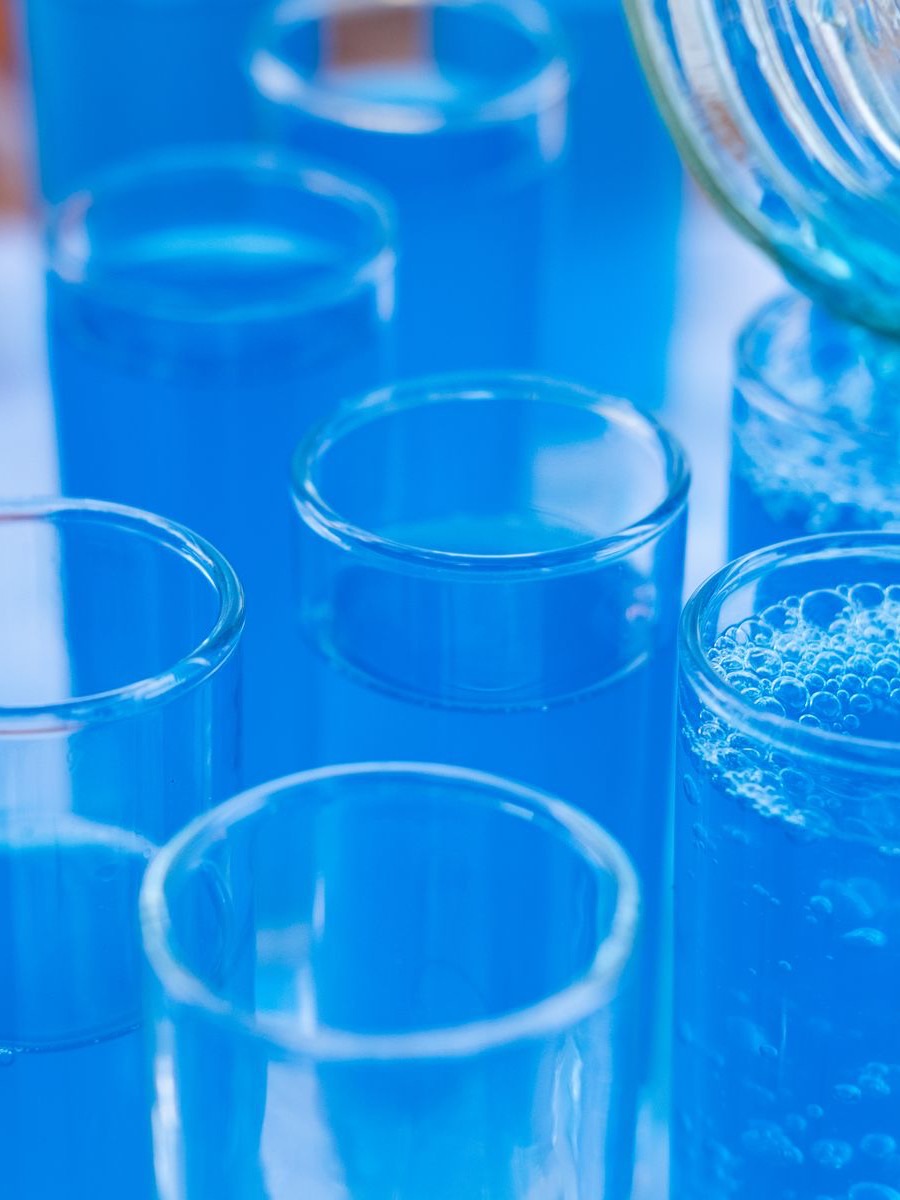
GHK is assayed by stability-indicating HPLC at the start and at stability time points; if the label states a content, the figure must hold to the end of shelf life. The raw material carries the blue color of the copper complex; the finished color depends on the level and is compared with a reference sample — a color shift is a signal to re-assay.
Three formulation directions
Three kinds of copper peptide serum
Minimal water serum
Copper Tripeptide-1 with Glycerin and Panthenol in a light Hydroxyethylcellulose gel; fragrance-free, short ingredient list. Easy to control pH and assay, suited to a brand that wants a clear single-active story.
Copper peptide – hyaluronate serum
Adds Sodium Hyaluronate for a dewy feel, with Butylene Glycol and Trehalose. The pairing story rests on cell data (Jiang 2023) — told as laboratory data, while the label speaks only of hydration.
Light milky serum
A thin oil-in-water emulsion with Squalane, Caprylic/Capric Triglyceride and the non-ionic emulsifier Cetearyl Olivate; GHK-Cu sits in the water phase. No negatively charged lipids such as dicetyl phosphate; a direction for dry skin that needs more softness.
How it differs from existing serum pages
The peptide serum uses acetyl hexapeptide-8 with optional Copper PCA (not a copper peptide); the anti-aging serum combines several active groups; the HA hydrating serum centers on humectants. This page is for a serum named after Copper Tripeptide-1, built around the pH, incompatibilities, level and assay of the GHK-Cu complex itself.
Parameters we monitor
What our R&D team measures on every sample
Below are the parameters Butter-C tracks while developing the formula and scaling it up for production. Specific limits are agreed with you on the approved sample and then written into the product's in-house specification.
- Incoming raw material file
- CAS, material form, peptide content, copper content, metal impurities, microbiology and the supplier's storage conditions.
- Peptide content
- Stability-indicating HPLC at the start and at stability time points; mandatory when the label states a content.
- pH
- Measured directly at 25 °C; target within 4.5–7.4, drift tracked over time.
- Appearance & color
- Color, clarity and odor against a reference sample kept in R&D; color change, haze or precipitate trigger a re-assay.
- Viscosity & stability
- Rotational viscometer; accelerated aging, freeze–thaw cycling and light exposure; separation checks for the milky version.
- Microbiology & preservative challenge
- Tested at a GLP / ISO 17025-accredited laboratory; preservative efficacy (challenge) test per ISO 11930 — a high-water base.
- On-skin assessment
- Tolerance testing as the target market requires; to state “skin looks smoother”, assess volunteers using the finished product itself.
- Packaging compatibility
- Filled into the actual pump or dropper bottle; checked for seal, light transmission and material odor.
Claims
Claims matched to the evidence for GHK-Cu
GHK-Cu data come in two very different layers. Cell data: increased collagen synthesis by fibroblasts from 10−12–10−11 M, peaking at 10−9 M (Maquart 1988); fibroblasts doubled faster and irradiated cells raised bFGF and VEGF (Pollard 2005). Human data: Miller 2006 — randomized, controlled, with blinded evaluators, 13 patients completed, perioral skin after CO2 laser resurfacing, using a skin care regimen with or without GHK-Cu for 12 weeks: no difference in time to resolution of redness, wrinkles or overall skin quality; only the self-rated questionnaire favored the GHK-Cu group (P = 0.04) — a post-procedure medical setting. A review by Mortazavi and colleagues (2025, university authors declaring no conflict of interest) noted a “surprising absence” of clinical studies with GHK-Cu; the reviews describing benefits for aging skin were written mainly by an author from industry. In vitro penetration through human skin: a 0.68% aqueous solution, measured as copper rather than peptide (Hostynek 2011). Conclusion: clinical evidence is limited; Appendix 03-MP of Circular 06/2011/TT-BYT does not accept claims to prevent, reduce or reverse age-related changes, so the label uses only the statements below.
Conditions the skin, helps skin look smoother (to be tested on the finished product)
Basis: assessment on volunteers using the finished product itself; cell data only explain why the ingredient was chosen. Instead of: boosts collagen, anti-wrinkle, anti-aging, rejuvenates, skin renewal.
Contains copper peptide (Copper Tripeptide-1)
State a content only when it is the actual peptide confirmed by HPLC; when citing research, say it is cell data. Instead of: “x-fold more collagen”, laboratory figures presented as results on skin.
For intact skin only
Not positioned for skin right after laser, peels or microneedling; after procedures, follow the doctor's instructions. Instead of: mends wounds, restores skin after laser, fades scars, post-procedure use.
Directions for use
Apply after cleansing and toner, before moisturizer; use sunscreen in the morning. There are no direct incompatibility data with retinol or exfoliating acids — they can be used at different times to make tolerance easier to follow. Instead of: combine with any active without caution.
Label notes
People with sensitive skin or a history of metal allergy should patch test a small area first; there are no data for pregnancy or breastfeeding — ask a doctor before use. Instead of: safe for pregnancy, non-irritating, suits every skin.
Manufacturing specifications
Our capabilities
- Texture
- Water serum, light gel or thin milky serum; pale blue tint or nearly colorless depending on the raw material level.
- Format
- Pump bottle, airless pump or dropper bottle. Volume agreed when packaging is selected.
- Minimum order quantity
- Agreed per order — depends on the formula direction, format and raw material lot.
- Testing
- Tested at a GLP / ISO 17025-accredited laboratory, with a certificate of analysis for every batch; peptide assays follow the stability plan.
- Documentation
- Product Information File (PIF) and notification dossier prepared by Butter-C, with the raw material COA, the actual-peptide calculation and a copper exposure assessment.
- Packaging
- Label design, printing and packing run in parallel with formulation.
Suggested product concept
Fragrance-free copper peptide – hyaluronate serum
One product direction to help you picture it — not a ready-made product for sale. The actual formula is built around your brand's positioning and price range.
Copper Tripeptide-1 as the named active
Level per the supplier's TDS, checked against the typical use CIR recorded; sourced per order with a COA for peptide and copper; HPLC assay at the start and per the stability plan.
Humectant group
Glycerin, Butylene Glycol, Panthenol and Sodium Hyaluronate in a light Hydroxyethylcellulose gel; pH set within 4.5–7.4.
No fragrance, no vitamin C, no chelator
Fewer sources of irritation and less risk of destabilizing the complex; preservative performance confirmed by an ISO 11930 challenge test.
30 ml pump bottle
Label lists INCI Copper Tripeptide-1 and every component of the raw material, advises daytime sunscreen and a patch test; the claim stops at “conditions the skin, helps skin look smoother” after testing on the finished product.
Customization options
What you can specify
The same product type can target very different customers. Tell us your requirements in the areas below and our pharmacists will build the formula to match.
Copper peptide level
Per the supplier's TDS and the typical use recorded by CIR; higher levels need extra safety data in the PIF.
Texture
Water serum, light gel or thin milky serum.
Supporting ingredients
Humectants and soothing agents (Panthenol, Sodium Hyaluronate, Trehalose, Allantoin); no vitamin C, oxidizers or negatively charged lipids in the same bottle.
Other peptides
Each peptide has its own data, level and calculation — Butter-C checks each one before combining and does not add up claimed benefits.
Fragrance and color
Fragrance-free recommended; no added colorants — any blue tint is the copper complex itself.
Companion products
A daytime sunscreen, a morning vitamin C serum or a gentle moisturizer in the same line to sell as a set, helping users separate morning and evening steps as directed.
Further reading
Related knowledge
Copper peptide (GHK-Cu) in cosmetics
Mechanism, the two layers of evidence, CIR levels, pH stability and measured claims (in Vietnamese).
Copper PCA in cosmetics
A copper salt quite different from copper peptide — why data for the two are not interchangeable (in Vietnamese).
Hyaluronic acid in cosmetics
The humectant that often accompanies GHK-Cu in water-based serums (in Vietnamese).
Peptide serum OEM/ODM manufacturing
A different direction: acetyl hexapeptide-8 with optional blue-tinted Copper PCA.
Anti-aging serum OEM/ODM manufacturing
A different direction: a serum combining several active groups (peptides, retinoids, vitamin C).
HA hydrating serum OEM/ODM manufacturing
A different direction: a serum centered on humectants.
How we work
From idea to finished batch
Eight steps and three milestones signed off by both sides: approved sample, notification number, finished batch. Step-by-step details (in Vietnamese) →
Get started
Tell us about the product you plan to launch
Send us your product direction and expected volume. Our team will get back to you during business hours (Vietnam time, GMT+7).
Head office: Huu Le village, Dai Thanh commune, Hanoi · Factory: Thanh Oai Industrial Cluster, Binh Minh commune, Hanoi, Vietnam
Hotline +84 967 176 511 · [email protected] · Privacy policy ← Full catalog