 BUTTER-C
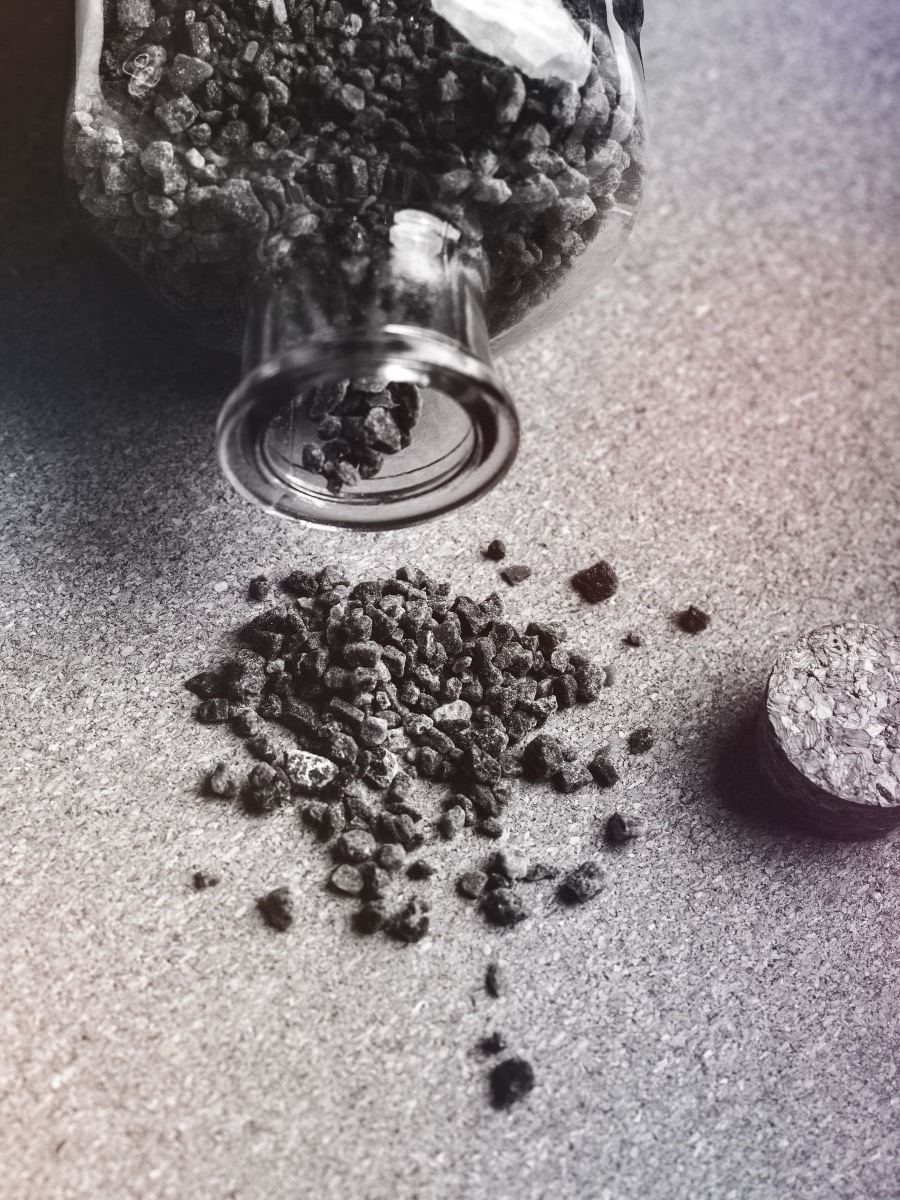
Signature ingredients
Charcoal facial cleanser OEM/ODM manufacturing
Charcoal Facial Cleanser · Signature Ingredients · OEM/ODM
Activated charcoal is a fine charcoal powder made by heating organic material such as bamboo or coconut shell and then activating it to increase its adsorptive capacity; “bamboo charcoal” names the raw material, while the INCI name on a cosmetic label is Charcoal Powder. CosIng (EU) lists three functions: abrasive, absorbent and opacifying — the charcoal holds oil and dirt on the skin surface so they rinse away, gives a light scrub during massage and lends the product a recognizable gray-black color. Charcoal Powder differs from the colorant carbon black (CI 77266) in both origin and regulation. On evidence, plainly: most research on charcoal in personal care concerns oral care; searching PubMed in October 2026, we found no human trial of any facial cleanser or mask containing charcoal, and a dermatology review notes that acne-related marketing claims are not supported by clinical evidence — limited evidence. Butter-C’s charcoal cleanser therefore promises what it can deliver: cleansing excess oil and dirt from the skin surface and skin that feels less oily after washing (assessed on the finished product), with the black color as its signature — no “detox”, no “drawing out toxins”. Butter-C offers turnkey OEM/ODM manufacturing, from formula development and testing to labeled finished goods and the notification dossier.
Formula base
Activated charcoal powder in a mild cleanser base
Activated charcoal does not dissolve in water or oil: it is a solid particle held in suspension. Cleansing power, lather and after-wash feel come from the surfactant system; the charcoal provides surface absorption, a light scrub and color.
Activated charcoal (Charcoal Powder)
The material in Butter-C’s ingredient records is declared under the correct INCI, Charcoal Powder. The Cosmetic Ingredient Review (CIR, US) notes that “activated charcoal” is a synonym of Charcoal Powder and concluded that plant-derived charcoal is safe in cosmetics in the present practices of use and concentration (final report, 2024). The maximum reported use in the US (2021 survey) for skin-cleansing products is 0.0063–0.1% (declared as Charcoal Powder) and 0.35% (declared as “activated charcoal”) — market data, not a limit or recommendation.
Mild cleansing system
Amino acid surfactants (sodium cocoyl glycinate, disodium cocoyl glutamate) or glucosides (coco-glucoside, decyl glucoside), paired with cocamidopropyl betaine. Carboxylate amino acid systems are pH-sensitive: pH is set from the pH–clarity–viscosity curve of the actual formula, as on the general facial cleanser page.
Suspending polymer
Charcoal powder is denser than water and settles unless the base has enough suspending power. Acrylates copolymer (neutralized within the pH range on its technical data sheet) or xanthan gum keeps the particles evenly dispersed through shelf life; viscosity is chosen together with the tube or pump (formulation experience).
Conditioning phase and companion clay
Glycerin and panthenol for moisture; glyceryl stearate for a creamy texture and soft after-feel. Kaolin holds oil and water on the skin surface by a physical mechanism (per the kaolin article) and suits a charcoal–clay story for oily skin; clay needs a certificate of analysis for heavy metals and microbiology per lot.
Key technical points
Five points specific to charcoal in a facial cleanser
This is where this page differs from the general facial cleanser page: issues that come from the charcoal powder itself — a black, porous, adsorptive solid particle.
Charcoal Powder is not carbon black
Charcoal Powder (activated charcoal) is charcoal powder from heating organic matter, with abrasive, absorbent and opacifying functions. CI 77266 (carbon black) is very fine elemental carbon from incomplete combustion of hydrocarbons, a colorant in ASEAN Annex IV (column 1) with purity criteria: purity above 97%, total PAH ≤ 500 ppb, benzo(a)pyrene ≤ 5 ppb, As ≤ 3 ppm, Pb ≤ 10 ppm, Hg ≤ 1 ppm… CAS numbers do not tell them apart (PubChem groups the forms under one “carbon” entry) — rely on INCI and the certificate of analysis. If a deep black is to come from a colorant, the CI declaration must be confirmed by regulatory affairs with the supplier.
The charcoal source must be on the certificate
According to CIR, cosmetic charcoal is made only from plant materials such as bamboo, and its safety conclusion covers plant-derived charcoal only; food-grade activated charcoal standards also allow coal and petroleum coke. The certificate of analysis therefore needs INCI, raw material source, activation method, particle size, arsenic, lead (CIR cites the Food Chemicals Codex: As ≤ 3 mg/kg, Pb ≤ 10 mg/kg) and microbiology. Charcoal Powder is not listed in ASEAN Annexes II, III, VI (version 2026-1) or VII (version 2025-2).
Even dispersion, no lumps, no settling
Charcoal powder is very light and clumps easily: sieve before weighing, pre-wet in part of the glycerin or a surfactant solution and homogenize before adding to the base (practice, to be validated for each formula). Undispersed particles feel gritty and leave uneven black streaks; checked by microscopy, centrifugation and monitoring settling through stability time points.
Mild abrasive particles and the eye area
Charcoal has an abrasive function per CosIng, so particle size (per certificate) and scrub feel on the skin are checked by tolerance testing on the finished product. In rabbit eyes, charcoal (INCI Charcoal) was not classified as an irritant under EU criteria but caused mild to severe conjunctival irritation that resolved within a week (CIR summary) — label directions say avoid the eye area. Not for use on broken or scratched skin.
Adsorption within the formula, black marks on towels and basins
In principle, charcoal may also adsorb preservatives and fragrance in the formula; there are no verified data, so Butter-C confirms with an ISO 11930 preservative efficacy test and tracks odor through stability testing. Gray lather can leave marks on towels, basins and tube rims: rinse-off is assessed on the finished product. In the plant, charcoal weighing uses local dust extraction, dust masks and thorough equipment cleaning so color does not carry over to the next batch.
Three formulation directions
Three charcoal cleanser formats for three customer groups
Fine-lather amino acid charcoal cleanser
Gray fine-lather lotion, sulfate-free amino acid system, light conditioning phase. For combination and oily skin, daily use; charcoal at a low level enough for color and story.
Suspended charcoal gel cleanser
Black gel with a glucoside–betaine system, acrylates copolymer holding the particles in suspension, a clean, fresh after-feel. For oily skin and male customers (see the men’s facial cleanser page); suspension and viscosity tightly checked through freeze–thaw cycling.
Charcoal–kaolin cream cleanser
Low-lather cream; kaolin and charcoal give a matte after-wash feel — for very oily skin. Post-wash tightness assessed on the finished product; clay with heavy-metal and microbiology certificates.
Packaging is designed with the formula
Dark flip-top tubes or pump bottles show fewer gray marks at the orifice; tubes need higher viscosity than pumps. Choose the pack before fixing viscosity and suspending power.
Parameters we monitor
What our R&D team measures on every sample
These are the parameters Butter-C tracks during formula development and scale-up. Specific limits are agreed with you on the approved sample and then written into the product’s in-house specification.
- Incoming charcoal certificate
- INCI, raw material source, activation method, particle size, arsenic, lead, microbiology — per lot; particle size and color rechecked when the lot changes.
- Appearance, color and dispersion
- Compared with the reference sample; particles checked under the microscope for lumps, grit and an even gray-black tone.
- pH
- Measured on a 10% solution at 25 °C; pH drift tracked. In amino acid systems, pH is tied to clarity and viscosity.
- Viscosity and suspension
- Rotational viscometer, spindle and speed recorded; centrifugation and upright storage to check charcoal settling.
- Foam height & stability
- Compared with the approved sample; charcoal powder and clay can lower foam versus a particle-free base.
- Stability
- Accelerated aging at 40 °C, freeze–thaw cycling, centrifugation; watching for phase separation, settling, odor change and pH drift.
- Microbiology & preservative efficacy
- Tested at a GLP / ISO 17025-accredited laboratory; preservative efficacy (challenge) test to ISO 11930 on the actual charcoal formula.
- Rinse-off and tolerance
- Residual gray marks on skin, towels and basins after washing; tolerance and post-wash tightness on volunteers — the basis for skin-feel claims.
- Packaging compatibility
- Filled into the actual tubes, bottles and pumps; watching for pump clogging by particles, staining of tube rims and deformation.
Claims
Writing charcoal cleanser claims within cosmetic scope
Oral activated charcoal used to adsorb poisons in emergencies is a medical setting; no source shows that a product applied and rinsed off removes toxins from the body. Charcoal toothpaste data (Brooks 2017, Tomas 2023, Ribeiro 2024) concern teeth and are not used for skin. Annex 03-MP of Vietnam’s Circular 06/2011/TT-BYT gives toned-down examples for oily skin: “reduces shine on oily skin”, “makes your skin feel less oily”. Below are the wordings Butter-C proposes.
Cleanses excess oil and dirt from the skin surface
Instead of: detoxifies skin, draws out toxins, pulls fine dust out of skin, purges heavy metals.
Activated charcoal helps absorb excess surface oil — skin feels less oily after washing
Sensory claim, to be tested on the finished product. Instead of: deep cleansing to the root, pore tightening, long-lasting oil control.
For oily and combination skin
Describes the user’s skin type. Instead of: claims to act on acne, prevents breakouts, reduces acne within a number of days.
Black color from activated charcoal (bamboo charcoal)
Ingredient and story claim; “bamboo charcoal” only when the certificate confirms a bamboo source. Instead of: “skin detox”, “all-natural”, borrowing charcoal toothpaste results.
Does not leave skin feeling tight after washing
Only after sensory testing on the finished product. Instead of: non-irritating for every skin, exfoliates, rejuvenates skin (Sanchez 2020 review: no evidence on exfoliation or anti-aging).
Directions and warnings
Wet the face, work into a lather, massage gently and rinse thoroughly; avoid the eye area, and rinse eyes with clean water at once if contact occurs; do not use on broken skin; stop use if redness or stinging occurs. Pregnancy and breastfeeding: insufficient data (CIR notes no reproductive toxicity data), consult a doctor.
Manufacturing specifications
Available capabilities
- Texture
- Gray fine-lather lotion, suspended black gel, or charcoal–kaolin cream cleanser.
- Charcoal material
- Activated charcoal (Charcoal Powder) is in Butter-C’s current ingredient list; raw material source and particle size per lot certificate.
- Pack formats
- Tube, pump bottle or flip-top bottle. Volume agreed when packaging is selected.
- Minimum order quantity
- Agreed per order — depends on formula direction and pack format.
- Testing
- Performed at a GLP / ISO 17025-accredited laboratory, with a certificate of analysis delivered with every lot.
- Documentation
- Product Information File (PIF) and cosmetic product notification dossier prepared by Butter-C, with the charcoal certificate stating INCI and raw material source.
- Packaging
- Label design, printing and packing run in parallel with formulation.
Suggested product concept
Fine-lather activated charcoal–kaolin cleanser for oily skin
A product concept to help you visualize the range — not a ready-made product for sale. The actual formula is developed around your brand positioning and price point.
Evenly dispersed activated charcoal
Low level, set by target color and rinse-off results; certificate stating raw material source, particle size, As, Pb.
Amino acid–betaine system
Sodium cocoyl glycinate with cocamidopropyl betaine and acrylates copolymer to suspend particles: fine lather, can be labeled “sulfate-free”.
Kaolin and glycerin
Kaolin for a matte after-wash feel; glycerin and panthenol replenish moisture. “Skin feels less oily” is used only once the finished product has been tested.
Dark 100 ml tube, fragrance-free
Morning and evening use; label includes directions to avoid the eyes.
Customization options
What you can specify
The same product type serves different customer groups for each brand. Tell us your requirements in the areas below and our pharmacists will build the matching formula.
Bamboo charcoal story on the label
Name and bamboo charcoal imagery — only when the certificate confirms a bamboo source; INCI stated correctly as Charcoal Powder.
Color depth
Light gray, dark gray or black; a deeper color means rinse-off, towel marks and tolerance must be retested. Color from a CI colorant needs regulatory confirmation of the declaration.
Surfactant system
Amino acid, glucoside or sulfate — determines mildness, thickening, suspending power and cost.
Companion ingredients
Kaolin or bentonite for a charcoal–clay story; humectants such as glycerin and panthenol.
Fragrance
Fragrance-free recommended for reactive skin; if fragrance is wanted, develop a fragrance-free version in parallel and track odor, since charcoal may adsorb fragrance.
Ingredient positioning
Vegan, sulfate-free, paraben-free — please state this at the start so suitable ingredients are chosen.
Further reading
Related knowledge
Activated charcoal in cosmetics
Charcoal Powder versus CI 77266, evidence on skin and teeth, CIR use-concentration survey, ASEAN rules (in Vietnamese).
Facial cleanser manufacturing
Surfactant systems, conditioning phase and pH range of facial cleansers in general; this page focuses on charcoal powder.
Clay mask manufacturing
Clays and charcoal in rinse-off masks for oily skin.
Charcoal toothpaste manufacturing
Same charcoal material, but oral-care parameters: abrasivity and fluoride.
Oily skin and pores
Setting the right expectations for cleansers for oily skin (in Vietnamese).
How we work
From idea to finished batch
Eight steps and three milestones signed off by both sides: approved sample, notification number, finished batch. Step-by-step details (in Vietnamese) →
Get started
Tell us about the product you plan to launch
Send us your product direction and expected volume. Our team will get back to you during business hours (Vietnam time, GMT+7).
Head office: Huu Le village, Dai Thanh commune, Hanoi · Factory: Thanh Oai Industrial Cluster, Binh Minh commune, Hanoi, Vietnam
Hotline +84 967 176 511 · [email protected] · Privacy policy ← Full catalog