 BUTTER-C
Signature ingredients
Ginseng essence OEM/ODM manufacturing
Ginseng Essence · OEM/ODM
Ginseng (Panax ginseng C.A. Meyer) is tied to the image of East Asian botanicals, and the name “Korean ginseng” is familiar to consumers, but that is a common name for the species, not a certificate of origin: the growing region goes on the label only when the COA or the supplier confirms it in writing. The featured ingredient is Panax Ginseng Root Extract, an extract of ginseng root and a natural mixture whose characteristic compound group is the ginsenosides; white ginseng, red ginseng, black ginseng, fermented ginseng and purified ginsenosides are different materials. Human evidence for topical use is limited: three small studies of about 20 people each all used processed or modified ginseng (enzyme-modified, fermented black ginseng, a red ginseng fraction); for ordinary root extract there are only cultured-cell data. The CIR Expert Panel concluded that 13 Panax root-derived ingredients are safe in the practices of use and concentration described in its report. That is why this ginseng essence is built as a moisturizing essence: ginseng carries the story, while the “moisturizes” and “helps skin feel soft and look fresh” claims rest on the humectants in the formula and on testing of the finished product. Butter-C offers turnkey OEM/ODM manufacturing, from formula development and testing to labeled finished goods and the notification dossier.
Formula base
Ginseng root extract, humectants and water
An essence is almost entirely water, so the four groups below decide the skin feel, the stability and the product story.
Panax Ginseng Root Extract: reading the raw material label correctly
The INCI name only states the species and the plant part (root); it says nothing about processing, extraction solvent or ginsenoside profile. The material Butter-C holds is a liquid ginseng root extract in a water–glycol base; the carrier solvents have not yet been checked against the original technical data sheet (TDS). The use level therefore refers to the liquid extract, not to dry extract, and the INCI list on the label shows the carrier solvents and preservatives according to the TDS of the lot actually used.
Right species, right form
White ginseng is air-dried root; red ginseng is steamed root with a different ginsenoside profile and composition. American ginseng (P. quinquefolius) and notoginseng (P. notoginseng) are different species, and their data are not interchangeable. The label says “red ginseng” or “fermented ginseng” only when the COA confirms that form.
Base humectants
Glycerin, butylene glycol, betaine, sodium PCA, panthenol and a small amount of sodium hyaluronate; this group is the main basis for the moisturizing claim.
Actives chosen for the positioning
Niacinamide at 2–5%, the range with human data on skin tone evenness (per our niacinamide article). The even-tone claim rests on niacinamide, not on ginseng.
Key technical points
A species-verified COA, use level and color stability
COA and ginsenoside profile
Butter-C asks for a COA stating P. ginseng, root, the form (white, red, fermented), the extraction solvent and the ginsenoside profile by the supplier's HPLC method. To state “contains ginsenosides” or a ginsenoside figure on the label, the COA must include a quantitative result. Processing changes the ginsenoside profile, so a change of supplier or ginseng form means reassessing the formula and the Product Information File (PIF).
Use level against the CIR survey
According to US industry survey data in the CIR report (Becker 2015), Panax Ginseng Root Extract is used at up to 0.5% in leave-on products and 0.3% in rinse-off products; that is current use, not a recommended or proven-effective level. The liquid extract level is converted per the TDS for comparison; going beyond the surveyed level calls for a separate safety assessment in the PIF. The concentrations in the studies (1% fermented black ginseng, 0.3% red ginseng fraction) belong to other materials.
Impurities and pulegone
The CIR report calls for control of pesticide residues, heavy metals and aflatoxin (≤ 15 ppb) in Panax root-derived materials. Pulegone has been reported in American ginseng; when combined with other botanicals that may contain pulegone (such as peppermint oil), CIR states total pulegone should not exceed 0.002% in leave-on products. Butter-C's ginseng essence therefore does not include peppermint oil without a pulegone COA.
Color, odor and addition temperature
The extract has a yellow-brown tint and a characteristic odor, and may darken over time. We have no verified source on ginsenoside stability in cosmetic formulas, so in line with factory practice the extract is added in the cool-down phase, with a metal-ion chelator and light-protective packaging, and the result is confirmed by accelerated aging and light exposure. A water-rich base must pass a preservative efficacy test to ISO 11930, with phenoxyethanol ≤ 1% (ASEAN Annex VI).
Three formulation directions
Three styles of ginseng essence
Water-light ginseng essence
Ginseng root extract with glycerin, betaine and panthenol; patted on by hand after cleansing. For normal and dry skin and for users who like a short ingredient list.
Lightly thickened, rich-moisture ginseng essence
A very low level of sodium hyaluronate or gum for a plumper feel. Absorbs more slowly; tackiness has to be balanced for layering.
Ginseng and niacinamide essence
2–5% niacinamide in a ginseng base. The “helps skin look more even-toned” claim rests on niacinamide, not on ginseng.
Packaging is designed with the formula
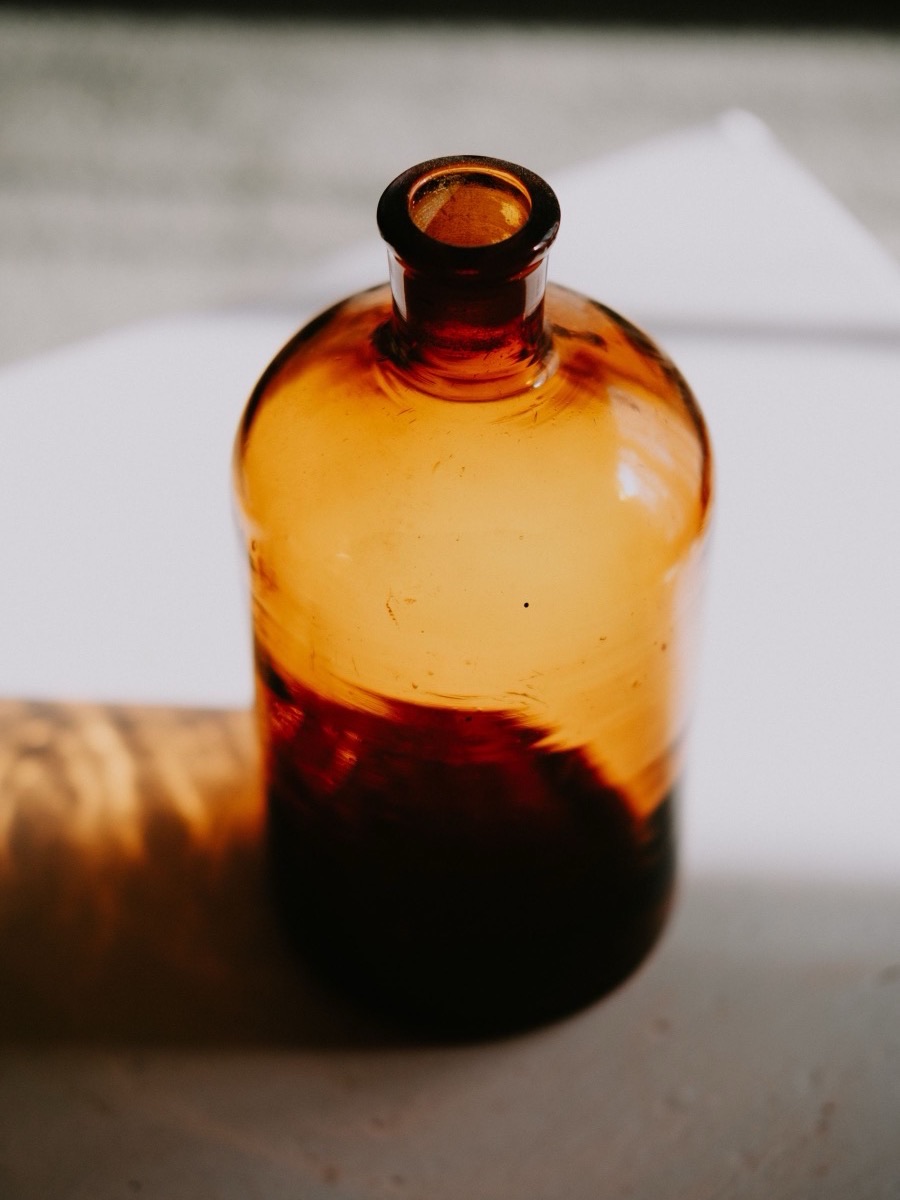
Amber glass or opaque plastic bottles with screw caps, dropper caps or pumps to limit light and contamination during use. A spray format needs its own assessment and is not assumed.
Parameters we monitor
What the R&D lab measures on every sample
These are the parameters Butter-C tracks during formula development and scale-up. Specific limits are agreed with you on the approved sample and then written into the product's in-house specification.
- Appearance, color & odor
- Clarity, color and odor against the reference sample across stability time points; a parameter sensitive to botanical extracts.
- pH
- Measured directly at 25°C; pH drift tracked across stability time points.
- Density & viscosity
- Quick lot identification; viscosity matters for the lightly thickened version with sodium hyaluronate.
- Niacinamide content
- Assayed by HPLC when the formula contains niacinamide; checked per lot.
- Stability
- Accelerated aging at 40°C, freeze–thaw cycling, light exposure and storage at 4°C; watching for darkening, haze and precipitation.
- Incoming raw material file
- COA for every lot of extract: species, plant part, form, solvent, ginsenoside profile, heavy metals, aflatoxin, pesticide residues and microbiology; rechecked before production.
- Microbiology & preservative challenge
- Tested at a GLP / ISO 17025-accredited laboratory; preservative efficacy test to ISO 11930 on the final formula.
- On-skin evaluation
- To state “helps skin look fresher and smoother” or a hydration figure, measure on volunteers using the finished product itself; tolerance testing as the target market requires.
- Packaging compatibility
- Filled into the actual bottle, cap or pump to be used; checked for material odor, light transmission and seal.
Claims
Claims matched to the evidence for ginseng
In humans, the three topical studies are all small and all used specific materials: a cream with enzyme-modified ginseng extract in a randomized, double-blind, placebo-controlled trial of 23 people on the eye-wrinkle area (Hwang 2015); a 1% fermented black ginseng cream compared split-face with a control cream in 23 people over 8 weeks (Park 2020); a cream with 0.3% red ginseng fraction in 20 people with acne symptoms, with no control group described in the abstract, which is a medical context (Hou 2019). Ginseng root extract increased type I procollagen synthesis in cultured fibroblasts (Lee 2007), which is test-tube data. We found no human efficacy study with ordinary white ginseng root extract. Level of evidence: limited. ASEAN: ginseng extract, ginsenosides and other Panax species are not listed in Annexes II, III or VI (06/2026 version). Annex 03-MP of Circular 06/2011/TT-BYT does not accept claims to prevent or reverse aging.
Moisturizes, helps skin feel soft and smooth
Based on the humectants in the formula. Instead of: anti-aging, regenerates skin, rejuvenates skin.
Helps skin look fresher and smoother (tested on the finished product)
Instead of: anti-wrinkle, erases wrinkles, boosts collagen, results from enzyme-modified or fermented black ginseng.
Contains ginseng root extract (Panax Ginseng Root Extract)
State “red ginseng” or “ginsenosides” only when the COA confirms it. Instead of: “Korean ginseng” without origin documents, results of purified ginsenosides attributed to the extract.
Helps skin look more even-toned (only when the formula has 2–5% niacinamide)
Instead of: skin whitening, whitening thanks to ginseng.
The East Asian botanical story
Told as culture and ingredient origin. Instead of: “as nourishing as drinking ginseng”, borrowed data on ginseng taken by mouth, claims about acne.
Warnings
Patch-test on a small area of skin before use; people allergic to plants of the ivy family (Araliaceae, such as English ivy) or who have reacted to cosmetics before should test first; stop use if redness or itching occurs. Pregnant or breastfeeding: not enough data, ask a doctor. Instead of: hypoallergenic, safe for all skin types, safe during pregnancy.
Manufacturing specifications
Capabilities
- Texture
- Liquid or lightly thickened essence with the natural yellow-brown tint of the extract.
- Format
- Screw-cap, dropper or pump bottles, preferably amber or opaque. Fill volume agreed when the packaging is selected.
- Minimum order quantity
- Agreed per order, depending on the formula direction and the format chosen.
- Testing
- Performed at a GLP / ISO 17025-accredited laboratory, with a certificate of analysis delivered with every lot.
- Documentation
- The Product Information File (PIF) and the notification dossier are prepared by Butter-C, together with the supplier's COA and TDS for the ginseng extract.
- Packaging
- Label design, printing and packing run in parallel with formula development.
Suggested product concept
A moisturizing ginseng essence for normal and dry skin
One product concept to help you picture the result; not a ready-made product for sale. The actual formula is built around your brand's positioning and price range.
Ginseng as the featured ingredient
Panax ginseng root extract with a COA confirming species, plant part and form; level converted per the TDS, compared with the CIR survey level, and fixed after color, odor and stability testing.
Humectant group
Glycerin, betaine, panthenol and sodium hyaluronate; the basis for the moisturizing claim.
4% niacinamide
For the “helps skin look more even-toned” claim; assayed per lot.
Amber glass bottle, fragrance-free, alcohol-free
The label lists the full INCI of the extract per the TDS; the ginseng story is told as culture and ingredient origin.
Customization options
What you can specify
The same product type can serve very different customers. Tell us your requirements in the areas below and our pharmacists will build the matching formula.
Ginseng form
White ginseng root extract, red ginseng or fermented ginseng; each form has its own COA, ginsenoside profile and level of data.
Extract level
A moderate level for a daily essence or higher as a selling point; affects color, odor, cost and the safety assessment in the PIF.
Skin feel
Water-light or lightly thickened; fast-absorbing or leaving a moist layer.
Co-actives
Niacinamide, panthenol, peptides; chosen together with the pH range and stability testing. A multi-active anti-aging serum or a peptide-led serum is covered on our anti-aging serum and peptide serum pages.
Fragrance and color
Fragrance-free or a light fragrance without peppermint oil; the natural color of the extract kept.
Ingredient preferences
Alcohol-free, fragrance-free, vegan; please state these at the outset so suitable ingredients can be chosen.
Further reading
Related topics
Ginseng (Panax ginseng) in cosmetics
White and red ginseng, ginsenosides, topical evidence and the CIR safety conclusion (in Vietnamese).
Anti-aging serum manufacturing
A multi-active serum (retinoids, vitamin C, peptides), unlike an essence featuring a single botanical extract.
Peptide serum manufacturing
Synthetic peptides calculated on actual content, with wrinkle-appearance claims only after testing the finished product.
Sleeping mask manufacturing
Another product type that already uses ginseng extract as its botanical story.
Contact dermatitis from cosmetics
Why botanical extracts still need a patch-test warning (in Vietnamese).
How we work
From idea to finished batch
Eight steps and three milestones signed off by both sides: approved sample, notification number, finished batch. Step-by-step details (in Vietnamese) →
Get started
Tell us about the product you plan to launch
Send us your product direction and expected volume. Our team will get back to you during business hours (Vietnam time, GMT+7).
Head office: Huu Le village, Dai Thanh commune, Hanoi · Factory: Thanh Oai Industrial Cluster, Binh Minh commune, Hanoi, Vietnam
Hotline +84 967 176 511 · [email protected] · Privacy policy ← Full catalog