 BUTTER-C
Signature ingredients
Enzyme powder wash OEM/ODM manufacturing
Enzyme Powder Wash · OEM/ODM
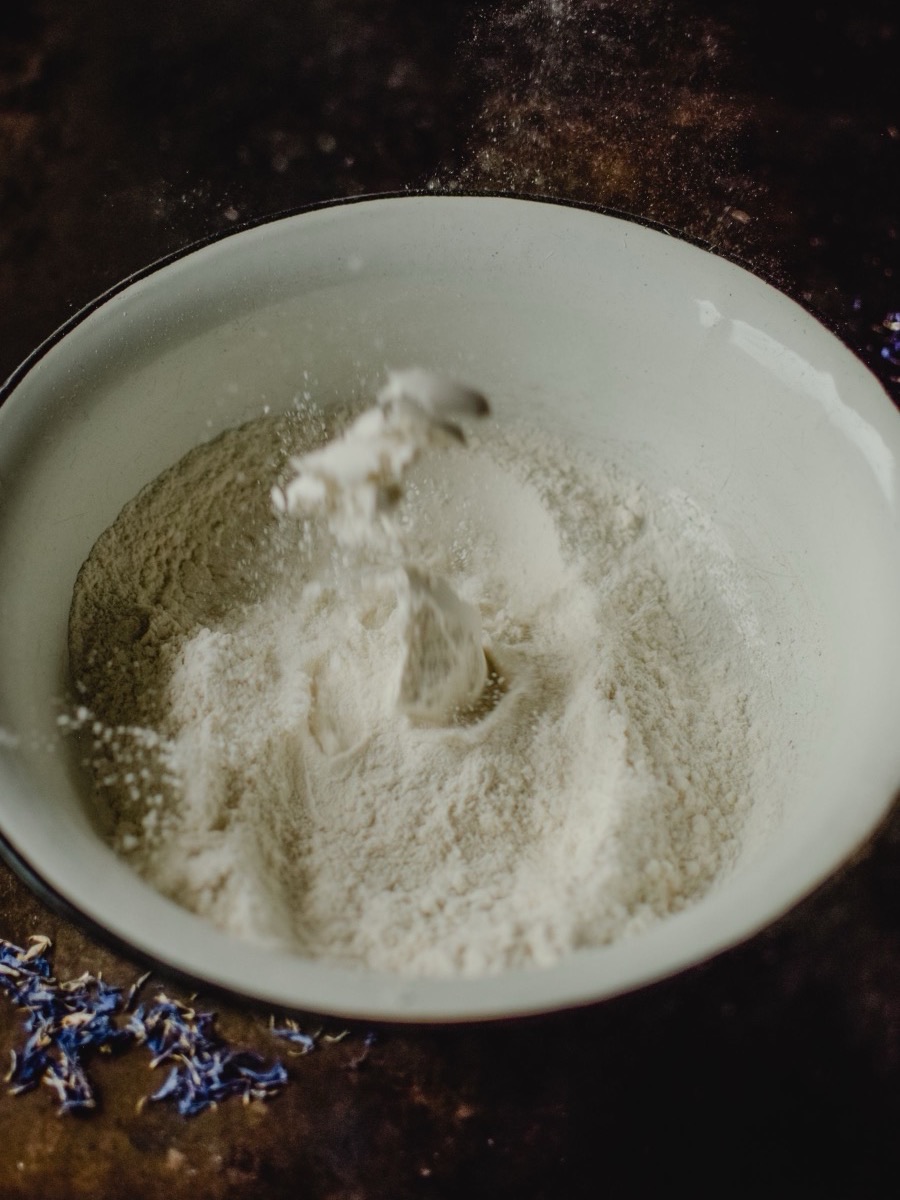
Papain is a protein-digesting enzyme taken from the latex of green papaya, a fruit found in Vietnamese home gardens and kitchens; that is a story for your brand, not evidence of efficacy. An enzyme powder wash is an anhydrous product: papain, solid surfactants and starch are dry-blended, and the user tips a small amount into a wet palm, works it into a lather and rinses off. The powder form is chosen because the enzyme meets water only at the moment of use, whereas in a gel or serum it sits in water for the whole shelf life; but no direct comparison of the two forms has been published, so activity still has to be measured over time on the actual formula. On the evidence: papain hydrolyzes keratin and collagen in the laboratory, yet one review found only 11 papers on exfoliating enzymes and very few human trials, and in one survey 6 of 11 commercial enzyme peel products had no detectable activity. That is why activity, not weight percentage, is what we manage, and the claims stop at “cleanses” and “gentle enzymatic exfoliation for smoother-feeling skin”. Papain dust is a known respiratory allergen for people who handle enzyme powder, and people with latex allergy should be cautious with papaya-derived products. Papain is not on Butter-C's current ingredient list: the raw material source and its activity certificate are confirmed per order. Unlike a foaming cleanser (a liquid dispensed through a foam pump), this is a dry powder. Butter-C offers turnkey OEM/ODM manufacturing, from formula development and testing to labeled finished goods and the notification dossier.
Formula base
Enzyme, solid surfactants and a powder base
The formula contains no water, so every ingredient must be solid, dry and compatible with the enzyme. The three parts below are fixed together because the surfactant and the powder base set the pH, moisture and dust of the product.
Papain: managed by activity
INCI Papain, not Carica Papaya Fruit Extract (a fruit extract). Commercial material is usually a mix of several papaya latex proteases (CIR 2025). Activity is measured with a defined assay (substrate, pH, temperature, time) and reported in that assay's units (for example U/g on casein); two lots both labeled “1% papain” can differ widely. No use level has been established from the sources we checked: the dose is calculated from the lot's activity and the target activity of the finished product, then confirmed by tolerance testing.
Solid surfactants
Sodium cocoyl isethionate (powder, flakes, granules, noodles) is a familiar dry surfactant; sodium cocoyl glycinate and sodium lauroyl glutamate come in solid grades from some suppliers, calculated as % active from the certificate of analysis. Granules or flakes are preferred over fine powder to reduce dust (good practice). “Sulfate-free” only describes the formula; mildness is measured on the finished product.
Powder base: starches and clay
Corn starch (on our current ingredient list), rice starch and tapioca starch give bulk and a smooth feel when mixed with water; kaolin suits a low-foam paste version. Starch feeds microbes once water is present, and the literature puts tapioca starch moisture at about 10–13.5%, so certificates of analysis must cover moisture, microbiology and heavy metals.
Excipients for dryness and comfort
Silica keeps the powder free-flowing and less prone to caking (formulation experience); powdered allantoin supports a soothing positioning. Exfoliating acids and zinc salts stay out of the blend: papain activity falls as pH drops, and zinc inhibits papain in laboratory solutions.
Key technical points
Keep the enzyme active, the powder dry and the dust under control
An enzyme powder fails invisibly: it stays white and still foams, but the enzyme has lost its activity. Each point below is therefore tied to a measurement.
pH in water and temperature
Across the pH and temperature range of skin, lower pH and temperature reduce activity; papain still kept at least 50% of its activity at 26 °C and 40% at pH 4.5 (Trevisol et al., 2022, in vitro). The pH of the powder dissolved in water is measured and fixed; sodium cocoyl isethionate in turn hydrolyzes readily above pH 8 or below pH 5 (Petter, 1984), so the range must suit both.
Heat and metal ions
High heat destroys activity (monograph: one preparation lost activity when held above 60 °C), so the enzyme never goes through melting or hot drying. Zinc and cadmium inhibit papain in a concentration-dependent way, with 50% activity lost at 4 × 10⁻⁴ M zinc chloride (Sathish et al., 2000), so test compatibility if any ingredient carries zinc. Cysteine raises activity; if the raw material contains an activator, it must be written into the specification.
Powder moisture
In an anhydrous powder the enzyme meets water only at use, but starches and surfactants still carry moisture and absorb more if the pack is left open. Powder moisture is checked on every lot; blending and filling take place in dry conditions; activity is measured on receipt of raw material, after blending and over retained-sample time to set the shelf life.
Enzyme dust: workers and users
Of 11 workers exposed to airborne papain, 7 had immediate hypersensitivity reactions, mainly asthma and nasal symptoms (Baur and Fruhmann, 1979). Weighing, sieving, blending and filling need local exhaust, closed handling and respiratory protection; granulated enzyme grades and a finished particle size that is not too fine are preferred (good practice). Specific measures are agreed according to equipment and order scale. Users are told to tip the powder into the hand, not shake it and not inhale it.
Three formulation directions
Three enzyme powder formats
Fine-foam enzyme powder wash
Papain with granular surfactants and starch; mixed with water in the hand into a creamy lather, massaged gently and rinsed. Used a few times a week in place of the usual cleanser.
Low-foam enzyme paste
Papain with kaolin and starch and little surfactant; mixed with water into a thin paste and rinsed after a short time. Contact time is set by tolerance testing; kaolin adsorbs actives, so activity is measured on the blend itself.
Single-dose enzyme sachets
One sachet per use, so the powder never meets moisture after opening. Whether small sachets can be filled depends on equipment and order scale, to be discussed before the format is fixed.
Packaging is designed with the formula
A sealed jar with a desiccant sachet and a small pouring opening to limit airborne dust; the label says not to use a wet spoon and to close the jar after use. Packaging is tested with the product at high temperature and humidity.
Parameters we monitor
What our R&D team measures on every sample
Below are the parameters Butter-C tracks during formula development and scale-up to production. Specific limits are agreed with you on the approved sample, then written into the product's in-house specification.
- Powder appearance
- Color, odor, free flow, no lumps; compared with a reference sample kept in R&D.
- Enzyme activity
- By one fixed assay (substrate, pH, temperature, time) on the raw material at receipt, on the finished product after manufacture and at retained-sample time points; the basis for shelf life and for the word “enzyme” on the label.
- Moisture
- Measured on every lot of powder base and finished product with a fixed in-house method.
- Particle size & dust
- Sieving or particle-size analysis; a limit on the very fine fraction to reduce dust when pouring.
- Solution pH
- Powder dissolved in water at a fixed ratio, measured at 25°C.
- Blend uniformity
- Samples from several points in the blend, tested for activity or a marker to confirm the enzyme is evenly distributed.
- Lather in water
- Amount of foam and time to foam with a set amount of water, by an in-house method.
- Microbiology
- Tested at a GLP / ISO 17025-accredited laboratory; an anhydrous product can be assessed as microbiologically low-risk under ISO 29621, with the conclusion kept on file.
- Human tolerance testing
- Tested on volunteers using the directions on the label before the target activity and frequency of use are fixed.
Claims
Claims for an enzyme powder wash
Evidence for papain as an exfoliant is limited: the mechanism is supported in the laboratory, but human trials with papain alone are very few. Papain has no entry in ASEAN Annexes II, III, VI or VII, and neither CIR nor SCCS has assessed papain itself, so safety is established through the safety assessment in the Product Information File. Annex 03-MP of Circular 06/2011/TT-BYT lists wording about acne or allergy relief among the claims that are not accepted. Butter-C reviews label and marketing wording when preparing the notification dossier.
Cleanses the skin
Instead of: detoxifies skin, deep pore cleansing.
Gentle enzymatic exfoliation for smoother-feeling skin (when the finished product has measurable activity and has been tested)
Instead of: peeling, skin renewal, skin regeneration, whitening, acting on acne.
Contains papain enzyme from papaya (when the activity certificate confirms it)
Instead of: natural enzymes so it is gentle, does not cause allergy.
For normal and combination skin (a skin-type description)
Instead of: safe for sensitive skin, safe during pregnancy; no source we checked supports these.
Directions
Tip a small amount into a wet hand, work into a lather, massage gently and rinse well; use a few times a week; do not stack several exfoliation methods (enzyme, acid, scrub, retinoid) while skin feels dry or stinging.
Label warnings
Not for the eye area or broken skin; patch-test on a small area first; stop use if itching, hives or burning redness occur. Do not inhale the powder; keep out of reach of children. People with latex or papaya allergy, and pregnant or breastfeeding women, should ask a doctor before use.
Manufacturing specifications
Our capabilities
- Product forms
- Dry-blended anhydrous powder: foaming or low-foam paste type.
- Pack formats
- Sealed jars with a desiccant sachet; single-dose sachets depending on equipment and order scale, to be discussed. Fill weight agreed when choosing packaging.
- Enzyme raw material
- Papain is not on our current ingredient list; raw material source and activity certificate are confirmed per order.
- Minimum order quantity
- Agreed per order, depending on the enzyme source, product form and pack format.
- Testing
- Tested at a GLP / ISO 17025-accredited laboratory, with a certificate of analysis delivered with every batch.
- Documentation
- Product Information File (PIF) with safety assessment and cosmetic product notification dossier prepared by Butter-C, with the papain certificate of analysis and activity certificate.
Suggested product concept
Papaya enzyme powder wash in a sealed jar
A concept to help you picture the product, not a ready-made product for sale. The actual formula is developed around your brand's positioning and price point.
Papain dosed to target activity
Papain amount calculated from the lot's activity certificate and checked on the finished product and over retained-sample time.
Granular surfactants
Sodium cocoyl isethionate with sodium cocoyl glycinate; a creamy fine lather in water, “sulfate-free” on the label.
Rice starch as the powder base
A familiar rice story and a smooth feel when lathering; certificate of analysis covering moisture and microbiology.
50 g jar with desiccant, fragrance-free
A small pouring opening limits dust; no fragrance removes one source of allergens.
Customization options
What you can specify
The same product type can target very different customers. Tell us your requirements in the areas below and our pharmacists will develop the formula accordingly.
Target activity
Enzyme activity of the finished product, fixed by tolerance testing and stability over time.
Foam level
Creamy fine lather or low-foam paste; sets the ratio of surfactant to powder base.
Powder base
Rice, corn or tapioca starch, with or without kaolin; each changes moisture, feel and the ingredient story.
Pack format
Sealed jar or single-dose sachets; sachets depend on equipment and order scale.
Fragrance and color
Fragrance-free is recommended; any powdered or powder-loaded fragrance requires retesting enzyme activity.
Ingredient positioning
Sulfate-free, vegan: please tell us at the start so we can choose a matching papain source and surfactants.
Further reading
Related reading
Papain (papaya enzyme) in cosmetics
Mechanism, activity, stability, allergy risk from inhaled dust and for people with latex allergy, ASEAN rules (in Vietnamese).
Facial exfoliator manufacturing
Scrubs, acids and enzymes compared.
Foaming cleanser manufacturing
Ready-made foam from a liquid through a foam pump, a different format from a powder wash.
Sodium cocoyl isethionate (SCI) in cosmetics
A solid surfactant: solubility, pH and hydrolysis, dust during weighing and blending (in Vietnamese).
Skin reactions to cosmetics
Irritation versus allergy, and when to see a doctor (in Vietnamese).
How we work
From idea to finished batch
Eight steps and three milestones signed off by both sides: approved sample, notification number, finished batch. Step-by-step details (in Vietnamese) →
Get started
Tell us about the product you plan to launch
Send us your product direction and expected volume. Our team will get back to you during business hours (Vietnam time, GMT+7).
Head office: Huu Le village, Dai Thanh commune, Hanoi · Factory: Thanh Oai Industrial Cluster, Binh Minh commune, Hanoi, Vietnam
Hotline +84 967 176 511 · [email protected] · Privacy policy ← Full catalog