 BUTTER-C
Signature ingredients
Passion fruit seed oil face oil OEM/ODM manufacturing
Passion Fruit Seed Oil Face Oil · OEM/ODM
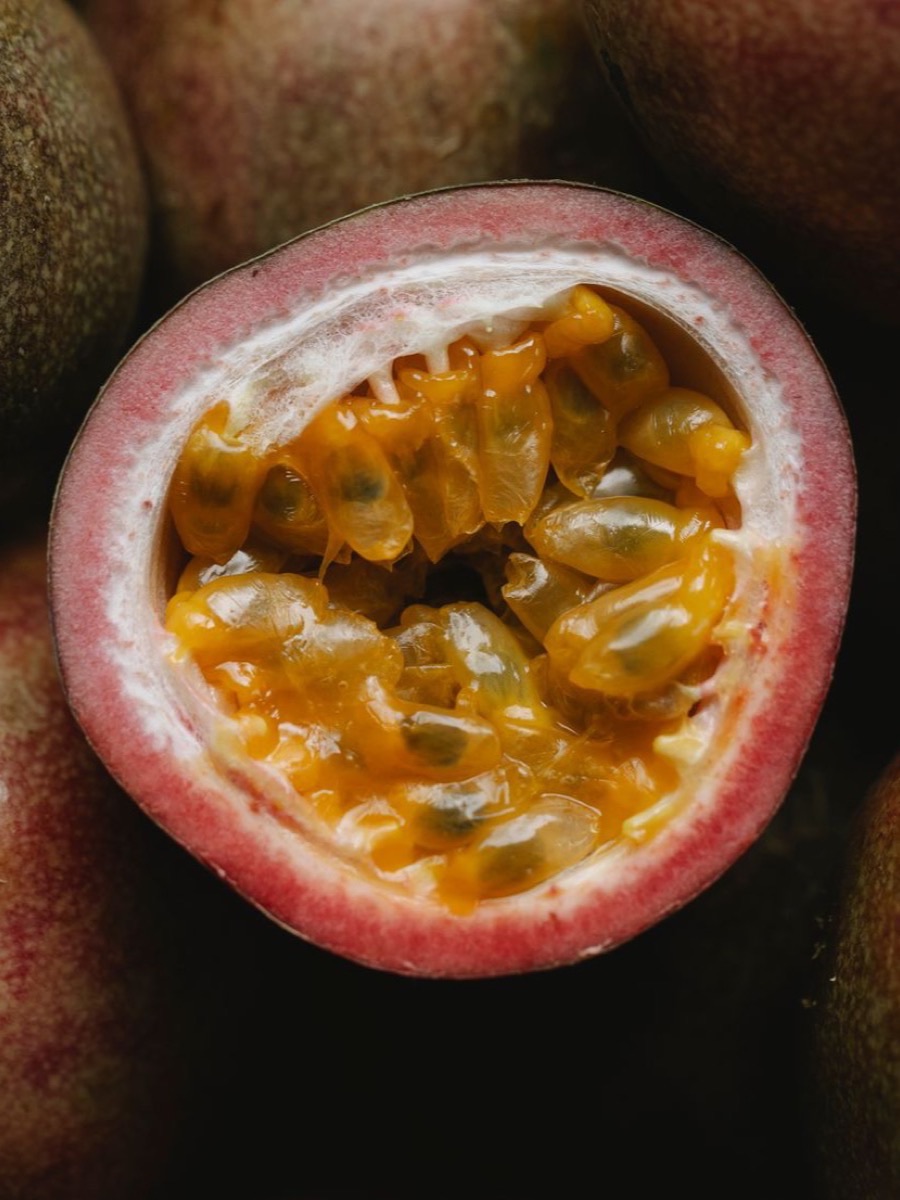
Passion fruit (Passiflora edulis) is a fruit Vietnamese people know from its juice; its seeds yield a yellow-orange oil (INCI Passiflora Edulis Seed Oil) in which linoleic acid makes up roughly two thirds to three quarters of the fatty acids — 66.94% in one sample of seeds collected in Vietnam, 72.69% in a sample from China. The passion fruit story is a brand story, not evidence of a skin benefit. Evidence for this oil on human skin is limited: the one human application study we found used a blend of three oils and measured over a few hours; melanin data come only from cells and from zebrafish fed the oil; and the piceatannol trial used an oral seed extract, not the oil. The face oil is therefore positioned at softening and moisturizing, and its quality depends on three technical points: a stable oil base to offset the oxidation-prone high linoleic content, sourcing checks because passion fruit oil is often diluted with sunflower oil, and light-protective, airtight packaging. Butter-C offers turnkey OEM/ODM manufacturing, from formula development and testing to labeled finished goods and the notification dossier.
Formula base
Passion fruit seed oil in a stable oil base
A passion fruit seed face oil is an anhydrous (water-free) blend, so it needs no emulsifier system; anhydrous formulas usually do not use a preservative (formulation practice), and a low microbiological risk conclusion must be documented in the safety dossier per ISO 29621. Passion fruit oil is the named ingredient; the rest is base oil chosen for oxidative stability and skin feel.
Passion fruit seed oil
INCI Passiflora Edulis Seed Oil: oil obtained from the seeds, not seed extract (a different, piceatannol-rich material). The US CIR Expert Panel (2017) concluded this oil is safe in the present practices of use; a 2010 survey recorded leave-on products at 0.003–5% — market data, not a regulatory limit. Higher levels in a facial oil need a formula-specific safety assessment.
Stable base oils
Squalane (a saturated hydrocarbon that resists oxidation), Caprylic/Capric Triglyceride (MCT oil, very low in unsaturated components), jojoba oil (chemically a liquid wax ester; more oxidation-stable than olive, sunflower and rosehip oils in an accelerated oxidation test at 100 °C — Fagoaga et al., 2026). A stable base lowers the share of polyunsaturated fatty acids in the whole formula.
Esters to adjust skin feel
Coco-Caprylate/Caprate helps the oil dry down quickly with less shine — suited to hot, humid climates and users new to facial oils; level set by sensory testing (formulation experience).
Antioxidant and fragrance
Tocopherol is added as soon as the oil phase is combined; level per the supplier technical data and stability testing. Fragrance-free is the recommended choice for a leave-on facial oil.
Key technical points
Oxidation, oil sourcing and evidence: four factors that decide quality
Passion fruit seed oil differs from a saturated base oil in its many doubly unsaturated fatty acids and the scarcity of skin data. The four items below are settled together on the sample, not left for later.
High linoleic content — prone to rancidity
Linoleic acid 66.94% (seeds collected in Vietnam, Soxhlet extraction — To Dao Cuong et al., 2019), 72.69% (China — Liu et al., 2008), 74.40% (China, supercritical CO2 — Li et al., 2026); iodine value 119.9–129.29 (CIR). Measures: tocopherol, limiting metal ions, no prolonged heating, light-protective bottles, little headspace; nitrogen flushing at filling is possible (formulation practice).
Oil sourcing and adulteration risk
Passion fruit oil is often diluted with sunflower oil, which does not notably change its appearance; infrared spectroscopy combined with statistical analysis detected additions below 1% (Kiefer et al., 2019). Butter-C requires a fatty acid profile on the COA for every lot and a traceable supplier.
The right raw material
The COA states INCI, species P. edulis, seed as the plant part, extraction method (cold pressing, solvent, supercritical CO2), refined or not, acid value, peroxide value and any added antioxidant. Hydrogenated passion fruit seed oil is a different INCI; piceatannol data on seed extract do not apply to the oil.
Limited evidence — proportionate claims
The human application study we found: 20 women, a single application of a nanoemulsion whose 10% oil phase was a blend of three oils (raspberry, passion fruit, peach); the versions with lanolin derivatives raised skin hydration and no irritation was seen — results of the whole formula (Pereira et al., 2016). Tyrosinase inhibition was seen only in cells and in zebrafish fed the oil (Li et al., 2026). Claims stop at softening and moisturizing.
Three formulation directions
Three passion fruit seed face oil formats
Squalane dropper oil
Squalane, MCT oil and passion fruit seed oil; light, low base odor. The common format: a few drops in the evening after moisturizer.
Dry-touch oil for combination skin
Adds a dry ester and less heavy oil; absorbs quickly with less shine — for hot, humid climates. A “non-comedogenic” statement is used only after testing the finished product itself: the sources checked contain no comedogenicity study of passion fruit seed oil.
High-level passion fruit oil
Passion fruit seed oil makes up most of the formula, with jojoba and tocopherol — a stronger ingredient story. This is above the CIR survey levels, so it needs its own safety assessment, human tolerance testing and more thorough oxidation stability testing; the period after opening is shorter.
Packaging is designed with the formula
Dark glass or opaque light-protective bottles, dropper or metered pump, little headspace. The dropper bulb and gaskets must be soak-tested with the oil.
Parameters we monitor
What the R&D lab measures on each sample
Below is the set of parameters Butter-C monitors during formula development and scale-up. Specific limits are agreed with you on the approved sample and then written into the product specification.
- Incoming oil certificate of analysis
- Fatty acid profile (checking for high linoleic), acid value and peroxide value for each lot; lots outside the internal specification are not used in production.
- Finished product peroxide value
- Measured at the start and at each stability time point — the main parameter for setting shelf life and the period after opening.
- Color, odor and appearance
- Compared with the reference sample at room temperature, 40 °C and under light; rancid odor and color change signal oxidation.
- Stability
- Accelerated aging at 40 °C, heat–cold cycling and light exposure in the actual packaging; watch for haze and separation.
- Clarity at low temperature
- Jojoba and some oils may cloud in the cold; tested at 4 °C.
- Packaging compatibility
- Soak testing with the bottle, dropper, bulb and gaskets to be used; watch for swelling, leaks and odor change.
- Microbiology
- Testing at a GLP/ISO 17025 accredited center; a written microbiological risk assessment of the anhydrous system per ISO 29621.
- On-skin evaluation
- Spreading, dry-down time, shine; irritation and tolerance testing on volunteers before sign-off — human tolerance data specific to passion fruit oil are scarce.
Product claims
Claims at the level of softening and moisturizing
Tyrosinase and melanin data for passion fruit seed oil come from cells and from zebrafish fed the oil; the piceatannol trial used an oral seed extract and was run by company-affiliated authors. None of this supports claims for an applied oil. Butter-C reviews the wording on labels and marketing materials when preparing the notification dossier.
Softens skin, moisturizes (test on the finished product if a degree is stated)
Instead of: restores the skin barrier, regenerates skin, claims to slow or reverse skin aging.
Contains linoleic-rich passion fruit seed oil (Passiflora Edulis Seed Oil)
Instead of: brightening, whitening, melanin inhibition, piceatannol benefits, “natural retinol”.
Absorbs quickly with little shine (only after sensory testing on the finished product)
Instead of: non-comedogenic or does not clog pores without testing.
Vietnamese passion fruit ingredient
Only when the COA and supplier documents prove the origin; the familiar fruit is a story, not evidence of benefit.
Label reminders
Patch test on a small area before use; avoid the eye area; stop use if redness or itching occurs; people with a known passion fruit or latex allergy should ask a doctor before use; close tightly and keep out of the sun. This is a practical suggestion, not a mandatory warning under the ASEAN Annexes.
Pregnancy and breastfeeding
Data on topical passion fruit seed oil are insufficient — not promoted for this group; advice is to ask a doctor.
Manufacturing specifications
Available capabilities
- Texture
- Liquid dropper oil or dry-touch oil; pale yellow to yellow-orange depending on the oil lot and level.
- Passion fruit raw material
- Passion fruit seed oil is in Butter-C’s current raw material list; COA for every lot, label per INCI.
- Packaging format
- Dark glass bottle with dropper or light-protective pump bottle. Volume agreed when packaging is selected.
- Minimum order
- Agreed per order — depends on the formula direction and packaging chosen.
- Testing
- Performed at a GLP/ISO 17025 accredited center, with results delivered with each batch.
- Dossier
- Product information file (PIF) and notification dossier prepared by Butter-C, with the passion fruit seed oil COA including the fatty acid profile.
- Packaging
- Label design, printing and packing run in parallel with formula development.
Suggested product direction
Passion fruit seed and squalane evening face oil
A product direction to help you picture the result, not a ready-made product for sale. The actual formula is built around your brand positioning and price range.
Passion fruit seed oil
The named ingredient, level set by safety assessment and stability testing; COA with fatty acid profile and peroxide value.
Squalane and MCT oil
A light, oxidation-stable, low-odor base; softens the skin.
Tocopherol, fragrance-free
Antioxidant for the oil phase; no fragrance.
30 ml dark glass dropper bottle
Light-protective, little headspace; label directions for a few drops in the evening and a patch-test reminder.
Custom options
Options you can request
The same product type can serve very different customers. Tell us your requirements in the areas below and our pharmacist team will build a matching formula.
Passion fruit oil level
Within the CIR survey levels, or higher (including near-neat) with its own safety assessment and more thorough oxidation stability testing.
Skin feel
Dry-touch with little shine, or richer for dry skin.
Base oils
Squalane, MCT oil, jojoba, dry esters; adding other plant oils means rechecking oxidative stability.
Scent
Fragrance-free (recommended) or a very light fragrance, with fragrance allergens declared as required.
Packaging
Dropper or pump; dark glass or opaque light-protective bottle.
Ingredient direction
Vegan, silicone-free, fragrance-free — please state these at the start so suitable raw materials are chosen.
Further reading
Related topics
Passion fruit seed oil (Passiflora Edulis Seed Oil) in cosmetics
Fatty acid profile, level of evidence on skin, oxidative stability, safety and ASEAN regulation (in Vietnamese).
Squalane facial oil OEM/ODM manufacturing
The saturated base oil that makes up most of a facial oil formula.
Jojoba facial oil OEM/ODM manufacturing
An oxidation-stable liquid wax blended with passion fruit oil.
Rosehip facial oil OEM/ODM manufacturing
Another facial oil rich in unsaturated fatty acids, with the same rancidity challenges.
Choosing oils in formulation
Oxidative stability of each oil group, peroxide value, acid value (in Vietnamese).
How we work
From idea to finished batch
Eight steps and three milestones signed off by both sides: approved sample, notification number, finished batch. Step-by-step details →
Get started
Tell us about the product you plan to launch
Send us your product direction and expected volume. Our team will get back to you during business hours (Vietnam time, GMT+7).
Head office: Huu Le village, Dai Thanh commune, Hanoi · Factory: Thanh Oai Industrial Cluster, Binh Minh commune, Hanoi, Vietnam
Hotline +84 967 176 511 · [email protected] · Privacy policy ← Full catalog