 BUTTER-C
Signature ingredients
Jojoba facial oil OEM/ODM manufacturing
Jojoba Facial Oil · Signature Ingredients · OEM/ODM
Jojoba (Simmondsia chinensis) is a drought-tolerant perennial shrub whose seeds store energy as wax rather than as fat. So “jojoba oil” (INCI Simmondsia Chinensis Seed Oil) is the familiar name, but chemically it is a liquid wax: about 98% wax, mainly esters of long-chain alcohols and fatty acids, not triglycerides like olive or sunflower oil (Gad et al., 2021). That nature gives jojoba two useful traits in a facial oil: a smooth, gliding feel, and stability — in accelerated Rancimat oxidation testing at 100 °C, jojoba had a longer induction period than olive, sunflower and rosehip oils (Fagoaga et al., 2026). The evidence on benefits needs to be stated plainly: we have not found any randomized controlled trial assessing the softening or moisturizing effect of jojoba alone on human skin; biological data such as lower cytokines or more collagen III come only from human skin tissue cultured outside the body. Butter-C's jojoba facial oil is therefore positioned at the level of softening the skin and leaving it smooth, and it does not use familiar marketing lines such as “just like sebum” or “non-comedogenic”. Butter-C offers full-service OEM/ODM manufacturing, from formula development and testing to labeled finished product with its notification dossier.
Formula base
Liquid jojoba wax as the main part of an anhydrous oil
A jojoba facial oil is an anhydrous (water-free) blend, so it needs no emulsifier system; anhydrous formulas usually do not use preservatives (formulation practice), and a conclusion of low microbiological risk must be documented as an ISO 29621 assessment in the safety file. Unlike the squalane and rosehip facial oil pages — where jojoba is only a blending oil — here jojoba is the signature ingredient and makes up most of the formula.
Jojoba oil (Simmondsia Chinensis Seed Oil)
A liquid wax pressed from the seeds; besides wax esters it contains sterols, vitamins, a few triglycerides, flavonoids and phenolic compounds (Gad et al., 2021). Butter-C's stock raw material is ERP code 10767 (golden jojoba oil; the ERP lists the INCI as Simmondsia Chinensis (Jojoba) Seed Oil); CAS is taken from the COA (PubChem lists 61789-91-1). Not listed in ASEAN Annexes II, III or VI, 06/2026 edition.
Unrefined or refined
Unrefined jojoba oil (often called golden jojoba) and refined oil differ in minor components, color and odor; the certificate of analysis for each lot is the reference (jojoba article). A six-year nitrogen fertilization experiment also showed that fertilizer level and harvest year changed most quality parameters of jojoba wax (Tietel et al., 2024) — which is why every lot is compared with a reference sample.
Blending oils and esters
Squalane (a light, saturated hydrocarbon), Caprylic/Capric Triglyceride (MCT oil) and Coco-Caprylate/Caprate for a quick dry-down. Ratios are set by spreading tests on skin (formulation experience); the verified sources give no standard use range for jojoba, and a single-ingredient facial oil can be bottled neat.
Antioxidants and fragrance
Jojoba is stable in the Rancimat test, but in the same study its total antioxidant capacity measured at 25 °C was lower than that of olive, sunflower and rosehip oils (Fagoaga et al., 2026). When less stable plant oils are blended in, tocopherol is added and stability is tested. Fragrance-free is the recommended choice for a leave-on facial oil.
Key technical points
Understanding the liquid wax — four points that decide quality
The points below come from jojoba itself: the name “oil” invites confusion, modified forms have their own INCI names, and popular claims need to be set aside.
Wax esters, not triglycerides
Most plant oils are triglycerides (glycerol bound to three fatty acids); jojoba is an ester of one long-chain alcohol with one fatty acid. Data on fatty acid profile, rancidity or skin feel of fatty oils therefore do not transfer directly to jojoba, and vice versa. The product keeps the familiar name “jojoba facial oil”, while the technical file states its liquid wax nature.
The right INCI, not a modified form
Simmondsia Chinensis Seed Oil is different from Jojoba Esters and Hydrolyzed Jojoba Esters (modified forms with their own INCI names); data on one are not used for the other (jojoba article). CAS 90045-98-0 belongs to a PubChem record for “jojoba extract” — not used for the oil. The COA and label must state the INCI of the material actually used.
No “just like sebum” claim
The claim stems from the fact that sebum contains some wax esters. In a synthetic sebum formula for laboratory use, jojoba oil serves as the wax ester part (25%) alongside triglycerides (44.7%), fatty acids (17%) and squalene (12.4%) (Wertz, 2009) — so it mimics only one part. The verified sources contain no direct comparison of the two, so this page does not describe jojoba as “like” or “close to” sebum.
Comedogenicity has not been studied
The verified sources contain no comedogenicity study on jojoba oil. The study on acne-prone skin we found used a clay mask containing jojoba, with a before–after comparison (Meier et al., 2012) — jojoba's share cannot be separated. The supplier-data note “non-comedogenic” has no verified source, so “non-comedogenic” is not claimed; acne-prone skin is advised to patch test.
Three formulation directions
Three types of jojoba facial oil
Neat jojoba
One ingredient; a short, easy-to-explain label. Finished product quality is almost the quality of the raw material lot: color, odor, clarity, acid and peroxide values are checked per lot; golden or refined is chosen for the desired sensory profile.
Light jojoba – squalane
Jojoba as the main part, squalane for a lighter feel and faster spreading; suited to normal to dry skin, morning or evening. Both materials resist oxidation, so the formula stays short with few auxiliary ingredients.
Dry-touch jojoba – ester oil
Jojoba with MCT oil and Coco-Caprylate/Caprate; absorbs quickly, low shine, suited to hot, humid climates and to people new to facial oils. The jojoba level is kept high enough for the product name to be accurate.
Packaging is part of the formula
Glass or compatibility-tested plastic bottles, dropper or metered pump, little headspace. Jojoba may cloud or partly solidify in the cold (formulation experience; pour point per the TDS) — freeze–thaw testing is run, and the label says “clears again at room temperature” if testing confirms it. Dropper bulbs and gaskets must be soak-tested with the oil.
Parameters we monitor
What our R&D lab measures on every sample
Below is the set of parameters Butter-C monitors during formula development and scale-up to production. Specific limits are agreed with you on the approved sample, then written into the product's in-house specification.
- Raw material identity
- COA for each lot stating INCI Simmondsia Chinensis Seed Oil, unrefined or refined, and any added antioxidant; lots labeled Jojoba Esters or extract are not accepted.
- Acid value, peroxide value
- Measured on the raw material on receipt and on the finished product across stability time points; lots outside the in-house specification are not used in production.
- Appearance
- Color, clarity and odor against the reference sample of the right grade (golden or refined); a rancid odor or unusual color triggers a recheck of the lot.
- Clarity in the cold
- Freeze–thaw cycling in the actual packaging: watching for haze, partial solidification and whether the oil clears again at room temperature.
- Stability
- Accelerated aging at 40 °C and light exposure in the actual packaging; watching color, odor and separation when oils or esters are blended in.
- Packaging compatibility
- Soak tests with the actual bottle, dropper, bulb and gaskets; watching for swelling, leakage and odor change.
- Microbiology
- Tested at a GLP / ISO 17025-accredited laboratory; written microbiological risk assessment for the anhydrous system per ISO 29621.
- Skin evaluation
- Spreadability, dry-down time and shine; irritation testing on volunteers before the formula is finalized. Any figures on softness, hydration or water loss must be measured on the finished product itself.
Claims
Claims at the level of softening the skin
Human data on jojoba are small biophysical measurements. In 6 healthy volunteers, four plant oils and paraffin oil penetrated only the uppermost layers of the stratum corneum; in water-loss measurements, the plant oils (except jojoba) and paraffin oil gave similar occlusion — the abstract does not state jojoba's own level of occlusion (Patzelt et al., 2012). Applying neat jojoba twice daily for 3–7 days to the back did not significantly change transepidermal water loss (Kinnunen, 1992). The lower cytokines and higher collagen III seen with jojoba wax come from human skin tissue cultured outside the body (Tietel et al., 2024) — not a basis for claims. Annex 03-MP of Circular 06/2011/TT-BYT does not accept claims to prevent or reverse aging; Butter-C reviews the wording on labels and promotional material when preparing the notification dossier.
Softens the skin, leaves it smooth
A benefit of the emollient and of the whole formula. Instead of: boosts collagen, anti-aging, rejuvenates skin.
Reduces the feeling of dry, rough skin (sensory testing on the finished product)
To keep skin hydrated, use after moisturizer or rely on humectants and occlusives in another product; hydration figures only when measured on the product itself. Instead of: restores the skin barrier, locks in moisture for days.
Contains jojoba oil (Simmondsia Chinensis Seed Oil) — a natural liquid wax
An ingredient and story claim; “unrefined” or “organic” only when the COA or a certificate confirms it. Instead of: “identical to sebum”, “balances oil”, “CIR-confirmed safe” when the report has not been checked.
Facial oil — sunscreen still needed during the day
Jojoba is not on the UV filter list (ASEAN Annex VII). Instead of: natural sunscreen, protects skin from UV.
Label notes
“Patch test on a small area before use; avoid the eye area; stop use if the skin becomes red or itchy.” The literature includes two case reports of contact dermatitis linked to jojoba (Wantke et al., 1996; Di Berardino et al., 2006); their PubMed records have no abstract, so no details can be given, and the verified sources give no sensitization rate. Instead of: non-comedogenic, hypoallergenic, safe for every skin type.
Pregnancy, breastfeeding
The verified sources contain no data specific to jojoba — not promoted for this group; advice is to ask a doctor. Instead of: safe for pregnancy.
Manufacturing specifications
Our capabilities
- Texture
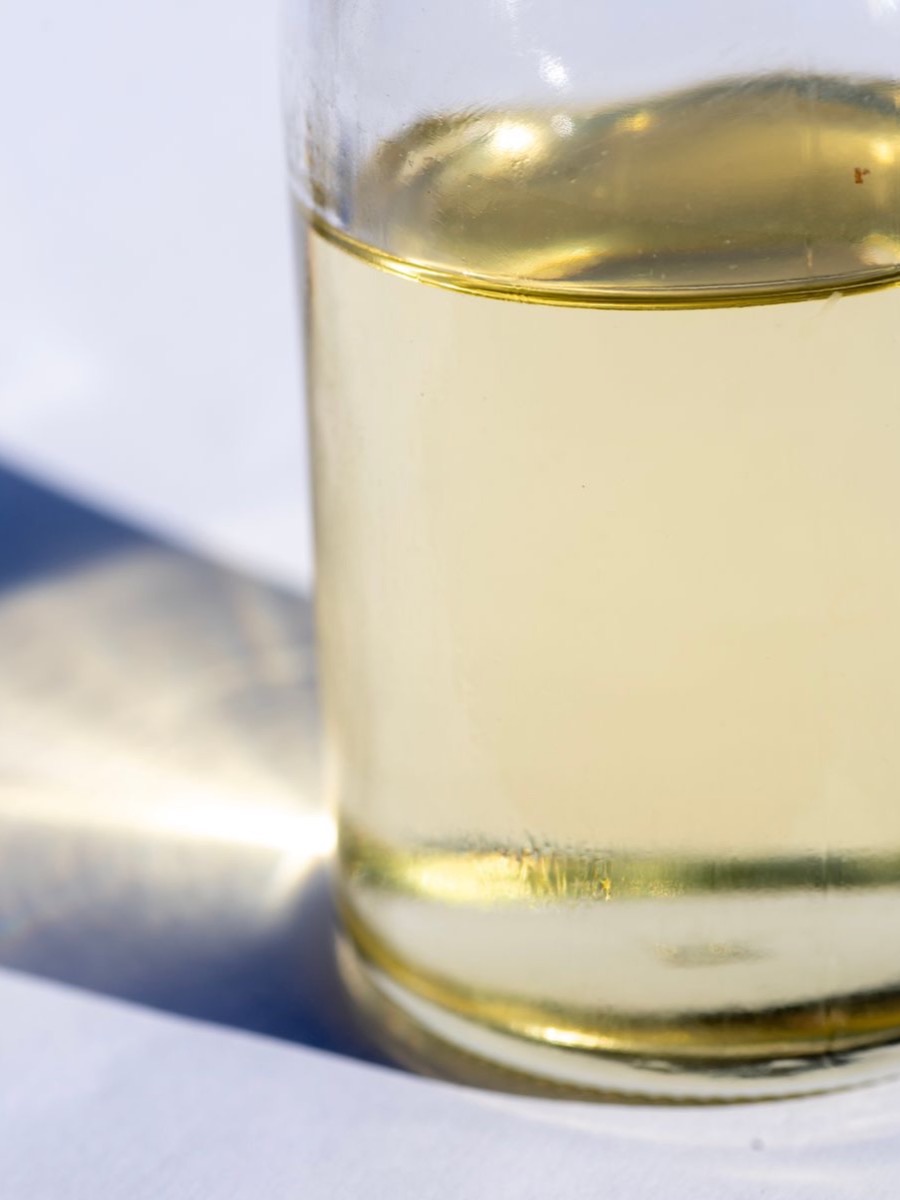
- Clear liquid oil, pale yellow (golden grade) to almost colorless (refined grade); neat or blended with squalane or esters.
- Pack formats
- Glass bottle with dropper or metered pump. Volume agreed when choosing packaging.
- Minimum order quantity
- Agreed per order — depends on the formula direction and pack format chosen.
- Testing
- Performed at a GLP / ISO 17025-accredited laboratory, with a certificate of analysis delivered with every batch.
- Documentation
- Product Information File (PIF) and cosmetic product notification dossier prepared by Butter-C, with the jojoba oil COA stating INCI, grade, acid and peroxide values.
- Packaging
- Label design, printing and packing run in parallel with formula development; the patch-test and storage notes are laid out from the first label draft.
Suggested product concept
Fragrance-free jojoba – squalane facial oil
A product concept to help you picture the result, not a ready-made product for sale. The actual formula is developed around your brand's positioning and price range.
Jojoba oil with a COA per lot
The main part of the formula; golden or refined grade chosen for the desired color and odor.
Squalane
A small share for a lighter feel and faster spreading; ratio set by sensory testing.
Fragrance-free
No fragrance or essential oils; tocopherol only when the formula includes a less stable plant oil.
30 ml glass dropper bottle
Little headspace; the label directs a few drops after moisturizer, with patch-test and daytime-sunscreen notes.
Customization options
What you can specify
The same product type can serve very different customer groups. Tell us your requirements in the areas below and our pharmacists will develop the matching formula.
Jojoba grade
Unrefined (golden, with a light base odor) or refined (almost colorless and odorless) — this decides the sensory profile and the label story.
Neat or blended
Single ingredient, blended with squalane, or blended with dry-touch esters.
Skin feel
Dry-touch and low shine, or richer for dry skin; dropper or pump.
Scent
Fragrance-free (recommended) or a very light fragrance, with fragrance allergens declared under the rules of the target market.
Raw material source
Origin, organic certification — stated on the label only when the supplier has documents.
Ingredient positioning
Fragrance-free, silicone-free, vegan — please state these at the outset so the right raw materials can be chosen.
Further reading
Related knowledge
Jojoba oil in cosmetics
Liquid wax nature, oxidative stability, level of evidence on skin and allergy risk (in Vietnamese).
Squalane facial oil manufacturing
A facial oil named after squalane — often blended with some jojoba.
Rosehip facial oil manufacturing
A polyunsaturated, rancidity-prone oil — jojoba is one stable carrier to blend with it.
Cleansing oil manufacturing
Jojoba in the oil phase of a rinse-off product, which needs emulsifiers to rinse clean with water.
Choosing oils in cosmetic formulation
Skin feel and oxidative stability of oil groups, and how to build a carrier blend (in Vietnamese).
How we work
From idea to finished batch
Eight steps and three milestones signed off by both sides: approved sample, notification number, finished batch. Step-by-step details (in Vietnamese) →
Get started
Tell us about the product you plan to launch
Send us your product direction and expected volume. Our team will get back to you during business hours (Vietnam time, GMT+7).
Head office: Huu Le village, Dai Thanh commune, Hanoi · Factory: Thanh Oai Industrial Cluster, Binh Minh commune, Hanoi, Vietnam
Hotline +84 967 176 511 · [email protected] · Privacy policy ← Full catalog