 BUTTER-C
Signature ingredients
Clove basil shampoo OEM/ODM manufacturing
Clove Basil (Ocimum Gratissimum) Shampoo · OEM/ODM
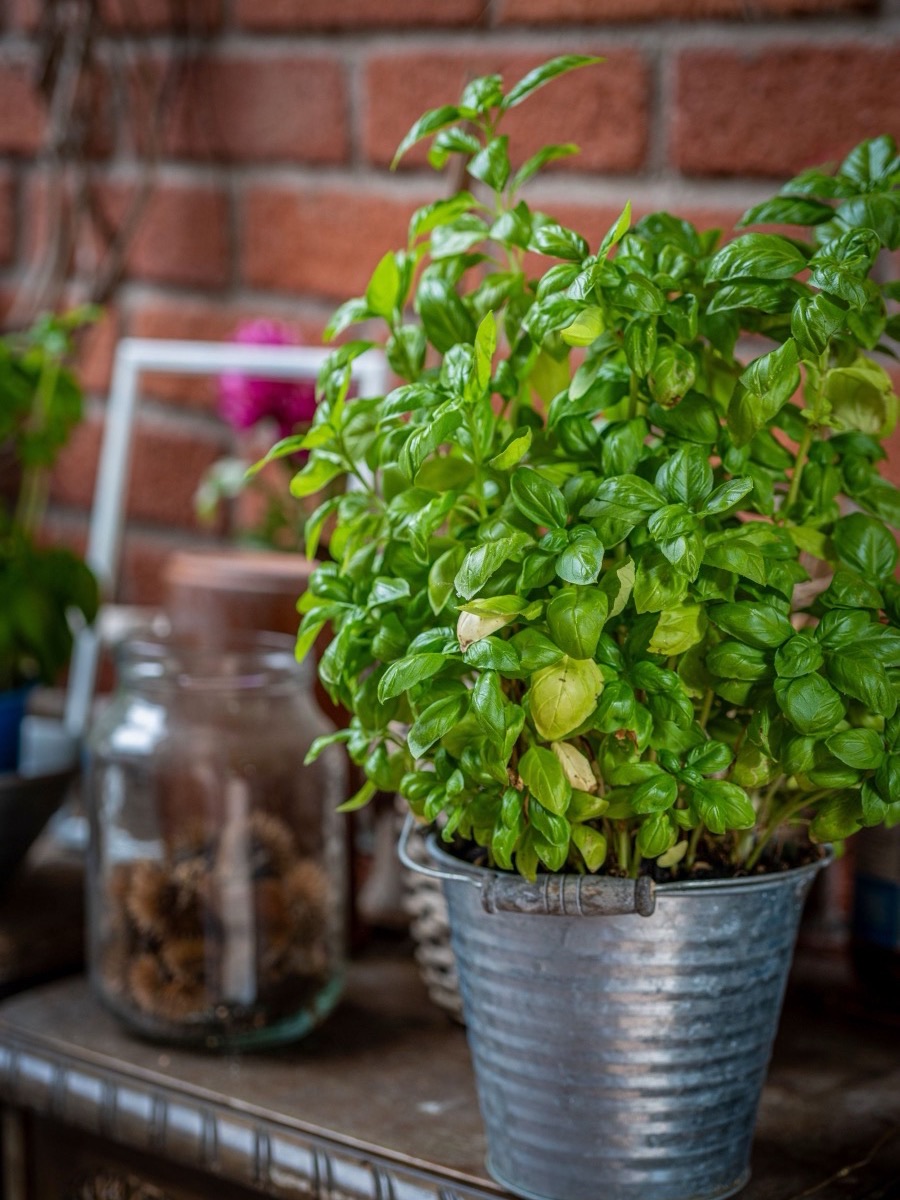
In many Vietnamese families, clove basil goes into the pot of water boiled with gleditsia pods and pomelo peel for washing hair; that is a folk custom and a cultural story for your brand, not evidence of efficacy. Clove basil (Ocimum gratissimum, mint family) is an aromatic plant in the same genus as sweet basil; the European Commission's CosIng database lists a single function for both the extract and the essential oil of this species: perfuming. We found no study of clove basil on human hair or scalp; available data are test-tube experiments, mostly with the essential oil. So this shampoo is built like our gleditsia shampoo: cleansing, lather and viscosity come from the surfactant system, while clove basil extract carries the herbal scent and the story. What is specific to this page is the regulation of the scent: methyleugenol (ASEAN Annex II, Ref 451, at most 0.001% in rinse-off products, summed across all fragrance sources) and eugenol, a known contact allergen; plus correct INCI naming, extract color and sediment, microbial control and claim limits: no hair growth, no reduced hair loss, no darkening of hair, no anti-dandruff claim. Butter-C offers turnkey OEM/ODM manufacturing, from formula development and testing to labeled finished goods and the notification dossier.
Formula base
Clove basil extract in a complete cleansing system
The formula has the same four groups as any shampoo; the difference is that the clove basil source (extract or essential oil) decides how methyleugenol is calculated and how the base looks and smells, so it is chosen from the very first sample rather than added at the end.
Clove basil extract: right species, right INCI name
The material Butter-C keeps on file is a liquid clove basil extract in a water–glycol base, listed as Ocimum Gratissimum Extract; that name is not in CosIng. CosIng has only two entries for the species: Ocimum Gratissimum Herb Extract (extract of the aerial parts) and Ocimum Gratissimum Herb Oil (essential oil), both with the perfuming function. The material file does not state the plant part or extraction solvent, so the supplier must confirm them so the label carries a listed INCI name plus every solvent that comes with the material. The COA states the scientific name Ocimum gratissimum L.; other Ocimum species are not identified by their Vietnamese common names.
Primary surfactant system
Sodium Laureth Sulfate with Cocamidopropyl Betaine for the mainstream version; amino acid surfactants (Sodium Lauroyl Glutamate, Sodium Lauroyl Sarcosinate), glucosides and betaine for the sulfate-free version, on the same principle as our gleditsia and herbal shampoo pages. This system decides cleansing, lather and viscosity; mildness is a property of the whole blend, measured on the finished product.
Hair conditioners
Guar Hydroxypropyltrimonium Chloride, Polyquaternium-10 and Panthenol help hair tangle less and comb easily after washing. The supplier's technical file notes that plant extracts may react with cationic ingredients (not checked against an independent source), so cationic polymers are tested for compatibility because they can cause haze or precipitation.
Texture, chelation, preservation and fragrance pairing
Sodium Chloride or Xanthan Gum for viscosity; Disodium EDTA or Tetrasodium Glutamate Diacetate to limit color change from metal ions; the preservative system is challenge-tested to ISO 11930. Clove basil does not replace a preservative: the ASEAN Annex VI preamble notes that essential oils may help preservation but “are not included in the ANNEX”. Pairing with gleditsia and pomelo peel fits the hair-washing story, but no study has looked at these combinations.
Key technical points
Five things specific to a shampoo with clove basil
These are the points where a clove basil shampoo differs from a standard shampoo; each is settled with the material file or tests on samples.
Essential oil and extract are two different materials
Essential oil distilled from the aerial parts is usually rich in eugenol: 86.5% in fresh leaves of a Vietnamese plant (Le et al., 2017) and 58.5–69.8% in plants grown in a net house in Hanoi (Chu et al., 2025). In a water decoction of the leaves, chicoric acid is the main phenolic (Casanova et al., 2016); the sources we read did not quantify eugenol or methyleugenol in water or glycol extracts. Essential oil data are not used to infer the composition of the extract, or the other way round.
Methyleugenol: ceiling calculated from the COA, summed across sources
ASEAN Annex II, Ref 451 prohibits methyleugenol except for normal content in the natural essences used and provided the finished product does not exceed “0.001 % in rinse-off products”. Content varies by sample: 13.21% in one essential oil from Kenya and 0% in another from the same study (Matasyoh et al., 2008), and none in the composition tables of two Vietnamese studies. Example from our ingredient article: an oil with 13.21% methyleugenol can be used at no more than 0.0075% in a shampoo; an oil with 0.5% (assumed) at no more than 0.2%. Adding clove, rose or other oils means summing methyleugenol from every source.
Eugenol and contact allergy
Eugenol is a known contact allergen. In 34 people already allergic to eugenol, patch tests were positive at concentrations as low as 0.031%, and 19 of 34 reacted to repeated application of 0.5–2.7% eugenol twice daily for 21 days (Ofenloch et al., 2023; PubMed lists a fragrance-industry research institute as the funder). PubMed has no case report of allergy to clove basil, but no report does not mean it cannot happen.
Color, odor, sediment and microbes
According to PubChem, eugenol “darkens and thickens on exposure to air”; the supplier's file says the extract is sensitive to heat and light and darkens easily (not checked against an independent source). Factory practice (to be validated): add the extract in the cool-down phase, premix essential oil with a solubilizer or the fragrance, and use closed, light-protective packaging. Extracts can shift the salt curve and cause sediment; a water-rich base needs a microbial COA for every batch and a preservative efficacy test.
Short contact time and the eyes
Shampoo stays on the scalp for a few minutes before it is rinsed away. Eye and light data exist only from alternative test models, with one essential oil sample and its nanoemulsion: low eye irritation (HET-CAM, CAM-TBS) and no phototoxicity in the 3T3 NRU test (Gava et al., 2025). These are laboratory results with no human data and do not replace assessment of the finished product; the label still carries an eye warning, as on any shampoo.
Three formulation directions
Three ways to put clove basil into a shampoo bottle
Sulfate-free clove basil extract shampoo
Amino acid, betaine and glucoside system with clove basil extract per the TDS and a methyleugenol COA; a softer scent than the version with essential oil, natural light-brown color. Hard to thicken with salt; mildness for sensitive scalps is stated only after testing the finished product.
Clove basil, gleditsia and pomelo peel shampoo
The trio recalls the traditional hair-washing pot. No study covers these combinations; this is a scent and ingredient story, and two extracts add up color, sediment and microbial risk.
Clove basil shampoo with a stronger scent (with essential oil)
Add clove basil essential oil (sourced per order, with a COA for eugenol and methyleugenol), premixed with a solubilizer. The level is worked back from the Ref 451 ceiling; export goods for the EU must name eugenol above the threshold (see Parameters we monitor).
Packaging is planned with the formula
300 ml–1 liter pump bottles, refill pouches. Opaque or amber bottles with little headspace help limit darkening; pumps and gaskets are tested for compatibility with the fragrance.
Parameters we monitor
What our R&D lab measures on every sample
Below are the parameters Butter-C monitors during formula development and scale-up. Specific limits are agreed with you on the approved sample and then written into the product's in-house specification.
- Appearance, color & sediment
- Color, odor, clarity or haze, sediment; compared with the reference sample kept in our R&D lab, since extracts darken over time and from batch to batch.
- pH
- Measured at 25°C; pH drift is tracked across stability time points because both the amino acid system and the preservative system depend on pH.
- Viscosity & salt curve
- Measured with a rotational viscometer at 25°C; the salt curve is redone whenever the clove basil extract level or the material batch changes.
- Lather & conditioning
- Foam height and stability; on hair tresses: slip during rinsing and ease of wet and dry combing.
- Stability
- Freeze–thaw cycling, storage at 40°C and under light; watching for separation, sediment, color change, odor change and viscosity drift.
- Incoming clove basil COA
- Listed INCI name with solvents, scientific name, plant part, extraction solvent, eugenol, methyleugenol, microbial count and heavy metals, for every batch of extract or essential oil.
- Methyleugenol in the finished product
- Summed from the COAs of every fragrance source and checked against 0.001% for rinse-off products (Annex II Ref 451); the calculation sheet is kept in the product file.
- Microbiology & preservative challenge
- Tested at a GLP / ISO 17025-accredited laboratory; preservative efficacy (challenge) test to ISO 11930.
- Fragrance allergens
- ASEAN has no list of fragrance allergens that must be named individually (Annex III entries 67–92 are blank). Export goods for the EU name “Eugenol” above 0.01% in rinse-off products; for example, 0.1% of an essential oil with 86.5% eugenol gives 0.0865% eugenol in the shampoo.
Claims
Claims for a shampoo with clove basil
Evidence for clove basil is limited: available data are test-tube experiments, mostly with the essential oil; there is no study on human hair or scalp and none on water–glycol extracts. The cosmetic role with a basis is perfuming; cleansing is a benefit of the whole product. Clove basil is not an anti-dandruff active. Butter-C reviews label and marketing wording when preparing the notification dossier.
Clove basil herbal scent; leaves hair fragrant
Instead of: claims to act on scalp bacteria or fungi, germ-free scalp.
With clove basil extract; inspired by traditional gleditsia, pomelo peel and clove basil hair washing
Instead of: fully herbal, all-natural when the formula contains synthetic surfactants.
Cleanses hair and scalp ("gentle" only after testing the finished product)
Instead of: milder than sulfate shampoos, scalp detox.
Helps hair feel smooth and easy to comb (with conditioning polymers and tress assessment)
Instead of: restores damaged hair, nourishes hair follicles.
Helps reduce breakage from combing (when breakage has been tested on the finished product)
Instead of: prevents hair loss, reduces hair loss, stimulates hair growth, thickens the hair strand, darkens hair.
Warnings, origin and users
"Avoid contact with eyes; if contact occurs, rinse immediately with plenty of water"; stop if redness, itching or burning persists; people already allergic to fragrance or eugenol should test on a small skin area. Write "Vietnamese clove basil" only when the supplier has origin documents. Pregnancy and breastfeeding: not enough data, ask a doctor. Heavy flaking with redness and strong itching, or patchy hair loss, needs a dermatologist. Instead of: removes dandruff, dandruff-free, hypoallergenic, safe for pregnancy and babies.
Manufacturing specifications
Available capabilities
- Texture
- Clear or slightly hazy shampoo, natural light-brown color from the extract or adjusted to the label.
- Pack formats
- Pump bottles, flip-top bottles, refill pouches. Volume agreed when choosing packaging.
- Minimum order quantity
- Agreed per order and per fragrance.
- Testing
- Tested at a GLP / ISO 17025-accredited laboratory, with a certificate of analysis delivered for every batch.
- Documentation
- Product Information File (PIF) and cosmetic product notification dossier prepared by Butter-C, with the COA of the clove basil material and the methyleugenol calculation.
- Packaging
- Label design, printing and packing run in parallel with formulation.
Suggested product concept
Sulfate-free clove basil and gleditsia shampoo
A product direction to help you picture the idea, not a ready-made product for sale. The actual formula is developed to match your brand's positioning and price range.
Amino acid and betaine cleansing system
Sodium Lauroyl Sarcosinate and Cocamidopropyl Betaine; fine lather, quick rinse, suitable for daily washing.
Clove basil and gleditsia extracts
Two materials with a COA for every batch; levels calculated on the material solution, all accompanying INCI names on the label; methyleugenol summed with every fragrance source.
Guar polymer and Panthenol
Hair tangles less and combs easily after washing; compatibility with the extracts is tested on samples.
500 ml amber pump bottle and refill pouch
Masks the natural darkening of the extracts; the label carries an eye warning.
Customization options
Options you can specify
The same product type serves different customer groups for different brands. Tell us your requirements in the areas below and our pharmacists will develop the matching formula.
Clove basil source
Clove basil extract (softer scent) or added essential oil (stronger scent); two different INCI names, each needing a methyleugenol COA.
Cleansing system
With sulfate for rich lather and a good price; sulfate-free (amino acid, glucoside) for a gentle positioning; a glucoside-free version for people known to be allergic to that group.
Fragrance pairing
Pomelo peel, gleditsia, lemongrass or a light scent; each added essential oil is counted toward methyleugenol and, for EU goods, toward fragrance allergens.
Hair type
Oily hair, dry and frizzy hair, breakage-prone hair, sensitive scalp; this decides the level of cleansing and conditioning.
Scalp with dandruff
When an anti-dandruff benefit is needed, the formula moves to an anti-dandruff shampoo with an active backed by data, used under the conditions of the ASEAN annexes; clove basil stays as scent and story.
Product set
Shampoo and conditioner sharing the traditional hair-washing story. Leave-on products such as hair sprays have a lower methyleugenol ceiling (0.0002%, Ref 451), so the clove basil level is recalculated from the COA.
Further reading
Related knowledge
Clove basil in cosmetics and shampoos
Essential oil versus extract, INCI names, eugenol and how to calculate levels from the methyleugenol limit (in Vietnamese).
Gleditsia shampoo OEM/ODM manufacturing
The same traditional hair-washing story, focused on gleditsia extract.
Herbal shampoo OEM/ODM manufacturing
General principles of multi-herb shampoos; this page focuses on clove basil.
Hair loss and hair breakage
Why shampoos make no hair growth or hair loss claims, and what cosmetics can do for the hair shaft (in Vietnamese).
Clove essential oil in cosmetics
Another source of eugenol and methyleugenol to sum when blending fragrances (in Vietnamese).
How we work
From idea to finished batch
Eight steps and three milestones signed off by both sides: approved sample, notification number, finished batch. Step-by-step details (in Vietnamese) →
Get started
Tell us about the product you plan to launch
Send us your product direction and expected volume. Our team will get back to you during business hours (Vietnam time, GMT+7).
Head office: Huu Le village, Dai Thanh commune, Hanoi · Factory: Thanh Oai Industrial Cluster, Binh Minh commune, Hanoi, Vietnam
Hotline +84 967 176 511 · [email protected] · Privacy policy ← Full catalog