 BUTTER-C
Signature ingredients
Horse chestnut eye cream OEM/ODM manufacturing
Horse Chestnut Eye Cream · OEM/ODM
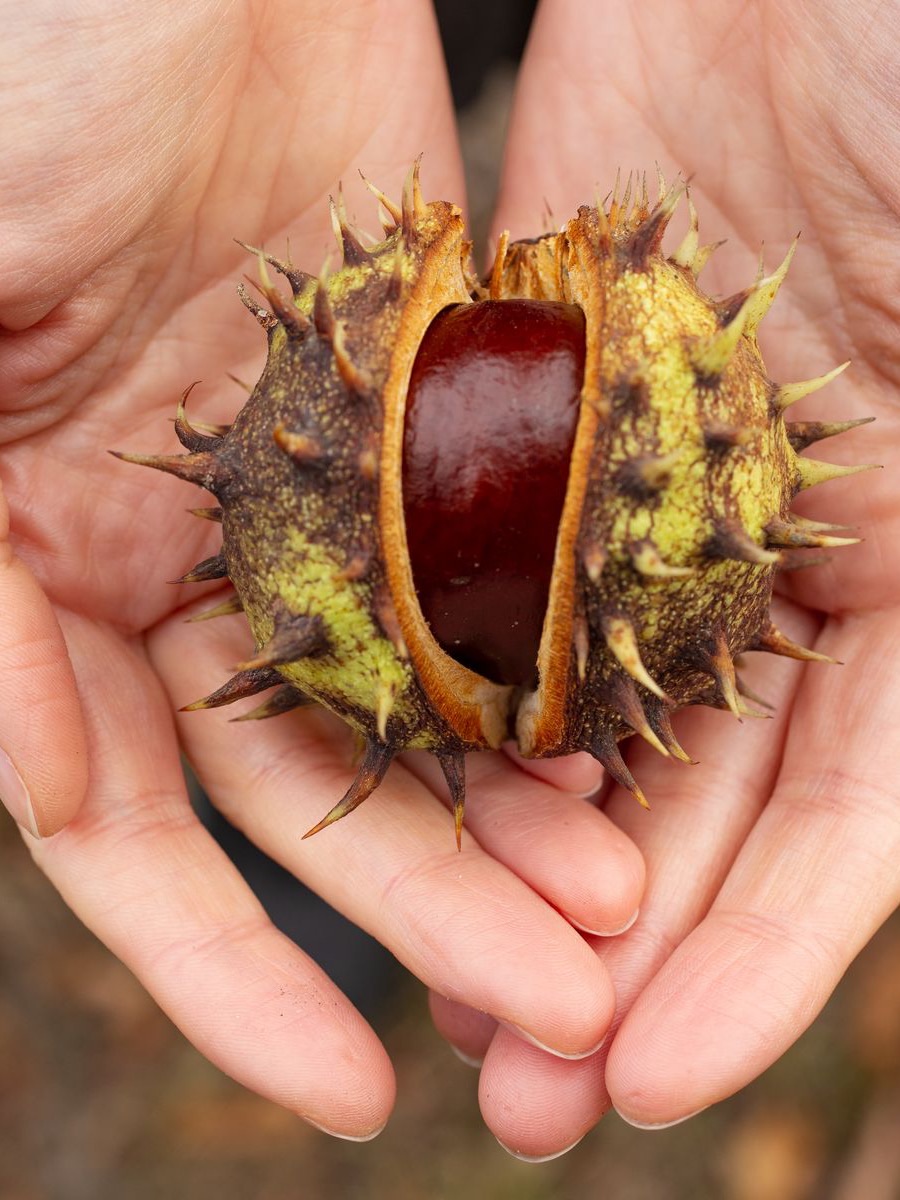
The European horse chestnut (Aesculus hippocastanum) — the glossy brown seed of an ornamental and street tree of temperate regions, very similar to the edible sweet chestnut but not edible — yields an extract rich in escin, a group of saponins with surface activity. Its reputation comes from medicine: oral seed extract for chronic venous insufficiency and escin gels for bruises are herbal medicinal products, not cosmetics. On the cosmetic side, the evidence is a single small study on eye-area wrinkles, and we have not found any study measuring under-eye puffiness or dark circles with a cosmetic containing this extract. So a Butter-C horse chestnut eye cream tells the ingredient story honestly and focuses on what the factory controls: a COA stating the seed as the plant part (the CAS number is shared by several plant parts), escin content, a light fragrance-free base, foam and emulsion stability control, and mandatory eye irritation and eye-area tolerance testing on the finished product — because the European Medicines Agency's own monograph advises against using the topical seed medicine around the eyes. Claims stop at moisturizing the eye area and a refreshed look, measured on the finished product. The raw material is not in Butter-C's stock list, so it is sourced per order with a mandatory COA. Butter-C offers turnkey OEM/ODM manufacturing, from formulation and testing to a labeled finished product and notification dossier.
Formula base
Seed extract, a light base and what goes with it
For a plant extract used next to the eyes, the raw material file and the base matter as much as the ingredient name — the four points below come first.
Aesculus Hippocastanum Seed Extract — the SEED extract
CosIng (entry 54427) defines it as an extract of the “nut” (seed) of the horse chestnut, function SKIN CONDITIONING; US INCI: Aesculus Hippocastanum (Horse Chestnut) Seed Extract. CosIng assigns CAS 8053-39-2 to the whole-plant, seed, bark, leaf and flower extracts alike, so the COA must state the seed. Data on flower, bark or leaf extracts do not apply to the seed; purified escin is a separate INCI (Escin).
Seed composition per the EMA
According to the European Medicines Agency assessment report (EMA, 2020), the seed contains 3–10% triterpene saponins (escin, more than 30 different saponins), about 0.3% flavonoids and 30–60% starch. Esculin and other coumarin derivatives occur in other parts of the tree but not in the seed or seed coat.
Sourced per order, COA mandatory
Horse chestnut seed extract is not in Butter-C's stock ingredient list. The COA and TDS must state the plant part (seed), extraction solvent, escin content, accompanying preservatives, microbiology and recommended level; the extract's solvents and preservatives are added to the ingredient list.
Light, fragrance-free eye cream base
A thin oil-in-water emulsion with Squalane and Caprylic/Capric Triglyceride; Glycerin, Panthenol and Sodium Hyaluronate as humectants; no fragrance or essential oils, pH near neutral as on the general eye cream page. Caffeine, Acetyl Tetrapeptide-5 or Hesperidin Methyl Chalcone can be added — no verified study shows any combination working together on human skin, so benefits must be measured on the finished product.
Key technical points
Escin, the eye area and the level
Escin is a surfactant
β-escin is a strong biosurfactant: below its critical micelle concentration it alters lipid membranes, above it can dissolve model lipid membranes (Geisler 2019, review); escin at 15–60 µg/mL ruptured human red blood cells in vitro (Gwozdzinski 2025). That is the reason for caution about irritation — an inference, as there are no human skin irritation data for the cosmetic extract.
Foam and emulsion stability
Escin foams and acts at the oil/water interface, so Butter-C watches foaming during mixing, deaerates under vacuum before filling and tracks emulsion stability; the extract usually goes into the water or cool-down phase per the TDS (a cautious practice, not backed by a dedicated study).
Eye irritation testing is mandatory
The EMA herbal monograph warns verbatim: “The product should not be used on broken skin, around the eyes or on mucous membranes.” The warning is written for the topical seed medicine, but for an eye cream Butter-C regards eye irritation testing (alternative methods) and eye-area tolerance testing on the finished product as conditions before the formula is locked.
Level: none established
CIR has no report on any Aesculus ingredient (catalog checked 10/2026), so there is no survey of use levels. Sourced level: 3% extract in an eye-area gel in one study (Fujimura 2006; escin content not stated). Escin gels at 1–2% in bruise and injury trials are medicine levels and do not apply to cosmetics. Butter-C follows the supplier's TDS.
Three formulation directions
Three eye-area products with horse chestnut
Light moisturizing eye cream
Horse chestnut seed extract with Glycerin, Squalane, Panthenol and Sodium Hyaluronate in a thin oil-in-water emulsion (Cetearyl Olivate). For dry skin around the eyes; the cream must stay where it is applied and not migrate into the eyes.
Cooling eye gel with caffeine
A high-water gel (Hydroxyethylcellulose) with horse chestnut seed extract, Caffeine and Glycerin; cool, fast-absorbing, a good match for a metal applicator. Caffeine must be fully dissolved so it does not recrystallize on cooling.
Eye cream with peptide and flavonoid
Adds Acetyl Tetrapeptide-5 and Hesperidin Methyl Chalcone, following the “tired-looking eyes” group on the general eye cream page. Each has its own limited data; claims rest on measurements of the finished product itself, not on adding up ingredient benefits.
How it differs from the general eye cream page
The general eye cream page chooses actives by the cause of dark circles and combines several groups. This page is for an eye cream named after horse chestnut seed extract, built around the plant-part file, escin, eye-area tolerance testing and the medicine–cosmetic boundary of this ingredient.
Parameters we monitor
What our R&D team measures on every sample
Below are the parameters Butter-C tracks while developing the formula and scaling it up for production. Specific limits are agreed with you on the approved sample and then written into the product's in-house specification.
- Incoming raw material file
- INCI by plant part (seed), solvent, escin content, accompanying preservatives, microbiology and heavy metals per the supplier's COA.
- Appearance, color & odor
- Base color of the extract, color drift and odor over stability time points against a reference sample.
- pH
- Measured at 25 °C; set near neutral as for any eye-area product, with drift tracked.
- Viscosity & emulsion stability
- Rotational viscometer, checked at skin temperature for migration; centrifuge, freeze–thaw cycling and 40 °C storage; air bubbles and separation tracked.
- Eye irritation test
- Alternative methods on the final finished product at a testing facility; mandatory for this product line.
- Eye-area tolerance
- Tested on volunteers using the finished product itself; to state “moisturizes, the eye area looks refreshed”, assess it in the same study.
- Microbiology & preservative challenge
- Tested at a GLP / ISO 17025-accredited laboratory; preservative efficacy (challenge) test per ISO 11930 — a plant extract in a high-water base.
- Packaging compatibility
- Filled into the actual tube and applicator; checked for seal integrity, squeeze force and residue left in the tube.
Claims
Claims matched to the evidence for horse chestnut
Most of the positive data on horse chestnut belong to medicines. Oral medicine for chronic venous insufficiency: a Cochrane review (Pittler & Ernst 2012) reported leg pain significantly reduced versus placebo in 6 of 7 trials and lower leg volume (6 trials, 502 people). Topical escin gels: a 2% gel reduced tenderness over an experimentally induced hematoma in a randomized, double-blind single-dose trial (Calabrese 1993); 1% or 2% escin gels combined with diethylammonium salicylate and heparin in 158 athletes with injuries (Wetzel 2002; first author from a pharmaceutical company's research department). Both are medicines. Cosmetics: in one study of 40 healthy women, a gel with 3% extract was applied around the eyes three times a day for 9 weeks, and wrinkle scores graded on photo scales fell significantly versus controls from week 6 (Fujimura 2006) — the authors were from a cosmetics company, and the abstract says only “horse chestnuts”, without the plant part, solvent, escin content, type of control or blinding; Butter-C does not base any claim on this study. We have not found any study measuring puffiness or dark circles with a cosmetic containing horse chestnut seed extract (PubMed and Europe PMC searched 10/2026). Appendix 03-MP of Circular 06/2011/TT-BYT lists “reducing/controlling swelling and edema” among functions not accepted for skin care products. Puffiness from fat pads or lax skin is structural and cosmetics cannot change it.
Moisturizes the skin around the eyes (to be tested on the finished product)
Basis: the formula's humectants and assessment on volunteers using the finished product itself. Instead of: reduces edema, gets rid of eye bags, removes fat pads.
Helps the eye area look refreshed (to be tested on the finished product)
An appearance claim measured on the finished product. Instead of: dissolves bruises, strengthens vessel walls, improves varicose veins, claims about inflammation, citing oral or medicinal gel data as results of the cream.
Contains horse chestnut seed extract
The label lists INCI Aesculus Hippocastanum Seed Extract by plant part, with the extract's solvents and preservatives; if purified escin is used, write “Escin”. Instead of: a medicinal ingredient, “like the bruise gel from the pharmacy”.
Directions for use
Apply a small amount around the orbital bone and keep the product out of the eyes; if it gets into the eyes, rinse at once with clean water. Do not apply to broken skin. Instead of: suitable on the eyelid, along the lash line, on damaged skin.
Label notes
There are case reports of contact dermatitis to horse chestnut extract (Comaish 1980, whose title names esculin — a substance the EMA says is absent from the seed) and of contact urticaria due to aescin (Escribano 1997); the EMA lists skin hypersensitivity (itching, redness) with the topical medicine. Patch test a small area first and stop if redness or itching occurs; pregnant or breastfeeding women should ask a doctor (insufficient data); keep out of reach of children. Instead of: hypoallergenic, safe for pregnancy, gentle for every skin.
Manufacturing specifications
Our capabilities
- Texture
- Light emulsion eye cream or eye gel; color follows the extract base.
- Format
- Nozzle tube, metal-tip tube or small pump bottle. Volume agreed when packaging is selected.
- Minimum order quantity
- Agreed per order — depends on the formula direction, format and raw material lot.
- Testing
- Tested at a GLP / ISO 17025-accredited laboratory, with a certificate of analysis for every batch; eye irritation and eye-area tolerance tests as planned.
- Documentation
- Product Information File (PIF) and notification dossier prepared by Butter-C, with a COA stating the seed and escin content and the eye irritation test report.
- Packaging
- Label design, printing and packing run in parallel with formulation; the label tells users to keep the product out of the eyes.
Suggested product concept
Fragrance-free moisturizing horse chestnut eye cream
One product direction to help you picture it — not a ready-made product for sale. The actual formula is built around your brand's positioning and price range.
Horse chestnut seed extract as the named ingredient
Level per the supplier's TDS; sourced per order with a COA stating the seed, solvent and escin content.
Light, moisturizing emulsion
Squalane, Caprylic/Capric Triglyceride, Cetearyl Olivate; Glycerin, Panthenol, Sodium Hyaluronate; no fragrance or essential oils.
Tests before the formula is locked
Eye irritation test on the finished product, eye-area tolerance test, ISO 11930 preservative challenge.
15 ml nozzle tube
Label lists every INCI of the extract, tells users to avoid the eyes and patch test first; the claim stops at “moisturizes the skin around the eyes, helps the eye area look refreshed” after testing on the finished product.
Customization options
What you can specify
The same product type can target very different customers. Tell us your requirements in the areas below and our pharmacists will build the formula to match.
Texture
Light emulsion eye cream or cooling eye gel.
Supporting actives
Caffeine, Acetyl Tetrapeptide-5, Hesperidin Methyl Chalcone — each with its own data and level, claims measured on the finished product.
Applicator
Nozzle, cooling metal tip or ceramic tip.
Additional testing
Beyond the mandatory eye irritation and eye-area tolerance tests, assessment on contact lens wearers or skin hydration measurement can be added — raise it early so it can be planned.
Powder or liquid extract
Dry powder needs local exhaust ventilation and a dust mask when weighing (a case of occupational asthma from inhaled escin has been reported — Muñoz 2006); for glycol or water extracts, list every solvent on the label.
Ingredient preferences
Fragrance-free, alcohol-free, paraben-free — please state these at the outset so we can choose suitable materials.
Further reading
Related knowledge
Horse chestnut (Aesculus hippocastanum) in cosmetics and eye creams
Medicine versus cosmetic, limited evidence, safety and ASEAN regulation of the seed extract (in Vietnamese).
Dark circles and under-eye puffiness
Pigment, blood vessel and structural causes, and what cosmetics can do (in Vietnamese).
Caffeine in cosmetics
An active often paired with horse chestnut seed extract in eye-area products (in Vietnamese).
Eye cream OEM/ODM manufacturing
A different direction: an eye cream choosing actives by cause, combining several groups.
Night cream OEM/ODM manufacturing
Often sold together with an eye cream in a set.
How we work
From idea to finished batch
Eight steps and three milestones signed off by both sides: approved sample, notification number, finished batch. Step-by-step details (in Vietnamese) →
Get started
Tell us about the product you plan to launch
Send us your product direction and expected volume. Our team will get back to you during business hours (Vietnam time, GMT+7).
Head office: Huu Le village, Dai Thanh commune, Hanoi · Factory: Thanh Oai Industrial Cluster, Binh Minh commune, Hanoi, Vietnam
Hotline +84 967 176 511 · [email protected] · Privacy policy ← Full catalog