 BUTTER-C
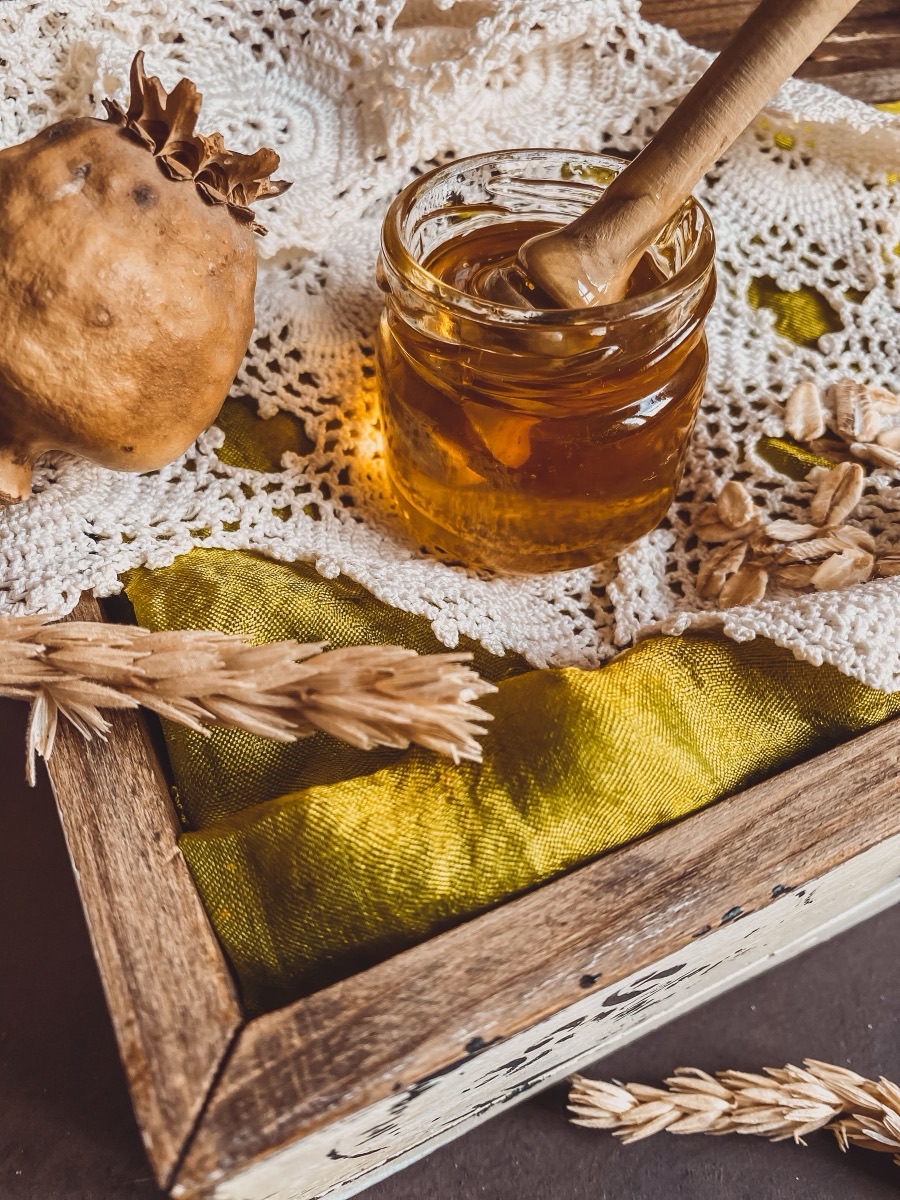
Signature ingredients
Honey & propolis sleeping mask OEM/ODM manufacturing
Honey & Propolis Sleeping Mask · OEM/ODM
Honey is a familiar kitchen ingredient in Vietnam and has long appeared in homemade face masks — a folk habit, not evidence. In cosmetics, honey (INCI Honey) is a humectant: two small human studies recorded higher skin hydration with honey-containing bases, so the reasonable claim is moisturizing and softening. Propolis (Propolis Extract) is a resin bees make from plant exudates mixed with beeswax; it carries the “shield of the hive” story and is classed as an antioxidant ingredient — but human data are very limited, and propolis is a known contact allergen. A well-made honey & propolis sleeping mask therefore comes down to three things: keeping honey within the level reported for leave-on products, managing the stickiness and microbial risk that sugar brings, and labeling clearly for people allergic to bee products. Butter-C offers full-service OEM/ODM manufacturing, from formula development to a labeled finished product with its cosmetic product notification.
Formula base
Honey, propolis and an overnight quick-dry film
Honey and propolis differ completely in composition and safety data; each is placed in the formula for its own role, on a film-forming base that dries down for overnight wear.
Honey (Honey)
A humectant: about 82 g of sugars per 100 g, mainly fructose and glucose (CIR, 2025). For leave-on products the highest Honey level reported in the industry survey is 3% — the 22% level appears only in rinse-off masks. Commercial raw materials can be blends: CIR describes one containing only 10.6% honey extract (Honey Extract) and another with 16.5% Honey in water and propylene glycol, so the formula sheet records both the raw material % and the actual honey %.
Propolis extract (Propolis Extract)
The water-soluble grade Butter-C keeps on file is a blend: Propolis Extract (and) Water (and) Arginine (and) Polysorbate 80 (and) Glycerin. The use level refers to the blend, not to propolis itself, and the label must list all five components. No independently published use concentration exists; dosing follows the supplier's technical data sheet and is confirmed by stability and tolerance testing.
Film-forming and humectant base
Carbomer, Sodium Polyacrylate or Xanthan Gum build the gel or gel-cream; Glycerin, Sodium Hyaluronate, Betaine and Panthenol hold water; Squalane, Caprylic/Capric Triglyceride and Ceramide NP in moderate amounts limit overnight water loss.
Points to weigh when choosing
No added fragrance: people who react to propolis often also react to fragrance and Peru balsam. No crude Peru balsam as a fragrance ingredient (prohibited under ASEAN Annex II, Ref 1136). Honey and propolis are both colored, so the product is hard to keep transparent and may darken over time.
Key technical points
Stickiness, microbiology, color and allergy — four problems to solve
These are the points that set a honey & propolis sleeping mask apart from a standard sleeping mask.
Sugar stickiness
Stickiness is a common difficulty when adding honey to a formula. For an overnight mask, the ratio of honey, humectants and polymer is tuned so the film dries within a few minutes and does not transfer to the pillow; this is assessed on skin before sign-off.
Microbiology: honey is not self-preserving
Honey can carry microorganisms, including spore-formers; once diluted into a water base, its sugars also become a nutrient source for microbes. Raw materials need a microbiological certificate of analysis for every lot; the finished product must pass an ISO 11930 preservative efficacy (challenge) test, and the counting method needs validated neutralization because bee-derived ingredients can inhibit microbes in the test sample and make counts read lower than they are.
Heat, color and clarity
Heating honey forms HMF (CIR), so honey and propolis go into the cool-down phase (factory practice). Color, odor and clarity of the propolis blend and interactions with metal ions are tracked in stability studies; Disodium EDTA can be added as a chelator. The Polysorbate 80 in the propolis blend may thin the gel — this needs testing.
Contact allergy to propolis
Among people patch tested at dermatology clinics (not the general population): 3.48% reacted to propolis in the 2019–2020 European baseline series (22,581 people, 53 dermatology departments, 13 countries); in 2023 the figures were 0.9% (3/329 people, Sweden, Chinese propolis test material) and 6.2% (16/257 people, Italy, mostly to Brazilian propolis test material only). The main sensitizers are caffeate esters. The label needs a note for people allergic to bee products.
Three formulation directions
Three textures for the same story
Honey gel
A semi-clear, pale amber gel with plenty of water that dries quickly. For combination skin and hot, humid climates; the natural color of honey and propolis must be accepted from the start.
Honey & propolis gel-cream
A gel-cream base with a small amount of oils and barrier lipids that partly masks the ingredient color and feels soft. Balances quick dry-down with moisture; suits normal and mildly dry skin.
Rich overnight cream
Closer to a night cream, with more emollients, for dry skin and air-conditioned rooms. Honey still stays within the level reported for leave-on products; the richness comes from oils and lipids.
Packaging designed alongside the formula
Tubes, or jars with a tight inner liner and a spatula, limit finger contact with a sugar-containing product. Frosted or amber containers mask natural darkening over time.
Parameters we monitor
What our R&D lab measures on every sample
Below are the parameters Butter-C monitors during formula development and scale-up to production. Specific limits are agreed with you on the approved sample and then written into the product's in-house specification.
- Incoming raw materials
- Honey: INCI, floral source, honey content of the raw material, microbiology, heavy metals, pesticide residues. Propolis: full INCI of the blend, origin, extraction solvent, marker compounds, microbiology, heavy metals.
- Sensory profile & color
- Color, odor and smoothness against a reference standard; watching for darkening, odor change and signs of fermentation.
- pH
- Measured at 25°C; honey has a pH of 2–6 depending on floral source and the propolis blend contains arginine, so finished-product pH is fixed and tracked for drift over time.
- Viscosity
- Rotational viscometer; checking the effect of polysorbate 80 and electrolytes on the gel, at room temperature and after accelerated aging.
- Tackiness & dry-down time
- On-skin evaluation: time to dry, stickiness and transfer to fabric after application.
- Stability
- 40°C, freeze–thaw cycling and light exposure in the actual packaging; monitoring for separation, gel thinning, precipitation and color change.
- Microbiology & preservative challenge
- Tested at a GLP / ISO 17025-accredited laboratory; preservative efficacy (challenge) test according to ISO 11930, using a counting method with validated neutralization.
- Skin tolerance
- Repeat insult patch test or in-use test on volunteers at a testing facility before sign-off — needs testing, as there are no tolerance data for the actual formula yet.
- Packaging compatibility
- Filled into the actual tubes or jars to be used; checking seal integrity, weight loss and staining of the jar and lid.
Claims
Writing claims within the cosmetic scope
Many results often quoted for honey (wounds, burns) come from medical-grade honey dressings — medical devices, not cosmetics; human data for propolis consist mainly of one company-run study on a specific extract and one study of a three-ingredient cream. Butter-C reviews the wording on labels and marketing materials while preparing the cosmetic product notification.
Moisturizes overnight, helps skin feel soft and smooth
Requires data on the formula (instrument hydration measurement if a figure is to be stated). Instead of: repairs damaged skin, heals skin, medical-grade honey.
Contains honey and propolis extract
List the correct INCI names, including all components of the propolis blend. Instead of: acts on bacteria, medical grade, “honey preserves itself, no preservatives”.
Propolis — an antioxidant ingredient
Describes the ingredient, not a skin result of the product. Instead of: erases wrinkles, anti-aging (the wrinkle result of one specific propolis extract does not apply to every material labeled Propolis Extract).
For dry and normal skin
Describes the target skin type. Instead of: reduces acne, heals blemishes, reduces rosacea.
Allergy note on the label
“Do not use if allergic to propolis, honey, bee venom or other bee products. People allergic to fragrance or pollen should test on a small area of skin first. Stop use if redness, itching or bumps appear.” Instead of: hypoallergenic, safe for all skin types, safe during pregnancy.
Directions for use
Use in the evening as the last step, in a thin layer, and cleanse the next morning; do not apply to broken skin or open wounds; avoid the eye area. Pregnant or breastfeeding women: data are insufficient, consult a doctor.
Manufacturing specifications
Current capabilities
- Texture
- Gel, gel-cream or rich cream; the natural color of honey and propolis.
- Packaging format
- Tubes, plastic jars or glass jars with a spatula. Volume agreed when selecting packaging.
- Minimum order quantity
- Agreed per order — depending on the formula direction and the chosen packaging format.
- Testing
- Performed at a GLP / ISO 17025-accredited laboratory, with a certificate of analysis delivered with each batch.
- Documentation
- Product Information File (PIF) and cosmetic product notification dossier prepared by Butter-C, including the allergy note on the label.
- Packaging
- Label design, printing and packing run in parallel with formula development.
Suggested product concept
Fragrance-free honey & propolis gel-cream sleeping mask
A product concept to help you picture the possibilities, not a ready-made product for sale. The actual formula is developed to your brand positioning and price range.
Honey within the reported level
Honey at no more than 3% — the highest level reported for leave-on products — named on the label with its floral-source story when the supplier provides documentation.
Water-soluble propolis
A water-soluble propolis blend dosed per the technical data sheet, with all components declared and an allergy note on the label.
Quick-dry, fragrance-free gel-cream
Natural pale amber color, dries to a film in a few minutes, no pillow transfer; no added fragrance to lower the risk of reactions in sensitive users.
50 g jar with spatula
Frosted jar with a tight inner liner; the spatula helps limit contamination from fingers.
Customization options
What you can specify
The same product type can serve very different customers depending on the brand. Tell us your requirements in the areas below, and our team of pharmacists will develop a matching formula.
Texture
Gel, gel-cream or rich cream.
Honey source
Wild-flower honey or a floral source that fits your brand story — origin is stated only with supporting documents.
With or without propolis
A honey-only version is possible for customers who want to avoid propolis; versions with propolis always carry an allergy note.
Supporting care ingredients
Panthenol, Allantoin, Sodium Hyaluronate, Ceramide NP, Squalane.
Target skin type
Dry, normal or combination skin — this sets the oil and polymer levels.
Ingredient direction
Fragrance-free, alcohol-free, silicone-free — please specify these from the start. Bee-derived ingredients do not fit a vegan positioning.
Further reading
Related topics
Honey in cosmetics
Moisturizing role, limited evidence, CIR use levels, microbiology and allergy (in Vietnamese).
Propolis extract in cosmetics
Composition varies with origin, blended raw materials and contact allergy figures (in Vietnamese).
Sleeping mask manufacturing
The general technical framework for sleeping masks: quick dry-down, no pillow transfer, no pilling.
ISO 11930 preservative challenge testing
Why formulas containing sugars and natural ingredients must be challenge tested (in Vietnamese).
How we work
From idea to finished batch
Eight steps and three milestones signed off by both sides: approved sample, notification number, finished batch. Step-by-step details (in Vietnamese) →
Get started
Tell us about the product you plan to launch
Send us your product direction and expected volume. Our team will get back to you during business hours (Vietnam time, GMT+7).
Head office: Huu Le village, Dai Thanh commune, Hanoi · Factory: Thanh Oai Industrial Cluster, Binh Minh commune, Hanoi, Vietnam
Hotline +84 967 176 511 · [email protected] · Privacy policy ← Full catalog