 BUTTER-C
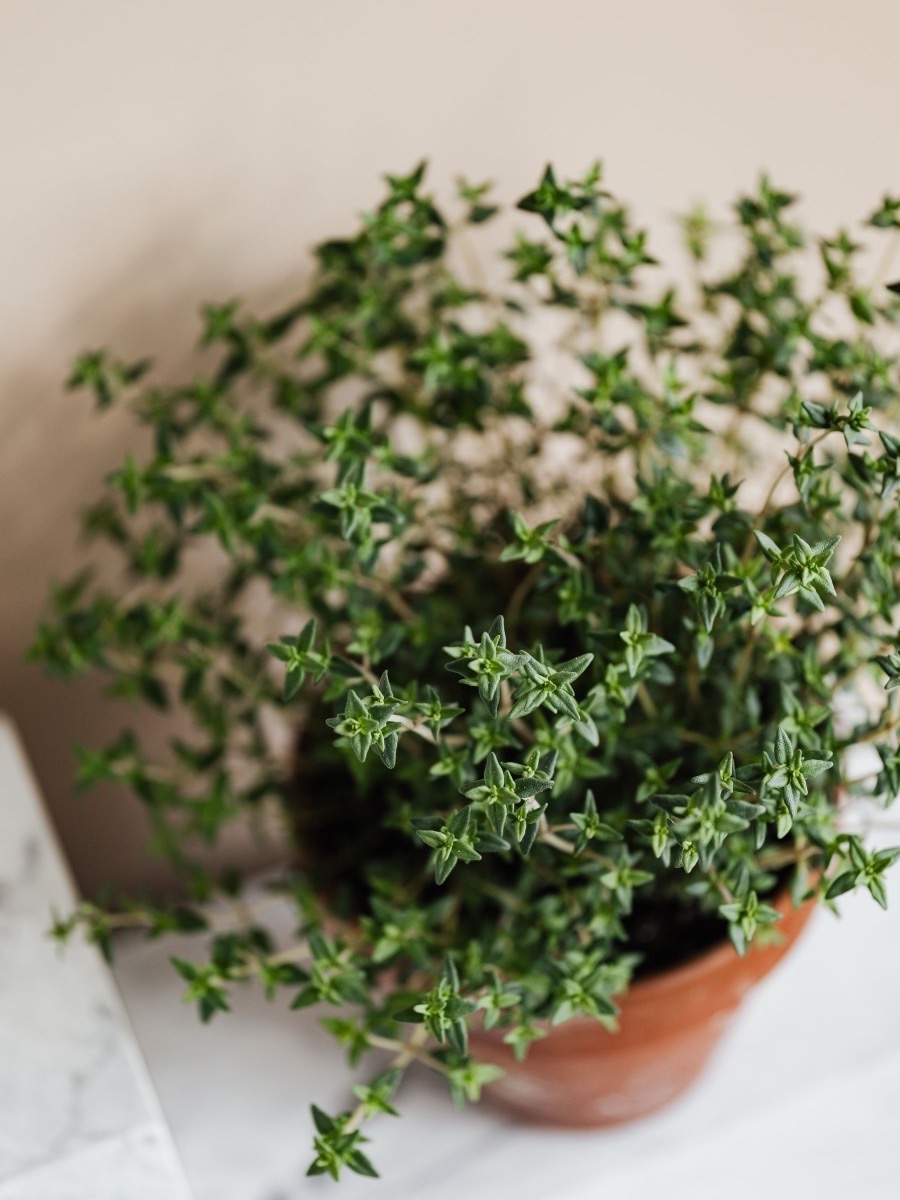
Signature ingredients
Thymol mouthwash OEM/ODM manufacturing
Thymol Mouthwash · Herbal Thymol Mouth Rinse · OEM/ODM
Thymol is the compound behind the warm, spicy scent of thyme, and one of the four components of the classic “essential oil” mouthwash, together with eucalyptol, menthol and methyl salicylate. That is why a mouthwash named for thymol is easily linked to study results on plaque and gums. Those results belong to an entire four-component formula at fixed concentrations in an alcohol base, reviewed as an over-the-counter drug in the United States, and measure indicators of gum disease — they do not carry over to other formulas; for cosmetics in Vietnam, claims stop at cleaning the mouth and fresh breath. What actually drives the formula is chemistry and regulation: thymol dissolves poorly in water, so it has to be solubilized properly; thymol (CAS 89-83-8) is not named in ASEAN Annexes II, III, VI or VII, but it is quite different from thymol iodide (prohibited) and 4-isopropyl-m-cresol (a preservative limited to 0.1%), so the COA must state the CAS; and thymol is not a permitted preservative, so the formula still needs a challenge-tested Annex VI preservative system. Unlike the general mouthwash and alcohol-free mouthwash pages, this page covers what is specific to thymol: sourced use levels, dissolving and evaporation, its sharp taste, the choice between alcohol and alcohol-free, and the reminders not to swallow and to keep out of reach of children. Butter-C offers turnkey OEM/ODM manufacturing, from formula development and testing to labeled finished goods and the notification dossier.
Formula base
Thymol at flavoring level in a mouthwash base with or without alcohol
Thymol makes up only a tiny share of the formula; the rest is solvents, solubilizers, breath ingredients, sweeteners and a challenge-tested preservative system.
Thymol — INCI Thymol, CAS 89-83-8
A monoterpene phenol, formula C10H14O, 150.22 g/mol; colorless crystals with a thyme odor. PubChem lists water solubility of about 900 mg/L at 20 °C, while 1 g dissolves in about 1 mL of alcohol; pKa 10.6. Thymol is obtained from thyme oil (Thymus vulgaris) or synthesized from m-cresol or p-cymene. Butter-C keeps crystalline thymol in its raw-material list. Thymol is not the same as thyme essential oil (a separate INCI, a mixture of many compounds) — their data are not interchangeable.
Solvents and solubilizers
Alcohol line: Alcohol dissolves thymol, menthol and flavor, at the alcohol level given on the general mouthwash page. Alcohol-free line: Glycerin, Sorbitol, Propylene Glycol with nonionic solubilizers (PEG-40 Hydrogenated Castor Oil, Poloxamer 407) as on the alcohol-free mouthwash page; thymol is first dissolved in the flavor system with the solubilizer and then added to the water phase.
Cooling flavor and breath ingredients
Low-dose Menthol and Eucalyptol give a cool feel and balance thymol's bite. Zinc gluconate — Annex III Ref 24 “Water-soluble zinc salts…”, which names zinc gluconate, maximum 1% calculated as zinc. “Fresh breath” is a claim for the whole product, supported by testing — not for thymol alone.
Taste, pH and preservation
Sorbitol, Xylitol or Sodium Saccharin and Sucralose for sweetness; Citric Acid – Sodium Citrate to hold pH; Sodium Benzoate (Annex VI Ref 1: oral care products max 1.7% as acid) and Potassium Sorbate (Ref 4: max 0.6% as acid). Thymol is not a preservative: the Annex VI preamble notes that many essential oils and some alcohols may help preservation but “are not included in the ANNEX”, and thymol is not named in that annex.
Key technical points
The right substance, the right role, sourced levels and how to dissolve it
These are the points where a thymol mouthwash differs from an ordinary mouthwash; each is settled with raw-material certificates, a calculation sheet and testing on the sample.
Thymol, thymol iodide and 4-isopropyl-m-cresol — three different substances
Thymol (89-83-8) is not named in Annexes II, III, VI (release 2026-1) or VII (release 2025-2). Thymol iodide (552-22-7) is in Annex II (prohibited), Ref 361, under the name “5,5'-Di-isopropyl-2,2'-dimethylbiphenyl-4,4'-diyl dihypoiodate”. 4-Isopropyl-m-cresol (o-cymen-5-ol, CAS 3228-02-2) is an Annex VI preservative, Ref 38, max 0.1%. PubChem also lists “IPMP” and “isopropyl cresol” among thymol's synonyms, so Butter-C orders and checks by the CAS on the COA.
Not a substitute for the preservative system
Thymol shows activity against bacteria and fungi in the laboratory (FDA 2003), but that is no basis for dropping the preservative: in Vietnam and ASEAN, preservatives must come from Annex VI. The preservative system is challenge-tested per ISO 11930 on the final formula, especially for the alcohol-free line; the dossier does not list thymol as a preservative.
Sourced use levels
0.064% thymol is the level of one specific formula — the combination of eucalyptol 0.092%, menthol 0.042%, methyl salicylate 0.060% and thymol 0.064% in a 21.6–26.9% alcohol base reviewed by the US FDA in 2003 — not a standard level for every product. The 2006 CIR report concluded thymol is safe at concentrations up to 0.5% in cosmetics (a limit chosen to avoid chemical leukoderma); a 2001 industry survey recorded maximum use levels of 0.004–0.25% (0.25% in toothpaste). Thymol tastes sharp, so Butter-C sets the level on rinse-test samples.
Dissolving, evaporation and assay
Thymol dissolves poorly in water: dissolve it first in alcohol, or with the flavor and a solubilizer, before adding to the water phase; test the alcohol-free line for clarity at low temperature. According to PubChem, thymol is appreciably volatile at 100 °C and distills with steam → add it in the cool-down phase with the vessel covered, and assay it again in the finished product. pKa 10.6: avoid strongly alkaline pH (an inference; monitor color and odor). Pure thymol crystals carry GHS hazard statements H302 and H314 (PubChem) → gloves, goggles and dust control when weighing.
Three formulation directions
Three thymol mouthwash lines
Thymol – mint, with alcohol
Thymol, menthol and eucalyptol in an alcohol base (alcohol level per the general mouthwash page); strong cooling, clear herbal taste. Storage and filling follow fire-safety rules; a child-resistant cap is worth considering. Although it shares three ingredients with the classic formula, that formula's study results are not attached to this product.
Thymol – zinc, alcohol-free
Zinc gluconate, thymol and low-dose menthol in a polyol base with a solubilizer; a gentler herbal taste without alcohol burn. Zinc's astringency is masked with polyols and flavor; clarity tested in the cold.
Gentle herbal thymol with xylitol
Alcohol-free, little or no menthol; xylitol and sorbitol for mild sweetness, thymol as the main scent. With no dedicated breath ingredient, the breath claim needs more thorough testing; the label reminds users to keep it away from pets (xylitol, per the xylitol mouthwash page).
Packaging is designed together with the formula
PET bottles with dosing caps, travel bottles, single-use sachets; the alcohol line needs seal and loss testing. Gaskets and spouts are tested for compatibility with the flavor system; flavor absorption into the bottle is monitored.
Parameters we monitor
What our R&D team measures on every sample
Below are the parameters Butter-C monitors during formula development and scale-up to production. Specific limits are agreed with you on the approved sample and then written into the product's in-house specification.
- Incoming thymol COA
- Each lot: INCI, CAS 89-83-8, purity per the supplier COA, appearance; lots labeled only with ambiguous synonyms and no CAS are not accepted.
- Thymol content in the finished product
- Assayed by gas chromatography when freshly made and after aging — thymol is volatile, so losses during production must be checked.
- pH and clarity
- Measured when freshly made and after aging; observed at cold, room and elevated temperatures — haze indicates that thymol or flavor exceeds what the solvent or solubilizer can hold.
- Ethanol
- Alcohol line: assayed and stated correctly on the label if declared. Alcohol-free line: absence of ethanol confirmed, including any carried in by flavors, before stating “alcohol-free”.
- Zinc content
- Assayed in the finished product; total zinc from all zinc salts does not exceed 1% calculated as zinc (Annex III Ref 24).
- Preservative efficacy
- Preservative efficacy (challenge) test per ISO 11930 on the final formula; thymol does not count as a preservative.
- Microbiology
- Tested at a GLP / ISO 17025-accredited laboratory.
- Color, odor, taste and packaging
- Stable after aging; rinse tests for sharpness, cooling and aftertaste; losses and cap leakage monitored.
Claims
Claims for a thymol mouthwash
Mouthwash is a cosmetic. Appendix 03-MP of Circular 06/2011/TT-BYT lists claims not accepted for oral hygiene and care products, including preventing diseases such as dental abscess, gumboils, gingivitis, mouth ulcers, periodontal disease, pus around the teeth, inflammation of the palate, misaligned teeth and oral infections. The clinical data involving thymol belong to a fixed four-component essential oil formula in an alcohol base: in 2003 the US FDA published its advisory panel's conclusion that this combination is safe and effective as an over-the-counter antiplaque and antigingivitis drug, after reviewing seven 6-month randomized trials; a meta-analysis of 29 trials lasting 6 months or more found plaque reduced by 27.7% and the gingivitis index by 16.0% when the rinse was added to mechanical cleaning — all of them industry-sponsored trials (Araujo 2015); compared with an alcohol vehicle without essential oils, the essential oil formula reduced plaque and gingivitis more, and the vehicle did not differ from water (Van Leeuwen 2014); compared with dental chlorhexidine, chlorhexidine controlled plaque better, with no significant difference in the gingivitis index (Van Leeuwen 2011). These are gum-disease data for one specific formula — they do not carry over to other formulas and do not become claims. For thymol alone in a mouthwash, we have not found a clinical trial in the PubMed abstracts searched (10/2026). Butter-C reviews the wording on labels and marketing materials when preparing the notification dossier.
Helps keep breath fresh (whole product, tested)
Instead of: drug-like claims about bad breath, claims to act on odor-causing bacteria.
Cleans the mouth, as an extra step alongside brushing
Instead of: replacing brushing, percentage-of-germs figures, “reduces plaque and gingivitis as in the studies”.
Herbal thyme flavor, cooling sensation
Instead of: “naturally preserved with thymol”, “no preservatives needed”, “all-natural” (thymol may be synthetic).
Daily oral care
Instead of: drug-like claims about tooth decay, gingivitis, mouth ulcers, periodontal disease; “gum care”.
With alcohol or alcohol-free (ingredient description)
“Alcohol-free” is stated only after confirming that flavors and other raw materials carry no ethanol.
Directions and warnings
Rinse and spit, do not swallow; keep out of reach of children. The FDA draft label for this group of mouthwashes states that children under 6 should not use it and children 6 to under 12 should use it under adult supervision; if more than the amount used for rinsing is swallowed, get medical help. The alcohol line also carries a risk of alcohol poisoning in children: a review found 17 articles on children poisoned by ethanol from household products, and mouthwash was among the products containing enough alcohol to cause poisoning (Rayar 2013) → Butter-C positions the alcohol line for adults. People who have reacted to thymol or thyme should not use it (cases of allergic contact dermatitis due to thymol have been reported); stop if burning persists or a rash or mouth ulcers appear. Pregnant or breastfeeding women: insufficient data, ask a doctor. Gum problems or persistent bad breath need a dentist's examination. Instead of: safe to swallow, suitable for babies, non-allergenic.
Manufacturing specifications
Current capabilities
- Texture
- Clear solution, colorless or with a color permitted for oral care products.
- Pack formats
- PET bottles with dosing caps, travel bottles, single-use sachets. Volume agreed when packaging is selected.
- Minimum order quantity
- Agreed per order and per flavor.
- Testing
- Performed at a GLP / ISO 17025-accredited laboratory; certificate of analysis delivered with every batch.
- Dossier
- Product Information File (PIF) and cosmetic product notification prepared by Butter-C, with the thymol COA stating the CAS and the thymol assay of the finished product.
- Packaging
- Label design, printing and packing run in parallel with formulation.
Suggested product concept
Alcohol-free thymol and mint mouthwash with zinc
A product concept to help you picture the possibilities, not a ready-made product for sale. The actual formula is developed to match your brand positioning and price range.
Thymol
The named scent, herbal taste; dissolved in the flavor system with a solubilizer, level set on rinse-test samples.
Zinc gluconate
The ingredient behind the fresh-breath positioning, total zinc within Annex III Ref 24.
Alcohol-free, mild mint
Low-dose menthol balances thymol's sharpness; polyols mask zinc's astringency; clear solution.
250 ml bottle
Dosing cap; label states rinse and spit, do not swallow, keep out of reach of children.
Customization options
What you can specify
The same product type can serve very different customer groups depending on the brand. Tell us your requirements in the areas below and our team of pharmacists will develop a matching formula.
With or without alcohol
Decides the cooling strength, the solvent for thymol, storage conditions and target users.
Thymol level
Lightly or clearly herbal — set on rinse-test samples.
Supporting flavor
Mint, eucalyptus, mild mint or menthol-free.
Sweetness
Sorbitol, xylitol, with or without saccharin or sucralose.
Target market
Domestic or EU export: thymol is not on the fragrance allergen list of Regulation (EU) 2023/1545, but menthol and some accompanying essential oils (such as eucalyptus oil) are — labeled when above the EU thresholds; Vietnam and ASEAN have no separate labeling threshold.
Product set
Paired with a herbal toothpaste in an oral care set; the thymol level is calculated separately for each product.
Further reading
Related topics
Thymol in cosmetics
What thymol is, evidence that belongs to the essential oil formula, concentrations, safety and ASEAN regulation (in Vietnamese).
Menthol in cosmetics
Cooling sensation, irritation, allergy and EU labeling (in Vietnamese).
Eucalyptol (1,8-cineole) in cosmetics
The second component of the essential oil flavor system, cautions for young children (in Vietnamese).
Mouthwash manufacturing
The alcohol line and the general technical base of mouthwash.
Alcohol-free mouthwash manufacturing
The technical base of the alcohol-free line; this page goes deeper into thymol.
Clove mouthwash manufacturing
Another herbal line in the group, named for clove bud oil.
Oral care routine
Mouthwash as an extra step, used at a different time from brushing (in Vietnamese).
How we work
From idea to finished batch
Eight steps and three milestones signed off by both sides: approved sample, notification number, finished batch. Step-by-step details (in Vietnamese) →
Get started
Tell us about the product you plan to launch
Send us your product direction and expected volume. Our team will get back to you during business hours (Vietnam time, GMT+7).
Head office: Huu Le village, Dai Thanh commune, Hanoi · Factory: Thanh Oai Industrial Cluster, Binh Minh commune, Hanoi, Vietnam
Hotline +84 967 176 511 · [email protected] · Privacy policy ← Full catalog