 BUTTER-C
Signature ingredients
Urea body lotion OEM/ODM manufacturing
Urea Body Lotion · OEM/ODM
Urea is no stranger to skin: it occurs naturally in the stratum corneum as part of the natural moisturizing factor (NMF), drawing and holding water in the outermost cell layer. Cosmetic-grade urea is synthesized from ammonia and carbon dioxide and purified by crystallization (PubChem); it is not taken from animal sources. What sets urea apart is that its effect changes with concentration: according to Celleno's review (2018), up to 10% urea acts as a moisturizer, while above 10% it has a keratolytic (exfoliating) effect; the CIR Expert Panel safety report records cosmetic use levels of 0.01% to 10%. A body lotion applied to arms, legs and back every day belongs in the moisturizing range — unlike a heel cream or an elbow and knee cream, where thicker skin usually takes higher urea levels, though according to the urea article still within the cosmetic use range. Two things decide quality: keeping urea stable in a water-rich emulsion for the whole shelf life, and controlling the stinging users may feel on dry, cracked or freshly shaved skin. Butter-C offers full-service OEM/ODM manufacturing, from formula development and testing to labeled finished product with its notification dossier.
Formula base
Urea at the center, with the buffer and emulsion built around its stability
The general body lotion page lists urea as one humectant among many. Here urea is the named ingredient, so pH, the temperature at which it is added and the thickener are all chosen to keep urea from breaking down.
Urea — the named ingredient
INCI Urea (carbamide, CAS 57-13-6), very soluble in water (about 545 g/L at 25 °C). Not to be confused with Hydroxyethyl Urea (a different INCI) or preservatives with “urea” in their names. Urea is not yet on Butter-C's current raw material list: the supply source and certificate of analysis (COA) are confirmed per order.
pH buffer
Urea is more stable at pH 4–8 and degraded least in a pH 6.0 lactate buffer in the study by Panyachariwat and Steckel (2014). Sodium Lactate is a salt of lactic acid and falls under ASEAN Annex III entry A6 — the lactate, calculated as the acid, counts toward the total AHA; a citrate buffer is an option if you prefer to stay outside this entry.
Supporting humectants
Glycerin, Sodium PCA and Panthenol complement urea. In a randomized, double-blind trial in 197 people with atopic dermatitis, a 20% glycerin cream and a 4% urea + 4% sodium chloride cream had the same effect on skin dryness, but moderate-to-severe smarting was more common with the urea–salt cream (24% vs 10%) (Loden 2002).
A light emulsion for large areas
An oil-in-water emulsion with nonionic emulsifiers, low levels of fatty alcohol, light oils and silicone for a dry finish. Xanthan Gum tolerates electrolytes better than Carbomer when a salt buffer is present. Phenoxyethanol – Ethylhexylglycerin preservation, verified by challenge testing.
Key technical points
Four points specific to urea in an all-over body lotion
Two lotions may both say “with urea”, yet the urea level, its stability and the usage instructions decide whether the product feels gentle or stings, and whether it holds its quality until expiry.
The right level for all-over body skin
According to Celleno (2018): up to 10% moisturizes, above 10% exfoliates; CIR records cosmetic use at 0.01–10%. Levels tested in people: a 4% urea + 4% sodium chloride cream (Loden 2002); a commercial 5% urea cream with ceramide and lactate in dry skin of people over 60 (Danby 2016 — results belong to the whole formula); a 10% urea cream with NMF components on lower legs and forearms (Gallinger 2022 — authors employed by the manufacturer). Levels above 10% for thickened skin and nails belong to a medical context and do not suit an everyday body lotion.
Keeping urea stable through shelf life
Urea degrades in solution, and its stability falls as temperature rises (Panyachariwat and Steckel 2014). Urea is therefore added to the water phase once the emulsion has cooled, with pH set within 4–8 and buffered. From formulation experience, urea breakdown products can make pH drift upward and give an ammonia odor — both are tracked in stability testing alongside a urea assay.
Stinging on cracked or abraded skin
The CIR report (2005) notes that a burning sensation is the most frequently reported effect when urea is used on diseased skin; urea absorption is 9.5% through normal skin versus 67.9% through abraded skin. Body lotion may be applied to freshly shaved or waxed areas — the label should advise avoiding abraded or cracked skin. According to the urea article, young children and people with atopic dermatitis should ask a dermatologist before using high-concentration urea products.
Urea increases penetration of other ingredients
The CIR Panel cautions formulators that urea may increase skin absorption of other substances. For a product used in large amounts over wide areas, fragrance, preservatives and co-actives are reassessed in the safety assessment; Butter-C suggests a fragrance-free or lightly scented version. ASEAN Annex III has no fragrance allergen list (entries 67–92 are blank); for EU export, these substances are named on the label above 0.001% in leave-on products, based on the fragrance COA.
Three formulation directions
Three ways to put urea into a body lotion
Low-level urea lotion for daily use
Urea at about 3–5% (with reference to the 4–5% levels tested in people; the exact level is formulation experience) plus glycerin, in a thin, fast-absorbing lotion. For normal to dry skin, year-round; less stinging than higher levels, still to be tested on the finished product.
10% urea lotion for very dry, rough skin
The top of the cosmetic use range recorded by CIR, suited to dry, rough shins and arms in dry seasons. A richer texture with added occlusives. Stinging is more likely: thorough tolerance testing, and a label advising against abraded or freshly shaved skin.
Urea combined with lactic acid
Following the 10% urea + 4% lactic acid formula tested on dry feet (Pham 2002 — people with diabetes, a combination formula, results not attributable to urea alone). Lactic acid and lactate salts fall under Annex III entry A6: total ≤ 10% calculated as the acids, final pH ≥ 3.5, and the sunburn warning is required from 2.5%. pH is set in the shared range from 4 upward to keep urea stable. Details on the lactic acid AHA body lotion page.
Packaging is designed with the formula
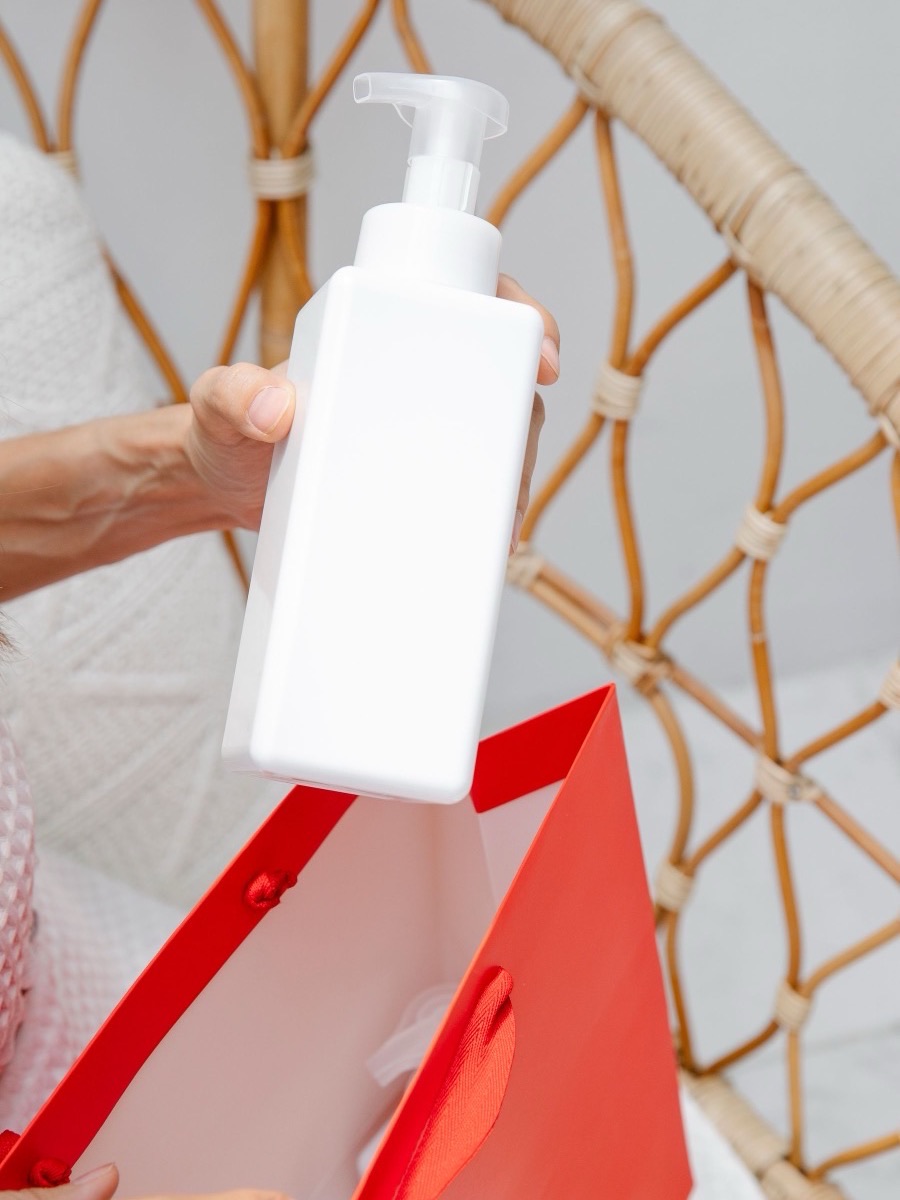
Pump or flip-top bottles, airtight; viscosity matched to the pump. Packaging is filled in the stability study to track odor and pH under real retail conditions.
Parameters we monitor
What our R&D lab measures on every sample
These are the parameters Butter-C monitors while developing the formula and scaling it up to production. Specific limits are agreed with you on the approved sample and then written into the product's in-house specification.
- pH over time
- Measured at 25°C at manufacture and at each stability checkpoint; upward pH drift signals that the buffer needs review.
- Urea content
- Assayed at the start and after stability testing to confirm the remaining urea matches the figure on the label.
- Odor
- Ammonia odor checked after storage at 40°C and freeze–thaw cycling.
- Viscosity & emulsion stability
- Rotational viscometer at 25°C; centrifugation, freeze–thaw cycling, storage at 40°C; separation and color change monitored.
- On-skin assessment
- Dry-down time, tackiness and stinging after application — including on dry, rough areas.
- Microbiology & challenge test
- Tested at a GLP / ISO 17025-accredited laboratory; preservative efficacy (challenge) test per ISO 11930.
- Total AHA (if lactate is used)
- With a lactate buffer or added lactic acid: the entry A6 total calculated as the acids is kept on file.
- Packaging compatibility
- Filled into the actual bottle and pump; pump force, clogging and packaging odor checked.
Claims
Writing claims within cosmetic scope
Much of the urea literature involves people with atopic dermatitis, people with diabetes, or 40% preparations for thickened skin — a medical context that does not become a body lotion claim. Conditions such as keratosis pilaris or ichthyosis need a dermatologist. Butter-C reviews label and marketing wording as soon as the notification dossier is prepared.
Hydrates and holds moisture in dry skin
Instead of: restores skin, promises to resolve dry, cracked skin.
Helps soften dry, rough areas
Instead of: claims about keratosis pilaris, ichthyosis, hyperkeratosis or eczema.
Supports the skin barrier
Only with data on the formula; the gene and defense-peptide data (Grether-Beck 2012) belong to urea in that study, not to the product. Instead of: boosts filaggrin, boosts skin defense peptides.
Contains X% urea
State the percentage that matches the assay after stability testing. Instead of: dryness-reduction figures borrowed from studies of other formulas.
Directions and label cautions
Do not apply to abraded, cracked, freshly shaved or waxed skin; stop use if stinging persists; young children or people using topical products prescribed by a doctor should ask a doctor. Instead of: suitable for all skin types, for diabetic skin, safe for babies.
Warning when lactate is present
If lactic acid plus lactate salts (calculated as the acid) reach 2.5% and the product contains no sunscreen: print the “Sunburn alert…” statement per footnote (13) of Annex III. Counting salts toward this threshold is a cautious reading, pending regulatory confirmation.
Manufacturing specifications
Our capabilities
- Texture
- Fluid lotion or light cream; dry-touch, or silkier for very dry skin.
- Formats
- Pump bottle, flip-top bottle, tube. Volume agreed when selecting packaging.
- Minimum order quantity
- Agreed per order — depends on the formula direction and chosen format.
- Testing
- Tested at a GLP / ISO 17025-accredited laboratory; a certificate of analysis is supplied with each batch.
- Documentation
- Product Information File (PIF) and cosmetic product notification dossier prepared by Butter-C, including stability results that track pH and urea content.
- Packaging
- Label design, printing and packing run in parallel with formula development; the caution against abraded skin is laid out from the first label draft.
Suggested product concept
5% urea body lotion with a lactate buffer, fragrance-free
One product idea to help you picture the result — not a ready-made product for sale. The actual formula is developed around your brand's positioning and price range.
5% urea and Glycerin
Urea as the named ingredient in the moisturizing range, with glycerin alongside; hydrates dry, rough skin on arms and legs.
Lactate buffer around pH 6
The pH range where urea degraded least in the Panyachariwat and Steckel study; lactate is kept low so the entry A6 total stays below 2.5% calculated as the acid (cautious reading), so the sunburn warning is not required.
Thin, fragrance-free emulsion
Xanthan Gum thickener and light oils for a dry finish; fragrance-free to limit irritation factors over a large skin area.
300 ml pump bottle
Frosted bottle with a pump that dispenses just enough; the label advises avoiding abraded or freshly shaved skin.
Customization options
What you can specify
The same product type can target very different customers. Tell us your requirements under the headings below, and our pharmacists will develop a matching formula.
Urea level
A low daily level or 10% for very dry skin — always within the cosmetic use range, never above 10% for a body lotion.
Buffer
Lactate buffer (urea stays stable, but it counts toward entry A6) or citrate buffer; this determines the dossier calculation and the label wording.
Combinations
Glycerin, Sodium PCA, Panthenol, ceramide, shea butter; or lactic acid under entry A6 rules.
Texture
A fast-absorbing fluid lotion or a silky light cream for dry seasons.
Fragrance
Fragrance-free or lightly scented recommended; if a scent is required, a fragrance-free version is developed in parallel.
Ingredient direction
Paraben-free, mineral-oil-free, silicone-free, vegan — please state at the outset.
Further reading
Related topics
Urea in cosmetics
Moisturizing mechanism, the 10% threshold, human evidence, stability and safety (in Vietnamese).
Body lotion manufacturing
General page: moisturizing, brightening, dry skin — urea is one option among many.
Heel cream manufacturing
Thick skin, higher urea levels than a body lotion.
Elbow and knee cream manufacturing
Urea and lactic acid for rough, pressure-prone areas.
Lactic acid AHA body lotion manufacturing
The lactic acid direction: entry A6 limits and the sunburn warning.
Sodium lactate in cosmetics
Lactate buffers for urea and conversion to lactic acid (in Vietnamese).
Dry skin and dehydrated skin
Telling the two apart to choose the right humectant (in Vietnamese).
How we work
From idea to finished batch
Eight steps and three milestones signed off by both sides: approved sample, notification number, finished batch. Step-by-step details (in Vietnamese) →
Get started
Tell us about the product you plan to launch
Send us your product direction and expected volume. Our team will get back to you during business hours (Vietnam time, GMT+7).
Head office: Huu Le village, Dai Thanh commune, Hanoi · Factory: Thanh Oai Industrial Cluster, Binh Minh commune, Hanoi, Vietnam
Hotline +84 967 176 511 · [email protected] · Privacy policy ← Full catalog