 BUTTER-C
Morning and evening facial skin care steps: order and rationale
Five steps, seven steps or ten steps? Most dermatologists’ recommendations center on three things: gentle cleansing, moisturizing when the skin needs it, and sun protection. The other steps should be added only when there is a specific reason — and one step at a time.
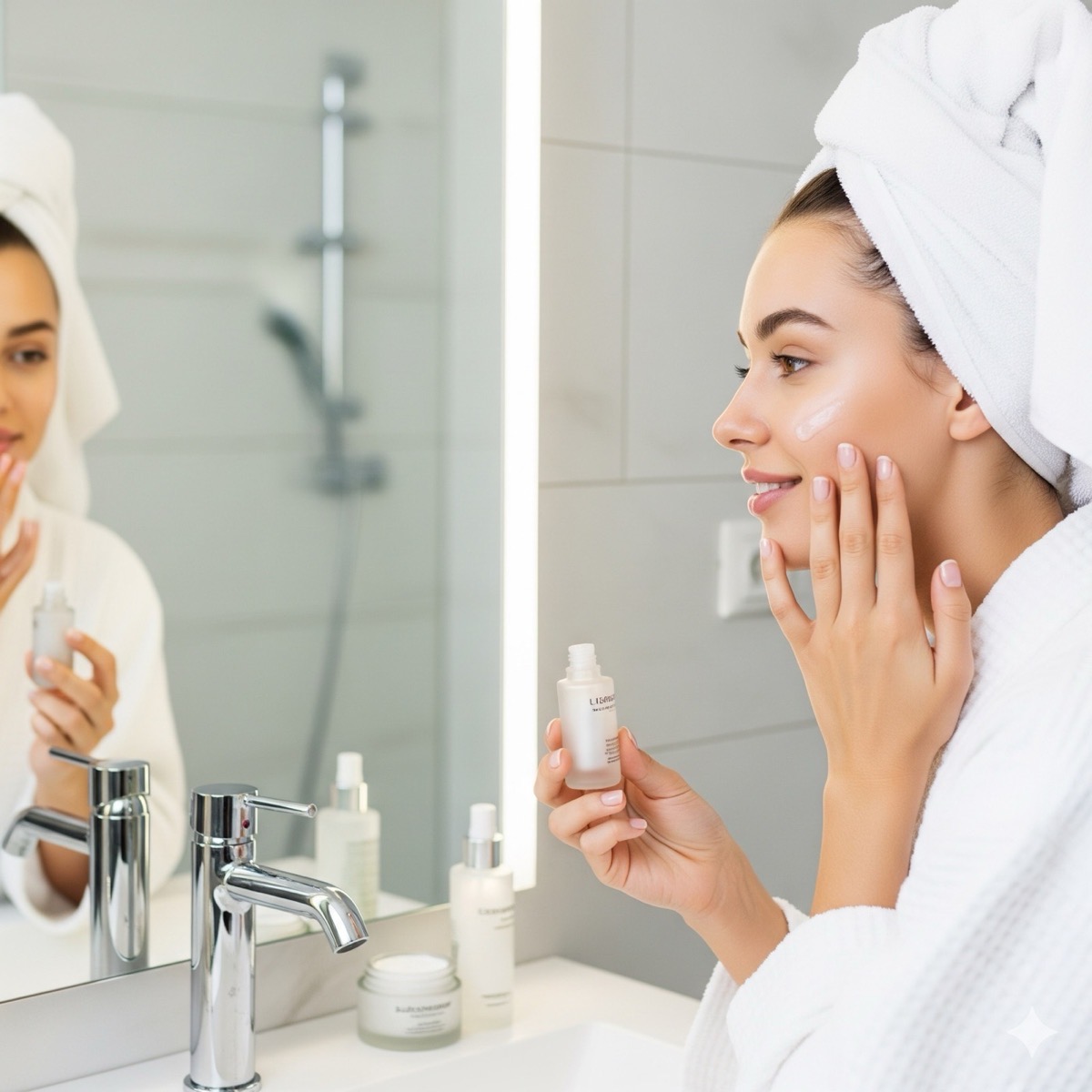
A facial skin care routine may be presented as five, seven or even ten steps. Compared against the recommendations of the American Academy of Dermatology (AAD), the core is much shorter: gentle cleansing, moisturizing when the skin needs it, and sun protection. The remaining steps — makeup removal, serum, toner, exfoliation, eye cream — should be added only when there is a specific reason, and added one step at a time.
1. Core steps and optional steps
For people in their 20s, the AAD suggests two products used every day: a gentle cleanser suited to the skin type and a broad-spectrum, water-resistant sunscreen with SPF 30 or higher. Only after that should one product be added to target the main concern — acne, fine wrinkles or brown spots. Moisturizer is recommended after washing the face if the skin is dry or itchy; oily skin may still need moisturizing, the difference being only in texture.
| Step | Role | How necessary |
|---|---|---|
| Cleansing | Removes oil, sweat, dust, sunscreen and makeup | Core: morning, evening and after heavy sweating |
| Sun protection | Reduces the harmful effects of UV rays on the skin | Core during the day |
| Moisturizing | Helps the stratum corneum hold water and keeps the skin soft | Needed when skin is dry; oily skin calls for a light texture |
| Makeup removal | Dissolves makeup and water-resistant sunscreen | When wearing makeup or water-resistant products |
| Serums, active products | Target one specific concern | Optional; add one product at a time |
| Exfoliation | Makes the surface layer of stratum corneum cells come off | Optional; low frequency, depending on skin type |
| Toner, eye cream | Hydration, a pleasant feel | Optional |
2. Morning: cleanse, moisturize, protect from the sun
Gentle cleansing
According to the AAD's face-washing guidance: use a gentle cleanser with no scrubbing particles and no alcohol; use lukewarm water; apply it with your fingertips rather than a washcloth or a tool, without scrubbing; pat dry with a soft towel; wash your face twice a day and after heavy sweating.
On ingredients, the review by Draelos (2018) distinguishes alkaline soaps from synthetic detergents (syndets): syndets cause less irritation and dryness because they denature proteins less.
One active product (optional)
If you use a vitamin C serum, the AAD suggests applying it after washing your face in the morning, before sunscreen.
Moisturizing
Choose the texture according to skin type: a light gel for oily skin, a cream for dry skin. A moisturizer with SPF combines two steps, but when you are outdoors it still has to be reapplied like a sunscreen (AAD).
Sun protection: the last skin care step
The AAD advises applying sunscreen after your other skin care products and under makeup, about 15 minutes before going outside. For the face, at least about one teaspoon of sunscreen is needed. The amount matters in practice: SPF is measured at 2 mg/cm², whereas surveys show that people usually apply only about 0.39–1.0 mg/cm², which substantially reduces protection; reapplying early compensates in part (Petersen and Wulf, 2014). When outdoors, the AAD advises reapplying about every two hours and immediately after swimming or heavy sweating; the same applies to makeup with SPF.
A randomized controlled trial in Australia in 903 adults under 55 years of age found that the group using a broad-spectrum sunscreen daily showed no detectable increase in skin aging after 4.5 years, and that skin aging over the follow-up period was 24% less than in the discretionary-use group (Hughes et al., 2013). How to choose a sunscreen is covered in the article UVA, UVB and visible light; related contract-manufactured product: sunscreen.
3. Evening: more thorough cleansing, actives, moisturizing
Removing makeup when needed
The AAD advises always removing makeup before going to bed. Whether two-step cleansing is needed depends on whether you wear makeup or water-resistant sunscreen (see the article double cleansing); if not, a single step with a gentle cleanser may be enough.
Evening actives
The AAD suggests applying a retinoid before bed, waiting 20–30 minutes after washing your face; if your skin feels dry, you can apply moisturizer right after washing and then apply the retinoid. A practical reason for evening use is stability: a survey of 12 commercial cosmetic products found that light degraded retinoids more strongly than temperature did (Temova Rakuša et al., 2021). Concentrations and how to increase gradually are covered in the article retinol in cosmetics (in Vietnamese).
On exfoliation, the AAD notes: if you are using a prescription retinoid, retinol or benzoyl peroxide, adding exfoliation may make the skin drier or cause breakouts; dry, sensitive or acne-prone skin suits a mild chemical exfoliant better than a scrub; people with darker skin should avoid strong exfoliation because it can leave dark spots; the stronger the method, the less often it should be used.
Nighttime moisturizing
In the evening there is no sunscreen or makeup on top, so it is a suitable time for a thicker moisturizer if your skin is dry. A study in 16 healthy people, measured every two hours over 24 hours, recorded that transepidermal water loss, skin surface pH and skin surface temperature varied with a day–night rhythm; the authors suggested that skin permeability is higher in the evening and at night (Yosipovitch et al., 1998). These are physiological data from one small study and are not enough to say that night creams are “optimally absorbed”.
4. Order of application: general principles
The AAD gives this sequence: (1) wash with a gentle cleanser and pat dry; (2) apply topical medication or active products right after cleansing; (3) moisturizer and/or sunscreen; (4) makeup if desired. When applying products around the eyes, use your ring finger so as not to pull hard on this thin skin. Many people also follow the practical convention of “thinner first, thicker last”; when the label gives specific directions, follow those first. Prescription topical medications should be used exactly as the doctor directs.
The AAD also warns that using too many products can irritate the skin, especially when several products aimed at signs of aging are layered at the same time, and irritation in turn makes signs of aging more visible.
5. Explanations worth a second look
| Common claim | What the checked sources show |
|---|---|
| “You need a toner to bring the skin's pH back into balance” | The natural skin surface pH averages about 4.7. Tap water (pH about 8 in Europe) raises skin pH for up to 6 hours, after which the skin returns to an acidic level on its own (Lambers et al., 2006 — the authors were affiliated with a personal care products company). Toner is an optional step; choose a gentle one if you like the hydrating feel |
| “The more steps, the better cared-for the skin” | More products increase the risk of irritation; the AAD advises starting with one product |
| “Eye cream gets rid of puffiness and dark circles” | Dark circles have many causes (pigment, blood vessels, structure), and cosmetics can help only in part, with a clearer role for pigment-related dark circles; eye cream does not get rid of under-eye bags caused by fat pads or lax skin — see the article dark circles and under-eye bags |
6. Adding a new product: test first, be patient
- One product at a time, so that you know which product causes discomfort.
- Test first. The AAD suggests applying a little to the inside of the forearm twice a day for 4–5 days; only if the skin stays normal, with no redness and no itching, should the product be used on the face. Products labeled “hypoallergenic” can still cause reactions.
- Stop if it stings or burns — these are signs of irritation; if it is a medication prescribed by a doctor, ask the doctor before stopping.
- Give products enough time. The AAD says it takes at least about 30 days to know whether a product is working; many products aimed at signs of aging need at least six weeks, sometimes up to three months.
How to choose each type of product for oily, dry, combination and sensitive skin is covered in the article choosing cosmetics by skin type.
7. A formulation perspective
When a brand owner builds a product set around a “routine”, the Butter-C formulation team checks whether the products layered on top of one another work together: pH, how the next layer feels on application, pilling when sunscreen sits on top of a serum, and the total number of potentially irritating actives across the whole set. Labels should state clearly when to use each product (morning or evening) and in what order, rather than only “use daily”.
Frequently asked questions
Do you need a cleanser in the morning?
The AAD advises washing your face both morning and evening. People with dry skin can choose a moisturizing cleanser, use a light touch and avoid scrubbing.
Do you need sunscreen if you stay indoors all day?
The AAD notes that UVA rays can pass through window glass. If you sit near a window or go outdoors at times, apply sunscreen in the morning; if you are outdoors for a long time, reapply about every two hours.
Do you need to wait between layers of products?
There is no general rule for all products. For retinoids, the AAD suggests waiting 20–30 minutes after washing your face; for other products, follow the label directions and let the previous layer dry before applying the next.
References
- American Academy of Dermatology. Face washing 101. https://www.aad.org/public/everyday-care/skin-care-basics/care/face-washing-101
- American Academy of Dermatology. Should I apply my skin care products in a certain order?. https://www.aad.org/public/everyday-care/skin-care-basics/care/apply-skin-care-certain-order
- American Academy of Dermatology. Dermatologist-recommended skin care for your 20s. https://www.aad.org/public/everyday-care/skin-care-basics/care/skin-care-in-your-20s
- American Academy of Dermatology. How to maximize results from anti-aging skin care products. https://www.aad.org/public/everyday-care/skin-care-secrets/anti-aging/maximize-anti-aging-products
- American Academy of Dermatology. How to safely exfoliate at home. https://www.aad.org/public/everyday-care/skin-care-secrets/routine/safely-exfoliate-at-home
- American Academy of Dermatology. Sunscreen FAQs. https://www.aad.org/media/stats-sunscreen
- Draelos ZD. The science behind skin care: Cleansers. J Cosmet Dermatol. 2018. PMID 29231284.
- Petersen B, Wulf HC. Application of sunscreen--theory and reality. Photodermatol Photoimmunol Photomed. 2014. PMID 24313722.
- Hughes MC et al. Sunscreen and prevention of skin aging: a randomized trial. Ann Intern Med. 2013. PMID 23732711.
- Lambers H et al. Natural skin surface pH is on average below 5, which is beneficial for its resident flora. Int J Cosmet Sci. 2006. PMID 18489300.
- Yosipovitch G et al. Time-dependent variations of the skin barrier function in humans: transepidermal water loss, stratum corneum hydration, skin surface pH, and skin temperature. J Invest Dermatol. 1998. PMID 9424081.
- Temova Rakuša Ž et al. Retinoid stability and degradation kinetics in commercial cosmetic products. J Cosmet Dermatol. 2021. PMID 33206444.