 BUTTER-C
Blackheads and whiteheads: how clogging happens and skin care
Comedones are the “quietest” form of acne, but they are also the starting point of many inflammatory acne lesions. Understanding how clogging happens helps you choose the right cleansing and exfoliation and avoid the squeezing habit that leads to marks and scars.
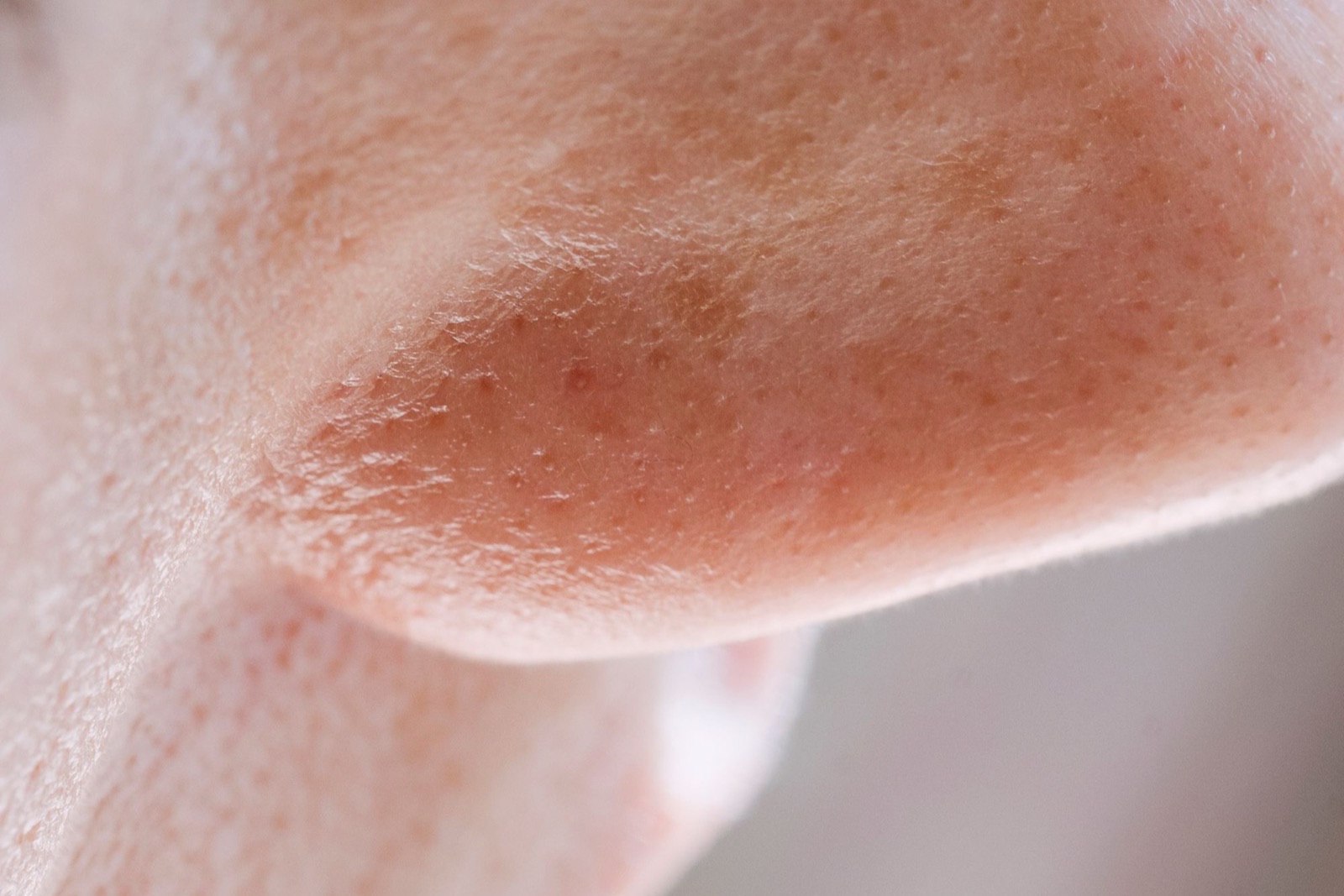
Blackheads and whiteheads — together called comedones (comedo) — are small skin-colored bumps or black dots, often found on the forehead, nose and chin. They are not swollen, red or painful, so they are often taken lightly; but in terms of mechanism, comedones are the early stage of acne, and the way people deal with comedones directly affects the risk of inflammation, marks and scars later on.
This article explains how comedones form, why blackheads are black, how to cleanse and use chemical exfoliation with cosmetics in a supporting role, and why dermatologists advise against squeezing them yourself. Many inflammatory lesions, cystic acne or long-lasting acne need to be assessed by a dermatologist.
1. What are comedones? Common types
According to DermNet — a dermatology reference site written by dermatologists — comedones are small bumps commonly found on the forehead and chin of people with acne, and they come in several types:
| Type | Features |
|---|---|
| Open comedone (blackhead) | The follicle opening stays open, with a black dot visible on the surface |
| Closed comedone (whitehead) | The follicle is sealed, appearing as a small white or skin-colored bump |
| Microcomedone | Too small to see with the naked eye |
| Macrocomedone | Closed comedones on the face, larger than 2–3 mm in diameter |
| Solar comedones | Found on the cheeks and chin of older people, thought to be due to sun damage |
When most of the lesions are comedones, the medical literature calls it “comedonal acne”, usually on the forehead and chin.
2. The clogging mechanism: from microcomedone to comedone
Comedones form when the cells lining the sebaceous duct proliferate and keratinize abnormally while sebum production increases at the same time; the mixture of keratinocytes and sebum plugs the sebaceous duct and the hair follicle. It is now known that inflammation is also involved in comedones. DermNet lists factors that may contribute:
- Activity of male hormones (in the form of DHT) in skin cells.
- Sebum low in linoleate (a salt of linoleic acid), leading to more scaling and a weaker barrier.
- Inflammatory messengers released by the cells lining the follicle, and free fatty acids produced from sebum by acne bacteria.
- Excessive “hydration” of the skin: before a menstrual period, or from moisturizers or a humid environment.
- Exposure to certain chemicals such as oily hair pomades, isopropyl myristate (data mainly from the rabbit ear model), propylene glycol and certain colorants in cosmetics.
- Follicle rupture from squeezing, abrasive face washing, chemical peels or laser.
- Smoking; certain dietary factors such as milk and foods with a high glycemic index.
Surface biopsy studies of “normal”-looking skin in people with acne show that microcomedones — lesions not yet visible — are the origin of later acne lesions. Oulès and Saurat (2026) describe the microcomedone not merely as an inert “plug” but as an “egg” that can develop into acne. The practical consequence: care for acne-prone skin needs to be kept up consistently over the whole area, not just dabbed on the spots you can see.
3. Why are blackheads black?
The black dot of a blackhead is not dirt. DermNet explains that the black color comes from pigment (melanin) at the surface of the open comedone. The AAD also advises against scrubbing the face with washcloths, sponges or other tools because this can irritate the skin. Because the black color is not dirt, scrubbing the black dots “clean” with brushes or coarse scrubs does not address the clogging mechanism underneath.
4. Cleansing correctly
Cleansing is a foundation step, not a step that “destroys” comedones. The AAD’s recommendations for acne-prone skin:
- Wash your face gently no more than twice a day and after sweating.
- Choose a gentle cleanser without scrubbing particles; apply it with your fingertips instead of a washcloth, sponge or tool.
- Use gentle, alcohol-free products; avoid astringents, toners or exfoliants that dry or irritate the skin.
- Shampoo regularly if your hair is oily and keep your hair away from your face, because oil from the hair can cause acne on the forehead.
People who wear makeup or thick sunscreen should remove it thoroughly in the evening; see also the article on double cleansing.
5. Chemical exfoliation: BHA, AHA and supporting actives
Unlike mechanical exfoliation (scrubbing particles), chemical exfoliation uses acids or actives that loosen the bonds between keratinocytes. For comedones, salicylic acid is often mentioned because it is lipid-soluble and therefore miscible with sebaceous lipids in the hair follicle, unlike AHAs such as glycolic acid (Arif, 2015).
| Active | How it helps | Notes on use |
|---|---|---|
| Salicylic acid (BHA) | Oil-soluble, helps shed the stratum corneum; described as comedolytic and as loosening the bonds between cells (Arif, 2015) | Start at a low frequency; may cause dryness and mild peeling |
| Glycolic acid, lactic acid (AHA) | Water-soluble, smooth the surface, help shed the stratum corneum | Increase sun sensitivity; consistent sunscreen use is needed |
| Cosmetic retinoids (retinol, retinal) | Support cell renewal, help keep the surface clear | Use in the evening and increase gradually; do not combine several strong actives at the same time |
The AAD’s 2024 acne guidelines give salicylic acid and azelaic acid a conditional recommendation (azelaic acid here is a topical medication; in ASEAN, azelaic acid is listed in Annex II — the list of substances prohibited in cosmetics); the strong recommendations are for benzoyl peroxide, topical retinoids, topical antibiotics and one oral antibiotic (Reynolds et al., 2024). Chemical exfoliating cosmetics are a supporting option for mild comedones and do not replace a medical examination when acne is severe.
On timing: DermNet notes that it may take several weeks to several months to see clear improvement, and care usually needs to be maintained long term. The AAD also says it takes a few weeks to a few months to see a difference, and that changing products too often can irritate the skin and cause breakouts. Constantly switching products because “nothing is happening yet” does not give the actives enough time to work. The stinging sensation when you first use acids is explained in the article on skin sensations when using actives (in Vietnamese).
6. Why you should not squeeze comedones yourself
Squeezing comedones looks simple, but the AAD warns that squeezing them at home can easily push some of the contents deeper into the skin, increasing inflammation, making the acne more noticeable and more painful, possibly leaving scars, and raising the risk of infection from bacteria on your hands. Squeezing and picking also make acne take longer to clear up and increase the risk of post-inflammatory dark marks (AAD).
Comedone extraction is a medical procedure: a dermatologist uses sterile instruments and an appropriate technique, usually only when other measures have not worked; comedones can still come back, so a skin care plan is needed afterward. The consequences of improper squeezing are covered in the articles on post-acne marks and acne scars.
7. Checklist and when to see a doctor
- Cleanse gently, no more than twice a day; do not scrub.
- Choose moisturizers, sunscreens and makeup labeled “non-comedogenic” or “oil-free”.
- Add one chemical exfoliating active and increase the frequency slowly; do not layer several acids and retinoids at the same time.
- Use sunscreen daily, especially when using AHAs, BHAs or retinoids.
- Do not squeeze or pick; limit touching your face.
- Be patient for several weeks to several months before drawing conclusions; do not keep switching products.
The AAD suggests seeing a dermatologist if you see no results after 4–6 weeks of using acne products bought without a prescription. See one sooner if you develop many red inflammatory pimples, pustules or cysts, or if acne leaves marks or scars. A doctor may prescribe medication or recommend an appropriate procedure.
8. Formulation perspective
For skin prone to clogging, the choice of base ingredients matters as much as the actives. When developing formulas such as a serum for acne-prone skin or exfoliating products, Butter-C’s pharmacist team considers acid pH and concentration within the cosmetic range, a lightweight base and limited heavy oils, and works with the brand owner so that claims stay at “helps keep pores clear”, without the language of medicines.
Frequently asked questions
Do blackhead pore strips work?
Strips can pull out part of the comedone tips at the surface, but they do not affect the clogging mechanism underneath, so comedones usually come back. Pulling strips off forcefully or frequently can irritate the skin.
Is BHA or AHA more suitable for blackheads?
BHA is oil-soluble, so it is often preferred for oily areas with many comedones; AHA is suitable for smoothing the surface. Start with one active and monitor how your skin responds before adding another.
Should I use a moisturizer if I have whiteheads?
Yes, but choose a lightweight texture labeled “non-comedogenic”. DermNet notes that excessive “hydration” of the skin from moisturizers or a humid environment is a factor that may contribute to comedone formation, so a thin, light layer is more suitable than a thick, oil-rich cream.
References
- Reynolds RV, et al. Guidelines of care for the management of acne vulgaris. J Am Acad Dermatol. 2024. PMID 38300170.
- Arif T. Salicylic acid as a peeling agent: a comprehensive review. Clin Cosmet Investig Dermatol. 2015. PMID 26347269.
- Oulès B, Saurat JH. Strategic Targets in Acne, Update 2025: The Microcomedone Is Not Just a Plug, It Is an Egg. Dermatology. 2026. PMID 40924653.
- DermNet. Comedonal acne. https://dermnetnz.org/topics/comedonal-acne
- American Academy of Dermatology. Acne: Tips for managing. https://www.aad.org/public/diseases/acne/skin-care/tips
- American Academy of Dermatology. Pimple popping: Why only a dermatologist should do it. https://www.aad.org/public/diseases/acne/skin-care/popping