 BUTTER-C
Preventing skin aging early: causes, signs and care
Many changes in facial skin over the years are caused not only by age but also by sunlight, tobacco smoke and the environment. That is why preventing aging "early" means, first of all, a daily habit of protecting the skin, and only after that, active ingredients.
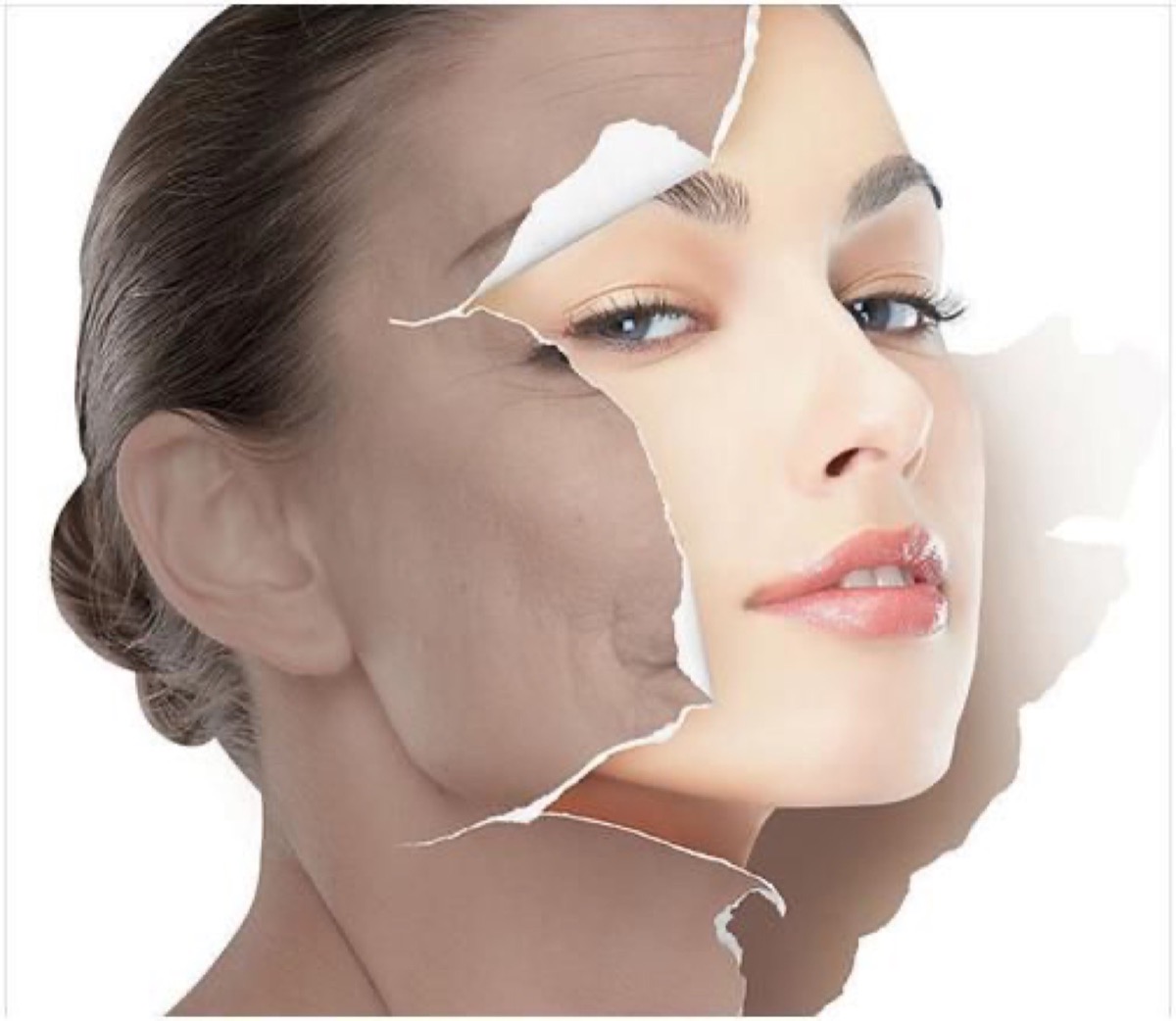
Skin aging is the process by which the skin changes over time: it becomes thinner and drier, wrinkles and brown spots appear, and the surface becomes less smooth. Part of it is due to age and genes — no one can avoid it; the rest is due to the environment and habits, above all sunlight, and this part can be slowed down. "Preventing aging early" therefore means protecting the skin consistently from a young age, not using many strong actives early on.
1. Intrinsic aging and extrinsic aging
The American Academy of Dermatology (AAD) distinguishes two forms. Intrinsic aging is a natural process whose timing is largely determined by genes: the skin becomes thinner and drier, the face gradually loses its fullness, and wrinkles appear. Extrinsic aging is caused by the environment and lifestyle and makes the skin age prematurely — this is the form that can be influenced.
A widely studied extrinsic form is photoaging: the result of long-term exposure to solar radiation, including UV rays, visible light and infrared. Its manifestations include wrinkles, pigmentation disorders, rough texture, volume loss and small dilated blood vessels, and they differ by skin color (review by Kaltchenko and Chien, 2025): darker skin more often shows pigmentation disorders and volume loss, whereas lighter skin tends toward wrinkles and elastic fiber degeneration. Photoaging is largely preventable and, to some extent, can be improved.
2. Factors that speed up skin aging
| Factor | Data | Source |
|---|---|---|
| Sunlight, tanning beds | Sunlight plays a major role in premature skin aging; every tan, whether from the sun or from a tanning bed or other indoor tanning device, prematurely ages the skin | AAD |
| Smoking | Smoking makes the skin age much faster, causing wrinkles and a dull, sallow complexion | AAD |
| Diet, alcohol | Some studies suggest that eating a lot of sugar and refined carbohydrates speeds up aging; alcohol dehydrates the skin and damages it over time | AAD |
| Prolonged irritation | Rubbing and products that sting irritate the skin, and irritated skin looks older | AAD |
The AAD also mentions repeated facial expressions: contracting the same group of muscles for many years makes the lines permanent; wearing sunglasses helps reduce lines caused by squinting. According to the AAD, it is never too late: people who already show signs of aging still benefit from changing their habits, and people who quit smoking often find that their skin looks healthier.
3. The foundation: daily sun protection
Sun protection is supported by evidence from a randomized controlled trial: in Australia, 903 adults under 55 years of age were randomly assigned to daily use of a broad-spectrum sunscreen or to discretionary use. After 4.5 years, the daily-use group showed no detectable increase in skin aging, and skin aging over the follow-up period was 24% less than in the discretionary-use group (Hughes et al., 2013).
The AAD advises protecting the skin every day by seeking shade, wearing covering clothing, a wide-brimmed hat and UV-protective sunglasses, and applying a broad-spectrum, SPF 30 or higher, water-resistant sunscreen to all skin not covered by clothing. People prone to dark marks and melasma can see the article UVA, UVB and visible light (visible light, tinted sunscreen); how much sunscreen to use and how to reapply it are covered in the article facial skin care steps.
4. Cosmetic actives: how strong is the evidence
The AAD names sunscreen and moisturizer as the two products to start with first. If you want to add an active, the table below summarizes the human data and the limits of those data.
| Active | Representative data | What to know |
|---|---|---|
| Retinol (in Vietnamese) | Randomized, double-blind, vehicle-controlled trial in 36 elderly people (mean age 87): 0.4% lotion applied to one arm, up to 3 times/week for 24 weeks; the fine wrinkle score decreased by 1.64, compared with 0.08 on the vehicle side (Kafi et al., 2007) | Data from the arms of very elderly people, not from the faces of young people. Use in the evening and increase gradually. Retinol is not listed in ASEAN Annexes II, III or VI (June 2026 version); tretinoin (retinoic acid) is a prescription drug and is prohibited in cosmetics (Annex II, Ref 375) |
| Niacinamide, vitamin C and other actives | Data and limitations for each substance: see the dedicated articles (in Vietnamese) | |
Side effects and how to build up retinol gradually are covered in the retinol article; people with sensitive skin can see the article bakuchiol (in Vietnamese). Women who are pregnant or breastfeeding should ask a doctor before using retinoids. Retinoids in drug form (tretinoin and similar drugs) are used only as prescribed by a doctor.
5. A suggested approach: start small
- Daily foundation: a mild cleanser, a moisturizer suited to your skin type, and a broad-spectrum sunscreen of SPF 30 or higher. The AAD advises giving these two foundation products a few weeks before reassessing.
- Choose one main concern: fine lines, brown spots or dull skin — then choose one product for that concern. According to the AAD, no product can address every sign of aging.
- Test first and be patient: test on the inner forearm for 4–5 days; most products need at least six weeks, sometimes three months, to show results; stop any product that causes stinging or burning.
- Realistic expectations: according to the AAD, skin care products that target aging give only modest results, and a cream cannot do what surgery does; a promise to "look 10 years younger overnight" is an overstatement.
6. When to see a dermatologist
- Signs of aging bother you despite consistent care: a dermatologist can advise on suitable medical interventions, minimally invasive procedures and prescription medicines.
- You want to use retinoids in drug form, or you are pregnant or breastfeeding.
- A brown spot that is new or changes in size, shape or color — see the article managing skin pigmentation.
The AAD also warns against buying lasers or "anti-aging" devices online to use at home: they are often counterfeit or smuggled and can be very dangerous.
7. A formulation perspective
For serums for signs of aging or night creams, the Butter-C formulation team pays attention to the stability of actives throughout the shelf life (retinol is sensitive to light and oxygen and needs airtight, light-protective packaging), the tolerability of the base, and the claim wording — which should stop at "helps improve the appearance of fine lines" and "helps support smoother, more even-toned skin", accompanied by a recommendation to use sun protection during the day.
Frequently asked questions
At what age should I start preventing skin aging?
Sun protection, moisturizing and gentle cleansing should become habits early; the AAD advises protecting the skin from the sun every day, whether you are going to the beach or just running errands. Actives such as retinol should be added only when you have a specific concern and your skin can tolerate them.
Does using many products for aging skin at the same time give faster results?
No. According to the AAD, using several products for aging skin within a few days or weeks easily irritates the skin, and irritation makes signs of aging more noticeable. Start with one product and assess it after a few weeks.
Does moisturizer help with wrinkles?
Yes, at the surface level. According to the AAD, moisturizer holds water in the skin and can make fine lines look plumper after just a few days; it needs to be used consistently to maintain the effect.
References
- American Academy of Dermatology. 11 ways to reduce premature skin aging. https://www.aad.org/public/everyday-care/skin-care-secrets/anti-aging/reduce-premature-aging-skin
- American Academy of Dermatology. How to select anti-aging skin care products. https://www.aad.org/public/everyday-care/skin-care-secrets/anti-aging/selecting-anti-aging-products
- American Academy of Dermatology. How to maximize results from anti-aging skin care products. https://www.aad.org/public/everyday-care/skin-care-secrets/anti-aging/maximize-anti-aging-products
- Kaltchenko MV, Chien AL. Photoaging: Current Concepts on Molecular Mechanisms, Prevention, and Treatment. Am J Clin Dermatol. 2025. PMID 40072791.
- Hughes MC et al. Sunscreen and prevention of skin aging: a randomized trial. Ann Intern Med. 2013. PMID 23732711.
- Kafi R et al. Improvement of naturally aged skin with vitamin A (retinol). Arch Dermatol. 2007. PMID 17515510.
- ASEAN. Annex II – List of substances which must not form part of the composition of cosmetic products (Version 2026-1, 22nd June 2026), Ref 375. https://asean.org/wp-content/uploads/2026/07/Annex-II-Release_22nd-June-2026-clean.pdf
- ASEAN. Annex III – List of substances which cosmetic products must not contain except subject to restrictions and conditions laid down (Version 2026-1, 22nd June 2026). https://asean.org/wp-content/uploads/2026/07/Annex-III_Release_22nd-June-2026-clean.pdf
- ASEAN. Annex VI – List of preservatives allowed for use in cosmetic products (Version 2026-1, 22nd June 2026). https://asean.org/wp-content/uploads/2026/07/Annex-VI_Release_22nd-June-2026-clean.pdf