 BUTTER-C
Oily skin and enlarged pores: understanding them for proper care
Skin that turns shiny after a few hours and visible pores on the nose and cheeks are very common concerns. Understanding how sebaceous glands work helps you choose the right cleansing, moisturizing and active ingredients, instead of “scrubbing it dry.”
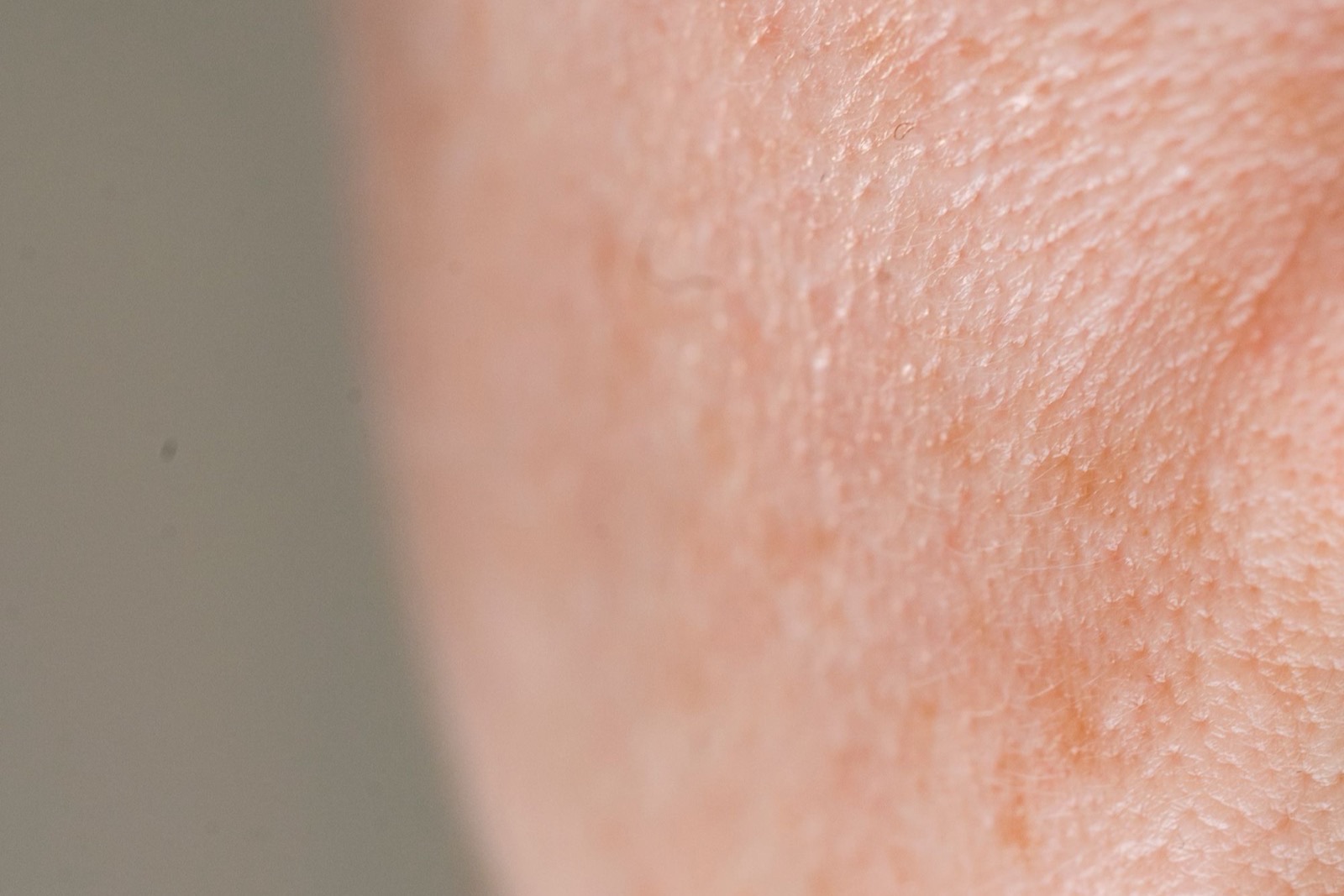
Oily skin and enlarged pores are two concerns that often go together: highly active sebaceous glands make the skin surface shiny and greasy, and a high sebum level is also one of the factors associated with pore size. This is mainly a cosmetic concern, not a disease.
This article explains how sebum is secreted, the factors that make skin oilier, daily care, cosmetic actives with data supporting oil control and common misconceptions. If oily skin comes with numerous, persistent inflammatory acne lesions, assessment and the prescribing of medicines are matters for a dermatologist.
1. Sebaceous glands and sebum: why skin gets oily
Sebaceous glands lie in the dermis and release their secretion into the hair follicle and from there onto the skin surface. Sebum is a mixture of lipids that sebaceous gland cells synthesize, store and then release; this lipid layer contributes to surface hydration and to the skin's barrier function against water loss. “Oily skin” (called seborrhea in the medical literature) occurs when the sebaceous glands are larger and produce more sebum than normal, giving a shiny, greasy appearance (Sakuma and Maibach, 2012).
The T-zone — forehead, nose and chin — has a high density of sebaceous glands, so it usually turns shiny earlier in the day than other areas. That is why many people have “combination skin”: an oily T-zone with normal or slightly dry cheeks (see the article choosing cosmetics by skin type).
Sebum is not “dirt.” According to the American Academy of Dermatology (AAD), oil helps protect the skin, and people with oily skin tend to have thicker skin and fewer wrinkles; what is needed is a balance between excess oil and the skin's natural moisture, not removing oil at all costs.
2. What are “enlarged” pores, really?
The pores we see on the face are the openings of pilosebaceous units. A review in the journal Dermatologic Surgery notes that enlarged pores are not a medical problem but are a cosmetic concern for a great many people, and names three main groups of causes: high sebum excretion, decreased elasticity of the tissue around the pores, and increased hair follicle volume. Chronic recurrent acne, sex hormones and skin care habits can also affect pore size (Lee et al., 2016).
A study of 60 volunteers (30 men, 30 women) that measured pores with a dermoscopic camera and sebum with a dedicated device found that pore size was significantly associated with sebum level, male sex and age; sebum level correlated most with pore size, followed by male sex, although the correlation coefficient was only moderate (r = 0.47 in men and 0.38 in women). In women, pores were larger during the ovulation phase, suggesting that cyclical hormonal factors also play a part (Roh et al., 2006).
Because the causes differ from person to person — oil, elasticity, age, hormones — care also needs to be individualized (Lee et al., 2016).
3. Factors that make skin oilier
According to Sakuma and Maibach (2012), skin oiliness varies with:
- Age and sex: sebaceous gland activity is influenced by hormones, so it differs between age groups and between men and women.
- Ethnicity: sebum output differs between ethnic groups.
- Hot, humid climates: these make skin noticeably oilier, as in the Vietnamese summer.
- Diet: noted as one of the factors that may have an influence.
Care habits also matter: an overly harsh cleanser can cause irritation and stimulate the skin to produce more oil (AAD).
4. Daily care for oily skin: a checklist
The recommendations below are compiled from the AAD's guidance on controlling oily skin and can be used as a checklist when building a skin care routine:
| Do | Avoid |
|---|---|
| Wash your face no more than twice a day and after sweating, with a gentle foaming cleanser | Scrubbing hard, or using cleansers that are too harsh or contain a lot of alcohol |
| Choose products labeled “oil-free” and “non-comedogenic” (not pore-clogging), including moisturizers and makeup | Going to bed without removing makeup |
| Still use a moisturizer after cleansing; you can choose one that also provides broad-spectrum SPF 30 or higher sun protection | Skipping moisturizer because you think oily skin “doesn't need it” |
| Use blotting papers during the day: press gently and hold for a few seconds | Rubbing blotting paper across the skin, which spreads oil to other areas |
| Wear sunscreen when going outdoors; to help limit breakouts, choose one that contains zinc oxide and titanium dioxide and is free of fragrance and oils | Touching your face many times a day |
People who wear makeup every day may find the article double cleansing helpful.
5. Cosmetic actives that help control oil
Most products for oily skin on the market work by absorbing surface oil; only a small fraction act on the process of sebum secretion (Draelos et al., 2006). The table below summarizes the common groups:
| Ingredient group | How it helps | Notes |
|---|---|---|
| Oil-absorbing powders (silica, starch, clay, etc.) | Absorb surface oil, temporarily reducing shine | Effect lasts a few hours; does not change the amount of sebum produced |
| Niacinamide | Clinical data show it may reduce the sebum excretion rate or the amount of sebum on the surface | Results differ between groups of participants (see below) |
| Salicylic acid (BHA), glycolic acid, lactic acid (AHA) | Help keep the skin surface and pores clear; may reduce the greasy feel | May be too harsh for some skin; use less often or stop if irritation occurs (AAD) |
| Cosmetic retinoids (retinol, etc.) | Support renewal of the skin surface; retinoids as a group are covered in a review on oily skin (Endly and Miller, 2017) | Start at a low concentration, use in the evening, always use sun protection |
For niacinamide, two trials by Draelos et al. (2006) used a moisturizer containing 2% niacinamide: in the Japanese group, the sebum excretion rate fell significantly after 2 and 4 weeks compared with placebo; in the Caucasian group, the amount of sebum on the surface fell after 6 weeks, but the sebum excretion rate did not fall significantly. In other words, niacinamide has supporting data, but the degree of response varies from person to person.
The review by Endly and Miller (2017) covers both topical options (retinoids, various cosmetic actives) and systemic medicines and medical procedures, analyzing the mechanism, reported efficacy and potential adverse effects of each option. Prescription medicines and medical procedures are indicated and monitored by a doctor. Cosmetics are limited to helping skin look less shiny and pores look smaller.
6. Common misconceptions
“The more often and the harder you wash your face, the less oily it gets”
Overcleansing causes irritation and can make the skin produce more oil (AAD).
“Oily skin doesn't need moisturizer”
Oily skin can still lack water; the AAD advises still using a moisturizer after cleansing and choosing one that does not clog pores. See also the article dry skin and dehydrated skin.
“Some products shrink pores permanently”
Pore size is influenced by oil, elasticity, hair follicle volume, age, sex and hormones (Lee et al., 2016; Roh et al., 2006). Cosmetics can help pores look smaller when the surface is clean, clear and adequately hydrated, but they do not change the structure of the hair follicle.
“Oil causes acne, so it must all be removed”
Sebum is one link in the process of acne formation, alongside abnormal keratinization in the follicular duct and the inflammatory response; oily skin also has benefits, as the AAD points out. The goal is to control oil, not to eliminate it. How comedones form is explained in the article blackheads and whiteheads.
When should you see a dermatologist? The AAD recommends seeing a dermatologist when the amount of oil worries you or when you are struggling with blackheads or acne; see one early if oily skin comes with inflammatory acne, dark marks or scars.
7. A formulation perspective
For oily-skin products, the formulation challenge usually lies in the skin feel: the texture must be light, dry to the touch and leave no shiny film, yet still be moisturizing enough and stable. When developing lines such as facial cleansing gel or serums for oily skin, Butter-C's pharmacist team considers gentle surfactant systems and active concentrations within ranges that have reference data, and discusses clearly with the brand owner so that product descriptions speak only of “oil control” and “helps pores look smaller,” without promising to change skin structure.
Frequently asked questions
Should people with oily skin use sunscreen?
Yes. The AAD recommends broad-spectrum SPF 30 or higher sun protection when going outdoors; people with oily or acne-prone skin should choose oil-free, fragrance-free products labeled “non-comedogenic.”
How long does niacinamide take to make skin less oily?
In the trials with 2% niacinamide, changes in sebum were measured at 2–6 weeks and differed between groups of people (Draelos et al., 2006). Use it consistently for several weeks before judging the result.
Do clay masks shrink pores?
Clay absorbs surface oil, so the skin looks less shiny for a short time, but it does not change the structure of the hair follicle.
References
- Sakuma TH, et al. Oily skin: an overview. Skin Pharmacol Physiol. 2012. PMID 22722766.
- Endly DC, et al. Oily Skin: A review of Treatment Options. J Clin Aesthet Dermatol. 2017. PMID 28979664.
- Lee SJ, et al. Facial Pores: Definition, Causes, and Treatment Options. Dermatol Surg. 2016. PMID 26918966.
- Roh M, et al. Sebum output as a factor contributing to the size of facial pores. Br J Dermatol. 2006. PMID 17034515.
- Draelos ZD, et al. The effect of 2% niacinamide on facial sebum production. J Cosmet Laser Ther. 2006. PMID 16766489.
- American Academy of Dermatology. How to control oily skin. https://www.aad.org/public/everyday-care/skin-care-basics/dry/oily-skin