 BUTTER-C
The skin microbiome: its role, imbalance and probiotics
On every square centimeter of skin lives a whole community of microorganisms that coexists with us. Understanding them helps you take a more level-headed view of products labeled "microbiome" or "probiotic", which are becoming increasingly common.
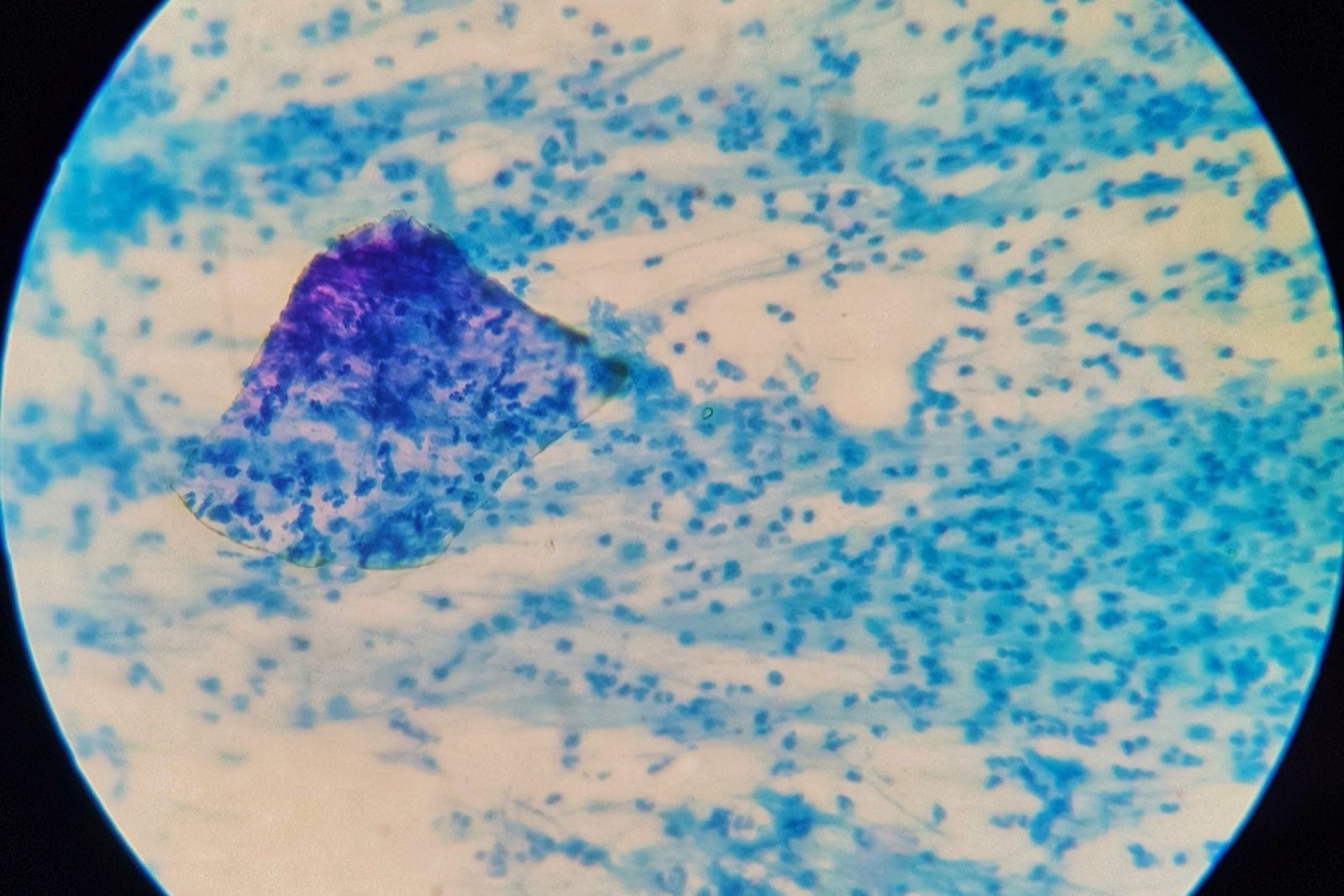
The skin microbiome is the collection of bacteria, fungi, viruses and other microorganisms that live on the skin surface and inside hair follicles and sebaceous glands. Grice and Segre (2011) describe the skin as the largest organ of the body, home to a diverse community of microorganisms, most of which are harmless or even beneficial to the host. In recent years, the word "microbiome" has appeared everywhere on cosmetic labels, bringing with it quite a few inaccurate interpretations.
This article explains what the skin microbiome consists of, what role it plays, what imbalance means, and how to correctly understand the concepts of prebiotic, probiotic and postbiotic when you see them in cosmetics.
1. Who lives on our skin
The skin surface is a harsh environment: dry, nutrient-poor and acidic. This makes life difficult for pathogenic microorganisms, yet the skin is still colonized by a diverse community (Byrd et al., 2018). Gene sequencing methods allow microorganisms to be identified down to the species and strain level, instead of relying only on culture as in the past. Three widely studied representatives are Cutibacterium acnes (formerly Propionibacterium acnes), Staphylococcus epidermidis and Staphylococcus aureus.
The composition of the community varies markedly by body site. Grice and Segre (2011) divide the skin into three types of "habitat":
| Type of skin site | Examples | Characteristics |
|---|---|---|
| Sebaceous (oily) sites | Between the eyebrows, the sides of the nose, behind the ears, the upper chest, the back | Low bacterial diversity; dominated by species that tolerate a sebum-rich environment |
| Moist sites | Armpits, groin creases, inner elbows, the backs of the knees, between the toes | High temperature and humidity; Staphylococcus and Corynebacterium predominate |
| Dry sites | Inner forearm, palm, buttocks | Flat, dry surface; the sites with the highest bacterial diversity |
Besides body site, the microbial community is also influenced by factors inside the body and in the external environment — including hygiene habits and cosmetics (Grice and Segre, 2011).
2. What the microbiome does for the skin
- Interaction with immunity: the skin's immune system regulates the microbial community, and in turn, microorganisms help "train" the immune system (Grice and Segre, 2011).
- Occupying space and competing: symbiotic microorganisms occupy many niches on the skin and help protect it against invasion by pathogenic or harmful microorganisms (Grice and Segre, 2011).
- Links with pH and lipids: according to Grice and Segre (2011), free fatty acids released by the breakdown of sebum contribute to the acidic pH of the skin surface; an acidic pH inhibits many pathogenic bacteria such as S. aureus, whereas prolonged occlusion of the skin raises the pH and favors them. The relationship between pH and the skin barrier is covered in the article the skin barrier.
3. When the microbiome becomes imbalanced
Imbalance (dysbiosis) is a state in which the composition or diversity of the microbial community shifts in an unfavorable direction. Santos et al. (2026) summarize that internal and external factors can cause imbalance, accompanied by signs such as dry skin, increased transepidermal water loss, reduced protective capacity of the barrier and, in severe cases, inflammatory skin diseases.
Byrd et al. (2018) review many studies on the composition of skin microorganisms in health and in disease. For example, in children with atopic dermatitis, the proportion of S. aureus at sites where the disease typically appears (the inner elbow and back-of-the-knee creases) was higher during flares than at baseline and after the flare (Kong et al., 2012). However, caution is needed: many of the associations observed are not sufficient to conclude whether microorganisms are the cause or the consequence. See also the article atopic dermatitis.
4. How cosmetics affect the microbiome
Santos et al. (2026) analyze the interactions between the microbiome and many groups of cosmetic ingredients: surfactants, lipids, preservatives, fragrances, vitamins and UV filters. Concentration, the way ingredients are combined and the pH of the finished product can all affect the balance of the skin. The authors also stress that more research is needed on this topic.
One commonly misunderstood point is preservatives. Water-containing products must be protected against microbial contamination throughout their period of use — this is a safety requirement for users (see the article preservative efficacy testing to ISO 11930 (in Vietnamese)). A "microbiome-friendly" approach in formulation means choosing a suitable preservative system and concentration, not removing preservation.
5. Understanding prebiotic, probiotic and postbiotic correctly
The International Scientific Association for Probiotics and Prebiotics (ISAPP) has published consensus definitions that are widely used in science:
| Term | ISAPP definition | Notes for cosmetics |
|---|---|---|
| Probiotic | Live microorganisms that, when administered in adequate amounts, confer a health benefit on the host (Hill et al., 2014) | Water-containing products need a preservative system, so keeping bacteria alive in a cosmetic is a major challenge |
| Prebiotic | A substrate that is selectively utilized by host microorganisms, conferring a health benefit (Gibson et al., 2017) | The 2017 definition extends to sites outside the digestive tract, but still requires the benefit to be demonstrated |
| Postbiotic | A preparation of inanimate microorganisms and/or their components that confers a health benefit on the host (Salminen et al., 2021) | Many lysate or ferment ingredients are closer to this concept than to probiotics |
What all three definitions have in common is that the benefit must be documented with data. Gibson et al. (2017) state clearly that the aim of the consensus is to help the term be used consistently in research, product marketing and regulation. Therefore, an ingredient that merely has a microbial origin does not automatically become a "probiotic" or "postbiotic" in the scientific sense.
Checklist when reading the label of a "microbiome" product
- Is the ingredient listed as live microorganisms, a lysate or a ferment?
- Are the claims backed by test data on the product itself, or based only on the raw material?
- Does the product still have a preservative system, and has its microbiological safety been assessed?
- Does the advertising promise effects on skin diseases? Cosmetics only play a supporting role in skin care.
6. Skin care that respects the microbiome
- Cleanse just enough: mild products, do not wash too many times, avoid harsh rubbing.
- Do not overuse antiseptic products on the face and body without a specific reason; hand sanitizers have their own role in hand hygiene.
- Keep the skin barrier healthy: moisturize regularly and protect the skin's natural acidic pH.
- Simplify your routine: few layers of products, few sudden changes.
- See a dermatologist if you have persistent skin lesions, pustules or widespread inflammation — do not try to manage these yourself with "microbiome-balancing" products.
7. A formulation perspective
When developing formulas for clients who want a "microbiome-friendly" positioning, the Butter-C formulation team usually starts from factors with a sound basis: the pH of the finished product, a mild cleansing system, a suitable preservative system that has passed challenge testing, and batch microbiological control to specification (see microbiological control of cosmetics (in Vietnamese)). For prebiotic or postbiotic ingredients, claims are written at the level that supporting data allow.
Frequently asked questions
Does washing your face a lot "wipe out" beneficial bacteria?
Washing does not completely remove the microbiome, but over-cleansing with harsh products can change the pH and the skin barrier — the microorganisms' habitat. Cleansing just enough is more sensible.
Do cosmetics labeled "probiotic" contain live bacteria?
Not necessarily. Many ingredients of this kind are lysates or ferments of inactivated bacteria; read the ingredient list and the information provided by the manufacturer.
Should I use "microbiome-balancing" products on my own for acne or eczema?
You should not manage these conditions on your own. Inflammatory acne and atopic dermatitis need assessment by a dermatologist; cosmetic products only support daily skin care in line with the doctor's advice.
References
- Grice EA et al. The skin microbiome. Nat Rev Microbiol. 2011. PMID 21407241.
- Byrd AL et al. The human skin microbiome. Nat Rev Microbiol. 2018. PMID 29332945.
- Kong HH et al. Temporal shifts in the skin microbiome associated with disease flares and treatment in children with atopic dermatitis. Genome Res. 2012. PMID 22310478.
- Hill C et al. Expert consensus document. The International Scientific Association for Probiotics and Prebiotics consensus statement on the scope and appropriate use of the term probiotic. Nat Rev Gastroenterol Hepatol. 2014. PMID 24912386.
- Gibson GR et al. Expert consensus document: The International Scientific Association for Probiotics and Prebiotics (ISAPP) consensus statement on the definition and scope of prebiotics. Nat Rev Gastroenterol Hepatol. 2017. PMID 28611480.
- Salminen S et al. The International Scientific Association of Probiotics and Prebiotics (ISAPP) consensus statement on the definition and scope of postbiotics. Nat Rev Gastroenterol Hepatol. 2021. PMID 33948025.
- Santos YR et al. A review of skin microbiome and new challenges to cosmetic microbiome-friendly formulations. Int J Cosmet Sci. 2026. PMID 41524133.