 BUTTER-C
Dry skin vs. dehydrated skin: differences, causes and care
Tightness after washing your face even though your forehead is still shiny, or flaky shins every dry season — people often call these “dehydrated skin” and “dry skin.” How closely do these terms match the medical literature, and how should they be cared for?
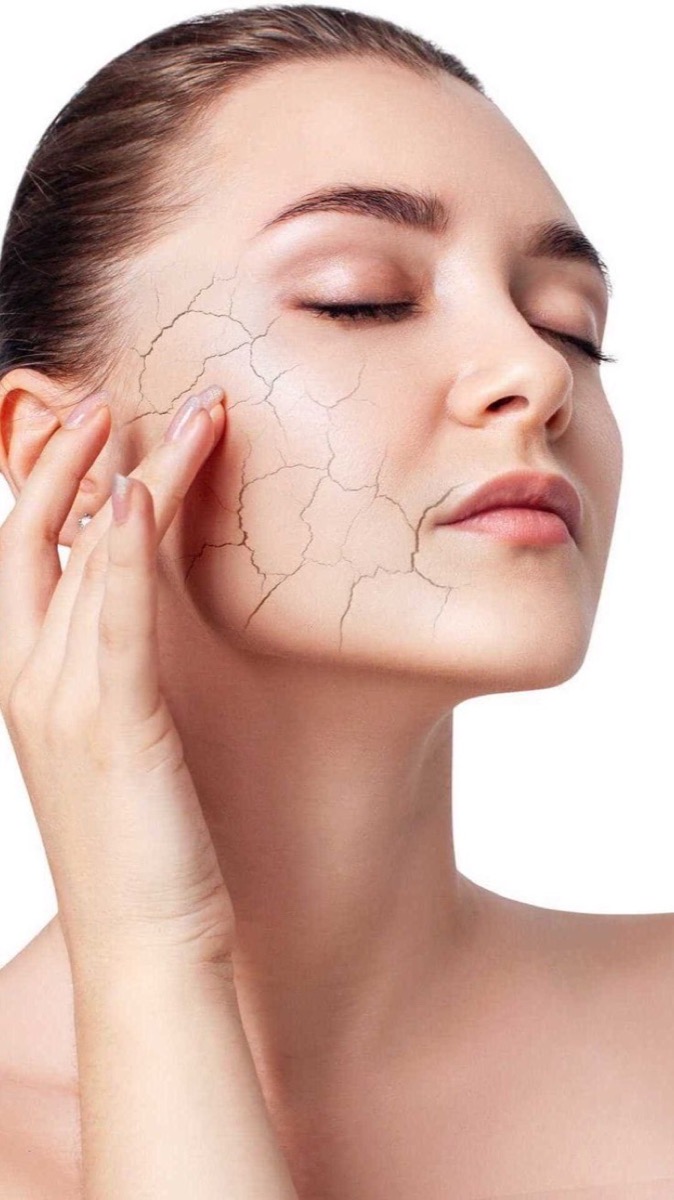
“Dry skin” and “dehydrated skin” are two phrases very often seen on cosmetic labels, usually understood simply as: dry skin lacks oil, dehydrated skin lacks water. This division is easy to remember but does not fully match how the dermatology literature describes dry skin. This article compares the two views and explains how the stratum corneum holds water, the common causes, principles of care with cosmetics and the signs that you should see a dermatologist.
1. Dry skin and dehydrated skin: what the literature says
In the cosmetics industry, “dry skin” usually refers to a long-term skin type that is rough and has little shine; “dehydrated skin” refers to a temporary lack of water in the stratum corneum, which can occur even in oily skin. The dermatology literature does not separate the two concepts this sharply. DermNet defines dry skin (xerosis) as a condition in which the stratum corneum — the outermost layer of the skin — lacks moisture, causing small cracks to appear on the surface; the cause is abnormal barrier function, including a reduction in stratum corneum lipids. Thus, dry skin in the medical sense is already a stratum corneum that lacks water, and a lack of lipids is one mechanism leading to it. In a position paper, a group of dermatology experts considers dry skin one of the common dermatological diagnoses and a cardinal symptom of many skin, internal and neurological diseases (Augustin et al., 2019). In the sources we have read, “dehydrated skin” is not a separate diagnosis.
“Dehydrated skin” has a clearer place in measurement. Seo et al. (2022) classified skin using measuring devices only, in 434 healthy adults in South Korea: “hydration” (stratum corneum capacitance) and “oiliness” (amount of sebum) are two separate categories, measured with two different devices. So a high oiliness value does not tell you whether the stratum corneum has enough water. The study's thresholds are not meant for self-assessment at home.
| Criterion | “Dry skin” | “Dehydrated skin” |
|---|---|---|
| Commonly described signs | Rough, fine scaling, little shine | Tightness, dullness; the T-zone may still be oily and shiny |
| In the literature | Corresponds to xerosis, defined as a stratum corneum lacking moisture | Not a separate diagnosis; one category in skin classification by measurement |
The table describes how the terms are used; it does not give diagnostic criteria.
2. How the stratum corneum holds water
According to Rawlings and Harding (2004), the ability of the stratum corneum to hold water depends mainly on three factors:
- Intercellular lipids: lamellae of ceramides, cholesterol and free fatty acids between the corneocytes, tightly packed in a gel state, block the passage of water through the tissue.
- A tortuous path: water has to wind its way through many layers of corneocytes.
- Natural moisturizing factor (NMF): a mixture of small, water-soluble molecules formed inside the corneocytes from the breakdown of the protein filaggrin.
Intercellular lipids are the stratum corneum's own lipids, different from the sebum that the sebaceous glands secrete onto the surface; that is why oily, shiny skin does not tell you whether the stratum corneum has enough water.
Conversely, the hydration level of the stratum corneum affects each step in the maturation of the barrier: strengthening the corneocytes, processing lipids and generating NMF. When the skin is exposed to adverse environmental conditions, these processes, together with the final step of corneocyte shedding, are often disturbed, leading to dry, flaky skin (Rawlings and Harding, 2004).
Studies usually measure stratum corneum hydration and transepidermal water loss (TEWL, which reflects barrier function); these two measures do not always move in the same direction (De Paepe et al., 2014). See also the article the skin barrier.
3. Common causes
- Environment: low air humidity, cold wind, air conditioning running continuously, direct heat from fan heaters (DermNet).
- Cleansing and friction: excessive bathing and washing, soap, solvents, topical products containing alcohol, rough clothing (DermNet).
- Age, constitution, medical conditions and medicines: dry skin is very common in older adults (see the article skin in older adults); dry skin since early childhood may belong to the ichthyosis group of conditions; dry skin is common in people with atopic dermatitis; late-onset dry skin may be associated with hypothyroidism, chronic kidney disease, malnutrition and weight loss, the postmenopausal period or certain medicines (DermNet). If your skin becomes dry after you start taking a medicine, ask the doctor who prescribed it; do not stop the medicine on your own.
4. Principles of care with cosmetics
Gentle cleansing, warm water
DermNet advises using warm water instead of hot water, taking short showers instead of long soaks, bathing less often and replacing soap with a gentle synthetic cleanser.
Three groups of moisturizing ingredients
The position paper on dry skin recommends care products that contain both rehydrating and lipid-replenishing components; the drier the skin, the higher the lipid content should be, preferably as a water-in-oil emulsion (Augustin et al., 2019 — medical context). In formulation terms, moisturizers usually combine three groups of ingredients:
| Group | Mechanism | Examples |
|---|---|---|
| Humectants | Draw in and hold water in the stratum corneum, similar to NMF | Glycerin, hyaluronic acid, urea, panthenol (linked articles in Vietnamese) |
| Emollients | Fill the gaps between the flakes of the stratum corneum, making the surface soft and smooth | Squalane, caprylic/capric triglyceride, shea butter |
| Occlusives | Form a water-repellent layer that reduces water evaporation | Petrolatum (in Vietnamese), mineral oil, waxes |
- Excipient silicones are not occlusives. On the forearms of 26 young women, after a single application, TEWL at the sites where three common excipient silicones were applied did not differ significantly from sites with nothing applied, and the silicones did not increase hydration, whereas petrolatum formed an occlusive layer that kept hydration elevated for more than 4 hours (De Paepe et al., 2014). Silicones such as dimethicone (in Vietnamese) mainly provide a silky feel.
- Urea has two sides: at low concentrations it helps hydrate; at higher concentrations it softens and loosens a thickened stratum corneum. Burning is the reaction most often reported when urea is applied to skin affected by a skin disease — see the concentration thresholds and sources in the article urea in cosmetics (in Vietnamese).
Barrier lipids: all three, in the right ratio
Many moisturizers add skin-identical lipids such as ceramides (in Vietnamese), cholesterol and fatty acids. Man et al. (1996) restate the results of earlier studies: applying only one or two of these lipids to skin with a disrupted barrier slowed recovery, and only an equimolar mixture of all three allowed normal recovery. The group's own study adds that, in a three-component mixture, increasing the proportion of any one component up to 3-fold made recovery even faster. These data should be read for what they are: they come mainly from mouse skin, and the results in human skin are only preliminary. That is why it is worth checking whether a formula contains all three.
Daily habits
- Apply moisturizer right after bathing or washing your face, while the skin is still slightly damp — emollients work well when applied to damp skin (DermNet).
- Apply a generous amount, reapply several times a day and whenever the skin itches; the drier the skin, the thicker the product should be (DermNet).
- Use a humidifier when the air is dry (DermNet).
5. Common mistakes
| Mistake | Why it is not quite right | What to do |
|---|---|---|
| “Oily skin doesn't lack water” | Oiliness and stratum corneum hydration are two separately measured parameters (Seo et al., 2022) | Still moisturize; choose a light texture |
| Assuming a silicone-rich cream is occlusive | Excipient silicones are permeable to water vapor (De Paepe et al., 2014) | Choose a cream with a true occlusive |
| Choosing a cream with ceramides only | Lacking the full set of three slows recovery; data mainly from mice (Man et al., 1996) | Favor formulas with all three barrier lipids |
| Long hot showers, scrubbing while the skin is peeling | Hot water, excessive bathing and friction dry the skin further (DermNet) | Warm water, short showers, pat dry gently |
6. When to see a dermatologist
Dry skin is diagnosed by a doctor through examination, and accompanying diseases need to be managed separately (Augustin et al., 2019); moisturizers play only a supporting role. See a dermatologist when:
- The skin stays dry and itchy despite gentle care and regular moisturizing.
- There is severe itching, red patches or oozing — DermNet notes that itchy dry skin may have progressed to a form of eczema; see the article atopic dermatitis.
- There are deep cracks, bleeding, pain or signs of infection — bacteria and viruses can enter through cracked skin (DermNet).
- Dry skin has been present since childhood, or appears for the first time in adulthood together with weight loss or other changes in health — DermNet notes that late-onset dry skin may accompany certain medical conditions.
7. A formulation perspective
For moisturizers for dry or dehydrated skin, Butter-C's formulation team balances the three groups — humectants, emollients and occlusives — according to the target skin, combines barrier lipids as a set of three and gives silicones the role of providing skin feel. Label claims stay at the level of “moisturizes” and “supports the skin barrier,” and figures are used only when they have been measured on the finished product.
Frequently asked questions
Is there a way to tell dry skin from dehydrated skin at home?
In the sources we have read, there is no validated at-home test. A feeling of tightness even though the skin is still shiny is often called “dehydrated skin”; a dull, rough, scaly surface is what DermNet describes for dry skin. Knowing the hydration of the stratum corneum accurately requires measurement with specialized equipment.
Does oily skin need moisturizer?
Yes. Skin that produces a lot of oil can still have low stratum corneum hydration. The difference lies in the texture: gels or gel-creams rich in humectants and low in oil.
Do moisturizers with silicones help retain moisture?
Common excipient silicones make a cream silky and easy to spread, but they are not occlusives (De Paepe et al., 2014); moisture retention comes from the ingredients used alongside them.
References
- Rawlings AV, Harding CR. Moisturization and skin barrier function. Dermatol Ther. 2004. PMID 14728698.
- Augustin M et al. Diagnosis and treatment of xerosis cutis - a position paper. J Dtsch Dermatol Ges. 2019. PMID 31738016.
- Seo JI et al. An objective skin-type classification based on non-invasive biophysical parameters. J Eur Acad Dermatol Venereol. 2022. PMID 34747517.
- Man MQ M et al. Optimization of physiological lipid mixtures for barrier repair. J Invest Dermatol. 1996. PMID 8618046.
- De Paepe K et al. Silicones as nonocclusive topical agents. Skin Pharmacol Physiol. 2014. PMID 24457536.
- DermNet. Dry Skin (Xeroderma): Causes, Treatments, and More. https://dermnetnz.org/topics/dry-skin