 BUTTER-C
Post-acne marks: telling red marks (PIE) from brown marks (PIH)
The acne lesion has flattened but leaves a red or brown mark that lasts for months. These two types of marks have different mechanisms, so the care approach and expectations also differ.
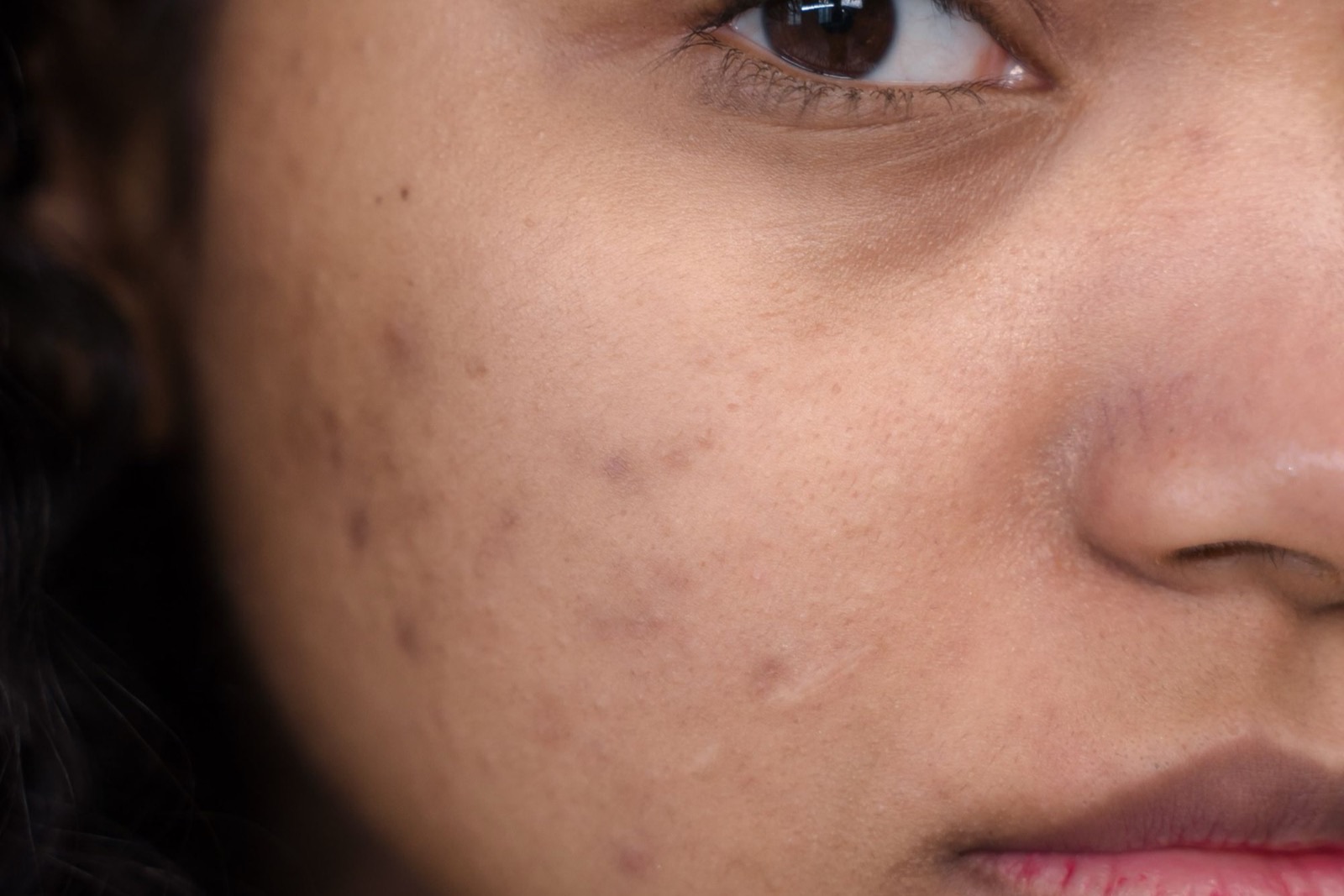
Post-acne marks are flat areas of discoloration that remain after an inflamed acne lesion has healed. There are two main types: red marks, postinflammatory erythema (PIE), and brown marks, postinflammatory hyperpigmentation (PIH). These color changes can be long lasting, and for many people they are even more distressing than the acne lesions themselves (Elbuluk et al., 2021).
This article helps you tell the two types of marks apart, explains why sun protection and controlling active acne are the two foundations, and covers which cosmetic actives have data supporting a more even skin tone. Interventions such as lasers, high-concentration peels and depigmenting medicines are a matter for a dermatologist.
1. Marks are not scars
Acne scars are a change in structure: wound healing in the dermis causes a loss or an excess of collagen, creating depressions or raised areas on the skin. Marks are a change in color on a surface that remains flat. According to DermNet, a dermatology reference site written by dermatologists, postinflammatory color changes (red, brown or lighter patches) are a common consequence of acne, can appear before or at the same time as scarring, and usually improve over time, although this may take many months or longer.
Telling them apart correctly helps set the right expectations: marks can fade with appropriate care, whereas depressed scars and raised scars need a medical assessment (see our article on acne scars).
2. Red marks (PIE): microvascular changes after inflammation
The term "postinflammatory erythema" was proposed to describe the pink-to-red discoloration that follows an inflamed acne lesion, which previously had no specific name (Bae-Harboe and Graber, 2013). According to DermNet, PIE is thought to relate to microvascular changes and thinning of the epidermis during wound healing. PIE occurs in all skin tones but is more common in people with lighter skin (Elbuluk et al., 2021).
Because it is vascular rather than pigmentary in nature, lightening actives that target melanin usually have little effect on red marks. Cosmetic care for PIE focuses on soothing the skin, keeping the skin barrier healthy and avoiding anything that makes the skin redder (rubbing, irritating products, heat). In the medical literature, vascular lasers are used by doctors to improve PIE (Bae-Harboe and Graber, 2013); this is a medical intervention that requires a doctor's assessment.
3. Brown marks (PIH): increased melanin after inflammation
PIH occurs when the inflammatory reaction in the epidermis stimulates pigment cells to produce more melanin and transfer it to the surrounding keratinocytes. If the basal layer is injured, melanin can drop into the dermis and be trapped there by phagocytic cells (DermNet). This gives two levels of depth:
- Epidermal hyperpigmentation: light brown, brown to dark brown; responds better to topical care.
- Dermal hyperpigmentation: gray, gray-violet or very dark brown; fades very slowly, possibly over many years, and procedures that act on the surface are not effective for this type (DermNet; AAD).
PIH can affect anyone but is more common, darker and longer lasting in people with medium to dark skin tones (Davis and Callender, 2010; Elbuluk et al., 2021). The marks can become darker with UV exposure (DermNet).
4. Quick comparison table
| Criterion | Red marks (PIE) | Brown marks (PIH) |
|---|---|---|
| Color | Pink, red, red-violet | Light brown to brownish black; blue-gray if deep |
| Nature | Microvascular changes, thinner epidermis after wound healing | Increased melanin and melanin deposition after inflammation |
| More common in | Light skin (but occurs in all skin tones) | Medium to dark skin |
| Aggravating factors | Irritation, rubbing, picking or squeezing spots | UV rays, visible light, irritation, picking or squeezing spots |
| Supportive cosmetics | Soothing, helping restore the barrier, sun protection | Sun protection, actives that help even skin tone |
| Medical interventions (by a doctor) | Lasers, devices that target blood vessels | Topical depigmenting medicines, peels, lasers |
A single mark can be both red and brown, especially in the early stage. If you are not sure, have a dermatologist assess it.
5. Two foundations: controlling acne and sun protection
Control active acne and do not squeeze spots
Marks only stop forming when new episodes of inflammation stop appearing. Reviews of PIH emphasize that intervention should start early, beginning with controlling the initial inflammation (Davis and Callender, 2010). The AAD also states that for dark spots caused by acne, the acne needs to be brought under control first; once the breakouts stop, most dark spots will gradually fade on their own, although this can take quite a long time. Squeezing and picking spots causes further injury and prolongs the inflammatory reaction, so it should be avoided. Extensive or persistent inflamed acne needs to be assessed and managed by a dermatologist.
Daily sun protection
DermNet recommends daily application of a broad-spectrum SPF 50+ sunscreen to skin with PIH to limit further darkening caused by UV rays. For people with darker skin tones, the AAD suggests a tinted sunscreen containing iron oxide, an ingredient that also helps protect against visible light, which is one cause of dark spots, and the product should be SPF 30 or higher, broad-spectrum, water-resistant, non-comedogenic if your skin is oily, and blend with your skin tone. Wearing a wide-brimmed hat outdoors is a complementary measure. The meaning of the SPF value is explained in our article SPF: what it means and how it is tested (in Vietnamese).
6. Cosmetic actives that help even skin tone
For epidermal PIH, reviews list many substances that act on melanin production. Some of those found in cosmetics (at permitted concentrations) include (Davis and Callender, 2010):
- Tyrosinase inhibitors: kojic acid, arbutin, certain licorice extracts.
- Other mechanisms: niacinamide, ascorbic acid (vitamin C), N-acetyl glucosamine, soy extract, retinoids (the form used in cosmetics is retinol).
A combination of measures is usually needed before clear improvement is seen (DermNet). Just as important is avoiding irritation: Davis and Callender (2010) warn that the very products and procedures used to fade marks can make PIH worse if they cause irritation. For this reason, introduce one active at a time, increase the frequency gradually, and stop if redness and stinging persist.
As for timing, the AAD states that once the cause has been removed, a mark a few shades darker than your skin tone usually fades within about 6–12 months; pigment that lies deep in the skin can take years. Stronger depigmenting agents, high-concentration peels and lasers fall within the medical scope and must be prescribed by a doctor. For melasma, freckles and other types of hyperpigmentation, see our article on managing skin pigmentation.
7. A formulation perspective
Products that help even skin tone require a balance between active concentration and gentleness, because irritation can make marks worse. When developing a brightening serum or a sunscreen for post-acne skin, Butter-C's team of pharmacists considers combining actives at concentrations supported by reference data, using a base that supports the skin barrier, and recommends that brand owners use wording such as "helps even skin tone" and "helps marks look less visible", without promising to erase marks.
Frequently asked questions
Can I use a brightening serum on red marks?
You can, but brightening actives mainly target melanin, so their effect on red marks is usually limited. For PIE, the focus is on soothing, moisturizing, avoiding irritation and sun protection; if red marks persist, a doctor may consider devices that target blood vessels.
How long does it take for brown marks to fade?
According to the AAD, a mark only a few shades darker than your skin usually fades within 6–12 months once the cause has been removed; deep marks can take years. Regular sun protection helps limit further darkening while you wait for the marks to fade.
Should I exfoliate hard to make the marks "peel off" faster?
No. Over-exfoliation causes irritation, and irritation can make brown marks worse. If you use AHAs or BHAs, choose cosmetic-strength concentrations and a moderate frequency, and always use sun protection.
References
- Bae-Harboe YS, et al. Easy as PIE (Postinflammatory Erythema). J Clin Aesthet Dermatol. 2013. PMID 24062874.
- Elbuluk N, et al. The Pathogenesis and Management of Acne-Induced Post-inflammatory Hyperpigmentation. Am J Clin Dermatol. 2021. PMID 34468934.
- Davis EC, et al. Postinflammatory hyperpigmentation: a review of the epidemiology, clinical features, and treatment options in skin of color. J Clin Aesthet Dermatol. 2010. PMID 20725554.
- DermNet. Postinflammatory hyperpigmentation. https://dermnetnz.org/topics/postinflammatory-hyperpigmentation
- DermNet. Acne Scarring. https://dermnetnz.org/topics/acne-scarring
- American Academy of Dermatology. How to fade dark spots in darker skin tones. https://www.aad.org/public/everyday-care/skin-care-secrets/routine/fade-dark-spots