 BUTTER-C
Choosing cosmetics for oily, dry, combination and sensitive skin
The same cream can suit one person yet leave another person’s skin feeling congested or stinging. Knowing your skin type helps you choose the right texture and ingredients — but skin type is not as fixed as many people think.
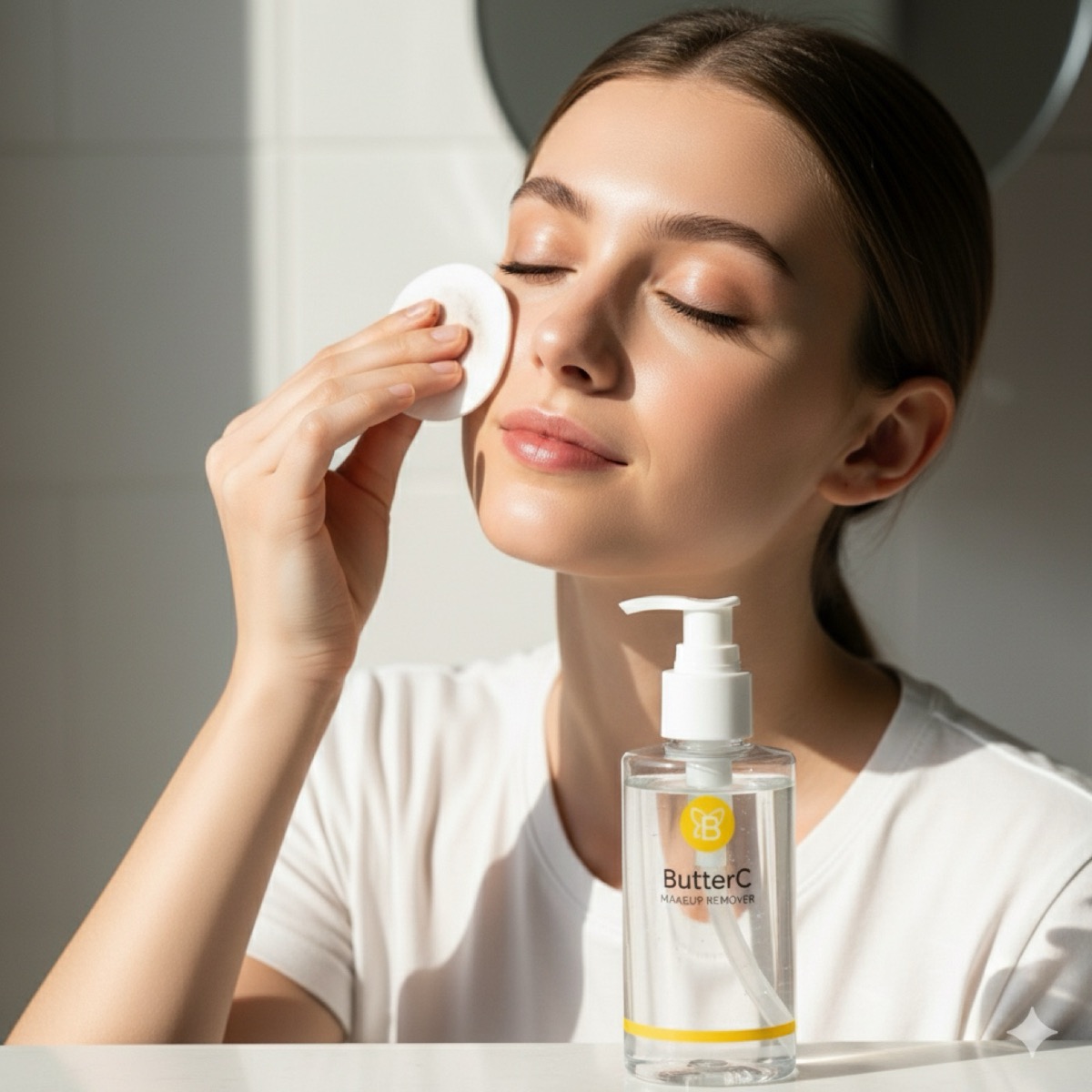
“Skin type” is a way of grouping skin by its oiliness, dryness and tendency to react, so that suitable cosmetic textures and ingredients can be chosen accordingly. The familiar categories are normal, oily, dry and combination skin, together with sensitive skin. However, skin type is not a fixed label: it varies across areas of the face, with the seasons and with age.
1. How skin types are classified
Youn et al. (2005) observed that classifying facial skin types (oily, normal, dry, combination) relies mainly on subjective assessment, and that no objective measurement method has yet been accepted as a standard. Measuring sebum at five sites on the face in each season over one year in the same group of volunteers, the authors found that the forehead, nose and chin secreted more sebum than the cheeks, that summer was the season of highest sebum secretion in the year, and that the T-zone and U-zone changed with the seasons. According to the authors, “combination” skin corresponds closely to the situation in which the T-zone and the U-zone differ in skin type in more than two seasons.
The classification system of dermatologist Baumann (2008) assesses skin on four pairs of characteristics — dry or oily, sensitive or resistant, prone to hyperpigmentation or not, wrinkled or not — giving 16 skin types. You do not have to use this system, but it is a reminder that a person can have skin that is both oily and sensitive, or both dry and prone to dark spots and melasma, and that both aspects need to be considered when choosing products.
Sensitive skin is defined by the special interest group of the International Forum for the Study of Itch (IFSI) as a syndrome: unpleasant sensations (stinging, burning, pain, itching, tingling) occur in response to stimuli that should not normally provoke them, and they cannot be explained by lesions of a skin disease; the skin may look normal or slightly red (Misery et al., 2017). Details are in the article sensitive skin.
2. Identifying your own skin type
The American Academy of Dermatology (AAD) describes the skin types as in the table below. Observe your skin over several days, at times when you have not just applied a product, and notice the changes between the dry season and the hot, humid season.
| Skin type | Signs (per the AAD) | Notes |
|---|---|---|
| Normal | Clear, not sensitive | Still needs sun protection; may become drier with the seasons and with age |
| Oily | Shiny, greasy | More oil on the forehead, nose and chin; increases in summer |
| Dry | Flaky, itchy or rough | Distinguish from dehydrated skin — see the article dry skin and dehydrated skin |
| Combination | Dry in some areas, oily in others | Usually oily in the T-zone |
| Sensitive | May sting or burn after using products | Can occur together with any of the skin types above |
If you are not sure which skin type you have, the AAD advises asking a dermatologist. Persistent redness, papules, pustules or severe itching should not be self-classified as a “skin type” — these may be signs of a skin disease that needs to be examined.
3. Oily skin
The AAD notes that oily skin also has advantages: oil helps protect the skin, and people with oily skin often have thicker skin and fewer wrinkles. The goal is balance, not stripping the skin dry. The AAD's main recommendations:
- Wash your face no more than twice a day and after sweating, with a gentle foaming cleanser; do not scrub. A cleanser that is too harsh can irritate the skin and make it produce more oil.
- Avoid oil-based or alcohol-based cleansers.
- Choose products labeled “oil-free” and “non-comedogenic” (does not cause comedones).
- Salicylic acid, glycolic acid and lactic acid can help reduce oil but may be too strong for some people — use them less often or stop if the skin becomes irritated.
- Still apply moisturizer after washing your face; during the day you can use blotting papers, pressing gently rather than rubbing.
Among active ingredients, 2% niacinamide has data on sebum: in 100 Japanese people, the sebum excretion rate fell significantly after 2 and 4 weeks compared with placebo; in 30 Caucasian people, surface sebum levels fell after 6 weeks but the sebum excretion rate did not fall significantly (Draelos et al., 2006). The “non-comedogenic” label also needs to be understood correctly: when tested on the backs of six people prone to forming comedones, finished products containing ingredients once ranked as “comedogenic” did not necessarily cause comedones (Draelos and DiNardo, 2006) — testing the finished product itself is more meaningful than ingredient ranking tables. See also the article oily skin and pores.
4. Dry skin
For dry skin, the AAD advises skipping thin lotions and choosing a cream or an ointment — the thicker the texture, the better it holds in water — and applying it right after bathing or washing your face, while the skin is still damp. You can look for ceramides and hyaluronic acid in the ingredient list; avoid alcohol, AHAs and fragrance while the skin is dry. Do not exfoliate while the skin is dry and flaking, because this makes the skin lose even more moisture.
The AAD also notes that the skin holds moisture less well with age: people in perimenopause and those aged 50 and over should use a moisturizer in cream form. If the skin is red, cracked, itchy, stinging or has a rash, it may be excessively dry; if it cracks, bleeds or hurts, see a dermatologist.
5. Combination skin
Because sebum on the forehead, nose and chin is higher than on the cheeks (Youn et al., 2005), combination skin often needs care by zone. A dermatologist quoted by the AAD advises thinking of the face as “two faces”: moisturize the dry areas and skip the oily areas — the nose often does not need moisturizer. For the oily areas, a gel moisturizer is lighter than other formats.
The routine should also change with the seasons: in summer you can switch to lighter textures, and in the dry season add moisturizer on the cheeks. A clay mask can be applied to the oily areas only.
6. Sensitive skin
- Few ingredients, no fragrance. A short formula reduces the number of substances that may cause discomfort and makes it easier to find the cause when a reaction occurs. The AAD notes that fragrance can irritate dry skin, and that “natural” products are not necessarily less likely to cause allergies.
- Read the label, but do not rely on the label alone. Even products labeled “hypoallergenic” can cause skin reactions (AAD).
- Exfoliate very gently. According to the AAD, dry, sensitive or acne-prone skin may do well with a soft washcloth and a mild chemical exfoliant; scrubs may be too irritating.
- Mineral sunscreen. The AAD says that dermatologists recommend people with sensitive skin use a physical (mineral) sunscreen containing zinc oxide and/or titanium dioxide.
- Test first. Apply a little to the inside of the forearm twice a day for 4–5 days; use the product on the face only if there is no redness and no itching (AAD).
Redness, itching or blisters exactly where a product was applied may be contact dermatitis — see the article contact dermatitis from cosmetics.
7. Summary table
| Skin type | Cleansing | Moisturizing | Sun protection | Use with caution |
|---|---|---|---|---|
| Oily | Gentle gel/foam, at most 2 times/day | Gel, oil-free, non-comedogenic | SPF 30+, broad-spectrum, fragrance-free, oil-free | Harsh, alcohol-based cleansers; scrubbing |
| Dry | Moisturizing type | Cream or ointment, applied while the skin is still damp | SPF 30+, broad-spectrum | Alcohol, AHAs, fragrance when the skin is dry and flaking |
| Combination | Gentle, does not leave the skin feeling tight | By zone: gel for the T-zone, cream for the cheeks | SPF 30+, broad-spectrum | Using one rich product on the whole face |
| Sensitive | Gentle, fragrance-free | Short formula, fragrance-free | Mineral filters | Scrubs, many actives at once |
Daily sun protection applies to every skin type. How to arrange the morning and evening steps is covered in the article facial skin care steps.
8. A formulation perspective
For the same active ingredient, the Butter-C formulation team often develops several bases for different skin types: a gel or light emulsion for oily skin, a lipid-rich cream for dry skin, a streamlined, fragrance-free formula for sensitive skin. Label statements such as “for oily skin” or “for sensitive skin” should be backed by appropriate data, for example a non-comedogenicity test or a tolerance assessment on the finished product itself.
Frequently asked questions
Does skin type change?
Yes. Sebum levels change with the seasons and are highest in summer (Youn et al., 2005), and according to the AAD, the skin holds moisture less and less well with age. That is why it is worth reviewing your routine when the seasons change or when you notice your skin reacting differently than before.
Does oily skin need a moisturizer?
Yes. The AAD advises people with oily skin to still apply a moisturizer after washing their face, choosing an oil-free, non-comedogenic product; a moisturizer that also contains broad-spectrum SPF 30 or higher sunscreen saves a step.
Are “natural” products better suited to sensitive skin?
Not necessarily. The AAD notes that “natural” does not mean less likely to cause allergies. What matters is a short ingredient list, no fragrance, and how your own skin reacts when you test the product.
References
- Youn SW et al. Regional and seasonal variations in facial sebum secretions: a proposal for the definition of combination skin type. Skin Res Technol. 2005. PMID 15998330.
- Baumann L. Understanding and treating various skin types: the Baumann Skin Type Indicator. Dermatol Clin. 2008. PMID 18555952.
- Misery L et al. Definition of Sensitive Skin: An Expert Position Paper from the Special Interest Group on Sensitive Skin of the International Forum for the Study of Itch. Acta Derm Venereol. 2017. PMID 26939643.
- Draelos ZD et al. The effect of 2% niacinamide on facial sebum production. J Cosmet Laser Ther. 2006. PMID 16766489.
- Draelos ZD, DiNardo JC. A re-evaluation of the comedogenicity concept. J Am Acad Dermatol. 2006. PMID 16488305.
- American Academy of Dermatology. How to control oily skin. https://www.aad.org/public/everyday-care/skin-care-basics/dry/oily-skin
- American Academy of Dermatology. How to pick the right moisturizer for your skin. https://www.aad.org/public/everyday-care/skin-care-basics/dry/pick-moisturizer
- American Academy of Dermatology. How to safely exfoliate at home. https://www.aad.org/public/everyday-care/skin-care-secrets/routine/safely-exfoliate-at-home
- American Academy of Dermatology. Sunscreen FAQs. https://www.aad.org/media/stats-sunscreen
- American Academy of Dermatology. How to maximize results from anti-aging skin care products. https://www.aad.org/public/everyday-care/skin-care-secrets/anti-aging/maximize-anti-aging-products
- American Academy of Dermatology. Dermatologist-recommended skin care for your 20s. https://www.aad.org/public/everyday-care/skin-care-basics/care/skin-care-in-your-20s