 BUTTER-C
Hormonal acne in adult women: features and skin care
Acne does not stop at puberty. For many women over 25, breakouts around the jaw and chin flare with the menstrual cycle and are hard to get rid of even after switching many products — a form of acne with its own features that needs its own approach.
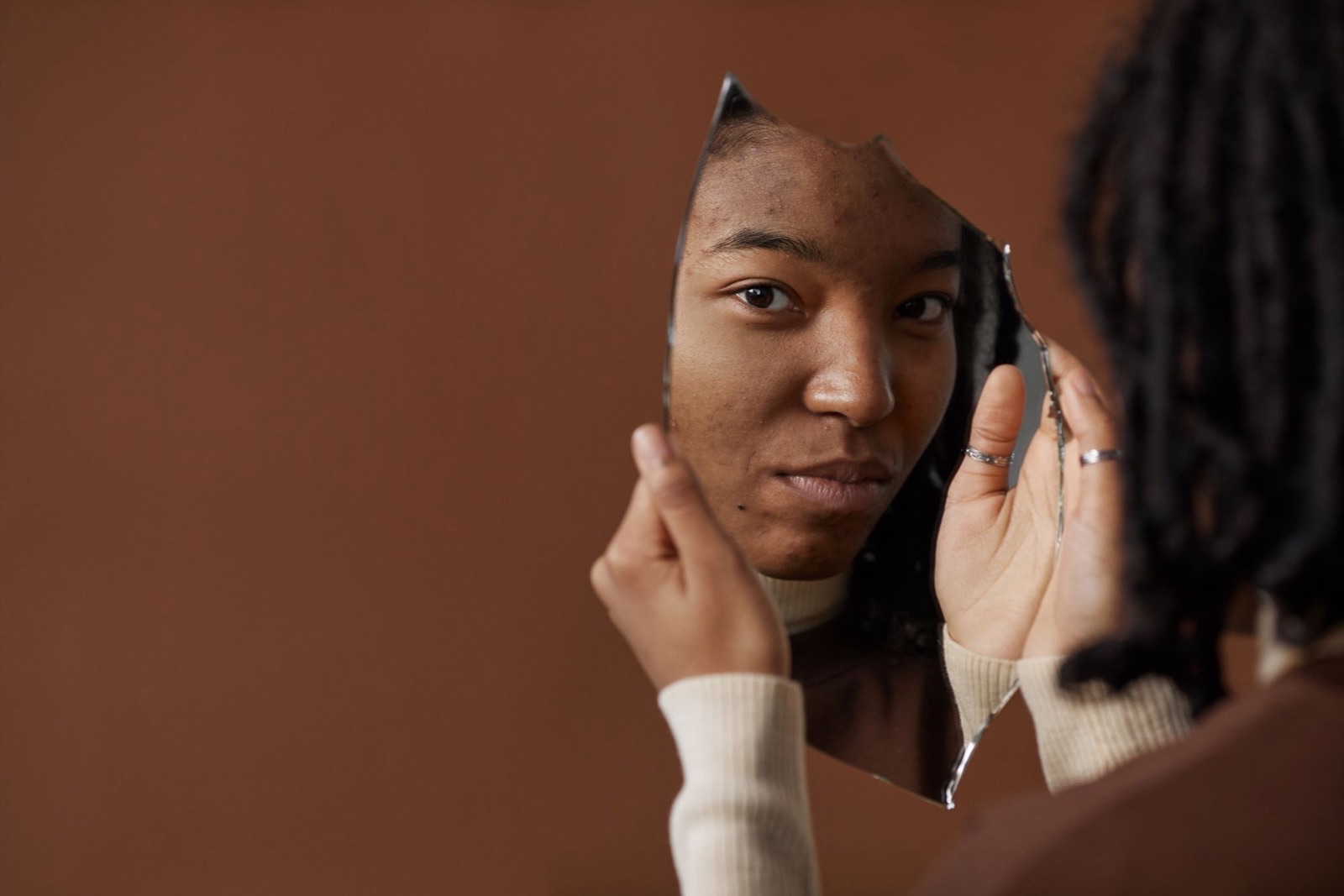
Hormonal acne in adult women is the familiar term for acne that persists or first appears after the teenage years, often concentrated around the jaw and chin and tending to worsen before a menstrual period. The medical literature calls it “adult female acne” — a chronic condition with a substantial impact on the psychological and social life of those affected (Dréno et al., 2013).
This article summarizes its recognizable features, related factors, principles of daily skin care in a supporting role, and the signs that mean you should see a doctor. Diagnosis, hormone testing and prescribing medication — including hormonal therapy — belong to medical specialists.
1. Adults still get acne: two common patterns
According to the American Academy of Dermatology (AAD), many people still get acne in their 30s, 40s and even 50s, and some people get acne for the first time as adults. Women get acne in adulthood more often than men. A product that suited your skin in your teenage years may no longer be suitable and may even make acne worse.
Based on the time of onset, experts divide acne in adult women into two patterns (Dréno et al., 2013):
- Persistent acne: acne that continues from puberty into adulthood.
- Late-onset acne: acne that appears for the first time in adulthood.
2. Recognizable features
The appearance of acne in adult women often differs from acne at puberty. The review by Dréno et al. (2013) describes:
| Feature | Acne in adult women |
|---|---|
| Location | Inflammatory lesions (papules, pustules, nodules) prominent on the lower chin, jawline and neck |
| Comedones | Closed comedones (small whiteheads) are more common than open comedones |
| Severity | Mostly mild to moderate |
| Course | May be hard to improve with medication; slow to respond |
| Skin | Older skin is more prone to irritation from products and strong actives |
Kim and Michaels (2012) also note that acne in this group often follows a specific pattern that can often respond poorly to medication and/or be prone to relapse. The “irritation-prone skin” feature is a key point to remember when choosing cosmetics.
3. Why is it called “hormonal acne”? Related factors
Genetic and hormonal factors together contribute to acne in adult women (Bagatin et al., 2019). The AAD lists common reasons:
- Hormonal fluctuations: around menstrual periods, during pregnancy, perimenopause and menopause, and when stopping or starting birth control pills.
- Stress: the body responds to stress by producing more androgens — a group of hormones that stimulate the sebaceous glands and hair follicles — so acne tends to persist when stress is prolonged.
- Family history: people whose parents or siblings have acne may be predisposed to acne in adulthood.
- Skin care and hair care products: products that tend to clog pores can contribute.
- Medication side effects: acne is a side effect of some medications.
- An undiagnosed medical condition: acne is sometimes a sign of another health problem.
From an endocrine perspective, a report by an expert committee on androgen excess and polycystic ovary syndrome (PCOS) states that the endocrine literature considers adult female acne a possible clinical expression of androgen excess, and recommends assessing androgen levels in adult women with acne (Carmina et al., 2022). This is a matter for a doctor, based on examination and testing — it cannot be concluded on your own from where the pimples appear.
“Hormonal acne” is only a popular term: not every pimple on the chin is caused by hormones.
4. Daily skin care: simple, gentle, consistent
Experts recommend a holistic approach to acne in adult women, in which medical approaches are complemented by skin care with suitable cosmetics; the routine should be simplified and “tailored” to individual needs and lifestyle so that it is easy to keep up (Dréno et al., 2013). In practice, the following checklist can be applied:
| Step | Choose | Avoid |
|---|---|---|
| Cleansing | A gentle cleanser, no more than twice a day, applied with your fingertips | Harsh cleansers, scrubbing particles, facial cleansing brushes |
| Supporting actives | One suitable active (for example BHA or niacinamide), increasing the frequency gradually | Layering several acids and retinoids at the same time on irritation-prone skin |
| Moisturizing | A moisturizer labeled “non-comedogenic” or “oil-free” that supports the skin barrier | Skipping moisturizer while using drying actives |
| Sunscreen | Broad-spectrum, SPF 30 or higher, lightweight texture, does not clog pores | Skipping sunscreen, especially when the skin has post-acne marks |
| Makeup, hair | Products labeled “non-comedogenic” or “won’t clog pores”; thorough makeup removal | Sleeping in makeup; hair oil getting onto the face |
The AAD advises checking the labels of every product you use — cleanser, moisturizer, sunscreen, makeup, hair products — and choosing ones labeled with one of the terms “non-comedogenic”, “non-acnegenic”, “oil-free” or “won’t clog pores”. How to order the morning and evening steps is covered in the article on facial skin care steps.
A practical point: because adult skin has acne and its owner is also starting to think about aging, many people use several acne products alongside products for signs of aging that contain strong actives, leading to irritation. Prioritize keeping the skin barrier stable first, and only then add actives. Suggestions on caring for signs of aging early are in the article on early care for signs of aging.
5. Lifestyle: what you can control
- Stress and sleep: because stress is linked to increased androgens (AAD), managing stress is part of acne care rather than just general advice.
- Do not squeeze or pick: inflammatory acne on the jaw is often deep; squeezing can easily leave marks and scars. See the article on post-acne marks.
- Track your cycle: note when acne worsens relative to your period, new products you have started and medications you are taking — useful information for a medical visit.
- Current medications: if you suspect a medication is making acne worse, the AAD advises not stopping the medication on your own but asking the doctor who prescribed it.
6. When should you see a doctor?
Acne in adult women often requires long-term maintenance, and the choice of approach depends on many individual factors such as irritation-prone skin, a possible slow response, and whether you are of childbearing age or planning a pregnancy (Dréno et al., 2013). Therefore, see a dermatologist when:
- You have cared for your skin consistently for several weeks and the acne has not improved (the AAD recommends seeing a doctor if acne does not get better).
- Acne is deep and painful, or leaves marks or scars.
- Acne comes with other unusual changes in your menstrual cycle or health — the doctor may need to assess your hormones.
- You are pregnant, breastfeeding or planning a pregnancy and want to use products with actives.
The AAD’s 2024 acne guidelines discuss medication options, including hormonal therapy (Reynolds et al., 2024); these are all prescription medications, to be used only as prescribed and monitored by a doctor. The AAD says dermatologists often combine two or more approaches, and that with a doctor’s help and patience, most cases of acne can be controlled.
7. Formulation perspective
Designing products for acne-prone adult skin is a balancing act: enough active to help keep pores clear, but a gentle base rich in barrier-supporting ingredients to limit irritation. When developing lines such as a serum for acne-prone skin or barrier-supporting moisturizers, Butter-C’s pharmacist team favors concise formulas and active concentrations within ranges supported by reference data, and recommends that brand owners state the intended users clearly and avoid product descriptions tied to “hormones” or to effects on disease.
Frequently asked questions
Is acne on the chin and around the jaw definitely hormonal?
Not definitely. The jaw and chin location suggests the adult female acne pattern, but the causes can include stress, pore-clogging products, medications and genetics. Only a doctor, through examination and testing when needed, can assess hormonal factors.
Should I take birth control pills on my own to reduce acne?
No. Hormonal therapy is prescription medication, with contraindications and side effects; only a doctor can decide whether it is suitable.
Can adult women with acne use products for signs of aging?
They can, but introduce one product at a time, favor formulas that do not clog pores and watch for irritation. Adult skin is more prone to irritation when several strong actives are used at the same time.
References
- Dréno B, et al. Adult female acne: a new paradigm. J Eur Acad Dermatol Venereol. 2013. PMID 23302006.
- Bagatin E, et al. Adult female acne: a guide to clinical practice. An Bras Dermatol. 2019. PMID 30726466.
- Carmina E, et al. Female Adult Acne and Androgen Excess: A Report From the Multidisciplinary Androgen Excess and PCOS Committee. J Endocr Soc. 2022. PMID 35155970.
- Kim GK, Michaels BB. Post-adolescent acne in women: more common and more clinical considerations. J Drugs Dermatol. 2012. PMID 22648217.
- Reynolds RV, et al. Guidelines of care for the management of acne vulgaris. J Am Acad Dermatol. 2024. PMID 38300170.
- American Academy of Dermatology. Adult acne. https://www.aad.org/public/diseases/acne/really-acne/adult-acne