 BUTTER-C
Acne-prone skin care: mechanisms, habits and when to see a doctor
Washing your face over and over, scrubbing hard, layering on more and more actives — these familiar reflexes when breakouts appear often leave the skin more uncomfortable. The current medical literature views acne differently than before, and the role of cosmetics also needs to be put back in its proper place.
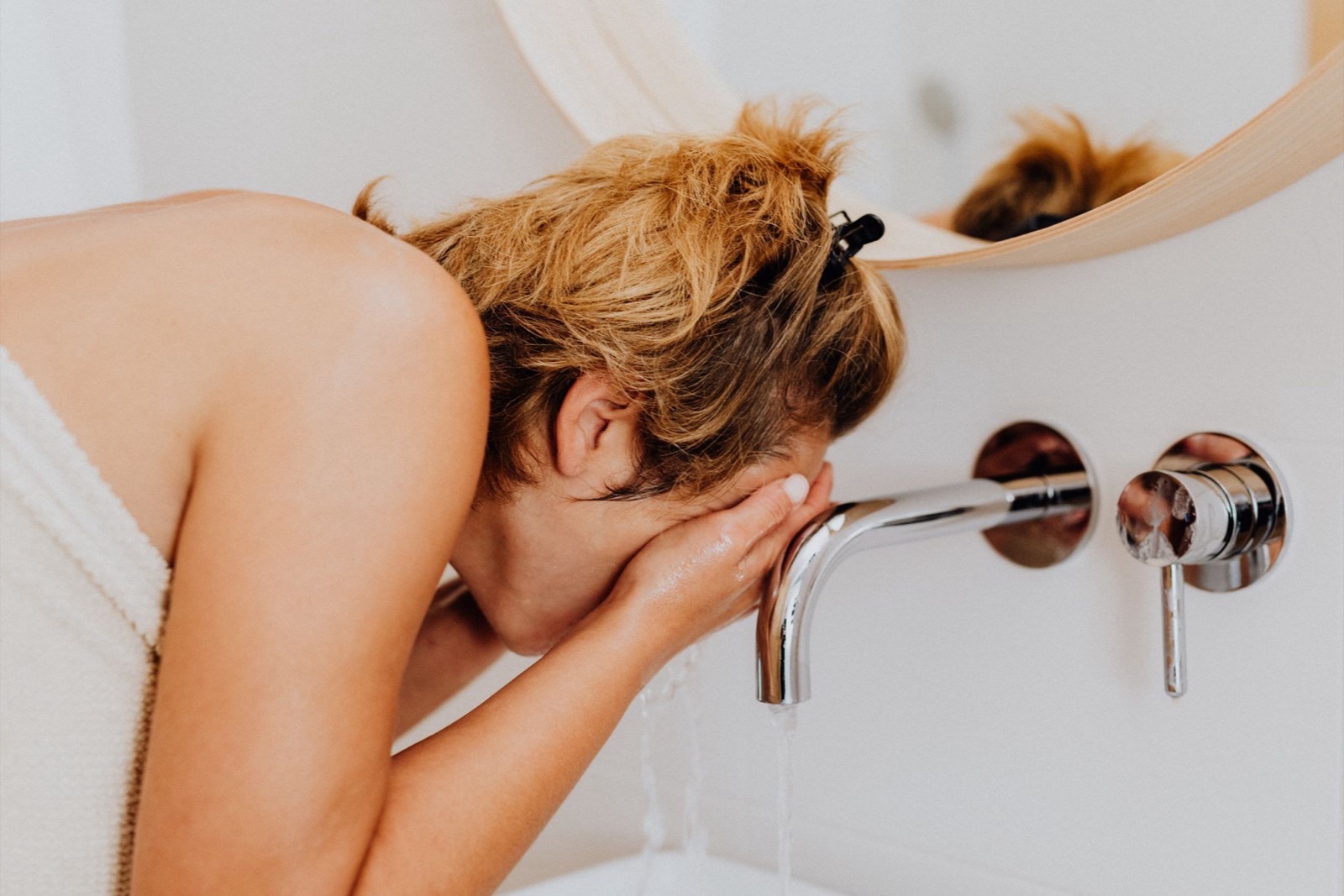
Acne care is a frequently asked-about topic in cosmetics, and also an area where it is easy to overpromise. It needs to be said clearly from the start: acne (acne vulgaris) is a skin disease; diagnosis and medication are the job of a dermatologist. This article stays at the level of caring for oily, acne-prone skin with cosmetics — cleansing, supporting actives, moisturizing, sunscreen — and points out the signs that mean you should see a doctor.
1. Where cosmetics fit in acne care
The 2024 acne guidelines of the American Academy of Dermatology (AAD) set out 18 evidence-based recommendations. The strong recommendations are for benzoyl peroxide, topical retinoids, topical antibiotics and one oral antibiotic; salicylic acid — an active also found in cosmetics — receives only a conditional recommendation. For acne that is severe, causes psychosocial burden, leaves scars or does not respond to conventional approaches, the guidelines strongly recommend a prescription oral medication (Reynolds et al., 2024). That is a decision for a doctor, not for someone selling cosmetics.
Cosmetics still have a place: when chosen correctly, cosmetics can support the overall outcome, whereas incorrect practices or unsuitable products can make acne worse; the authors of this review strongly recommend appropriate moisturizers for everyone with acne (Dall'Oglio et al., 2015 — medical context). The appropriately measured way to put it is: cosmetics suitable for oily, acne-prone skin help reduce the look of shine, help keep pores clear and soothe the skin — not “get rid of acne”.
2. How acne forms: four links in the chain
| Link | What happens | What cosmetics can do |
|---|---|---|
| Sebum | Both creates shine and contributes to the formation of comedones and inflammatory acne; most over-the-counter products only absorb oil on the surface (Draelos et al., 2006) | Help reduce the look of shine — see the article on oily skin and pores |
| Abnormal keratinization in the follicle neck | Keratinocytes together with sebum plug the follicle canal, forming microcomedones and then comedones | Chemical exfoliation helps keep pores clear — see the article on blackheads and whiteheads |
| Microorganisms and immunity | Loss of diversity in the skin microbiome, together with activation of innate immunity, may lead to chronic inflammation (Dréno et al., 2018) | No claims of action on bacteria; gentle cleansing to preserve the skin barrier |
| Inflammation | Red papules, pustules, deep and painful nodules | Only at the level of “soothing”; many inflammatory lesions need a doctor’s assessment |
Bacteria are not the “culprit” in the way once thought
A familiar belief holds that the bacterium Cutibacterium acnes (formerly Propionibacterium acnes) “multiplies in clogged pores and then causes inflammation”. According to the review by Dréno et al. (2018), C. acnes is a resident bacterium that helps maintain healthy skin but can become an opportunistic pathogen. Its proliferation is not the triggering factor, because people with acne do not carry more of this bacterium in their follicles than people without acne. The review emphasizes the close balance between the phylotypes of this bacterium and within the skin microbiome as a whole; loss of diversity in the skin microbiome, together with activation of innate immunity, may lead to the chronic inflammation of acne.
So scrubbing very hard or looking for products that “target bacteria” is not the right direction. Cosmetics may not claim an effect on bacteria on the skin; that role, when needed, belongs to medications prescribed by a doctor. See also the article on the skin microbiome.
3. Cleansing: gentle and just enough
Washing your face more often does not help more. In a randomized, single-blind trial in men with mild to moderate acne (medical context), groups that washed their faces once, twice or four times a day for 6 weeks did not differ significantly; the twice-daily group showed significant improvement in open comedones and non-inflammatory lesions, while the once-daily group got worse. The authors regarded this as slight support for the habit of washing the face twice a day with a mild cleanser (Choi et al., 2006).
The AAD advises washing your face when you wake up, before bed and after sweating; using a gentle, non-comedogenic cleanser, applying it lightly with your fingertips, rinsing with lukewarm water and patting dry with a clean towel. Washing many times a day or scrubbing can irritate the skin and make acne flare. The AAD also notes that even non-comedogenic makeup can cause acne if it is left on overnight — how to combine makeup remover and cleanser is covered in the article on double cleansing.
4. Cosmetic actives for acne-prone skin
Most of the studies below were done in people with acne, that is, in a medical context: the results show the direction of an effect, not the promise of a specific product.
| Active | Role at the cosmetic level | What to know |
|---|---|---|
| Salicylic acid (BHA) (in Vietnamese) | Helps keep pores clear | The AAD gives it a conditional recommendation (Reynolds et al., 2024). ASEAN Annex III (Ref 98): up to 2.0% in serums, toners and facial gels; not to be used for children under three years of age |
| Glycolic and lactic acid (AHA) | Exfoliate the surface, help the skin look smoother | ASEAN Annex III (Ref A6), skin products for general use: glycolic and lactic acid combined up to 10% calculated as the acids, finished-product pH of 3.5 or higher; at 2.5% or more without a sunscreen, the label must warn of increased sun sensitivity |
| Niacinamide (in Vietnamese) | Helps reduce the look of shine | 2% cream: in 100 Japanese participants, the sebum excretion rate fell after 2 and 4 weeks compared with placebo; in 30 Caucasian participants, the amount of surface sebum fell after 6 weeks but the excretion rate did not fall significantly (Draelos et al., 2006) |
| Zinc salts | Support oily skin | Zinc acetate may help limit excessive sebum production (Dall'Oglio et al., 2015); water-soluble zinc salts up to 1% calculated as zinc (ASEAN Annex III, Ref 24) |
| Azelaic acid | Not used in cosmetics | Included in the AAD guidelines as a topical medication; in ASEAN it is listed in Annex II (A1141) — substances that must not be present in cosmetics |
Principles: one main exfoliating active, starting at a low frequency and increasing gradually; do not layer BHA, AHA and retinol at the same time; people using medications prescribed by a doctor should ask the doctor before adding an exfoliating product.
5. Moisturizer and sunscreen: two often-skipped steps
Oily skin still needs moisturizing. The AAD advises against trying to dry out the skin with astringents or alcohol: dry skin is irritated skin, and irritation increases the risk of breakouts; if your skin is dry, use a moisturizer made for acne-prone skin after each wash. Why shiny, oily skin can still lack water is explained in the article on dry skin and dehydrated skin.
The “non-comedogenic” label (meaning the product does not cause comedones) needs to be understood correctly. The comedogenic potential of ingredients was formerly rated in animal models, on the assumption that a finished product containing such an ingredient would also be comedogenic. When finished products were tested directly on the backs of 6 people prone to forming comedones for 4 weeks, Draelos and DiNardo (2006) concluded that finished products made with ingredients rated as “comedogenic” are not necessarily comedogenic. Ingredient ranking tables online therefore cannot replace testing of the product itself.
Daily morning sunscreen is all the more necessary when using AHAs, and it is also a foundation for limiting post-acne marks — see the article on post-acne marks.
6. Daily checklist
- Wash your face twice a day and after sweating, using your fingertips; no washcloths, sponges or scrubbing beads (AAD).
- Remove makeup before bed (AAD).
- Add one product at a time; give each acne product 6–8 weeks before judging it — the AAD notes that switching products every week can irritate the skin and cause breakouts.
- Apply acne products in a thin, even layer over the whole area where breakouts tend to appear, not only as a dab on the spots you can see (AAD).
- Do not squeeze or pick; when exercising, blot sweat gently instead of rubbing; do not share makeup or brushes (AAD).
- A lightweight moisturizer; sunscreen every morning.
7. When to see a dermatologist
The AAD stresses that you do not need to wait until acne is severe to see a dermatologist, and offers a list of self-assessment questions covering situations such as:
- You have tried many things and the acne has not improved, or it clears and then keeps coming back.
- Deep, painful, cyst-like or lumpy acne; acne-like bumps in the armpits, groin or thighs, or on the backs of the arms.
- Acne started at age 8–11 or earlier, or has lasted for many years.
- Acne makes you feel sad, anxious, reluctant to see people or want to cover your face.
- You started taking a medication within the past 6 months and now have breakouts.
- Acne leaves scars or dark marks; acne on the back or chest does not improve.
According to the AAD, if you still have breakouts after giving skin care measures enough time, a dermatologist can help, and some people need prescription medication. Acne in adulthood is discussed in the article on hormonal acne in adult women.
8. Formulation perspective
For products such as a serum for acne-prone skin, the Butter-C formulation team keeps salicylic acid and AHAs within the limits of ASEAN Annex III, favors one main exfoliating active in a gentle, moisturizing base, and recommends testing the finished product for “non-comedogenic” status when the brand owner wants to put this statement on the label. Claims stop at “suitable for oily, acne-prone skin” and “helps keep pores clear”.
Frequently asked questions
Does oily, acne-prone skin need a moisturizer?
Yes. Many actives that support acne-prone skin tend to dry the skin, and dry, irritated skin is more prone to breakouts (AAD). Choose a lightweight texture labeled “non-comedogenic”.
How long before I see a change in my skin?
The AAD advises using a product for 6–8 weeks before judging it. If there is no improvement, or if you have any of the signs in section 7, see a dermatologist instead of continually switching products.
Is acne caused by dirty skin and lots of bacteria?
It is not that simple. People with acne do not carry more C. acnes in their follicles than people without acne (Dréno et al., 2018), and washing the face four times a day did not produce significantly different results from washing twice a day (Choi et al., 2006).
References
- Reynolds RV et al. Guidelines of care for the management of acne vulgaris. J Am Acad Dermatol. 2024. PMID 38300170.
- Dréno B et al. Cutibacterium acnes (Propionibacterium acnes) and acne vulgaris: a brief look at the latest updates. J Eur Acad Dermatol Venereol. 2018. PMID 29894579.
- Dall'Oglio F et al. Cosmetics for acne: indications and recommendations for an evidence-based approach. G Ital Dermatol Venereol. 2015. PMID 25315288.
- Draelos ZD et al. The effect of 2% niacinamide on facial sebum production. J Cosmet Laser Ther. 2006. PMID 16766489.
- Draelos ZD, DiNardo JC. A re-evaluation of the comedogenicity concept. J Am Acad Dermatol. 2006. PMID 16488305.
- Choi JM et al. A single-blinded, randomized, controlled clinical trial evaluating the effect of face washing on acne vulgaris. Pediatr Dermatol. 2006. PMID 17014635.
- American Academy of Dermatology. 10 skin care habits that can worsen acne. https://www.aad.org/public/diseases/acne/skin-care/habits-stop
- American Academy of Dermatology. Treating acne? Is it time to see a dermatologist?. https://www.aad.org/public/diseases/acne/diy/when-derm