 BUTTER-C
Cosmetic contact dermatitis: irritation, allergy, patch testing
Redness, itching or stinging after using a new product is not always an “allergy.” Understanding the two mechanisms, irritation and allergy, helps users respond correctly and helps doctors find the culprit faster.
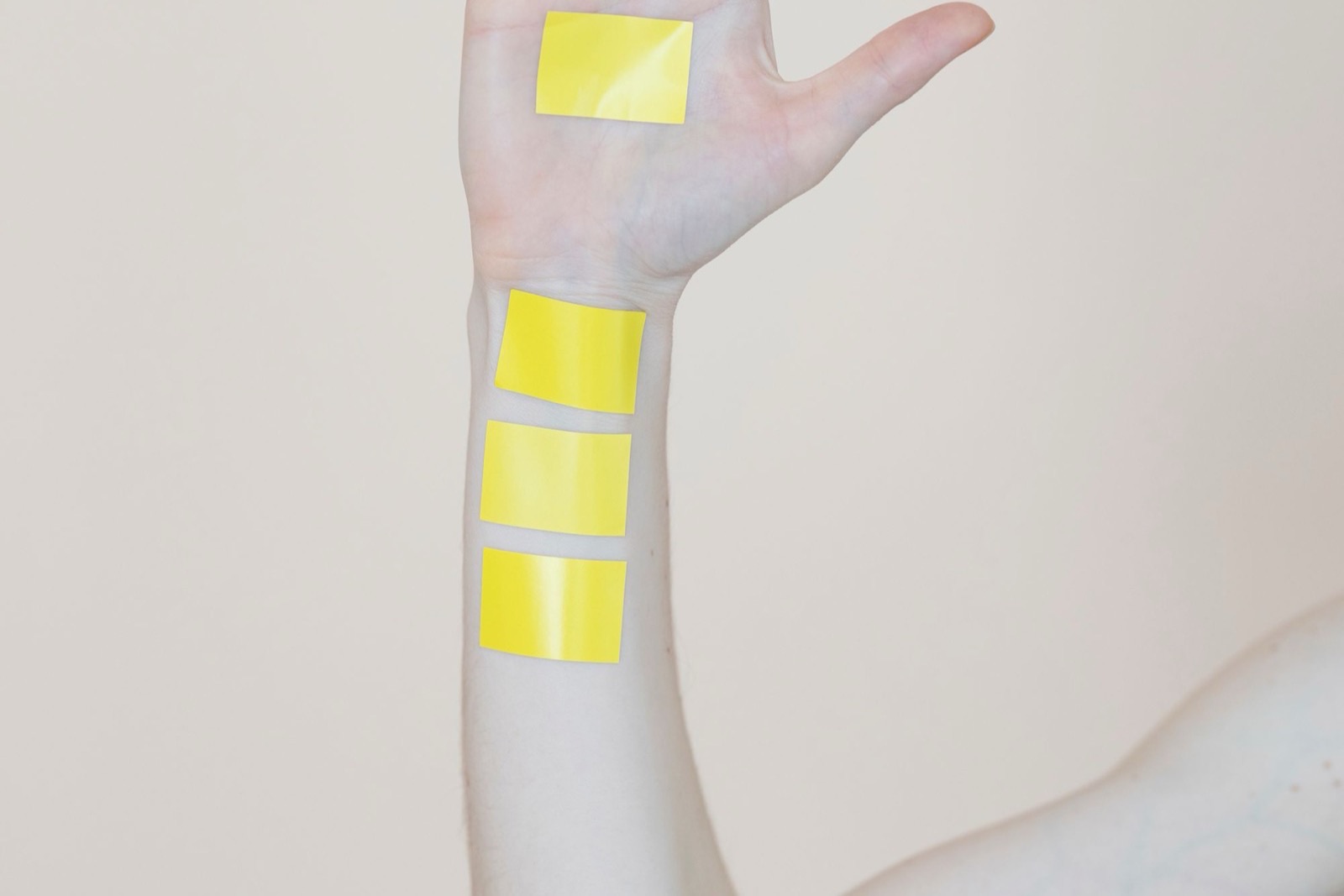
Cosmetic contact dermatitis is an inflammatory reaction that appears on skin that has been in contact with a skin care, hair care, makeup or personal hygiene product. Common signs are itching, redness, burning and papules, sometimes with blisters or scaling. According to the American Academy of Dermatology (AAD), more than 15,000 substances in everyday life can cause an allergic reaction when they touch the skin, with fragrance and nickel being two common groups.
This article explains the two main mechanisms (irritation and allergy), the role of patch testing in diagnosis, how to read ingredient lists and the principles of gentle skin care when a reaction to cosmetics is suspected. Diagnosis and prescribing belong to the dermatologist; the content below is only meant to help readers understand correctly and know when to see a doctor.
1. What is cosmetic contact dermatitis?
“Contact dermatitis” is a general term for the skin’s reaction to an external agent that touches it. With cosmetics, the agent may be an ingredient in the formula (fragrance, preservatives, surfactants, plant extracts, UV filters…) or an accessory such as a makeup sponge or an eyelash curler. The condition is not contagious from person to person (AAD).
The difficulty is that many people use several products at the same time, and a reaction does not always appear the first time a product is applied; a product used for many years can still be the culprit.
2. Irritation and allergy: two different mechanisms
Irritant contact dermatitis occurs when an agent directly damages the skin’s protective barrier. Anyone can develop it if the exposure is strong enough or long enough: washing the face too many times, using harsh cleansers, layering several exfoliating actives. This is the more common form of contact dermatitis; diagnosis is often difficult because there is no confirmatory test, and it is often concluded after allergy has been ruled out (Patel and Nixon, 2022).
Allergic contact dermatitis is a delayed-type immune reaction: the body has “memorized” a specific substance, and later exposures cause inflammation, even in very small amounts. The rash usually appears a few hours to a few days after contact (AAD). According to the review by Zirwas (2019), contact allergy to cosmetics is very common and is probably the most common reason why patients present for patch testing.
| Feature | Irritation | Allergy |
|---|---|---|
| Mechanism | Direct damage to the skin barrier | Delayed-type immune reaction to a specific substance |
| Common sensations | Burning, stinging, dryness and tightness | Prominent itching; may spread beyond the area of application |
| Onset | Usually early; increases with repeated exposure | After a few hours to a few days |
| How it is identified | No confirmatory test; based on medical history | Patch testing performed by a dermatologist |
In practice the two mechanisms can overlap: skin that is irritated, with a weakened barrier, takes up allergens more easily. A brief stinging sensation when applying actives is a different matter (see skin sensations when using actives (in Vietnamese)).
3. Where it appears hints at the source
The face is exposed to more cosmetics than any other area, so facial dermatitis is the typical presentation. Zirwas (2019) describes some common distribution patterns:
- Eyelids: very frequently affected. Sources can include shampoo, conditioner, facial cleanser, makeup remover, mascara, nail polish, artificial nails, makeup sponges, eyelash curlers, or substances on the hands that then touch the eyes. Post-inflammatory hyperpigmentation due to allergic contact dermatitis is also one of the causes of dark circles mentioned in the medical literature (see dark circles and under-eye puffiness).
- Sides of the face and neck: often a “rinse-off” pattern, when shampoo and conditioner run down over these areas during rinsing.
- Central face: may be related to moisturizers, anti-wrinkle creams and foundation — products that are applied more thoroughly to the center of the face than to the sides.
Ingredient groups often mentioned in contact allergy to personal care products include fragrances, plant extracts, preservatives, surfactants, emollients, emulsifiers, vitamins and UV filters (Smale et al., 2026). This does not mean that these groups are “toxic”: only people who are already sensitized need to avoid the exact substance they are allergic to.
4. Patch testing: the doctor’s diagnostic tool
Patch testing is the standard method for identifying contact allergens. The European Society of Contact Dermatitis (ESCD) has issued detailed guidelines on materials, technique, reading the results, testing products brought in by the patient and counseling after testing (Johansen et al., 2015).
As described by DermNet, the test substances are placed in small chambers stuck onto the skin, usually on the back; the patches are removed after 48 hours and the skin is assessed again 48 hours after that, because allergic reactions need time to show clearly. The doctor may also test the suspected product itself, so patients should bring the product and its packaging to the appointment.
When patch testing is not possible right away, the doctor sometimes gives instructions for a repeated open application test: applying the suspected product to an area of forearm skin about 5 cm in diameter twice a day for 5–10 days, then observing (DermNet). The results need to be read and explained by a dermatologist.
From a consumer’s point of view, the habit of applying a new product to a small area of skin for a few days before using it on the whole face is a reasonable precaution, but it cannot replace patch testing once reactions keep coming back.
5. Reading ingredient lists: a skill once you know what you are allergic to
Once the allergen has been identified, avoiding it depends on the ability to read labels. Smale et al. (2026) stress that educating patients about product labeling is key. Some practical tips:
- Read the INCI names — the international names of ingredients printed on the packaging. Write down the exact name of the substance you are allergic to, as given by your doctor, because one substance can have many trade names.
- Watch for “Parfum/Fragrance”: this is a collective name for a fragrance mixture; some fragrance ingredients that readily cause allergy are listed separately on labels in many markets.
- Plant extracts are not synonymous with gentle; people who have been identified as allergic to a plant species need to check the plant extracts in the ingredient list carefully.
- Check again when a familiar product changes its packaging, because the formula may have changed.
6. Skin care when a reaction to cosmetics is suspected
The American Academy of Dermatology stresses that contact dermatitis can clear completely only when the cause is avoided. While waiting to see a doctor, you can follow these supportive care principles:
- Stop the newly used or suspected product; keep the packaging to bring to the appointment.
- Cut your routine down to the minimum: one gentle cleanser, one fragrance-free moisturizer, and a broad-spectrum sunscreen when going outside.
- Pause exfoliating products, cosmetic retinoids and any unnecessary steps.
- Moisturize regularly to support the skin barrier — together with avoiding irritants and protecting the skin, this is the foundation of care for irritant contact dermatitis (Patel and Nixon, 2022). You may consider our moisturizing cream range with minimalist formulas.
See a dermatologist when: the rash spreads widely; the eyelids or lips swell; there are blisters or oozing; symptoms do not improve after the product has been stopped; reactions keep recurring with many different products. Topical or oral medicines, if needed, are prescription medicines prescribed by the doctor.
7. Formulation perspective
For manufacturers, reducing the risk of contact dermatitis starts with selecting raw materials, controlling the concentrations of preservatives and fragrance, assessing the safety of the formula and labeling the ingredients fully so that users can check for themselves. When developing formulas for product lines aimed at reactive skin, the Butter-C pharmacist team favors short formulas, limits unnecessary ingredients and discusses clearly with brand owners the limits of “gentle” claims.
Frequently asked questions
I have used a product for many years without problems; can I now become allergic to it?
Yes. Contact allergy develops after a period of sensitization, so a familiar product can still become the cause. Patch testing helps the doctor identify the specific substance.
Does a product labeled “for sensitive skin” rule out allergy?
No. People who are allergic to a substance need to avoid that exact substance, regardless of advertising claims. Reading the ingredient list is a step that cannot be skipped.
Can I do a patch test at home?
Diagnostic patch testing needs a standard set of test substances, appropriate concentrations and a qualified person to read the results, so it should be done at a dermatology facility. Trying a new product on a small area of skin is only a precaution when you start using it.
References
- Zirwas MJ. Contact Dermatitis to Cosmetics. Clin Rev Allergy Immunol. 2019. PMID 30421329.
- Patel K, Nixon R. Irritant Contact Dermatitis - a Review. Curr Dermatol Rep. 2022. PMID 35433115.
- Johansen JD, et al. European Society of Contact Dermatitis guideline for diagnostic patch testing - recommendations on best practice. Contact Dermatitis. 2015. PMID 26179009.
- Smale NE, et al. Allergic contact dermatitis to personal care products: A focus on established and emerging allergens. J Am Acad Dermatol. 2026. PMID 42309282.
- DermNet. Patch tests: Skin Contact Allergy Tests Explained. https://dermnetnz.org/topics/patch-tests
- American Academy of Dermatology. Eczema types: Contact dermatitis overview. https://www.aad.org/public/diseases/eczema/types/contact-dermatitis